Animal Rights Groups Push Baldwin County Sheriff for Full-Time Cruelty Investigator
Animal welfare advocates are urging the Baldwin County Sheriff's Office to create a full-time animal cruelty investigator position as abuse reports continue to climb, though budget constraints may stand in the way.
ROBERTSDALE, Ala. — Animal welfare advocates are calling on the Baldwin County Sheriff’s Office to create a full-time animal cruelty investigator position, arguing that a sharp rise in abuse and neglect cases has outpaced the department’s ability to respond.
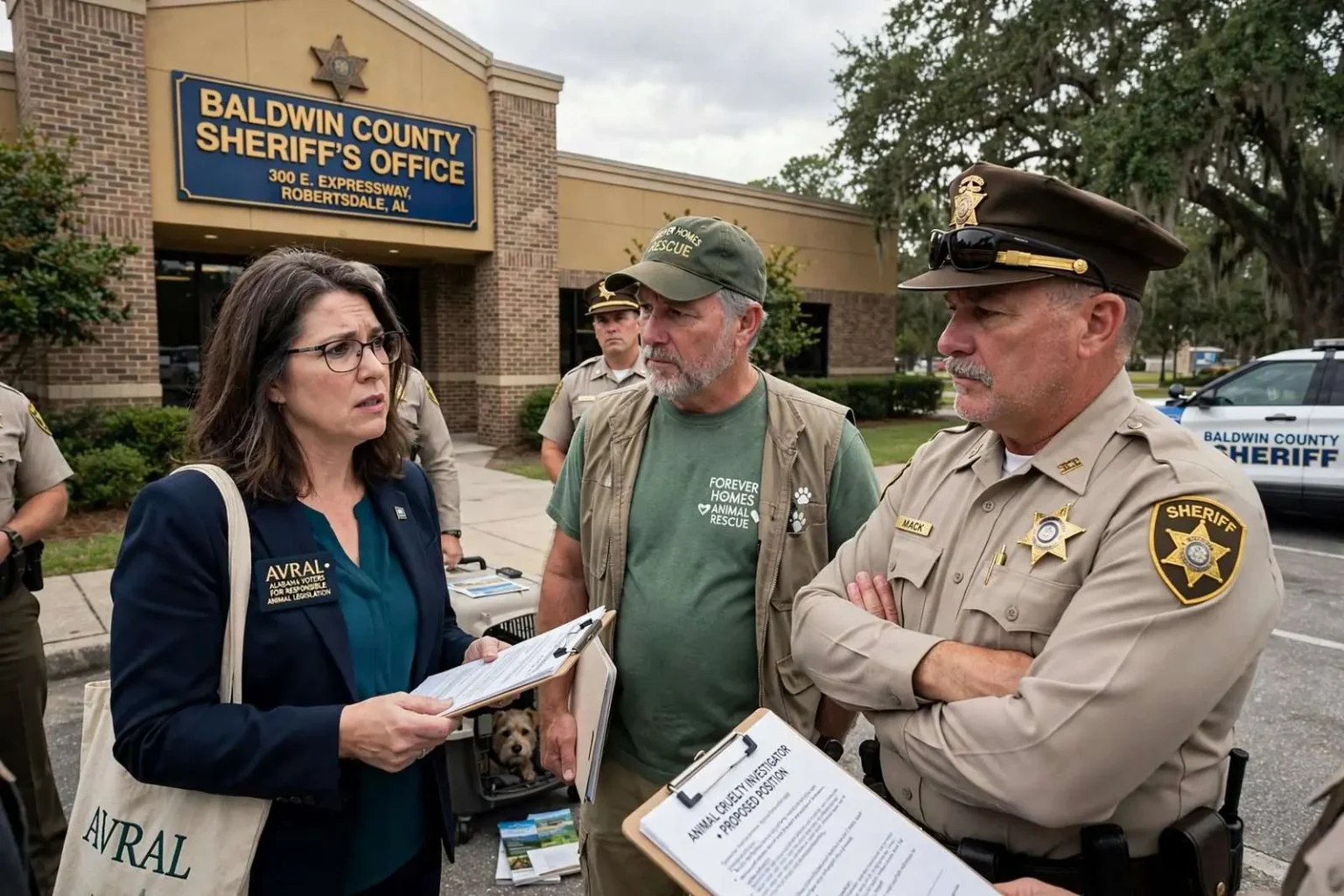
Representatives from Alabama Voters for Responsible Animal Legislation (AVRAL) and Forever Homes Animal Rescue attended a Baldwin County Sheriff’s Office budget meeting in Robertsdale this week to make their case directly to Sheriff Huey “Hoss” Mack and county officials.
According to the sheriff’s office, the number of animal cruelty calls it responds to has roughly tripled over the past eight years. Deputies are required to answer every animal complaint that falls outside city limits, a workload that advocates say has grown too large for general patrol deputies to handle effectively.
Advocates Make Their Case Amid Rising Caseloads
Sandra Nathan, a representative of AVRAL, said the sheriff’s office needs someone dedicated specifically to identifying and documenting cruelty when it happens. “The Sheriff’s department has to answer every call that is outside of the cities, and it’s becoming where they need a trained, dedicated animal cruelty investigator who would recognize cruelty right away,” Nathan said.
Steve Williams, president of Forever Homes Animal Rescue, said a dedicated investigator would not only help animals already in danger but could also serve as a deterrent. “This would help greatly in the reduction of these types of situations, and more people would be held accountable for what they’re doing,” Williams said.
Part of the added strain on the sheriff’s office stems from a change at the state level. Officials say the Alabama Department of Agriculture discontinued its own animal crimes investigator position, effectively shifting more of that casework onto county law enforcement agencies like Baldwin County’s.
Sheriff’s Budget Concerns and Weak Cruelty Laws
Sheriff Mack said he supports the idea in principle but said funding remains the primary obstacle. The sheriff’s office is bracing for a smaller budget in the coming year, and Mack said any new position would have to compete with other pressing needs. “We know that our sheriff’s office, we’re gonna have a decreased budget already over what we have had this year, so it becomes a priority, and we’re looking at what can and can’t be done,” Mack said.
Advocates acknowledge the financial constraints but say they intend to keep pressing the issue. They argue that animals cannot advocate for themselves and that without a specialist trained to spot cruelty and build cases, many abuse situations may go unaddressed or result in only minor penalties.
Alabama’s animal cruelty statutes are relatively lenient compared to many other states. Most cruelty cases are charged as Class B misdemeanors, a classification advocates say fails to reflect the severity of some cases deputies encounter, including malnourishment, abandonment and other forms of neglect.
A Push to Regulate Alabama Puppy Mills
Beyond staffing at the sheriff’s office, the advocacy groups are also pushing state legislators to tighten regulations on commercial dog breeding operations, commonly known as puppy mills, which they say operate throughout south Alabama with little oversight or taxation.
Nathan said breeders running large-scale operations often profit substantially while facing minimal regulatory scrutiny. “They are making a ton of money on the bodies of animals, but they’re not paying any taxes,” Nathan said, referring to puppy mill operators.
Williams said the prices these operations charge underscore how lucrative the unregulated trade can be, with some dogs selling for hundreds or even thousands of dollars. “They’re actually selling these dogs from anywhere to $500 to $2,000 a piece,” Williams said.
Next Steps and Alabama’s Pet Protection Act
Nathan said she hopes state lawmakers will take the concerns seriously and consider new legislation that would impose stricter licensing, inspection and taxation requirements on large-scale breeding operations.
For now, the fate of a dedicated animal cruelty investigator position in Baldwin County remains tied to the outcome of the sheriff’s office budget process.
Alabama law treats the worst cases involving dogs and cats more severely than the general cruelty statute. Under the state’s Pet Protection Act, passed in 2000, intentionally torturing, mutilating or killing a dog or cat in a cruel manner is cruelty to a dog or cat in the first degree, a Class C felony.