Ascension Providence Hospital Resumes Elective Surgeries in Mobile
Ascension Providence Hospital in Mobile began a phased resumption of elective surgeries and non-urgent procedures on May 4, adding COVID-19 screening, visitor limits and other safeguards as Alabama eases its restrictions.
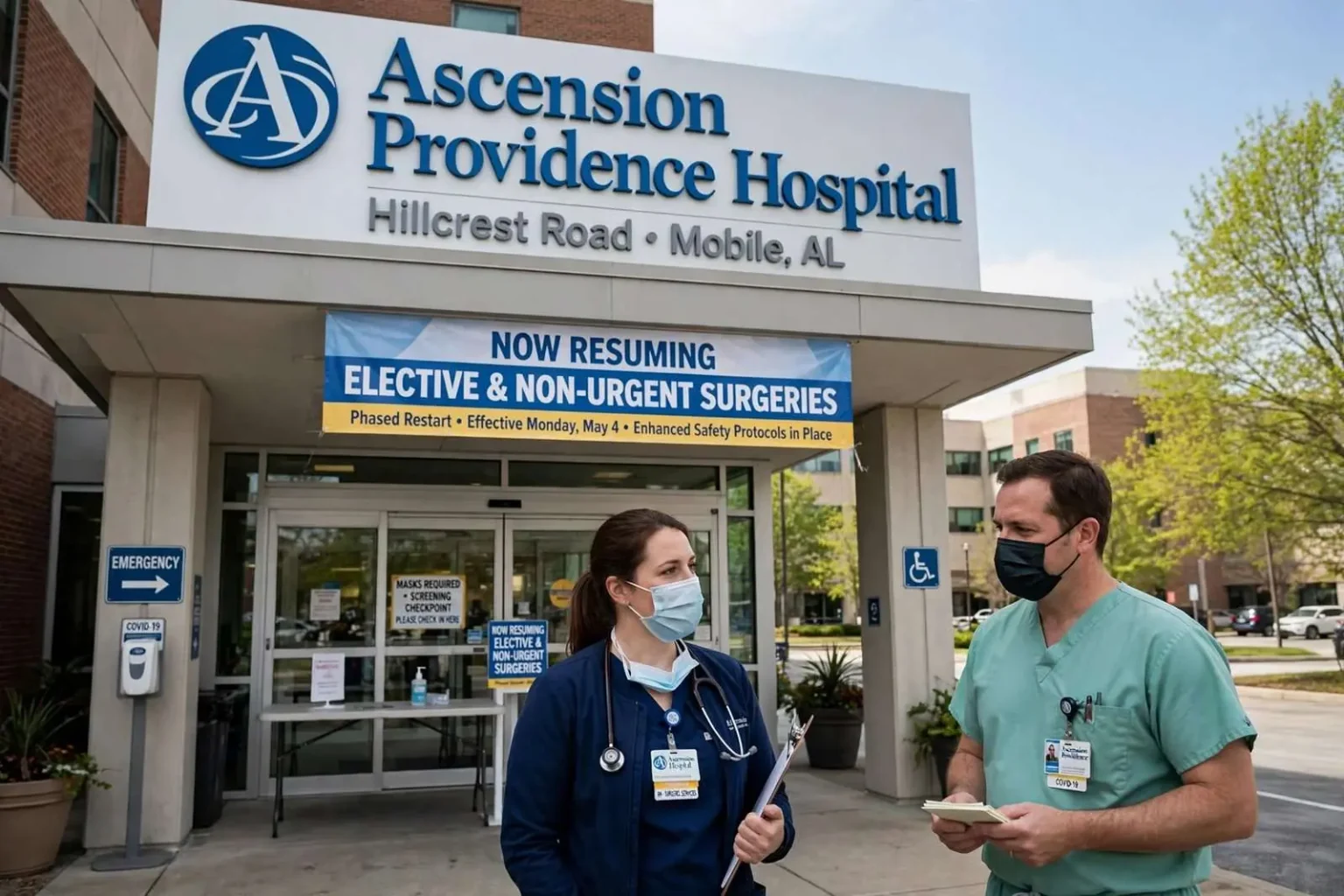
Ascension Providence Hospital in Mobile is restarting elective and non-urgent surgeries this week, joining hospitals across the region in a gradual return to normal operations now that Alabama’s statewide ban on such procedures has been lifted. Hospital administrators say the resumption, which took effect Monday, May 4, will unfold in phases rather than all at once, with clinical staff guiding the pace based on patient needs and available resources.
The phased approach is the operational heart of the plan. Rather than opening the surgical schedule to its full pre-pandemic volume on a single day, the hospital is rebuilding capacity step by step, adding procedures as supplies, staffing, testing capability and bed availability allow. Clinical leaders, not administrators alone, will decide how fast the phases move, a structure designed to keep the resumption from outrunning the safety measures that make it possible.
The move follows Gov. Kay Ivey’s broader plan to reopen segments of the state’s economy and health care system after weeks of restrictions imposed to slow the spread of COVID-19. The statewide order suspending elective medical, dental and surgical procedures had been in place since late March, and its expiration set hospitals across Alabama scrambling to build the screening, testing and scheduling systems a safe restart requires.
Seven Weeks of Paused Schedules
Ascension Providence first postponed elective surgeries and non-urgent procedures back on March 16, a step taken to preserve hospital capacity, protect patients and staff, and support the statewide effort to “flatten the curve” of coronavirus infections. At the time, the concern facing Mobile hospitals was modeled on what was then overwhelming hospitals in New York, New Orleans and other early hotspots: a surge of infected patients that could fill every bed and exhaust protective equipment within weeks.
During the roughly seven-week pause, the hospital continued handling emergency surgeries and urgent medical needs, while also expanding virtual care and telemedicine options so patients could consult providers from home. The continuation of emergency and urgent work meant the operating rooms never went dark, but the volume of scheduled procedures — everything from joint replacements to hernia repairs to cancer-related surgeries that could safely wait weeks — fell away almost entirely.
The telemedicine expansion, pushed nationwide by the pandemic, changed how Ascension Providence and other hospitals in the region deliver follow-up and non-urgent care. Patients who once drove to a clinic for a routine postoperative check or a chronic condition management visit could instead connect by video, a shift that reduced exposure risk for patients and staff and that hospitals expect to keep in place in some form after the crisis passes.
For patients whose procedures were postponed in March, the seven-week stretch was more than an inconvenience. Delayed elective surgeries — including some for painful, progressively worsening conditions — left people managing pain, limited mobility and anxiety for weeks longer than planned, and the resumption of scheduling brings those patients to the front of the line in a carefully ordered sequence.
A Measured Return
“It’s important we take careful and measured steps to ensure a safe return to providing full access to healthcare services while also continuing to serve and support individuals and communities impacted by COVID-19,” said Dr. Huson Gilberstadt, chief clinical officer for Ascension Florida and Gulf Coast. He said patients can expect expanded access to care paired with enhanced safety measures designed to keep hospitals functioning as safe healing environments.
Gilberstadt’s phrasing captures the double burden hospitals carried in the reopening period: they needed to resume the revenue-sustaining work of scheduled surgery, but they needed to do it in a way that did not reintroduce the virus into a facility still caring for infected patients. Ascension, the health system of which the Mobile hospital is part, operates hospitals across Florida and the Gulf Coast, and its clinical leadership set the framework that local facilities like Providence adapted to their own conditions.
The enhanced safety measures touch every step of the surgical journey. Visitors are restricted, masking and screening apply at all entries, and distancing requirements reshape waiting rooms, pre-op holding and recovery areas. Patients who once arrived with family members who camped in the surgical waiting room now arrive alone or with strict limits, an adjustment hospitals describe as among the hardest for families to accept but essential to keeping the environment safe.
Getting Postponed Patients Back on the Schedule
As part of the reopening, hospital staff will begin reaching out to patients whose surgeries and procedures were postponed during the shutdown, prioritizing those with the most urgent clinical needs. The triage of a postponed backlog is itself a clinical exercise: a patient whose delayed surgery involves a worsening condition or a cancer diagnosis that cannot wait moves up the schedule, while a genuinely elective procedure may sit further out in the queue as volume builds back.
Patients scheduled for elective or non-emergency surgery will be required to undergo COVID-19 screening and testing ahead of their procedure date, and will be asked to self-quarantine in the days before surgery. The pre-procedure testing requirement, which quickly became standard across the country, serves two purposes: it protects the patient from arriving for surgery while unknowingly infected, and it protects the surgical teams, other patients and the hospital’s capacity from an outbreak traced to the operating room.
The self-quarantine instruction pairs with the testing to close the gap between a negative test and the surgery date. A test taken several days out can miss an infection acquired afterward, so patients are asked to minimize contact in the interim, limiting trips to essential errands and avoiding gatherings in the days leading up to their procedures.
The Hospital and Its Community
Ascension Providence serves west Mobile from its Hillcrest Road campus and has long been one of the city’s major hospital systems, with an emergency department, a broad surgical service line and a range of specialty programs. Its surgical restart matters locally because scheduled surgery is both a health service and an economic engine: surgeons’ offices, anesthesia groups, staffing agencies and post-acute care providers all depend on the flow of scheduled procedures that the March order stopped cold.
The hospital is part of Ascension, one of the largest Catholic and nonprofit health systems in the country, and its Gulf Coast division has emphasized throughout the pandemic that its mission obligates it to keep serving the community even while its normal operations are constrained. That mission framing has also driven the system’s charity care and community support work during the crisis, from COVID-19 screening to support for patients and families affected by the outbreak.
What Patients Should Expect
For patients called back to the schedule, the experience of surgery in the reopening phase differs from what it looked like in January. Expect a pre-procedure phone call covering screening questions and testing logistics, a required COVID-19 test within the window the hospital specifies, and clear instructions about self-quarantine before surgery. Expect limits on who can accompany you, masks at every entrance, and screening stations at the doors.
Patients with symptoms of illness in the days before a scheduled procedure are advised to contact their surgeon’s office before reporting to the hospital, since a symptomatic patient will need to be rescheduled and evaluated first. Surgical teams would rather move a procedure than risk an infected operating room, and hospitals have built the rescheduling flexibility to accommodate that.
The phased restart also means the calendar may not fill as quickly as patients would like. Adding surgical volume consumes protective equipment that remains in finite supply, and the pace of the phases will rise and fall with what the hospital can safely support. Administrators have cautioned that the schedule will not snap back to normal all at once, and patients whose procedures are furthest out in the queue should expect to hear from the hospital as their turn approaches rather than all at once.
The Broader Reopening in Alabama
Ascension Providence’s move aligns with what hospitals across Alabama were doing in the first week of May. The statewide lifting of the elective procedure ban allowed facilities from Huntsville to Mobile to resume scheduled care, with each hospital designing its own protocols within the framework set by the governor’s office and state health officials. The Alabama Department of Public Health continued to track cases, and hospitals balanced their reopening plans against local case trends, which varied widely across the state.
For Mobile, the resumption of elective surgery marked a milestone in the region’s emergence from the first wave of the pandemic. The seven-week pause had accomplished its purpose — the feared surge never overwhelmed Mobile’s hospitals — and the gradual restart reflected both the confidence that capacity was preserved and the caution that the virus had not disappeared.
Public health officials continue to remind residents that the lifting of restrictions is not a declaration that the risk is over. The measures hospitals are adopting — screening, testing, masking, visitor limits and the phased pace itself — exist precisely because the disease remains present in the community, and the return to fuller operations will succeed only if those measures hold.
Patients waiting for word on a postponed procedure are encouraged to watch for communication from their surgeon’s office and the hospital, and to keep their contact information current so the scheduling staff can reach them. The backlog of seven weeks will take time to work through, but the phone calls have begun, the operating rooms are lighting back up, and the care that paused in March is moving again — carefully, in phases, and with an eye toward keeping both the patients and the hospital safe.