Battleship Memorial Park Holds Its Annual Memorial Day Flag Lowering Ceremony
Mobile's Battleship Memorial Park held its traditional Memorial Day flag lowering ceremony at the park's Vietnam memorial, honoring service members who died defending the country.
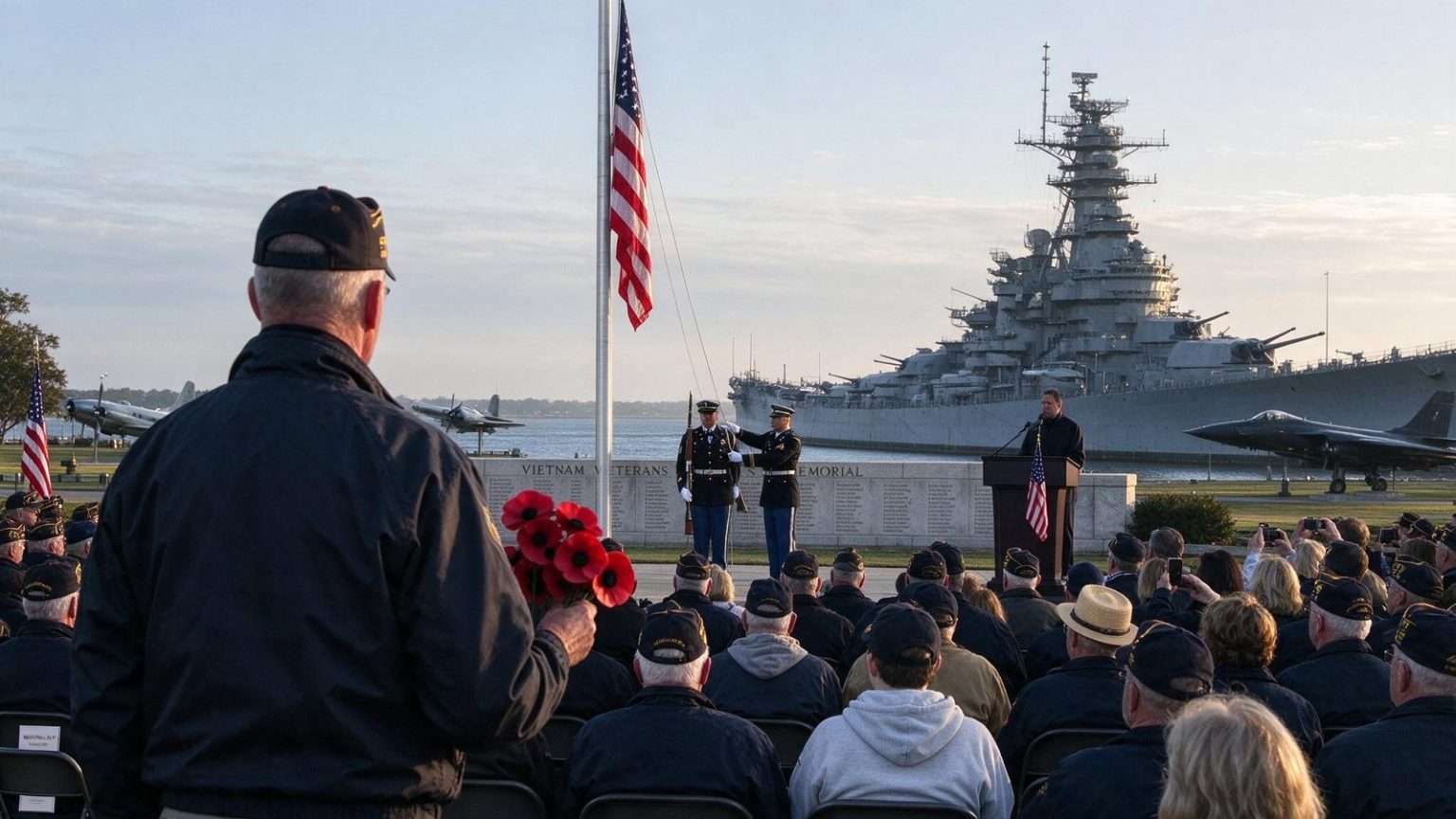
Mobile marked Memorial Day this year with its traditional flag lowering ceremony at Battleship Memorial Park, a longstanding observance held to honor the men and women of the U.S. armed forces who died in service to the country. The ceremony continues a Memorial Day tradition that has anchored the park’s calendar for years, drawing families, veterans groups and residents to the Mobile Bay waterfront in the early morning hours. The ceremony took place at the park’s Vietnam memorial, a site that has become a focal point for the community’s remembrance events throughout the year. The Vietnam memorial holds particular weight in Mobile, a city with deep military ties stretching back generations through its naval installation, its veterans’ organizations and the families who have sent sons and daughters into every American conflict.
Battleship Memorial Park, home to the USS Alabama and a collection of military aircraft and artifacts, regularly hosts patriotic ceremonies tied to Memorial Day, Veterans Day and other observances honoring the armed forces. The park is one of the most recognizable landmarks on the Gulf Coast, drawing visitors from across the country to walk the decks of the legendary World War II battleship and tour the aircraft and equipment that fill its grounds. On days of remembrance, the park transforms from a tourist destination into the region’s central gathering place for honoring military service, a role that fits the history embodied in the ships and aircraft on display.
Memorial Day, observed on the last Monday of May, is set aside specifically to remember service members who lost their lives while serving in the U.S. military, distinguishing it from Veterans Day in November, which honors all who have served. The distinction matters to the veterans’ organizations that plan the ceremony, who emphasize that the day belongs to the fallen and to the families they left behind. Ceremonies like the one held at Battleship Memorial Park are a common way communities across the country pause to reflect on that sacrifice, often centered around the lowering of the American flag as a gesture of tribute.
The park’s location on the shores of Mobile Bay has made it a natural gathering point for the region’s veterans, active-duty service members and residents who turn out each year for the ceremony. The waterfront setting gives the observance a solemnity that indoor venues cannot match, with the bay and the ships at the park forming a backdrop that connects the ceremony to the naval heritage of the region. As one of the area’s most visited historic sites, Battleship Memorial Park continues to serve as a place where South Alabama residents can come together to honor those who gave their lives in defense of the country.
The South Alabama Veterans Council and the dawn ceremony
The South Alabama Veterans Council has long been part of the dawn ceremony, which draws civilians and veterans alike to the Mobile Bay waterfront each Memorial Day. The council coordinates veterans’ organizations across the region, and its involvement in the Memorial Day observance connects the ceremony to the veterans’ posts, auxiliaries and service organizations that operate throughout Mobile and the surrounding communities year-round. Dawn ceremonies carry their own tradition among veterans’ groups, and the early hour reflects the solemnity that organizers believe the day demands.
At one recent observance, council president Lou Lartigue told those gathered that the day was intended as remembrance rather than celebration, noting that roughly 1.6 million American service members have given their lives since World War I. The reminder frames the day’s purpose in concrete terms, connecting the local ceremony to a century of American sacrifice across the global conflicts of the twentieth century and the wars that have followed. Veterans’ leaders have long stressed that understanding the scale of that loss is central to understanding what Memorial Day means.
The park and its place in Mobile’s military heritage
Battleship Memorial Park’s centerpiece, the USS Alabama, is a World War II battleship that earned its place in history through combat service in both the Atlantic and the Pacific, and it remains one of the most decorated ships of its era preserved anywhere in the country. The battleship came to Mobile Bay after the war through a statewide effort to save it from the scrapyard, and it has served as a memorial ever since, joined over the years by a submarine, historic aircraft, tanks and artillery. The park’s collection allows visitors to experience the scale of the machines and the realities of the service members who operated them, which is why veterans’ organizations have long considered it the right setting for days of remembrance.
The aircraft and artifacts displayed throughout the park represent every major American conflict of the twentieth century, giving the Memorial Day ceremony a setting that spans the entire arc of the service being honored. Visitors walking the park’s grounds pass memorials dedicated to specific wars, branches of service and units, each one maintained as a place where families can reflect on relatives who served. That landscape of memory is why the park’s Vietnam memorial serves as the ceremony’s focal point, and why remembrance events throughout the year return to the same grounds.
The park’s role as an educational destination deepens the meaning of ceremonies like the Memorial Day observance, since each generation of students and families that tours the battleship learns the history that the day commemorates. School groups from across Alabama and the Gulf Coast visit the park throughout the year, and many Mobile-area residents trace their first understanding of military service to a childhood visit aboard the Alabama. On Memorial Day, the grounds fill instead with those pausing deliberately to honor the fallen, reversing the park’s usual energy into a morning of quiet tribute.
What Memorial Day means for the Gulf Coast community
Communities across the Gulf Coast observe Memorial Day with ceremonies of their own, from small-town parades to formal services at national cemeteries, and Mobile’s observance at Battleship Memorial Park stands among the region’s most established traditions. The region’s military connections run deep, from the naval and coast guard installations that have operated in the area to the generations of local families with service records reaching back through every American war. Those connections give Memorial Day in Mobile a personal dimension, as the names honored at the ceremony belong to neighbors, classmates and family members of those in attendance.
The dawn flag lowering brings together the strands that define the day: the veterans’ organizations that carry the traditions, the families of the fallen, the civic leaders who attend, and the residents who set an early alarm to stand along the bay. The red poppies distributed to attendees leave the ceremony in pockets and on lapels across the city, carrying the observance’s meaning into the rest of the holiday weekend. For the South Alabama Veterans Council and the organizations that sustain the tradition year after year, the ceremony fulfills Memorial Day’s core purpose — ensuring that the men and women who died in service are remembered by name, in person, by the community they served.
As the holiday continues to draw visitors to the park throughout the day, the morning ceremony remains the emotional center of Mobile’s Memorial Day, a tradition that links the city’s present to the sacrifices of its past. The park will host observances again throughout the year, but the last Monday of May belongs to the fallen, and the flag lowered at dawn over Mobile Bay stands as the region’s most visible sign that their service is not forgotten.
Attendees at the ceremony also receive red poppies, a tradition the American Legion has carried nationally since World War I. The organization describes the flower as a recognized symbol of sacrifice honoring those who died in service, and a reminder of the cost paid by veterans in defense of the country. The poppy tradition traces its roots to the World War I battlefields where poppies bloomed across the devastated ground, and it spread through veterans’ organizations as a way to keep the memory of the fallen visible in everyday life.
Planning and community support behind the observance
Putting together an observance of this scale takes months of coordination among the veterans’ council, park staff, military organizations and the community groups that supply volunteers, music and color guards for the ceremony. The flag lowering itself follows a formal protocol, with ceremonial details carrying out the precise movements that military tradition requires, and speakers selected to reflect the day’s purpose. Local scout troops, school groups and civic organizations often assist with seating, programs and the distribution of poppies, giving younger residents a direct role in the tradition their grandparents helped establish.
Veterans’ organizations across Mobile prepare for the ceremony as the capstone of a year of observances that includes Veterans Day, armed forces birthdays and dedicated memorials for specific units and conflicts. The South Alabama Veterans Council’s calendar reflects the breadth of the region’s military community, with member organizations representing veterans of World War II, Korea, Vietnam, the Gulf War and the conflicts of the past two decades. Each generation of veterans brings its own traditions to the joint observances, and the Memorial Day dawn ceremony is where those traditions converge.
The ceremony also serves the families of the fallen, for whom Memorial Day carries a weight that goes beyond public observance. Gold Star families in the Mobile area are invited each year, and the act of gathering at the water’s edge among ships and memorials dedicated to service offers a form of recognition that everyday life rarely provides. Veterans’ leaders emphasize that remembering the families is part of remembering the fallen, since the cost of service extends to every household that lost someone.
As Mobile grows and changes, the dawn ceremony at Battleship Memorial Park has remained a fixture of the city’s civic calendar, passed from one generation of organizers to the next. The tradition endures because it fulfills a need that no other observance quite matches — a public, communal act of remembering the region’s war dead at a site built in their honor, on the one day each year set aside for exactly that purpose.