Bomb-Sniffing Dogs Helped Fairhope Track Sewage Leaks in Fly Creek, Officials Say
A Fairhope-funded program using specially trained dogs to sniff out sewage overflows in Fly Creek has proven successful, according to a report given to the city council.
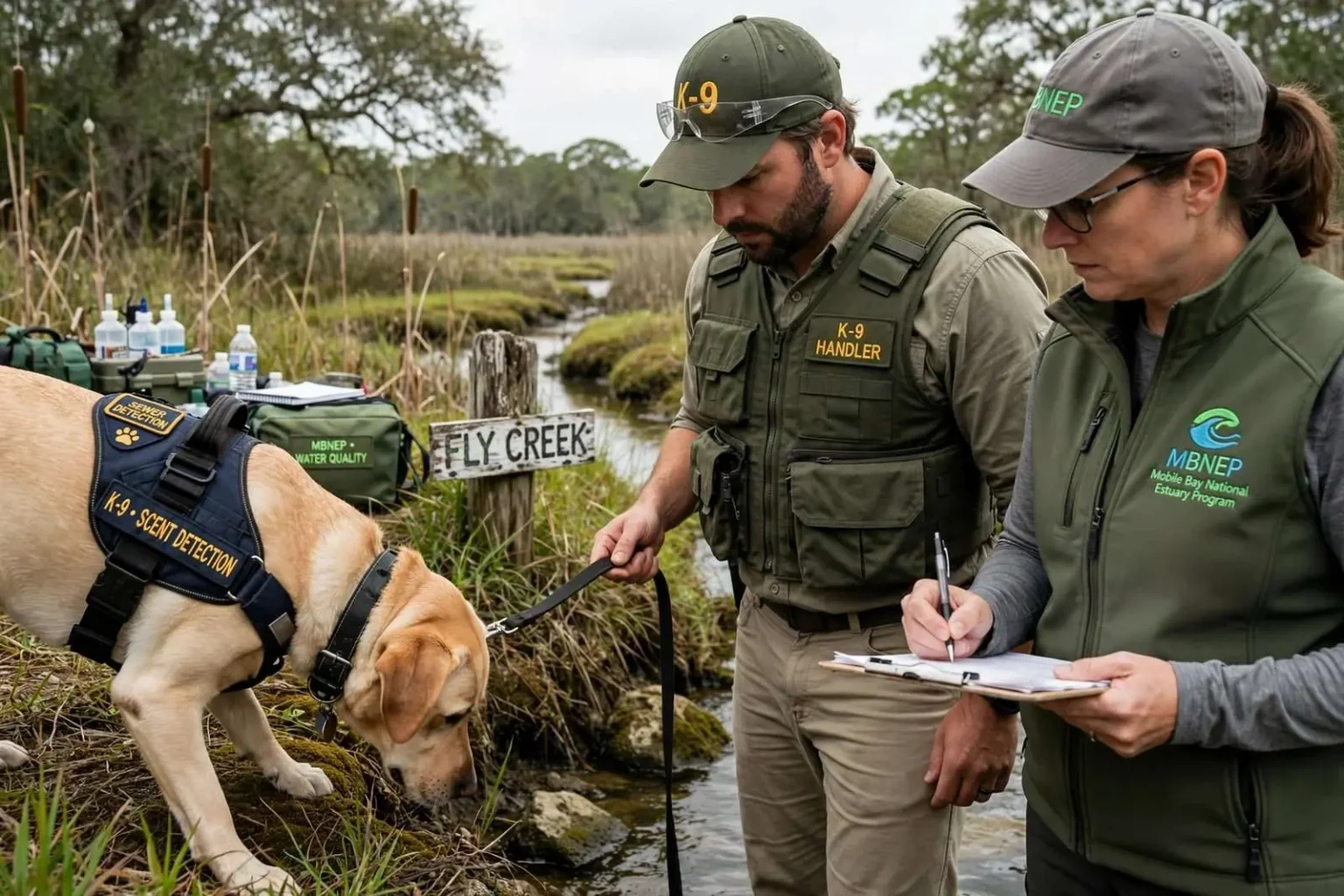
A Fairhope-funded research effort using bomb-sniffing dogs to detect evidence of sewage overflows in Fly Creek has proven successful, according to a presentation given to the Fairhope City Council. Representatives from the Mobile Bay National Estuary Program (MBNEP) briefed the council during its Monday, Aug. 10, work session on the results of the program, which began in 2024.
The city funded the effort with roughly $35,000, enlisting canines trained to detect scent markers associated with sewage to help identify overflow points along Fly Creek that might otherwise go unnoticed. MBNEP, a nonprofit that works to protect and restore water quality in the Mobile Bay watershed, led the research and reported the results to council members.
City officials have not yet announced next steps for addressing any overflow points identified through the program.
About the estuary program
The Mobile Bay National Estuary Program is one of 28 National Estuary Programs established under the federal Clean Water Act to protect and restore estuaries of national significance. It was created in 1995 and works with local governments, businesses and residents across the Mobile Bay watershed.
In Alabama, sanitary sewer overflows must be reported to the Alabama Department of Environmental Management, but leaks from damaged lines are not always visible and can reach creeks unnoticed, which is the kind of problem the detection dogs were used to find along Fly Creek.