
Bright Academy Benefit Golf Tournament Tees Off March 18 at Spring Hill Golf Course
A Mobile school for students with learning differences is hosting a benefit golf tournament March 18 at Spring Hill Golf Course to raise scholarship funds.
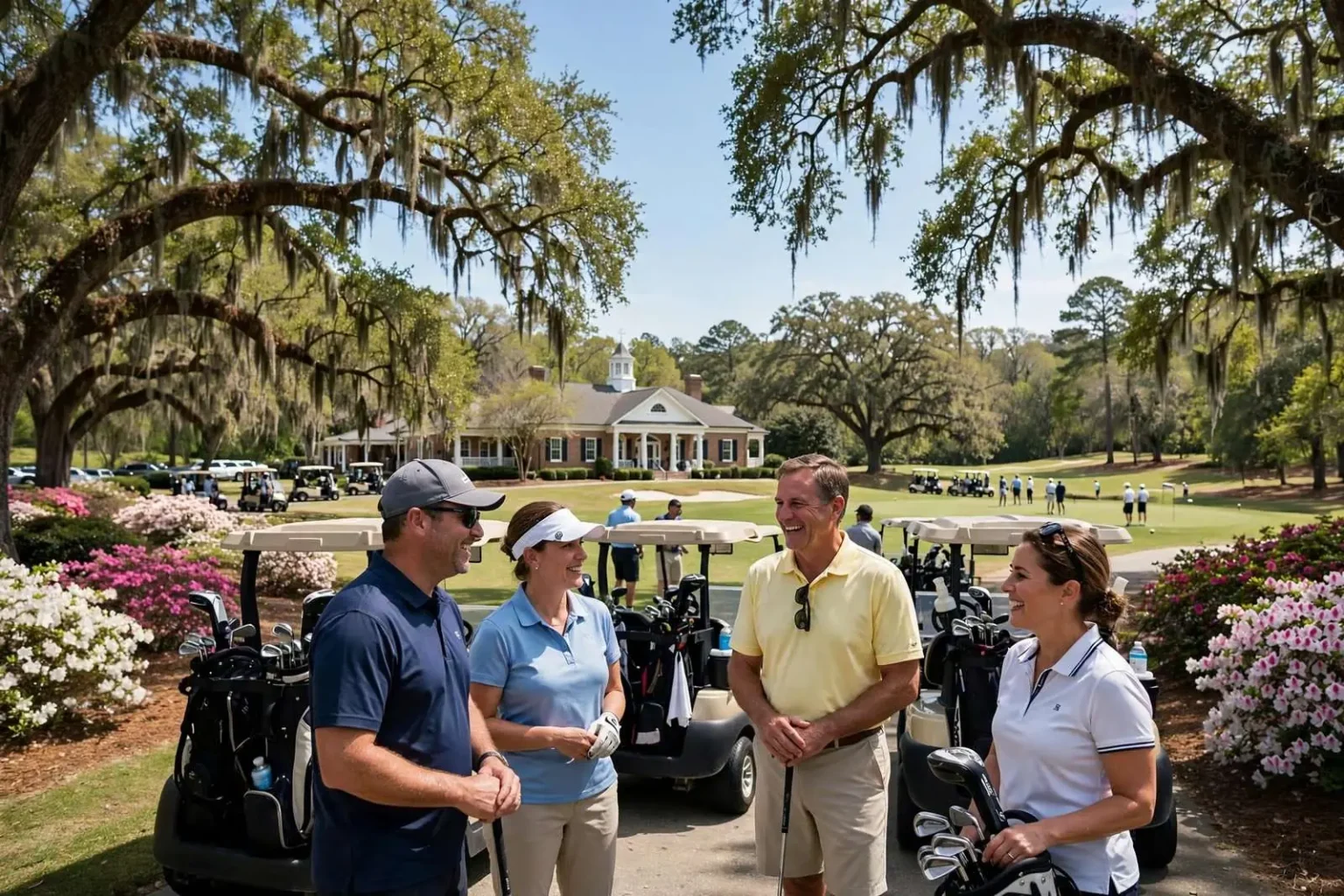
A Mobile school that specializes in teaching students with learning differences is inviting golfers to play for the cause. Bright Academy is hosting a benefit golf tournament Saturday, March 18, at Spring Hill Golf Course, raising money for student scholarships. The tournament has become one of the school’s signature fundraising events, pairing a day on one of Mobile’s most established courses with direct support for the students the school exists to serve.
Play begins at noon with a four-person scramble format. The scramble is the most popular format in charity golf for good reason: teams of four all hit from the best of their previous shots, which keeps groups of mixed ability competitive, moves play along at a brisk pace, and turns the day into a social occasion as much as a competition. For a benefit event, that accessibility matters, since the goal is to fill the field with supporters rather than only low-handicap golfers.
The cost is $100 per person, and players can register online or by calling 251-525-9105. All proceeds go directly to Bright Academy students. That direct-to-student framing distinguishes the event from fundraisers where overhead absorbs a share of the take, and the school has made clear that scholarship support is the tournament’s purpose: tuition assistance that opens the school’s doors to families who could not otherwise afford them.
“Bright Academy is an independent school providing excellent education to bright students who have dyslexia and/or specific learning struggles,” the school said in its announcement. The phrasing is deliberate. The school’s mission rests on a premise that often surprises parents new to the world of learning differences: the students are bright, and the struggles come from the way their brains process written language, not from their intelligence or their effort.
Who Bright Academy serves
The school admits students of average to above-average intelligence diagnosed with language learning differences such as dyslexia, dysgraphia or dyscalculia, using what it describes as a multi-sensory, whole-child approach in small group settings. Each of those diagnoses describes a specific disconnect between a capable mind and a conventional classroom: dyslexia affects reading and decoding, dysgraphia makes writing and handwriting a struggle, and dyscalculia disrupts number sense and math processing. Students with those profiles routinely struggle in mainstream classrooms where instruction moves at one pace and through one modality, not because they cannot learn but because they learn differently.
The multi-sensory approach the school describes is the established alternative. Structured literacy methods, the family of approaches most associated with teaching students with dyslexia, engage visual, auditory, and kinesthetic channels simultaneously, building phonemic awareness and decoding skills step by deliberate step. Small group settings make that individualization practical, allowing teachers to adjust pace, repetition, and presentation for each student rather than for an imaginary middle of the room.
The whole-child element addresses what families of students with learning differences often describe as the most damaging part of the struggle: the erosion of confidence. Children who spend years working harder than their classmates for less visible success frequently arrive at specialized schools having decided they are not smart. A school built around their profile rebuilds that self-concept alongside the academic skills, and the two repairs reinforce each other.
The scholarship angle of the tournament addresses the practical barrier that follows a diagnosis of dyslexia or a related learning difference: specialized education is expensive, and the public school options, however well intentioned, often lack the trained staff and structured programs that these students need. Independent schools that specialize in learning differences employ specially trained teachers and operate in small groups by design, and tuition reflects those costs. Scholarships are the mechanism that turns eligibility into enrollment for families across the economic spectrum.
Spring Hill Golf Course provides a fitting stage for the event. The course is one of Mobile’s most venerable layouts, a parkland-style course woven through the Spring Hill neighborhood where live oaks and rolling terrain define the round. Generations of Mobile golfers have played it, and a Monday-style weekday field of supporters filling the tee sheet for a cause gives the school an audience of exactly the community members, professionals, business owners, and neighborhood families, most likely to sustain its mission after the tournament ends.
The wider picture of dyslexia education on the Gulf Coast
Bright Academy operates in a state context that has been evolving. Alabama has taken legislative steps in recent years to recognize dyslexia formally, requiring screening in public schools and mandating training and interventions for students who show the characteristic warning signs. Those mandates have raised awareness across the state, and with awareness has come demand for the specialized instruction that screening identifies. Independent schools like Bright Academy sit alongside public school intervention programs as the options families weigh, and scholarship funds decide the choice for many of them.
The statistics that specialists cite make the case for early, structured intervention: dyslexia affects an estimated one in five people to some degree, it is neurobiological in origin rather than a product of environment or effort, and outcomes improve dramatically when structured literacy instruction begins early. Students who spend years in classrooms that cannot teach them the way they learn pay a compounding cost, not only in reading skill but in the vocabulary, knowledge, and confidence that fluent reading feeds.
Events like the March 18 tournament serve a purpose beyond the funds raised. Every golfer who spends a Saturday at Spring Hill learns a little more about what dyslexia is and is not, and the school’s message, that these are bright students who need to be taught differently, reaches an audience that includes parents who have been struggling to understand their own children’s struggles without a name for them.
For prospective players, the registration details frame a low-effort way to participate. At $100 per person, the tournament prices below many Gulf Coast charity events, and the four-person scramble means a team can be assembled from an office, a church group, or a circle of friends without requiring anyone to play competitive golf. The school’s phone number, 251-525-9105, and its online registration route give supporters two ways to commit, and teams that cannot fill all four slots are typically paired with other players, another reason scramble events build community across an organization’s donor base.
A noon start is likewise deliberate for a school fundraiser. It allows sponsors and supporters to attend without taking a full day, and it sets the event up to finish with the afternoon free for the banquet-style elements, awards, remarks from school leadership, and the stories of students whose scholarships the tournament funds, that turn attendees into recurring donors. Charity golf events live or die on this rhythm: golf in the afternoon, mission in the evening.
The March 18 date places the event in the heart of Mobile’s spring, when azaleas and the lingering glow of Mardi Gras season give the city its most welcoming backdrop. Spring tournament weather on the Gulf Coast is reliably warm without summer’s humidity, and the calendar slot, after Mardi Gras and before Easter, suits both the school’s academic year and the routines of Mobile golfers who play through the winter and peak in the spring.
The tournament is also a showcase for what the school offers families still searching for answers. Parents who have watched a bright child struggle with reading, writing, or math often begin with private testing, then tutoring, then a search that leads them to the small circle of schools equipped to teach students with learning differences. A benefit event at a public venue puts the school’s name and its phone number in front of exactly those families, some of whom will find their way to the campus not as donors but as students.
Golfers and sponsors who support the day get the direct version of the school’s pitch in return: all proceeds go directly to Bright Academy students. The scholarships that result are the difference between diagnosis and education for the children the school admits, students of average to above-average intelligence with dyslexia, dysgraphia, or dyscalculia, taught the way they learn in groups small enough for teachers to know exactly how each one learns.
Schools like Bright Academy also carry an advocacy role that extends past their own enrollment. Specialized independent schools are scarce in south Alabama, and families outside Mobile’s metro area often drive long distances or relocate outright to access one. Each event that raises the school’s profile, a golf tournament included, doubles as evidence for parents and educators across the region that this kind of education exists on the Gulf Coast and works.
The economics of scholarship fundraising are straightforward and visible in a tournament setting. The event’s costs, green fees, catering, prizes, are typically underwritten by sponsors, which is what allows the promise that all proceeds go directly to students. A filled field at $100 per player produces a meaningful sum for tuition assistance, and sponsors who underwrite holes and prizes extend that total further. For the school’s development office, a March tournament is both the year’s signature ask and its best recruiting event, all in one afternoon at Spring Hill.
For the students whose scholarships depend on it, the connection to the event is direct even if they never see a golf course. Tuition assistance is what converts a multi-sensory, whole-child program from a brochure into a classroom, and the school’s promise that the money reaches students, not overhead, is the covenant on which events like this one are built and repeated each spring.


