Coast Guard Helicopter Pulls Four From Burning Boat Off Dauphin Island, 50 Miles Out in the Gulf
A U.S. Coast Guard helicopter crew hoisted four people from a 90-foot fishing vessel burning about 50 miles off Dauphin Island during a nighttime rescue. No one was injured, and the cause of the fire is under investigation.
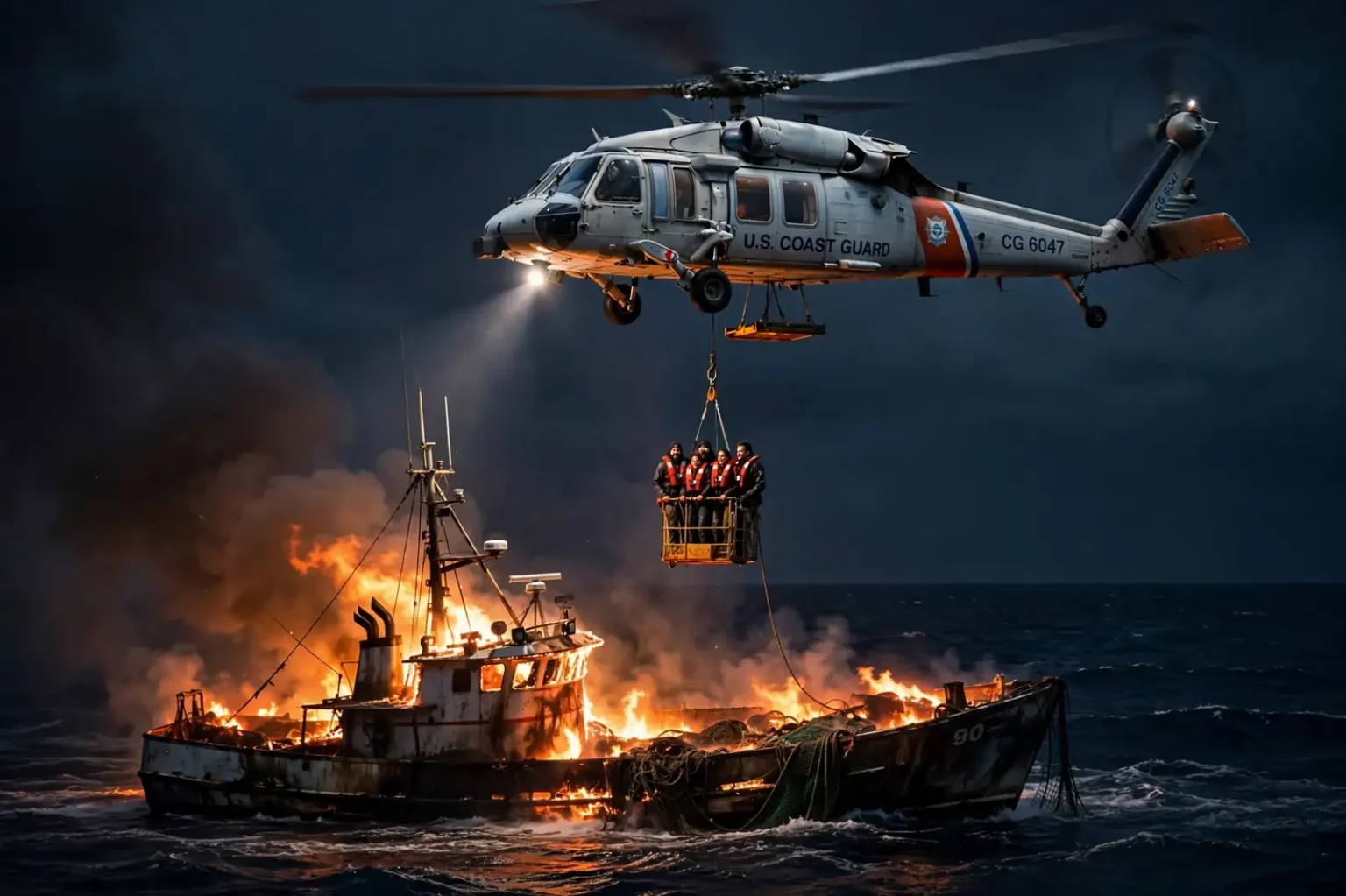
DAUPHIN ISLAND, Ala. — Four people were rescued from a burning boat off Dauphin Island after a U.S. Coast Guard helicopter crew found the vessel engulfed in heavy flames roughly 50 miles offshore and hoisted the crew to safety, officials said.
The emergency began in the dark of night, when a distress call went out from a 90-foot fishing vessel reporting that the boat was on fire. Multiple emergency agencies were involved in the response, which was reported Monday, Oct. 19. No one was injured, according to officials.
A nighttime call for help
After the call for help came in, the Coast Guard launched a helicopter toward the vessel’s position in the Gulf. The aircrew located the boat burning with heavy fire and began airlifting the crew members off the vessel.
The fire continued to burn while the rescue was underway, adding urgency and danger to an operation already complicated by darkness and the boat’s distance from shore. All four people were brought aboard the helicopter and flown to the U.S. Coast Guard Aviation Training Center in Mobile.
Officials said the cause of the fire was not known. Authorities did not immediately release the name of the vessel, its home port, what type of fishing it was engaged in, or what became of the boat after the crew was removed.
Rescues far from shore
Fifty miles is a long way from help on the water. The location placed the vessel well beyond Alabama’s state waters, which extend about three nautical miles from the coast, and far beyond the reach of most small boats that might otherwise assist in an emergency near the beach or in Mobile Bay.
That is where Coast Guard aviation becomes critical. A helicopter can cover that distance far more quickly than a surface vessel, locate a boat in distress, and lower a rescue swimmer or a basket to bring people up off the deck or out of the water. Hoisting people from a burning vessel at night is one of the more hazardous missions aircrews train for, since smoke, heat, the motion of the vessel and limited visibility all add risk.
Fire is among the most feared emergencies at sea. On a large working vessel, fuel, oil, electrical systems and engine rooms can all feed a fire, and crew members have limited places to go if flames spread. When a fire cannot be controlled, the crew’s best chance is often to send a distress call quickly, put on life jackets and prepare to abandon ship or be hoisted off.
About the Coast Guard Aviation Training Center
The Coast Guard’s Aviation Training Center in Mobile, located near Mobile Regional Airport, is where Coast Guard pilots and aircrew members train on the service’s aircraft. In addition to its training mission, the unit flies search and rescue missions along the northern Gulf Coast, responding to boaters, fishermen and others in distress in the waters off Alabama, Mississippi and the Florida Panhandle.
Coast Guard Sector Mobile coordinates search and rescue and other maritime operations across the region, including the waters off Dauphin Island. When a mayday call comes in, the Coast Guard typically coordinates the response, launching aircraft or boats and, when needed, asking nearby commercial and recreational vessels to help.
Dauphin Island and the Gulf fishing fleet
Dauphin Island sits at the mouth of Mobile Bay, and the waters to its south are some of the busiest fishing grounds on the northern Gulf Coast. Commercial vessels from Bayou La Batre, Coden, Dauphin Island and other ports work offshore throughout the year, along with charter and recreational boats that run long distances to reach offshore reefs, rigs and deeper water.
Commercial fishing remains one of the most dangerous occupations in the United States, and crews often spend long stretches far from land. Federal rules adopted under the Commercial Fishing Industry Vessel Safety Act of 1988 require commercial fishing vessels to carry safety gear such as life-saving and firefighting equipment, depending on their size and where they operate, and the Coast Guard offers dockside safety examinations to help crews make sure their boats are prepared.
Safety tips for offshore boaters
The safe outcome of this rescue is a reminder of the steps that can make the difference when trouble strikes offshore. Coast Guard and boating safety officials recommend that commercial crews and recreational boaters:
- Carry a working marine VHF radio and know how to issue a mayday call on Channel 16, the international distress frequency monitored by the Coast Guard.
- Use an EPIRB or personal locator beacon. These devices send a distress signal with your location to search and rescue authorities by satellite.
- Keep fire extinguishers aboard, charged and within reach, and make sure everyone on board knows where they are and how to use them.
- Maintain engines, fuel lines and electrical systems to reduce the risk of fire.
- Wear or keep life jackets immediately accessible for every person on board.
- File a float plan with someone on shore, including where you are going, who is aboard and when you expect to return.
- Act early. Call for help as soon as an emergency begins rather than waiting to see whether it can be handled.
What happens next
The cause of the fire remains under investigation. The Coast Guard generally looks into serious marine casualties, including fires aboard commercial vessels, to determine what happened and whether any safety lessons or violations are involved.
For the four crew members, the most important outcome was already clear. Despite a nighttime fire 50 miles from land, all of them made it back to shore without injury.
Anyone who sees a vessel in distress on the water should call 911 or contact the Coast Guard on VHF Channel 16.