Callaghan’s Irish Social Club: The Mobile Neighborhood Pub With a Worldwide Reputation
Callaghan's Irish Social Club pairs award-winning burgers and live music with an Esquire best-bars pedigree in Mobile's Oakleigh Garden District.
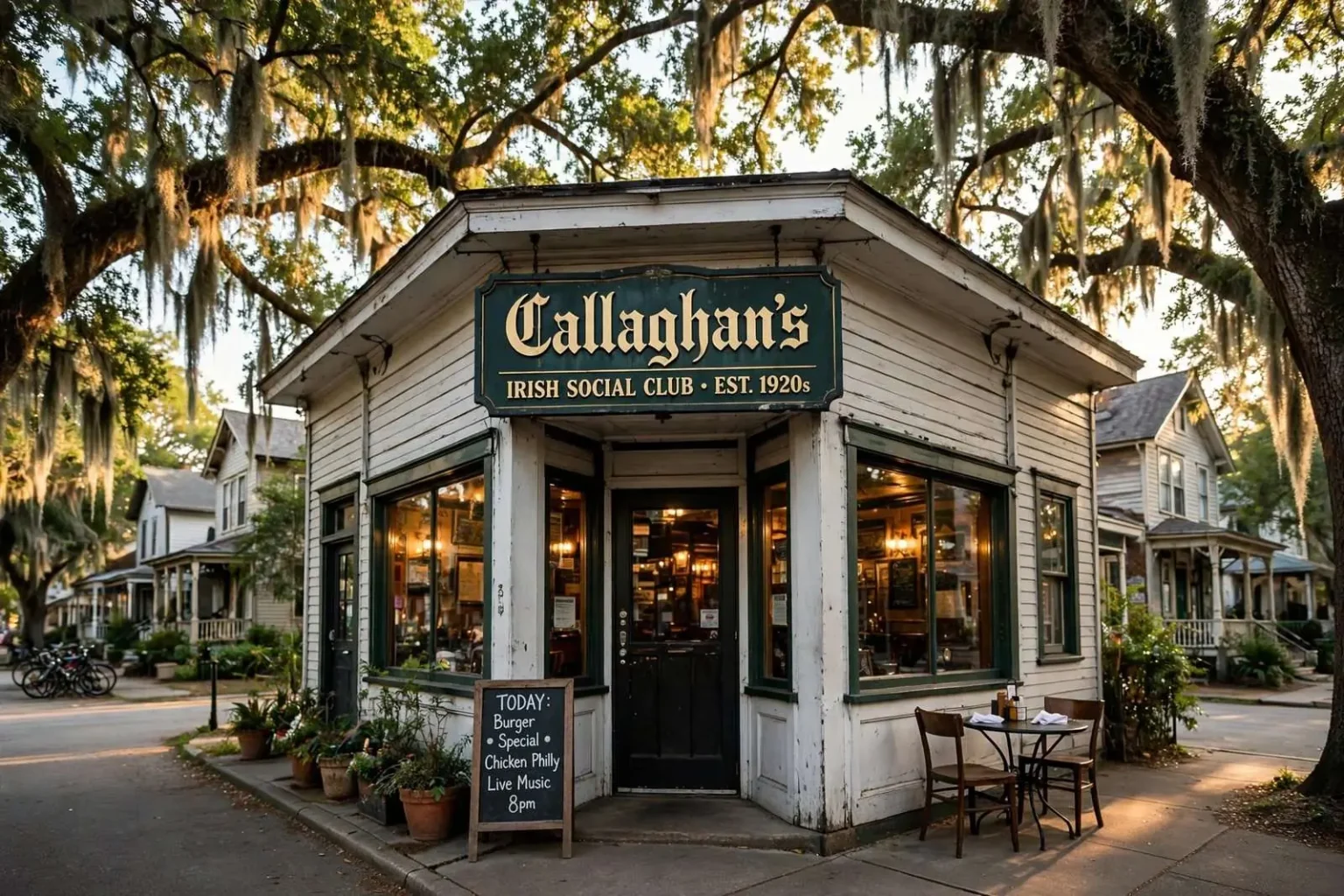
Tucked into a cluster of historic homes and early-20th-century cottages in Mobile’s Oakleigh Garden District sits Callaghan’s Irish Social Club — a boxy 1920s-era building that once housed a butcher shop and now anchors one of the city’s most beloved neighborhood corners. From the outside it is easy to miss; even some Mobile natives have never found it. Those who do rarely forget it.
The building itself sets the tone. The old butcher-shop bones mean no strip-mall frontage, no parking lot, no signage competing for the highway — just a corner structure with a bar inside and a neighborhood all around it. The Irish Social Club name has always been more spirit than strict heritage: what pours is Mobile’s own blend of neighborhood pub culture, Gulf Coast evenings and a regular crowd that treats the place as an extension of its living rooms.
Awards, Burgers and a Visit From Robert Plant
The pub’s reputation extends well beyond Mobile. Esquire magazine ranked Callaghan’s among the best bars in the United States, a designation that landed on a room most Americans will never drive past, much less into. National attention of that kind is rare for a neighborhood bar of any size, and rarer still for one that has kept its scale, its menu and its address unchanged through decades of the industry’s consolidation and churn.
Its burgers have collected their own share of awards — routinely cited among the best in the city — and the kitchen keeps things fresh with daily specials, from overflowing chicken Philly sandwiches on fresh-baked bread to housemade chips and tart cucumber salad. The kitchen’s approach mirrors the room’s: a short menu done well, changed often enough that regulars check the board, and executed at a level that turned a neighborhood lunch into a destination worth planning a day around.
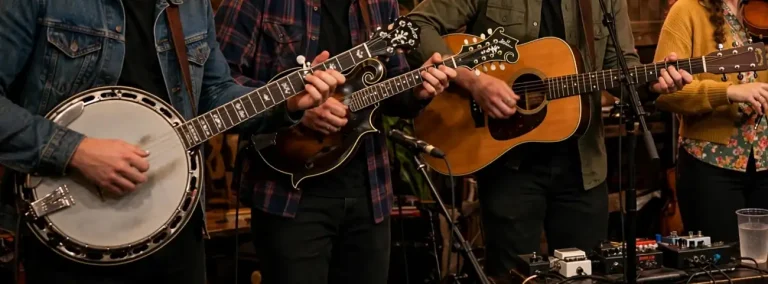
The venue’s draw as a music room is equally real. Callaghan’s consistently books first-rate touring acts for its intimate space — a stage a few feet from the audience, where singer-songwriters and roots acts that fill theaters elsewhere play close enough to read the set list from the bar. The caliber of the room registered on a global scale when Robert Plant stopped by for a pint or two after playing a Mobile show with his Band of Joy, the veteran rocker’s visit becoming the kind of story a bar tells forever.
The Centerpiece of the Neighborhood
Inside, walls crowded with vintage Mobile memorabilia and oddities give the room its character, while HD televisions, a shaded patio and a famously warm welcome keep regulars coming back. Host John “JT” Thompson has a way of making first-time visitors feel like fixtures — an introduction, a table, a recommendation from the daily board — and that welcome is as much a part of the Callaghan’s product as anything on the menu.
The Oakleigh Garden District setting does half the work. The neighborhood south of downtown is one of Mobile’s most walkable historic districts, its streets lined with cottages and larger homes within sight of the oak-shaded gardens that give it its name. Residents can walk to Callaghan’s for lunch, dinner or a night’s music, which is how a bar becomes infrastructure — a place whose absence the neighborhood would feel within a week.
For decades Callaghan’s has functioned less as a bar than as the centerpiece of its Oakleigh Garden District neighborhood — a living-room-sized social club where lunch crowds, night owls and traveling musicians all end up at the same long table. The butcher shop that occupied the building a century ago served the neighborhood’s kitchens; the pub that replaced it serves the neighborhood itself.
The Oakleigh Garden District and Its Corner Bar
Callaghan’s location explains much of its character. The Oakleigh Garden District grew up in the late nineteenth and early twentieth centuries as Mobile expanded south from its core, and the cottage-scale homes and corner commercial buildings of that era still define its streets. The district’s residential density within walking distance of the bar is the foundation of its business: a neighborhood pub lives on regulars, and regulars need to be able to get home without a car.
The 1920s butcher shop that once occupied the building placed it in the daily commerce of that neighborhood, and its conversion to a social club preserved the pattern — a corner business where the community gathers. Bars that inherit buildings like this inherit habits along with them: the lunch trade from nearby workers, the after-dinner crowd from surrounding porches, and the sense that the room belongs to whoever lives within a few blocks.
Mobile’s broader pub culture gave the model a warm reception. The city’s historic relationship with neighborhood social clubs and corner bars — a category that predates the modern gastropub by generations — meant Callaghan’s wasn’t inventing an audience, just perfecting one. What it added was the kitchen and the booking calendar, the two ingredients that lifted it from a good neighborhood bar to a nationally recognized one.
The Burger That Built a Reputation
The awards for the burger deserve their own accounting. In a city with no shortage of strong burger programs, Callaghan’s has been routinely cited among the best in Mobile — the kind of local consensus that eventually draws food writers and out-of-town visitors on its own. The kitchen’s formula pairs the burger with daily specials that rotate through Southern Gulf Coast staples: the chicken Philly on fresh-baked bread, housemade chips rather than anything from a bag, and the tart cucumber salad that gives the plate its counterpoint.
Running a serious kitchen inside a bar the size of Callaghan’s is a logistical choice as much as a culinary one. Space is tight, storage is tight, and the menu has to be short enough to execute at volume on a busy music night. The specialization that results — a handful of sandwiches, a celebrated burger, a daily board — is why the quality has held. A small menu done consistently beats a long menu done occasionally, and regulars can taste the difference.
A Music Room With National Reach
The booking calendar has become a signature of the room. Touring acts that play the Southeast’s club circuit routinely include Callaghan’s on their routes, drawn by the room’s reputation among musicians as well as fans — good sound, attentive audiences and a venue where the craft of a solo performer or small band isn’t swallowed by the space. For Mobile audiences, the result is outsized access to nationally touring songwriters and bands at neighborhood-bar prices, a few blocks’ walk from home.
The Robert Plant visit belongs to that side of the house. The former Led Zeppelin frontman, touring with his Band of Joy project, played a Mobile show and then stopped in for a pint or two at the neighborhood pub — an appearance that instantly became part of the bar’s mythology and Mobile’s music lore. Rooms that touring musicians visit on their night off are telling you something; the artists know which rooms are real.
Between the Esquire ranking, the burger awards, the music calendar and the visits from rock royalty, Callaghan’s has collected the kind of recognition most bars never see. What keeps it running, though, is the thing that was there before any of it: a boxy old building on a neighborhood corner, a warm host behind the bar, and a room where the whole Oakleigh Garden District fits.
The Memorabilia Room
The walls do their part in making the room what it is. Vintage Mobile memorabilia and oddities — the accumulated artifacts of a city’s twentieth century — cover the space the way they accumulate in a place that has never thrown anything away, giving first-time visitors an hour of reading material and longtime regulars the comfort of things that never change. The collection isn’t themed or curated in the corporate sense; it looks gathered, which is the point, and it anchors the room’s identity as a Mobile place rather than a bar that could exist anywhere.
The modern touches coexist with the old ones. HD televisions make the room a sports bar when the games are on, the shaded patio carries the afternoons when Gulf Coast weather allows, and the long table does what long tables do — turns separate parties into one room. The blend of eras is part of the appeal: a 1920s building, a twentieth-century social club, and a twenty-first century audience that found it through a burger, a band or a magazine ranking.
What a Social Club Actually Is
The “social club” in the name describes the operation better than any review could. Traditional social clubs — the kind that formed across Mobile’s neighborhoods in the last century — were membership organizations built around a hall, a bar and a calendar of gatherings, run by and for the community around them. Callaghan’s carries the form forward without the formalities: no dues, no member list, just the assumption that everyone who walks in belongs, and JT Thompson’s talent for making that assumption feel true to newcomers.
That function is visible in how the room is used across a single day. Lunch brings the neighborhood’s workers and regulars; the afternoon brings the porch crowd and the patio; music nights bring the whole district, plus the visitors who planned a trip around a show. The same tables serve all of it, and the overlaps are the point — the person at the next stool at lunch is the person singing along that night. Cities spend millions trying to build “third places” like this one; Mobile’s version grew out of an old butcher shop and stayed.
National Recognition, Local Soul
The Esquire ranking placed Callaghan’s on a list of the best bars in the United States — company that usually includes big-city cocktail institutions and legendary dives with decades of press. What the ranking recognized was the same thing the neighborhood already knew: the combination of food worth traveling for, music worth planning around and a welcome worth coming back for. National lists rarely capture that mix, because it can’t be sampled in one visit; regulars accumulate it over years.
The bar’s history also tells a story about Mobile itself. The Oakleigh Garden District has gentrified and grown around it — the cottages restored, the district one of the city’s most desirable — and through every cycle the corner bar has remained the same room at the same scale. Restaurants and bars that survive their neighborhoods’ changes usually do so by being useful to every era of resident at once, which is exactly what a social club is built to be.
Decades in, the formula holds: a boxy old building that once fed the neighborhood’s kitchens now feeds its evenings, its weekends and its musical memory — one burger, one show and one pint at a time, with a plate of housemade chips and a cucumber salad on the side.