
Carnival Cruise Line Extends Sailing Pause Through September 30, 2020
Carnival Cruise Line extended its North American sailing pause to September 30, 2020, keeping cruises from the Port of Mobile on hold amid COVID-19.
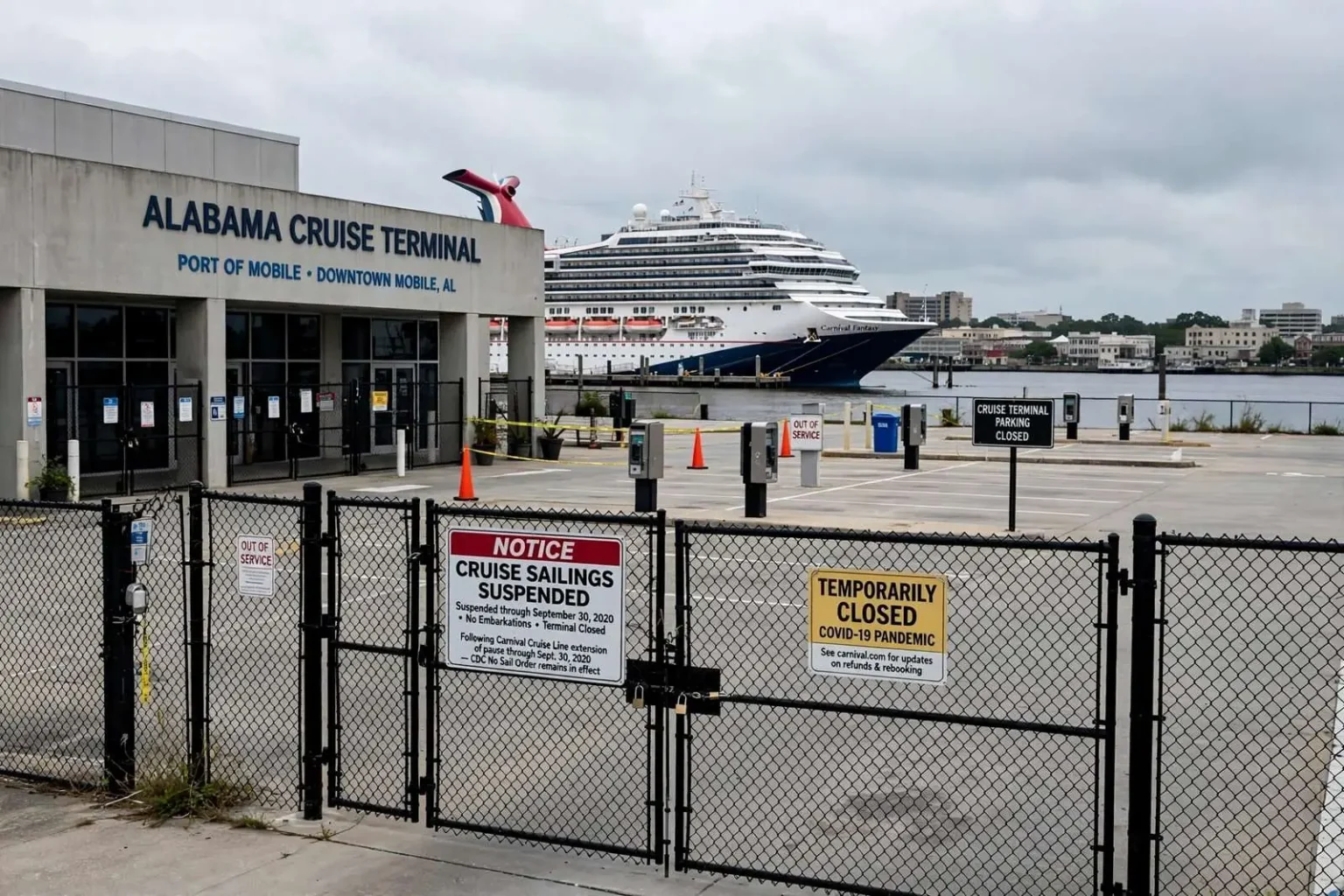
Carnival Cruise Line announced it is extending its pause of all North American sailings through September 30, 2020, a decision that keeps cruises from the Port of Mobile on hold even longer during the coronavirus pandemic. The extension pushed the industry-wide shutdown well into the fall, leaving port communities — including Mobile — without the cruise traffic that had become part of their economic rhythm.
The announcement came after the Cruise Lines International Association, the industry’s leading trade group, said its member lines would voluntarily extend their own suspension of passenger operations from U.S. ports until September 15. Carnival’s decision to go beyond that date gave the line flexibility to complete its own planning for a restart rather than committing to a resume date ahead of the science and logistics it depended on.
Why the industry hit pause
In a statement, CLIA pointed to the ongoing spread of COVID-19 across the United States. The federal No Sail Order issued by the Centers for Disease Control and Prevention was set to expire July 24, but industry leaders said it had become clear that more time would be needed to clear the barriers standing in the way of a safe restart.
Those barriers were substantial. Cruise lines needed to develop and agree on enhanced health and safety protocols, coordinate with ports on screening and terminal procedures, and work with public health authorities on measures to prevent the kind of shipboard outbreaks that had marked the pandemic’s early months. None of that could be resolved by a single expiration date on a federal order, which is why the industry moved first, extending the pause itself rather than waiting for government action.
The voluntary suspension applied to every CLIA member line covered by the CDC order — essentially any vessel able to carry 250 or more passengers and crew. The group said members would keep evaluating conditions and decide whether yet another extension was needed, holding out the possibility of either a restart or a further delay depending on how the pandemic developed through the summer.
Economic stakes for port communities
The economic toll of the shutdown was mounting quickly. CLIA estimated that each day cruise operations remained suspended cost roughly $110 million in economic activity and up to 800 American jobs.
Those losses ripple outward from the ships themselves. Cruise operations sustain jobs aboard vessels, at terminals, in parking operations, among shore excursion providers, and throughout the hotels, restaurants and transportation services that serve embarking passengers. When ships stop sailing, the effects land hardest in the port cities themselves, where the spending is concentrated.
Before the pandemic, the cruise industry supported more than 421,000 U.S. jobs in 2018, with roughly one American job sustained for every 30 cruisers sailing from a domestic port. Those figures capture how tightly the industry is woven into the economies of port communities — not just through direct employment, but through the chain of suppliers, service providers and seasonal workers who depend on a steady flow of ships and passengers.
For Mobile, which had built a steady cruise business around Carnival sailings from the Alabama Cruise Terminal, the extension meant more months without the passenger traffic, parking revenue, and pre-cruise spending that homeported ships bring downtown. A homeported ship is a recurring economic engine: every sailing brings thousands of passengers through the terminal, many of whom arrive the night before, fill hotels, eat in downtown restaurants and use local services before boarding.
The Alabama Cruise Terminal sits on the Mobile River downtown, a short walk from the city’s historic district, an arrangement designed to let cruise passengers extend their visit into the city itself. That proximity made the cruise business a downtown business — one felt by parking decks, eateries and shops within blocks of the terminal on sailing days. With sailings suspended, that weekday and weekend traffic simply disappeared.
Waiting for a restart
For travelers who had booked Carnival cruises from Mobile, the extension meant another round of cancellations, refunds and rebooking decisions in a year already full of disrupted vacation plans. The line’s repeated extensions left would-be cruisers in a holding pattern, and the uncertainty itself — never knowing whether the next month’s sailing would go forward — became one of the consistent features of the pandemic for cruise customers.
Port officials and local tourism leaders, meanwhile, watched the CLIA and Carnival announcements for signs of a restart framework. The industry’s willingness to extend its own pause signaled that lines understood the restart would depend on health conditions and agreed-upon protocols rather than calendars, and that they were prepared to absorb further losses rather than sail unsafely.
The extension through September 30 kept Carnival’s North American fleet — and Mobile’s cruise schedule — tied up for the remainder of the summer, with the industry’s eventual restart contingent on progress against the pandemic. What came next would depend on the protocols, the public health picture and the decisions that followed in the weeks after the CDC’s order expired.
What the pause meant for Mobile’s cruise business
Mobile’s cruise history with Carnival stretched back years before the pandemic, and the service had grown into one of the port’s signature consumer-facing operations. Unlike cargo shipping, which moves goods through the port with little public visibility, cruise sailings put thousands of area residents and visitors on the downtown waterfront every month, making the terminal one of the most visible links between the Port of Mobile and the everyday economy of the city.
The pandemic shutdown interrupted that visibility completely. With no ships sailing, the terminal stood quiet, and the calendar of sailing days that local businesses had planned around vanished. Parking operators, downtown restaurants and other businesses that track cruise schedules as closely as airlines track flight arrivals were left to wait out an extension with no clear end date.
Cruise renewal timelines of this kind also affect seasonal planning. Passengers often book months in advance, so each extension of the pause pushed not only current sailings but future bookings into uncertainty. For the local economy, the difference between a one-month suspension and a multi-month one compounds quickly, because each canceled sailing removes a full cycle of passenger spending, crew provisioning and terminal operations.
The industry’s path forward
CLIA’s statement emphasized that member lines would continue evaluating conditions, and the association framed the extensions as part of a deliberate effort to restart only when passenger and crew safety could be assured. The trade group represents the vast majority of the world’s ocean-going cruise capacity, which meant its voluntary suspension effectively defined the industry’s posture in American ports during the shutdown.
The CDC’s No Sail Order, meanwhile, remained the regulatory backdrop for the entire episode. Federal health authorities had taken an unusually active role in cruise operations during the pandemic, and any restart would require alignment between the industry’s voluntary measures and the government’s public health requirements — a process that continued to evolve as the summer wore on.
For Gulf Coast travelers and the businesses that serve them, the announcements were sobering but unsurprising. The extension to September 30 matched the reality the industry had been signaling since spring: cruise operations would not resume on the original timelines, and the restart, whenever it came, would look different from the sailings that paused in March. Mobile’s cruise fans and the downtown businesses that count on sailing days would have to wait — for the fall, and for a set of health protocols that could make the ships move again.
The extension also rippled through the broader Gulf Coast travel economy. Cruise passengers typically arrive in port cities a day early or stay a night after disembarking, filling hotel rooms, restaurants, and attractions before and after their voyages. With no ships sailing, that spending disappeared from Mobile’s downtown, just as it did in Galveston, New Orleans, and Tampa. Regional tourism officials spent much of 2020 promoting drive-in vacations and local outdoor destinations to offset the loss, but the gap left by an idled cruise industry was difficult to bridge in a single season.
A Terminal Built for Homeported Ships
Mobile’s stake in the industry dates to the mid-2000s, when the Alabama Cruise Terminal opened on the Mobile River downtown and began hosting year-round sailings. Homeporting a ship in Mobile means far more than occasional port-of-call visits: the vessel provisions locally, hires local services, and draws passengers who park in city garages, book local hotels, and shop downtown before boarding. When Carnival suspended operations nationwide, the terminal sat empty, and the steady rhythm of weekend embarkations that downtown merchants had built their calendars around simply stopped. City and county leaders who had supported the cruise business as a downtown anchor watched the extension announcements with an eye toward how long the terminal could remain dormant without lasting damage to the surrounding entertainment district.
The layered nature of the shutdown made planning difficult. The CDC’s No Sail Order, CLIA’s voluntary suspension, and individual line decisions each carried different timelines, and Carnival’s move to extend through September 30 pushed past all of them. That meant travelers holding bookings for summer and early-fall departures from Mobile had to wait for the line to decide between cancellations and rescheduled sailings, while the line itself had to weigh refund obligations against future revenue. Industry-wide, the extensions of 2020 forced cruise operators to rebuild their 2020 and 2021 calendars nearly from scratch, a process that dragged on as health conditions changed.
What Comes Next for Mobile Cruising
For now, the practical message for Gulf Coast travelers was patience. Carnival committed to evaluating conditions alongside public health authorities and the rest of the CLIA membership, and the industry said it would announce further changes if the restart slipped again. When sailings did eventually resume, officials expected a different experience from the one passengers remembered: modified boarding procedures, reduced capacity, and new health screening requirements designed to reassure both guests and port communities. Until then, the Alabama Cruise Terminal remained quiet, and Mobile’s cruise season stayed on hold along with the rest of the North American fleet.


