Mobile City Council Approves 13-Month Deal Bringing Carnival Fantasy to Alabama Cruise Terminal
The Mobile City Council unanimously approved a 13-month agreement that will bring the Carnival Fantasy cruise ship back to the Alabama Cruise Terminal.
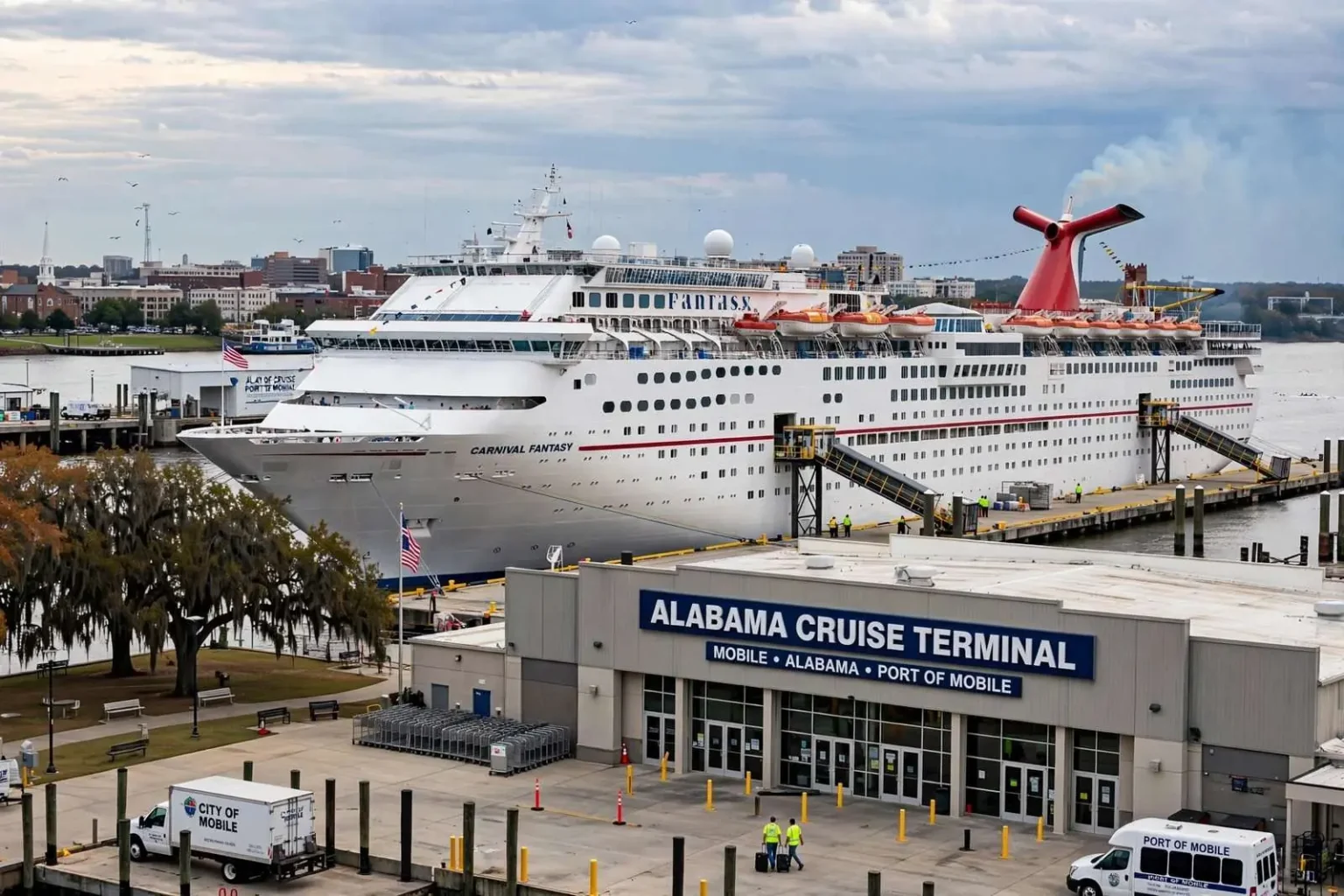
The Mobile City Council voted unanimously to approve a 13-month agreement that will bring the Carnival Fantasy cruise ship back to homeport at the Alabama Cruise Terminal, restoring regular cruise service to the city’s downtown waterfront. The vote reflected broad support among city leadership for a deal that officials described as both an economic development opportunity and a step toward fuller use of Mobile’s waterfront infrastructure.
Under the agreement, the 2,056-passenger Carnival Fantasy will operate out of Mobile from November 2016 through late November 2017, offering four-day cruises to Cozumel as well as five-day itineraries that include stops in Cozumel and either Costa Maya or Progreso, Mexico. The schedule gives Mobile a steady rotation of weekend and midweek departures, the kind of consistent cruise calendar that supporters say feeds passengers into downtown hotels, restaurants and attractions before and after each sailing.
The details of the agreement
The Carnival Fantasy is one of the line’s long-running Fantasy-class vessels, a ship class that carried much of Carnival’s growth into the mass-market cruise era and became a familiar presence in Gulf and East Coast homeports. With roughly 2,000 passengers aboard per sailing, a full year of departures translates into tens of thousands of visitors moving through the downtown terminal, along with the parking traffic, taxi and shuttle runs, and crew spending that accompany a working cruise port.
Mayor Sandy Stimpson told council members and reporters that the deal represents a meaningful financial win for the city, describing it as roughly a $4 million swing in revenue that will help offset the cruise terminal’s annual bond payment obligations. The city currently pays approximately $1.8 million per year toward that debt, and for the past several years the terminal has lacked a dedicated revenue stream to help cover the cost. Stimpson said the new cruise agreement should substantially change that picture.
“We hope it nets the city $2 million,” Stimpson said, pointing to anticipated parking fee revenue as part of the projected financial benefit. Full specifics on the fee structure had not yet been disclosed at the time of the council vote, leaving some of the finer points of the financing to be laid out after the agreement takes effect. City officials scheduled a follow-up news conference for later the same day to provide additional detail on the agreement’s terms and its expected economic impact on the surrounding downtown area.
A terminal built for ships
The return of cruise service marks a significant shift for the Alabama Cruise Terminal, a facility that has spent much of the past several years hosting private events such as proms and fundraisers rather than the ship departures it was originally built to support. The terminal sits on the Mobile River at the heart of the Alabama State Docks complex, a short walk from Cooper Riverside Park and the downtown business district, and its cavernous embarkation hall was designed to process hundreds of passengers and their luggage in a single sailing-day cycle.
When no ship is in port, that capacity sits idle, and the building’s upkeep has to be carried by the city’s general obligations rather than ticket and parking revenue. City leaders have long viewed a return of cruise traffic as key to justifying the terminal’s continued operation and debt service. Previous attempts to line up a committed homeported vessel had stalled, and each year without a ship added another round of bond payments with no offsetting stream of harbor-side income.
The economics of a cruise homeport differ sharply from those of a one-time port of call. A homeported ship purchases fuel and provisions locally, bases crew members in the city between sailings, and generates recurring embarkation activity week after week. Port officials in Mobile have pointed to those ongoing purchases — food, supplies, maintenance services and port fees — as the kind of steady commercial activity the State Docks complex was built to attract, distinct from the one-day burst of spending a visiting ship produces.
What the return means downtown
Downtown interests have pushed for a working cruise schedule for years, arguing that embarkation days put visiting families on the streets and waterfront parks adjacent to the terminal. Sailing-day crowds arrive early, park for the duration of the cruise, and often spend a night before or after their voyage in the city’s hotels — patterns that give restaurants, attractions and lodging operators a predictable boost tied directly to the cruise calendar.
The terminal’s position along the waterfront also ties the agreement to the broader revitalization of Mobile’s riverfront, where a maritime museum and public park space have gradually given downtown visitors more reasons to linger near the water. A ship docking weekly, supporters note, puts the waterfront to work in the most literal sense, converting a facility that had become primarily an event hall back into the working cruise berth it was designed to be.
How the vote unfolded
The council’s unanimous vote reflected broad support among city leadership for restoring cruise activity. No council member spoke in opposition to the arrangement, and the tone of the discussion centered less on whether to bring back a cruise ship than on how quickly the financial benefits would begin arriving. City officials framed the 13-month term as an opportunity to prove the market, with the agreement’s performance over the coming year likely to inform whether cruise service in Mobile can extend beyond the initial contract window.
The deal’s reliance on parking fee revenue as a component of the projected benefit underscores how a cruise homeport pays for itself in small, repeated transactions: thousands of vehicles paying to park for four or five days at a time, plus the per-passenger fees built into the port arrangement. Whether the $2 million net figure Stimpson hopes for materializes will depend on how consistently the Fantasy sails full and how the yet-to-be-disclosed fee structure is finalized between the city and the cruise line.
What comes next
Further details on parking arrangements, terminal operations and the broader economic projections were expected to follow in the days after the vote, beginning with the news conference officials scheduled for later that same day. Questions about staffing at the terminal, security coverage on sailing days, and coordination with the State Docks for ship berthing were among the operational matters that city staff were expected to address as the November start date approached.
For residents, the practical effect is the return of a familiar sight on the skyline: a cruise ship moored along the downtown riverfront with passengers streaming up the gangway. For the city’s budget, the effect is a revenue stream that the terminal has lacked since its last homeported ship departed. Both outcomes rest on the Fantasy’s year in Mobile going as planned — a test the administration will be watching through each sailing season from November 2016 through late November 2017.
Between now and the first departure, the city and Carnival were expected to finalize the administrative details that turn a signed agreement into a working cruise schedule: embarkation staffing, parking lot configuration, and the ticketing and fee systems that determine how much of the projected $2 million actually reaches the city’s ledger. Officials said those specifics, along with the full economic projections for the downtown area, would be released as the follow-up events laid out the agreement’s terms in detail.
A familiar ship on a familiar route
The itineraries announced for the Fantasy follow the well-worn tracks of western Caribbean cruising from the central Gulf Coast. Cozumel, the Mexican island port across from the Yucatan Peninsula, has long been the anchor stop for short cruises out of the region, with Costa Maya and Progreso offering alternating ports for five-day rotations. The four- and five-day structure keeps the ship’s schedule tight and repeatable, letting a single vessel offer dozens of departures over the 13-month term.
For Mobile, the agreement also represents a return to a role the city has played before. The Alabama Cruise Terminal welcomed its first homeported Carnival ship in the mid-2000s, and for a stretch of years the city ran a steady cruise calendar that made embarkation day a routine part of the downtown waterfront. That service eventually ended, and the terminal settled into its years of event bookings — proms, fundraisers and private functions — while city leaders periodically searched for a cruise partner to bring a ship back. The Fantasy deal closes that gap, at least for a 13-month test period.
Travel agents and tourism officials along the Gulf Coast have long noted that Mobile draws cruisers from a wide radius, including northwest Florida, south Mississippi and south Alabama — travelers who might otherwise drive to New Orleans for comparable departures. A homeported ship shortens that drive, and the parking revenue that accrues with each sailing is a direct product of the city’s ability to capture those passengers at the berth rather than losing them to competing ports along the Gulf.
Reading the numbers
The financial math behind the council’s vote is straightforward. The terminal’s bond obligations run roughly $1.8 million per year, a figure the city has been absorbing without a dedicated revenue stream for several years. A deal that nets $2 million would not merely cover the debt service but turn the facility into a modest moneymaker — a swing the mayor sized at approximately $4 million relative to the status quo. The gap between the gross revenue the ship generates and the net figure the city retains lies in the operating costs of running the terminal, from staffing and security on sailing days to maintenance of the building itself.
Those details, along with the parking fee structure, were expected to be spelled out in the follow-up briefings officials scheduled after the vote. Until they are, the council’s endorsement of the agreement stands on the terms the administration presented: a 13-month commitment from Carnival, a 2,056-passenger vessel, two itinerary options, and the expectation that a working cruise berth will finally pay its own way in Mobile.