Choppy Gulf Waters Force Orange Beach Charter Captains to Scrap Trips, Postpone Tournaments
Rough surf forced the postponement of at least three fishing tournaments and a string of charter cancellations in Orange Beach this weekend, cutting into an already short red snapper season.
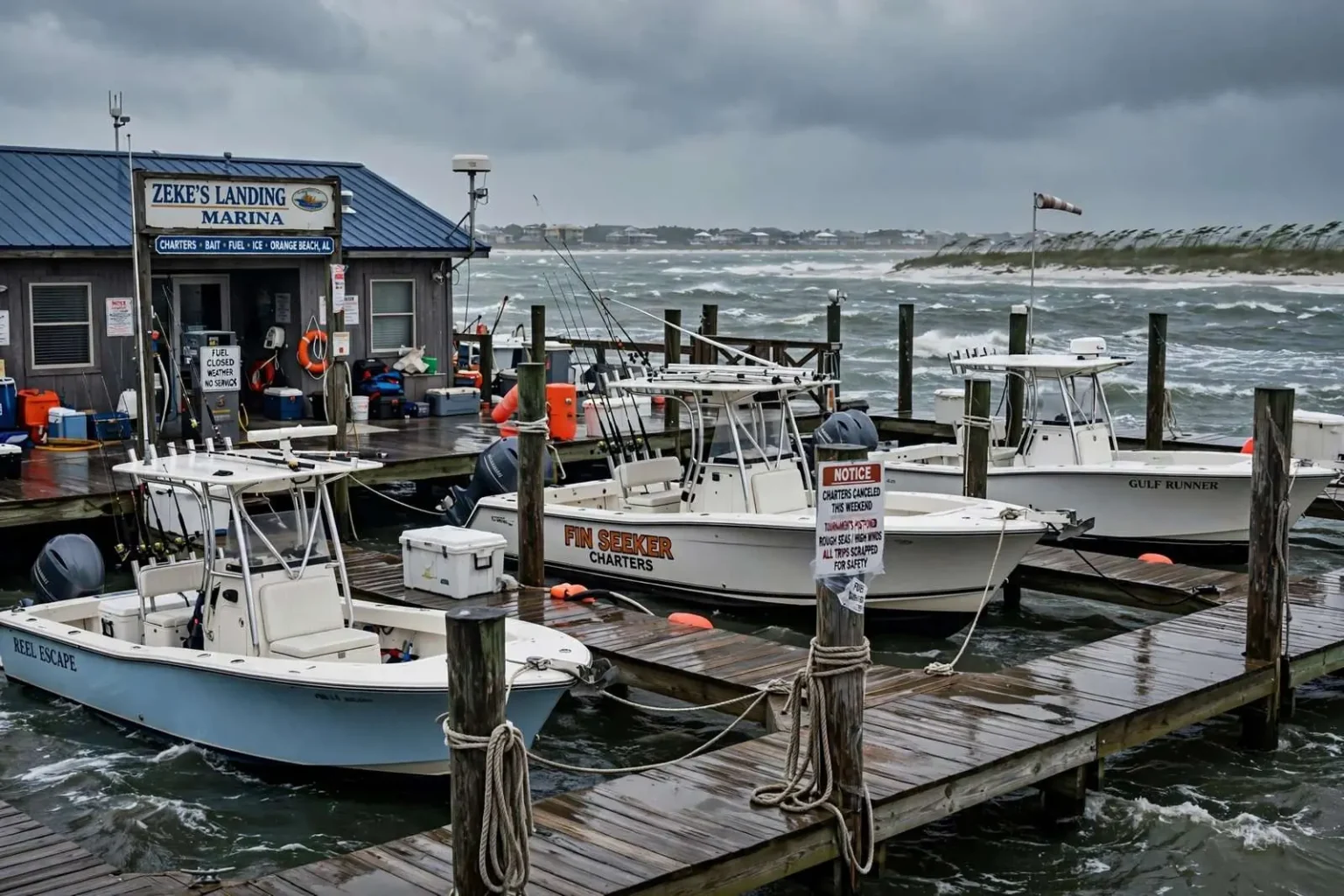
ORANGE BEACH, Ala. — Rough surf and building swells off the Alabama coast put a damper on the fishing calendar this weekend, forcing the postponement of at least three fishing tournaments and prompting a wave of canceled charter trips out of Orange Beach. Marine forecasters called for choppy conditions to worsen as the weekend wore on, and charter captains who normally run multiple trips a day found themselves watching radar and wave-height reports instead of loading coolers and rods. For an industry that depends heavily on a short, tightly regulated red snapper season, the timing could not have been worse.
“This weekend is supposedly booked up, if we can get the weather to cooperate,” said charter boat captain Nicholas Leiterman, who like many of his fellow captains was hoping conditions would ease enough to get boats out of the marina. His sentiment was echoed up and down the docks, where a typically busy summer weekend hung on a forecast that kept getting worse.
Alabama’s private recreational red snapper season runs only a handful of weekends each summer, and every day lost to weather cannot be made up once the season closes. That reality was on the mind of Thad Stewart, who works at Zeke’s Landing Marina in Orange Beach and spent part of the weekend calling customers to break the news that their trips were being scrubbed. “You can’t get days back,” Stewart said, looking over a growing list of canceled charters. He estimated that two canceled trips alone represented around $7,000 in lost business for their captains — a reminder of how quickly bad weather can eat into a boat’s bottom line during peak season.
The Math of a Short Season
The economics of a charter season built around red snapper are unforgiving. Captains earn the bulk of their year in a compressed window when the prized reef fish is open to private recreational anglers, and a weekend lost to weather means not just empty slip fees and fuel not burned but customers who may not rebook before the season ends. For hire boats face their own separate federal framework, and both segments plan their crews, maintenance schedules, and loan payments around the season’s dates rather than the weather’s whims.
Orange Beach and neighboring Gulf Shores sit at the heart of one of the most active charter fleets on the Gulf Coast, with marinas like Zeke’s Landing anchoring an industry that has grown up around the area’s artificial reef zones. Alabama’s inshore and nearshore waters are famously short on natural bottom, but decades of deliberate reef building — from decommissioned shrimp boats to purpose-built concrete structures — have created some of the most productive snapper habitat in the Gulf, putting productive fishing grounds within relatively short runs of the inlet.
Not every angler was shut out, however. The Davidson family, visiting Orange Beach on vacation, managed to get out on the water before conditions turned and came back with a productive haul. The trip wasn’t entirely smooth, though. “The fish was bitin’ good, it was a little bit rough goin’ on way out there. We had a little bit of sickness,” said Ryan Davidson, the family’s father. His son TJ Davidson had a harder time of it. “Until I vomited, yes I was good,” he said.
Reading the Water Before the Weekend
The weekend’s deteriorating conditions were the product of building winds and swell arriving from the south, the kind of forecast that experienced captains start watching days in advance. Deciding whether to run a trip is a judgment call layered from multiple sources — marine forecasts, buoy observations, wave-period models, and the hard-earned local knowledge of how the bar and the inlet behave when the wind shifts. Captains who make the wrong call risk more than seasick customers: taking a charter load through rough inlet conditions is a safety decision with real consequences, and most would rather refund a deposit than test the forecast.
For the tournaments that postponed, the decision was similarly practical. Rodeo-style events and weekend series draw dozens or hundreds of boats, and holding a weigh-in in building seas puts smaller vessels in the position of choosing between prize money and prudence. Rescheduling is the standard answer, and event organizers announced new dates as the weekend’s forecast solidified, juggling calendars that already compete for the same summer weekends along the coast.
The Red Snapper Calendar
Few fisheries carry the weight that red snapper does along the Alabama Gulf Coast. The species is the backbone of the recreational fleet and a fixture of restaurant menus from Orange Beach to Mobile, and its management has been contested for years among federal regulators, the state, and the fishing public. Alabama’s private recreational anglers fish under a state-run season in state and federal waters that is far shorter than the demand for trips, which is precisely why each open weekend is treated by the charter industry as irreplaceable inventory.
The state’s reef zones make those weekends more productive than their length suggests. The artificial reef program has seeded Alabama’s nearshore waters with thousands of structures over the decades, creating habitat where snapper congregate in numbers unusual for the northern Gulf. A charter trip out of Orange Beach can reach productive bottom in well under an hour on a good day, meaning a captain can fit more fishing into a half-day trip than fleets in other ports can manage — when the weather allows.
Weather, though, is the variable no reef program can fix. Late-summer Gulf weather patterns routinely park wind and swell over the coast for days at a time, and a weekend spent tied to the dock during snapper season is a weekend a captain never recovers. Crews use the downtime where they can — maintenance, tackle, paperwork — but the lost revenue simply disappears, and the charter industry’s seasonal workforce absorbs the hit in ways that never show up in tourism statistics.
Waiting Out the Forecast
By the time Stewart was working down his call list at Zeke’s Landing, most of the fleet had already made the same calculation. Marinas act as informal clearinghouses in weather events like this one: customers call the marina, the marina calls the boats, and the news travels slip to slip faster than any forecast update. The etiquette of cancellations varies by captain and how far out the call is made, but most Orange Beach operators work with customers to rebook within the season or refund deposits, knowing a fair shake on a rough weekend pays off in repeat business.
The Davidson family’s experience — a productive trip with a queasy stretch on the ride out — captures the gamble anglers and captains take in marginal conditions. Passing squalls and leftover swell can leave the fishing excellent while the ride in and out turns miserable, and seasoned visitors learn to bring motion-sickness remedies and to trust the captain’s read on conditions. The family’s haul, secured before the worst of it arrived, made the trip a story worth telling rather than a day lost to the dock.
The postponed tournaments and canceled charters gave way, as they always do, to watching the next forecast. Captains along the Baldwin County coast planned to be back at the fuel dock before dawn once conditions eased, restocking ice and bait for customers whose trips had moved to the next fishable day. With the snapper season’s remaining weekends numbered, every boat in the fleet was counting on the Gulf to settle — because in this business, as Stewart put it, you can’t get the days back.
Safety First on a Rough Weekend
The same conditions that emptied the marinas also put the Coast Guard and local marine police on alert. Sector Mobile and its counterparts watch weather events closely because rough-weather weekends are precisely when trouble finds boaters who venture out anyway — vessels swamped crossing the bar, anglers caught in building seas offshore, and jet skis and small craft caught outside protected waters. Captains who canceled did so not just for comfort but because running an inlet in short, steep chop is the kind of operation that turns dangerous quickly, especially for boats carrying customers who have never been offshore.
Veteran captains preach the same checklist before any marginal-weather decision: file a float plan, check that life jackets and flares are current, confirm the radio and EPIRB work, and never let a paying customer talk the boat into conditions the captain wouldn’t run alone. Those habits are drilled into the fleet precisely because the Gulf can turn from fishable to fearsome faster than forecasts update, and the boats that operate out of Orange Beach year after year tend to be the ones whose skippers respect that margin.
What Rough Weekends Cost the Coast
The losses from a washed-out weekend ripple beyond the charter docks. Customers who can’t fish still eat in local restaurants, shop in tackle stores, and stay in condos, but the charter industry’s direct losses — fuel, dockside services, mate wages, tips — vanish entirely. bait shops that load boats each morning see the shortfall immediately, and the multiplier that fishing trips generate along the Perdido Pass corridor goes unrealized. For a tourism economy that leans on summer weekends, a stretch of bad weather in peak season compounds quickly.
The industry’s resilience, though, is part of the story too. Orange Beach’s charter fleet has weathered oil spills, hurricanes, and years of regulatory whiplash over snapper seasons, and captains have learned to treat the calendar’s setbacks as part of the trade. Marinas market rebooking aggressively, tournaments find make-up dates, and the same customers who were called off this weekend are usually the first to reschedule when the forecast clears. The boats that survive are the ones whose regulars come back — and whose captains know when to keep them at the dock.
With the weekend’s tournaments rescheduled and the cancellations made, attention along the Orange Beach waterfront shifted to the next weather window. The reefs aren’t going anywhere, the snapper are still stacked on the bottom, and the fleet’s remaining season weekends are as precious as ever. All that’s left is for the Gulf to lay down — and for the phones at the marina to start ringing again with the trips that got away this weekend.