‘We Are FULL’: Clarke County Animal Shelter Pleads for Dog Adopters as Euthanasia Looms
The Clarke County Animal Shelter in Grove Hill is out of room and preparing to euthanize some dogs unless more are adopted. Director Taylor Blackledge explains how to apply.
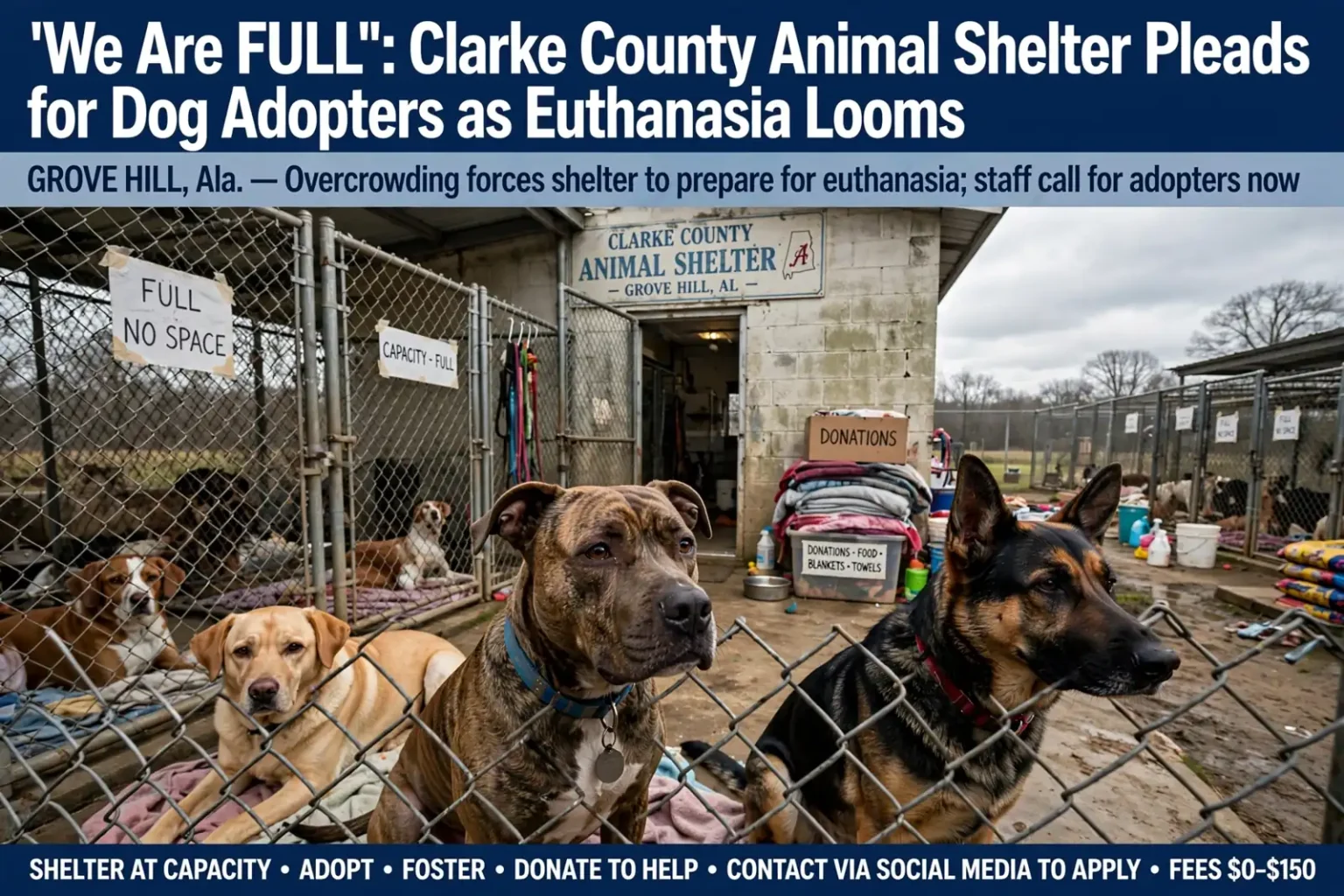
GROVE HILL, Ala. — The Clarke County Animal Shelter is asking residents to adopt dogs as soon as possible, warning that overcrowding has left staff preparing to euthanize some animals to make room for the dogs that keep arriving.
In a public message, shelter staff said they have put off euthanasia for as long as they can but can no longer keep pace with the steady stream of dogs coming through the door. “We are FULL,” the shelter said, urging anyone who has been thinking about adopting to apply now.
A shelter out of room
The shelter’s outdoor kennels and play yards are full, according to the staff’s message. To clean and make space, workers have been moving dogs between rooms and buildings. Some dogs are sharing kennels or indoor rooms when they can safely be housed together.
The shelter typically houses about 50 dogs, though the number changes as animals come and go. Over the weekend, the shelter took in about three more dogs and was expecting another puppy, adding to the animals already in its care.
“We hope to find a new home for as many as we can,” shelter Director Taylor Blackledge said. “Any dog that gets adopted makes room for another, so that helps us a lot.”
Blackledge said the number of dogs that may have to be euthanized will depend on two things: how many more dogs arrive and how many find homes. With space limited, staff members are working to manage the crowding while they look for adopters.
Which dogs are available
The shelter does not currently have any small dogs available for adoption. Most of the dogs in its care are medium, large or extra large. They include:
- Bully breeds and pit bull mixes
- Labrador mixes
- Hound mixes
- Shepherd mixes
- Other mixed breeds
Blackledge said pit bull and bully mixes, along with Labrador and shepherd mixes, are among the dogs the shelter takes in most often. The shelter also receives hunting breeds, including cur dogs and hounds.
Ages vary. Most of the dogs are between 2 and 5 years old, Blackledge said, but there are also some older dogs and some as young as 6 months.
Hunting dogs and second chances
Some hunting dogs arrive at the shelter after hunting season, Blackledge said, when they have been lost, abandoned or are no longer being used. The shelter does adopt dogs to people who hunt. However, she said potential adopters should understand that staff cannot guarantee a particular dog has hunting potential.
Blackledge also urged people not to pass over dogs because of their breed or appearance. Pit bull-type dogs often face negative assumptions about their behavior, she said, but she believes many of the dogs that come into the shelter have endured mistreatment and still show affection and trust.
Shelter workers and animal welfare advocates often encourage adopters to meet a dog in person and ask staff about its personality, energy level and how it gets along with people and other animals. A meet-and-greet, which is part of Clarke County’s adoption process, gives both the adopter and the dog a chance to see whether they are a good fit.
How to adopt from the Clarke County Animal Shelter
The shelter’s adoption process begins online. According to Blackledge, the steps are:
- Send a message. Reach out to the Clarke County Animal Shelter through its social media page. Staff will reply with a link to the adoption application.
- Apply. Fill out and submit the application, making sure to include a veterinary reference.
- Review. Shelter staff review the application and contact the applicant’s veterinarian.
- Meet the dog. After the review, staff reach out to arrange a meet-and-greet with a dog.
Adoption fees range from free to $150, depending on the dog, for applicants who are approved.
What adoption fees do not cover
Blackledge said the shelter’s adoption fees do not cover the full cost of getting a dog ready for a new home. Spaying or neutering a dog and giving it a rabies vaccination alone costs the shelter about $110 per animal, she said. That figure does not include other medical care, vaccinations, deworming, heartworm testing or heartworm prevention.
That gap is common among small rural shelters, which often rely on local government support, donations and volunteers to cover the cost of caring for animals until they are adopted. Spaying and neutering, in particular, is one of the most effective ways to reduce the number of unwanted litters that end up in shelters over time.
Other ways to help
Not everyone is able to adopt right now, but there are other ways residents can help the shelter and the dogs in its care:
- Share the shelter’s adoption posts with friends and family who may be looking for a dog.
- Ask the shelter about fostering, which can free up kennel space while a dog waits for a permanent home.
- Ask what supplies or donations the shelter currently needs.
- Spay or neuter your own pets and keep their vaccinations current.
- Keep identification on pets, including hunting dogs, so lost animals can be returned to their owners rather than ending up in the shelter.
Anyone interested in adopting or helping can contact the Clarke County Animal Shelter through its social media page. Grove Hill is the county seat of Clarke County in southwest Alabama.