Clarke County hospitals fill as officials look out of state for help
Clarke County hospitals continue to fill with COVID-19 patients as case counts climb, prompting officials to look at facilities in other states for space.
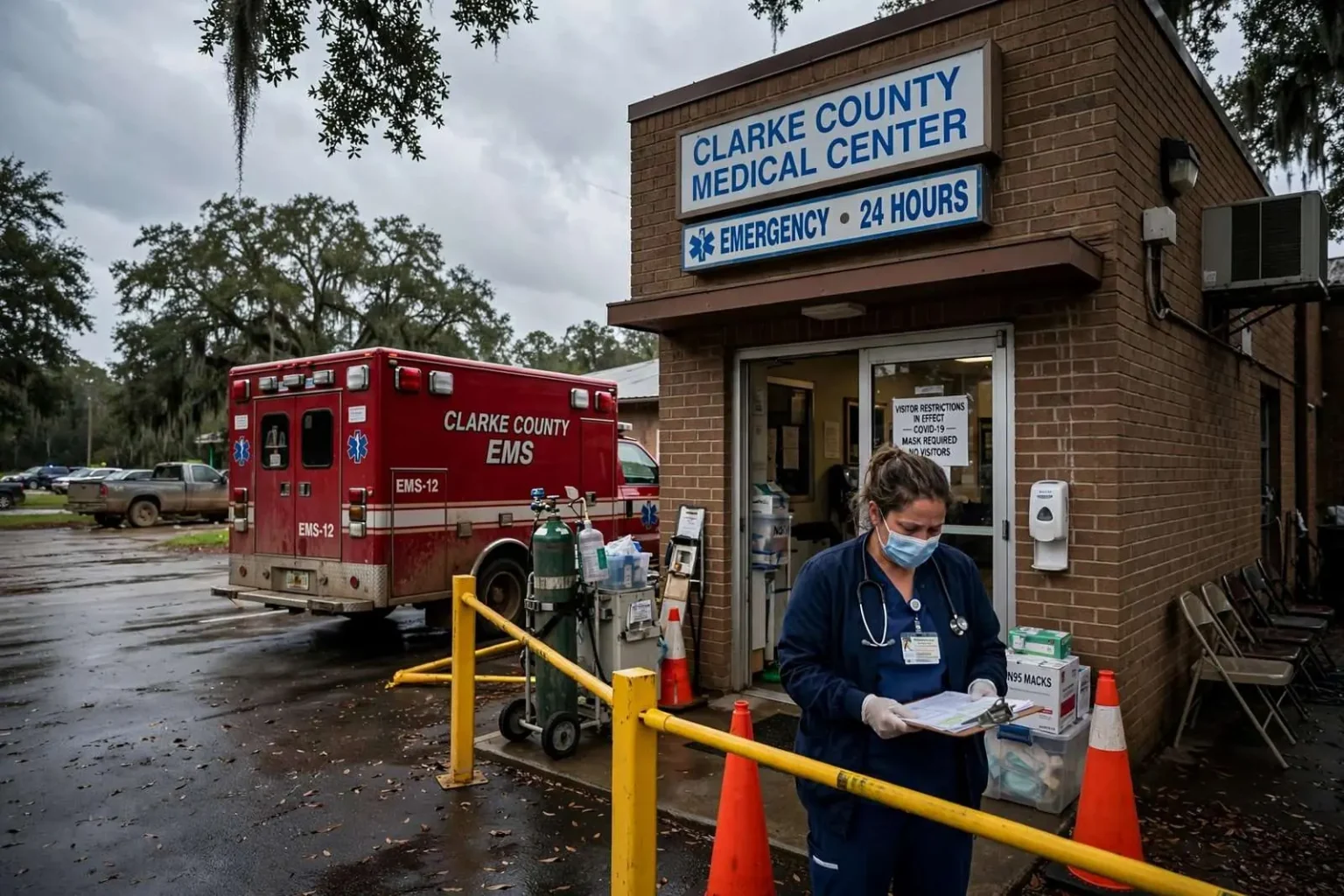
CLARKE COUNTY, Ala. — Keeping up with daily changes has been a struggle in Clarke County as COVID-19 cases continue to climb, officials say.
Roy Waite, the county’s EMA and E-911 director, said leaders are discussing capacity for funeral homes and whether to activate a fatality management plan. He said hospitals across the county continue to fill up.
“It is a constant increase right now. We’re also seeing quite a few fatalities,” Waite said, adding that local officials know of 10 to 12 people who died from COVID in the past seven to 10 days.
The numbers behind those deaths are part of a wider surge that has pushed rural Alabama hospitals to their limits. Clarke County, a sparsely populated county in the state’s southwest, relies on small community hospitals with limited bed counts, and when those facilities fill, there is no larger hospital down the street to absorb the overflow.
Hospital staff are working to handle the rush, but the problem isn’t improving, Waite said. Officials are now looking at hospitals across the Southeast in other states to find space for patients.
A county running out of local options
Clarke County sits in the Black Belt’s southern reaches, home to communities including Grove Hill, the county seat, and Thomasville, its largest town. The county’s hospitals are small facilities — the kind of critical-access and community hospitals that serve rural Alabama — and their intensive care capacity is measured in single digits rather than dozens.
When beds fill in a rural county, the standard response is transfer: moving the sickest patients to larger hospitals in Mobile, Montgomery or the Tuscaloosa area. But during the current surge, those destination hospitals are full as well, and the transfer system that normally works quietly in the background has jammed.
That is why local officials are looking farther afield — calling hospitals across the Southeast in neighboring states to find an open bed for patients who need a higher level of care. A transfer that once meant an hour’s ambulance ride can now stretch across state lines, consuming ambulance crews for half a day at a time and pulling them away from their home coverage area.
Planning for the worst
The discussion of funeral home capacity and a fatality management plan is standard emergency-management practice, even though it sounds grim. Emergency planners across Alabama activated similar protocols during earlier waves of the pandemic, when morgue capacity — never large in rural counties — was exceeded in some jurisdictions.
In Clarke County, the conversation reflects the number Waite cited: 10 to 12 deaths known to local officials in roughly a week’s span. For a county with a population of about 23,000, deaths at that rate over a sustained period strain more than medical resources — they strain the funeral homes, coroner services and clerk’s offices that handle the aftermath.
A fatality management plan coordinates those pieces: temporary morgue capacity if needed, transportation, documentation and communication with families. Activating one does not mean the worst has happened; it means officials are making sure the county is ready if the trend continues.
The surge’s shape in rural Alabama
Clarke County’s experience mirrors what county leaders across south Alabama have reported in recent weeks as the Delta-driven wave has swept through communities with some of the state’s lowest vaccination rates. Rural counties have seen case counts climb faster and hospitalizations arrive younger than in earlier phases of the pandemic, and the state’s overall hospitalization figures have set records during the same span.
The strain shows up in the same way in county after county: emergency rooms holding patients while waiting for beds that do not open, elective procedures postponed to free up staff, and nurses and respiratory therapists working overtime shifts for weeks on end. Small hospitals, which operate with thinner staffing margins than urban facilities, feel each absence more acutely.
For the county’s E-911 operation, which Waite also directs, the surge has a second face — call volume. Emergency calls for breathing difficulty, chest pain and unresponsive patients rise alongside hospitalizations, and each transport now takes longer when crews must drive farther to find a receiving hospital.
Vaccinations rising as the pressure builds
Waite said the number of people getting vaccinated has increased in recent days as officials look ahead to their needs over the next 12 to 14 days.
The turnaround reflects a pattern seen across the Gulf South during the surge: hesitancy that persisted through the pandemic’s first year and a half began to give way as the Delta variant filled local hospitals, and residents who had postponed vaccination sought appointments in numbers local health departments had not seen in months.
The 12-to-14-day window officials are watching is significant because of how the vaccine works. Protection builds over the weeks after a shot — the first dose of the two-dose regimens begins shaping an immune response within days, but meaningful protection takes roughly two weeks to develop, and full protection takes longer. Anyone vaccinated now will not be protected until after the horizon officials are most worried about.
That timing gap is why vaccination drives are described as a measure that helps the next wave rather than the current one. Hospitals full today will remain full regardless of how many shots go into arms this week; the benefit arrives with the patients of October and beyond.
What the coming weeks hold
Officials in Clarke County continue to update their planning as conditions change, and Waite’s office has emphasized that daily briefings and coordination with hospitals, funeral homes and state agencies remain active. The county’s experience in previous surges has given local leaders a playbook; the question is whether the current wave follows the same curve or stretches longer.
Across south Alabama, neighboring counties have reported similar strains, and the mutual-aid habits built during earlier emergencies — sharing staff, equipment and information across county lines — are part of why small hospitals have managed to keep their doors open through the worst stretches of the surge.
Epidemiologists describe the surge’s trajectory in terms of community spread: when a county’s positivity rate runs high, cases double quickly, hospitalizations follow case counts by a week or two, and deaths follow hospitalizations on a similar lag. That sequencing explains why county officials track the numbers so closely — the fatalities counted today reflect the hospitalizations of earlier in the month, and today’s case counts foreshadow the beds that will be needed next week.
For residents, public health guidance during the surge has remained consistent: get vaccinated, wear masks in crowded indoor settings, stay home when sick and seek testing after exposure. Doctors and hospital administrators across the region have added a specific plea — do not wait until breathing becomes difficult to seek care, and do not use the emergency room for mild symptoms that a clinic or test site can handle.
How the county’s system is holding
Emergency management in a small county is by nature a coordinating role. Waite’s office links the hospitals, ambulance services, fire departments, coroner and municipal leaders, making sure each has what it needs and that the county speaks with one voice to state agencies such as the Alabama Department of Public Health and the Alabama Emergency Management Agency.
During the surge, that coordination has meant daily conversations about bed availability, staffing requests channeled to the state, and the funeral capacity discussions now underway. It also means keeping the public informed — a task made more difficult by the pace of change Waite described, in which the county’s numbers shift meaningfully from one day to the next.
The county has been through the pandemic’s earlier waves, and its institutions — two small hospitals, volunteer fire departments, a single coroner’s office — have absorbed previous shocks. What distinguishes the current surge, officials say, is its combination of speed and duration: cases climbing continuously rather than rising and falling, with no clear peak yet in sight.
What residents can do now
Local officials continue to urge the same steps that have carried rural counties through every phase of the pandemic. Vaccination remains the most effective tool, and the recent uptick in local shots is a sign the message is reaching some residents who previously hesitated. Masks, distancing and avoidance of crowded indoor gatherings remain the standard advice for the unvaccinated and, during high transmission, for everyone.
Residents who test positive are urged to contact their healthcare provider early in the course of illness, when outpatient treatments are most effective, rather than waiting until symptoms force an emergency room visit. And families are asked to check on older relatives and neighbors — the population most likely to end up in one of the county’s full hospital beds.
As Waite’s updates make clear, the county’s next two weeks will be shaped by decisions residents make now — and by whether the state’s transfer network finds room for the patients its small hospitals cannot keep.