Could Mobile Land a Second Carnival Cruise Ship?
As Mobile prepares for the return of Carnival Cruise Line, an industry analyst says the city could eventually support a second homeported ship.
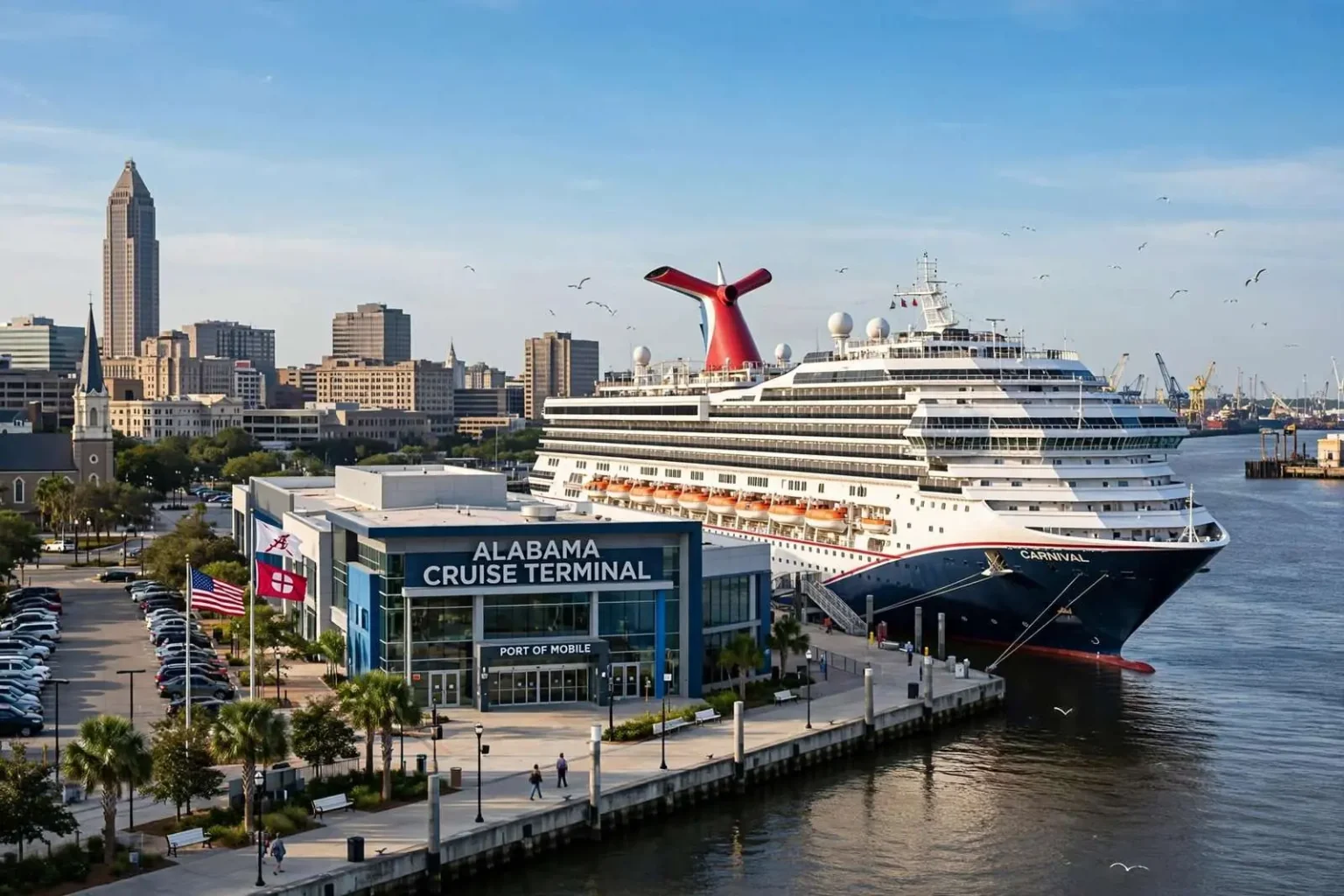
As Alabama’s Mobile prepares to welcome back a Carnival cruise ship after years without one, at least one industry analyst is already looking further ahead, suggesting the port city could eventually support two vessels rather than one. Stewart Chiron, chief executive of the cruise industry website CruiseGuy.com, said this month that if Mobile can demonstrate it can successfully support a full-scale cruise ship, there is no reason the city could not eventually land a second one from Carnival Cruise Line.
A second homeported ship would mark a first for both the city and the state. Since the Alabama Cruise Terminal was dedicated more than a decade ago, only a single vessel has ever called Mobile home at any given time, and the industry left the region entirely in 2011 after operating there for several years.
Homeporting — basing a ship in a city rather than merely stopping there — is the prize in the cruise business. A homeported vessel fills local hotels the night before sailings, packs restaurants and parking lots, and sends thousands of passengers a week through the terminal’s doors. A second ship would double that economic footprint, and it would make Mobile one of the few Gulf ports outside Texas and Florida with year-round cruise operations at scale.
A Strong Debut Could Open Doors
Chiron described the return of cruise service as a potential catalyst for further growth, saying a strong debut could open the door to additional investment and route options down the line. He noted that Carnival will be closely watching pricing and demand out of Mobile compared to other Southeastern ports as it evaluates the market.
Cruise lines make fleet decisions on data, and the data Mobile generates in its first months back will matter. Occupancy rates, onboard spending, customer satisfaction scores and — above all — the prices passengers are willing to pay all feed into whether Carnival deepens its commitment or keeps its newest investment elsewhere.
Cities frequently mentioned as pricing benchmarks for the kind of Carnival Fantasy-class voyages expected to sail from Mobile include Charleston, South Carolina, and Jacksonville, Florida. According to fare comparisons cited by Chiron, a four-night Bahamas cruise from Charleston was running at roughly $460 per person including taxes and fees, while a similar sailing from Jacksonville priced out closer to $388 per person.
Those benchmark prices illustrate both the challenge and the opportunity for Mobile. If passengers in the region will pay Charleston-level fares, the market supports investment; if Mobile fares settle closer to Jacksonville’s, the economics get harder. Chiron’s point was that Carnival will be reading that data closely, and that a market which fills ships at strong prices becomes a candidate for more capacity.
Why Carnival Left — and Why It Might Stay
Chiron said pricing was central to why Carnival originally pulled its ship from Mobile nearly four years earlier, explaining that the company recognized it could secure higher fares by operating from other ports instead. He characterized the decision as a difficult but necessary business call at the time, rather than one made lightly.
The retreat from Mobile in 2011 followed several years in which the Alabama Cruise Terminal had hosted Carnival vessels sailing year-round from the Port City. Lower fare potential relative to larger ports, combined with the industry’s reshuffling after the recession years, made Mobile the ship that moved. The terminal itself remained, maintained and awaiting a tenant — a fact that made any future return a matter of fitting a ship into existing infrastructure rather than building new facilities.
Despite that history, Chiron argued Mobile holds a geographic advantage over some rival ports when it comes to marketing genuine Caribbean itineraries. He said cruises from ports like Charleston, Jacksonville and Port Canaveral, Florida, typically cannot reach the Western Caribbean on four- or five-night sailings the way a ship based in Mobile can, giving the port a selling point that other Gulf and Atlantic coast cities are not positioned to match on shorter voyages.
The geography works because of Mobile’s position at the head of Mobile Bay, with relatively short steaming distances to the open Gulf through which Western Caribbean routes run. A ship sailing from Atlantic ports must travel farther to reach the same waters, forcing those itineraries to spend more nights at sea or call at different islands. For Mobile, that translates into itineraries that can deliver Western Caribbean destinations — with their beaches and dive sites — inside a long-weekend sailing.
What a Second Ship Would Mean for Mobile
City and tourism officials in Mobile have not publicly committed to pursuing a second ship, but the renewed cruise service is widely viewed locally as an early step toward rebuilding the port’s standing in the industry after years without a homeported vessel.
The return itself carries substantial weight for the local economy even before any second-ship conversation matures. Each homeported sailing brings thousands of passengers and crew through the city, many arriving the night before and staying in downtown hotels, eating in local restaurants, and filling parking facilities near the terminal. Crew members add to that activity between voyages. Industry studies have consistently tied homeport operations to millions of dollars in annual regional spending, from taxi and rideshare fares to flower shops and provisioning companies that supply ships with food and materials.
A second vessel would compound every one of those effects. It would also give the terminal year-round certainty rather than dependence on a single ship’s schedule, protect the port’s cruise operations against the dry-docking and repositioning cycles that temporarily idle any individual vessel, and signal to Carnival — and to competing lines watching — that the Alabama market deserves continued investment.
The Region’s Stake in the Terminal
The Alabama Cruise Terminal sits on the Mobile River downtown, within easy reach of the city’s historic districts and its growing entertainment corridor. State and local leaders invested heavily in the facility during the mid-2000s cruise boom, and the years without a ship were an extended reminder of how much a terminal costs when it sits empty. The building’s availability is precisely what makes the current return possible with little new capital spending — and what makes any future expansion conversation easier than it would be for ports that would have to build from scratch.
For now, the immediate measure of success is simple: fill the ship, satisfy the passengers, and let the numbers make the case. Chiron’s forecast for a second vessel is not a commitment by anyone — it is an analyst’s read that Mobile has a real shot, if the debut goes well, at becoming a two-ship port for the first time in its history. The passengers boarding in Mobile this season will effectively cast the first votes.
The stakes extend beyond the terminal gates. Mobile’s downtown has spent two decades rebuilding around attractions like the GulfQuest maritime museum, the RSA Battle House hotel tower, Cooper Riverside Park and a restaurant scene concentrated along Dauphin Street. Cruise passengers with an evening to spend in the city are exactly the visitors that corridor is built to receive, and a steady sailing schedule turns the terminal into a recurring demand source for the hospitality businesses that anchor downtown.
Regional tourism officials also view cruise service as a gateway to the wider Gulf Coast. Travelers flying in for a cruise often extend their trips to visit Gulf Shores and Orange Beach, Pensacola or New Orleans, which means every homeported ship markets the entire central Gulf Coast to passengers from across the country. A visitor who comes once for a four-night sailing and tacks on a day at the beach becomes a return visitor for both the port and the shoreline.
The comparison cities illustrate what is possible. Charleston built a thriving cruise operation that became part of its tourism economy, while Jacksonville’s experience shows how competitive the Southeastern cruise market is, with lines constantly weighing where ships earn the most. Mobile sits between those models — a port with genuine geographic advantages, existing infrastructure and a large regional drive market within a few hours’ radius, but without the destination brand those cities enjoy.
Carnival’s decision to return, and any later decision to add a second ship, will hinge on whether Mobile’s real advantages — the short run to the Western Caribbean, a terminal ready to operate, and a population base stretching from New Orleans to the Florida Panhandle — translate into fares and fill rates that justify the investment. The industry analyst who raised the possibility of two ships has simply given the city a target worth watching: if Mobile supports one ship successfully, the argument goes, the Port City has every reason to believe it can support two.
The port’s leadership has said it will judge the return on the same basis the cruise line does, and a successful season would give Mobile its strongest position in the cruise industry in more than a decade.