
Davidson High Football Coach Fred Riley Placed on Administrative Leave Amid Hazing Fallout
Mobile County schools placed Davidson High football coach Fred Riley on leave amid the hazing lawsuit brought by Rodney Kim Jr.'s family.
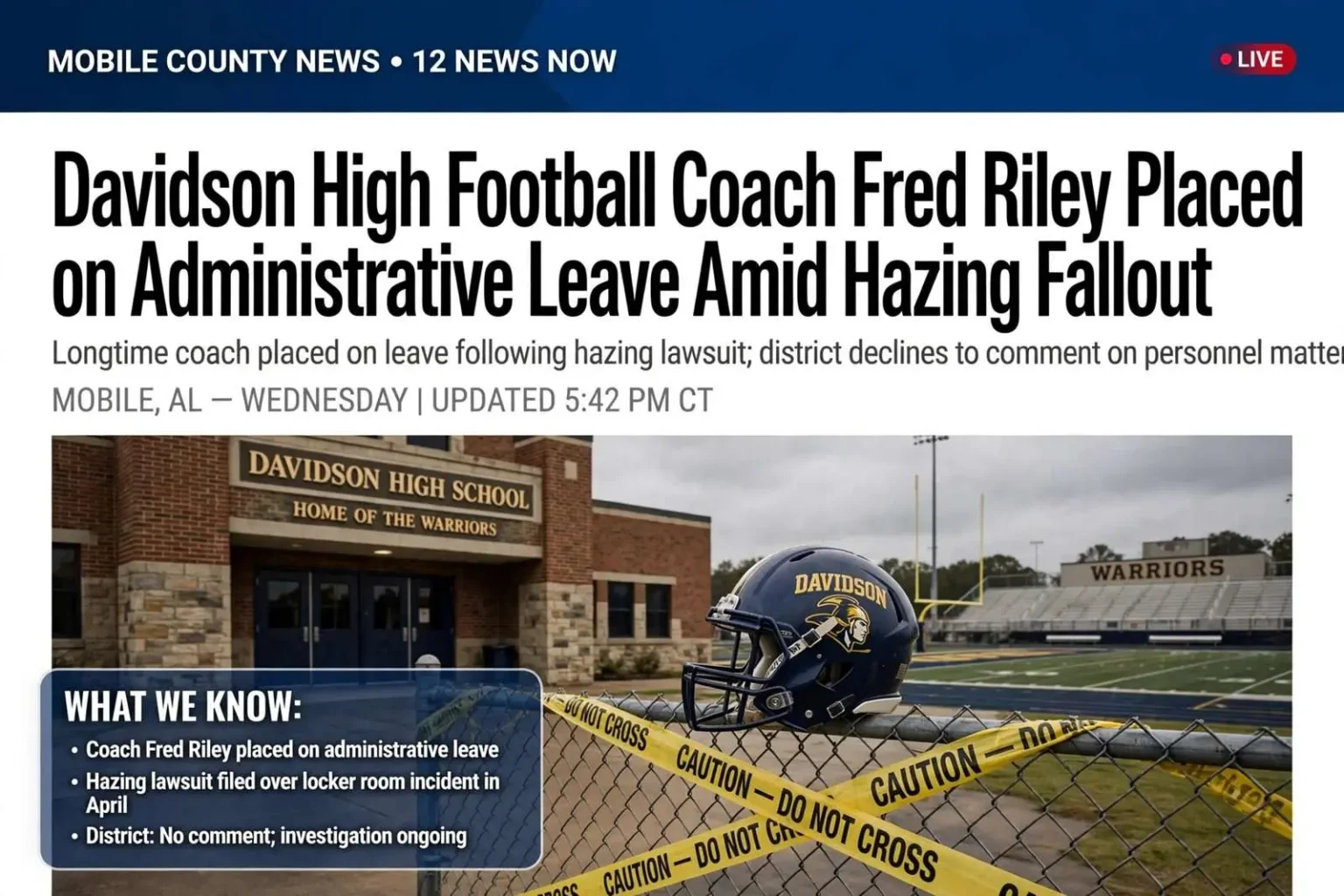
Longtime Davidson High School head football coach Fred Riley was placed on administrative leave, Mobile County school officials confirmed Wednesday. The district offered little explanation for the move. “We don’t comment on personnel matters,” said Rena Phillips, director of communications for Mobile County Public Schools.
The announcement rippled quickly through west Mobile, where Davidson is one of the system’s largest high schools and where Riley’s program has been a fixture of the community for years. Administrative leave is a status that removes an employee from active duty while the district reviews a matter, and it stops short of termination. In cases that draw public attention, districts typically use it as a holding measure while investigations, legal claims, and internal reviews play out behind closed doors.
Coach at Center of Hazing Case
Riley has been the central figure in a scandal that erupted at the west Mobile school after video surfaced in April showing freshman Rodney Kim Jr. being beaten by eight teammates in the locker room. Kim suffered a broken arm in the attack, and his family says he has also endured lasting emotional trauma.
Kim’s parents filed a $12 million lawsuit against the school system and publicly called for Riley to be fired. Last week, two former Davidson players and their families joined the litigation, alleging they too were beaten by football players and claiming that Riley knew about the violence.
The video’s emergence in April turned what families described as a pattern of locker room abuse into a public controversy. Footage recorded by students spread beyond the school, drawing reaction from parents, alumni, and observers across Mobile County, and it placed the district under pressure to explain how the attack could have happened inside a school facility under the supervision structure that is supposed to protect students.
The lawsuit filed by the Kim family targets the school system itself, a route that makes the district responsible for defending its supervision practices, its response to any earlier complaints, and its handling of the aftermath. Subsequent filings by other former players broaden the case into a larger question about the culture of the football program and whether adults in charge tolerated, ignored, or failed to detect the violence students say was widespread.
The Most Significant Personnel Action Yet
The administrative leave marks the most significant personnel action in the case to date, though the district stopped short of characterizing it as discipline or connecting it directly to the allegations. It remained unclear how long the leave would last and who would lead the program in Riley’s absence.
That ambiguity is typical of how personnel matters unfold in Alabama’s largest school district. Mobile County Public Schools operates more than 90 schools and employs thousands of certified staff, and administrators generally decline to detail the status of individual employees, citing both privacy law and the district’s own personnel policies. Employees on administrative leave may be reinstated, reassigned, or ultimately separated from the district depending on what internal findings and legal developments dictate.
For the football team, the immediate consequence is uncertainty at the top of a program preparing through the offseason. Assistant coaches and administrators will absorb duties in the interim, and the district will face pressure to name an acting leader so that players, most of whom had no role in the allegations, can move forward with conditioning, practices, and the classroom responsibilities that come with being student-athletes.
What Hazing Investigations Mean for Alabama Schools
The case has become a reference point for conversations across Alabama about hazing in high school athletics. State education policy requires districts to maintain codes of student conduct that prohibit harassment and violence, and school boards are expected to enforce reporting and investigation procedures whenever allegations surface. When incidents involve student athletes and occur in team facilities, scrutiny falls not only on the students who carried out an attack but on the coaching staff and administrators responsible for supervision.
Legal observers note that civil suits like the ones filed against the Mobile County school system often hinge on what officials knew and when. Plaintiffs typically must show that the district had notice of dangerous conduct and failed to act, which is why claims from multiple former players alleging a pattern of beatings, and assertions that the head coach knew about them, carry particular weight. The district’s response will be shaped by its legal position in the litigation, which is one reason officials have kept public comment to a minimum.
The bruising nature of the allegations has also reignited debate among parents about locker room culture. Anti-hazing advocates have long argued that rituals involving physical abuse are often dismissed as tradition or team-building, and that changing that culture requires consistent adult enforcement rather than one-time punishments after an incident becomes public. Districts across the Gulf Coast have used high-profile cases elsewhere to review their own policies, and Davidson’s situation is likely to prompt similar reflection in Mobile County.
The Family’s Fight and the District’s Position
For the Kim family, the administrative leave is a milestone but not the outcome they asked for. They have said publicly that they want Riley fired, and their litigation seeks accountability that extends to the system itself. The family has described the injury to their son as only part of the harm, saying the experience left lasting emotional wounds that have affected his schooling and sense of safety.
The two former players who joined the lawsuit add their own accounts of being beaten by teammates, and their families’ claims that the coach knew about the violence broaden the factual landscape the district must answer for. Multiple plaintiffs with similar allegations strengthen the argument that the problem was systemic rather than a single incident, and they raise the stakes for any settlement negotiations as well as for the eventual trial timeline.
The school system, for its part, must balance several pressures simultaneously: defending itself in court, complying with its own employment procedures for a tenured employee, maintaining order and morale at a large high school, and reassuring thousands of Mobile County parents that student safety is being taken seriously. Administrative leave sits at the center of that balancing act, removing Riley from the environment while the district avoids prejudging a case that is still unfolding in the courts.
What Comes Next for Davidson
In the weeks ahead, attention will focus on whether the district takes further action and how the football program is staffed. Community members have called for transparency about the investigation’s scope, while supporters of the coach and program have urged patience until the legal process runs its course. Either way, the episode has already changed the calculus for how the district handles supervision, reporting, and accountability in its athletic programs.
The case also underscores the speed with which student-recorded video can transform a school controversy. Footage that once might have stayed within a locker room now spreads instantly, forcing districts to respond in real time to evidence that jurors, reporters, and parents can all see for themselves. For Mobile County, the video from April set in motion a chain of events that has now reached the sideline of one of the city’s most established football programs, and the decisions made in the coming months will shape both the district’s legal exposure and its standing with the families it serves.
A Community Waiting for Answers
West Mobile neighborhoods that fill Davidson’s stands each fall have watched the story develop with a mix of shock and resignation. Families with players in the program have had to decide whether to keep their sons on the roster, while alumni of the school have debated publicly whether the allegations reflect the program they remember. School board members, who set policy but do not manage personnel directly, have faced their own pressure to demonstrate oversight of the administration’s handling of the case.
The situation also lands in a district already familiar with the challenges of managing a large, diverse system spread across urban, suburban, and rural parts of Mobile County. Principals and coaches in communities across the county have been reminded in staff meetings of supervision expectations, incident reporting duties, and the consequences that follow when student safety procedures are not followed. Whatever the eventual legal outcomes, the operational lesson is already being absorbed: no locker room, weight room, or practice field can be left to police itself.
For Rodney Kim Jr. and his family, the road ahead runs through depositions, motions, and likely years of litigation, with the school system’s insurers and attorneys now central figures in the process. The other families who joined them face the same long timeline. As for the football program, its next head coach, whoever holds the job, will inherit a roster of teenagers whose season and sport became the subject of a statewide conversation about violence, supervision, and trust in the adults who run high school athletics.