
Disability Advocates Seek City Funding to Revive Adult Day Program in Mobile
The Arc of Mobile County is asking the city for $55,000 to restart a group adult day program for people with intellectual and developmental disabilities.
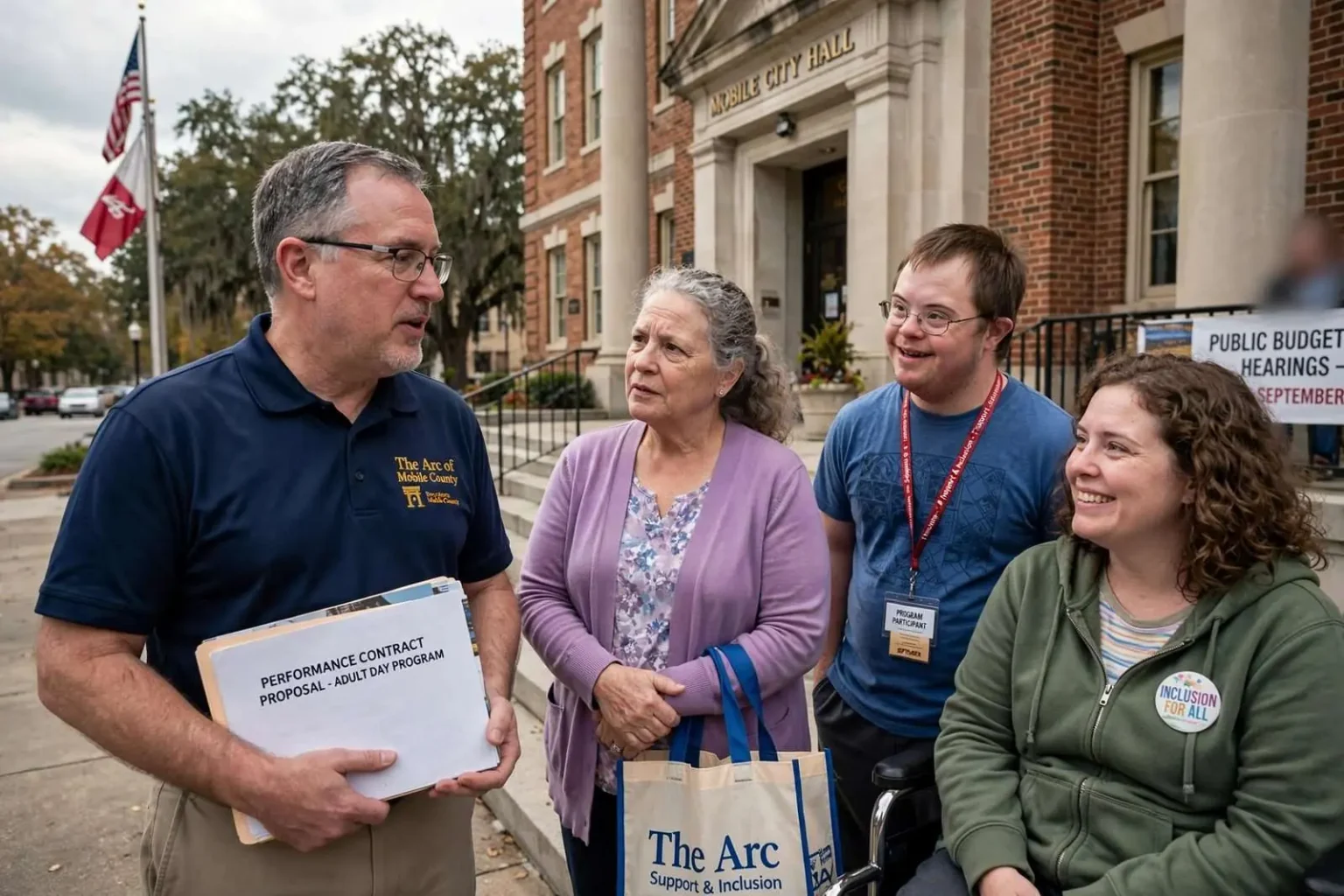
Advocates for people with intellectual and developmental disabilities are asking the City of Mobile for last-minute funding to restart a group adult day program that was phased out during the pandemic. The request arrives with only weeks left in the current fiscal year, ahead of the Mobile City Council’s vote on a new annual budget, and it puts a spotlight on how the city supports residents whose services have shifted dramatically over the past several years.
Tom Holmes of The Arc of Mobile County petitioned the council and the mayor for money to launch a structured daytime program for adults with disabilities. The program would give participants a consistent place to gather, learn and practice daily living skills under staff supervision. The group hopes to begin with about 20 participants and grow from there as demand and capacity allow, according to the request presented to city officials.
The timing matters. Mobile’s fiscal year runs through the end of September, and the council typically works through budget hearings and amendments in the weeks before it adopts a spending plan for the following year. Funding requests that surface late in that process have to compete for space in a budget that is already close to final, which is why advocates describe their appeal as a last-minute effort.
Holmes is requesting more than $55,000 through a performance contract with the city. That figure carries its own history: it matches the amount the former Mobile ARC received from the city before that organization merged with AltaPointe, the behavioral health provider that absorbed its disability services in 2019. Advocates frame the number not as an expansion but as a restoration of support the city once provided at a similar level.
AltaPointe has asked that the $55,000 be earmarked from its own performance contract with the city for these programs, but nothing has been finalized. That arrangement would route the money through the existing contract rather than creating a new line item, though the details remain under discussion as the budget deadline approaches.
A Program the Pandemic Took Away
The story of the proposed program begins with what changed in 2019. That year, AltaPointe merged with the former Mobile ARC and took over its services, folding programs that had operated under a local advocacy organization into one of the largest behavioral health systems on the Gulf Coast. The merger reshaped how disability services were delivered in Mobile County and left groups like The Arc focused on advocacy rather than direct programming.
Then came the pandemic. Group day programs, which once brought adults with disabilities together in shared settings, gave way to models that kept adults in their own communities or with family caregivers. The shift was a public health necessity at the time, but it removed a fixture from the lives of many participants and their families. As restrictions eased, the group setting did not return, and adults who once attended daily programs have been left with fewer structured options.
The Arc now wants to bring that group setting back. Its central argument is practical: adults lose skills they have gained when they are not in a structured program. Skills that once seemed stable, such as money handling, social interaction, communication and routine self-care, can erode without regular practice and staff support. For people with intellectual and developmental disabilities, a daytime program is not simply a place to pass the hours. It is an environment designed to maintain and build abilities that families see slipping without it.
Family caregivers carry much of the weight in the meantime. When adults spend their days at home, parents and siblings often become full-time supervisors, arranging activities, managing medications and providing transportation on their own. For older caregivers in particular, the absence of a daytime program can mean years without a break, a strain that disability advocates across Alabama have described as one of the most persistent gaps in the state’s system of supports.
The funding mechanism Holmes proposes is a familiar one in Mobile city government. Performance contracts are agreements in which the city provides money to a nonprofit organization in exchange for defined services delivered to residents. The council reviews and funds a set of these contracts each year with agencies that address everything from senior services to youth programs. A performance contract would make The Arc accountable for specific outcomes while giving it the seed money needed to stand up a program quickly.
There is also a longer-term funding path built into the proposal. Holmes noted that the services would be reimbursed through a combination of state and federal Medicaid dollars once the group is certified as a provider, allowing individuals to be referred for care. In other words, city money would cover the startup period, and ongoing operations would eventually draw on the Medicaid system that funds most adult day services in Alabama.
How Medicaid Certification Works
Becoming a certified Medicaid provider involves meeting state standards for staffing, safety, documentation and service delivery. Once certified, an organization can serve participants whose care is authorized through Alabama’s waiver programs, which pay for community-based services that allow adults with disabilities to live at home rather than in institutional settings. Day programs are among the services those waivers can cover, and referral relationships with case managers determine who enrolls.
For Mobile, the request lands alongside broader questions about services for adults with disabilities. The city’s population includes thousands of residents living with intellectual and developmental disabilities, and their families navigate a patchwork of providers, waiver slots and state agencies. A group day program in the city limits would shorten travel for participants who currently reach services in other parts of the county or go without them altogether.
The Arc of Mobile County, Inc. is the legal name of the organization making the request, and the name is not an acronym. The group promotes and protects the rights of people with intellectual and developmental disabilities and supports their full inclusion in the community. It is an affiliated chapter of The Arc of Alabama and The Arc of the United States, which together form one of the oldest and largest advocacy organizations in the country for people with disabilities and their families.
That advocacy history shapes the group’s approach to the funding request. The Arc movement began nationally in the 1950s, when parents of children with disabilities organized to demand public education and community services that did not yet exist. Chapters in Alabama followed the same model, and the Mobile chapter has long worked on issues ranging from school inclusion to employment and community living. Restarting a day program fits squarely within that mission, since structured daytime services are a foundation of community inclusion for adults whose options would otherwise be limited.
Advocates say the proposed program’s design reflects lessons from the pandemic years. Rather than simply restoring what existed before 2020, the plan starts small, with about 20 participants, and scales up as staffing and referrals allow. That measured approach is meant to reassure city officials that the $55,000 would be spent carefully, with enrollment growth tied to demonstrated capacity rather than projected demand.
The decision now rests with city leaders as they finalize the budget. The mayor’s office and the council will weigh the request against competing priorities, and the proposed earmark from AltaPointe’s performance contract offers one path to approval without new spending. Whether the money moves through that route or another, advocates have made their case in the narrow window before the council votes, and families of adults with disabilities in Mobile are watching to see whether a service lost to the pandemic will come back with the city’s help.
What Families Are Watching
For the roughly 20 adults who would fill the first enrollment, the difference between a structured day program and days spent at home is measured in skills retained, friendships maintained and relief for aging caregivers. Those are the outcomes the performance contract would pay for, and they are the measure by which The Arc says the program should be judged if the council approves the funding in the closing weeks of the budget process.
The Bigger Picture for Disability Services
The Mobile request also reflects a wider pattern across Alabama, where adult day services have struggled to rebuild since 2020. Providers in many counties reported that participants who left group programs during the pandemic never returned, either because family routines settled into new patterns or because programs closed permanently and never reopened. State disability officials have pointed to the loss of these settings as a quiet but significant setback, since day programs often serve as an early warning system where staff notice changes in health, behavior or home circumstances that family members might miss.
Nationally, The Arc’s network of chapters continues to press for expanded community-based services, and Alabama’s system relies heavily on home and community-based waiver programs to deliver care outside institutions. Waiver capacity in the state has historically lagged behind demand, with waiting lists that leave families on their own for years. Against that backdrop, a locally funded day program carries extra weight, because it does not depend on a waiver slot opening up. The city’s investment would create capacity immediately, with Medicaid reimbursement following once certification is complete and referrals begin.
The weeks ahead will show whether Mobile’s budget process can accommodate the request. Council members will consider the proposed earmark from AltaPointe’s performance contract, the startup costs of certification and the timeline for getting 20 participants enrolled. For the advocates who appeared before the council, the argument comes down to a simple comparison: a modest annual appropriation now, or continued costs, borne quietly by families, of adults losing ground without a place to go each day.


