
Does the Flu Shot Help Against COVID-19? Alabama Health Officials Say No
The Alabama Department of Public Health says there's no evidence flu shots affect COVID-19 infection rates, but still urges flu vaccination.
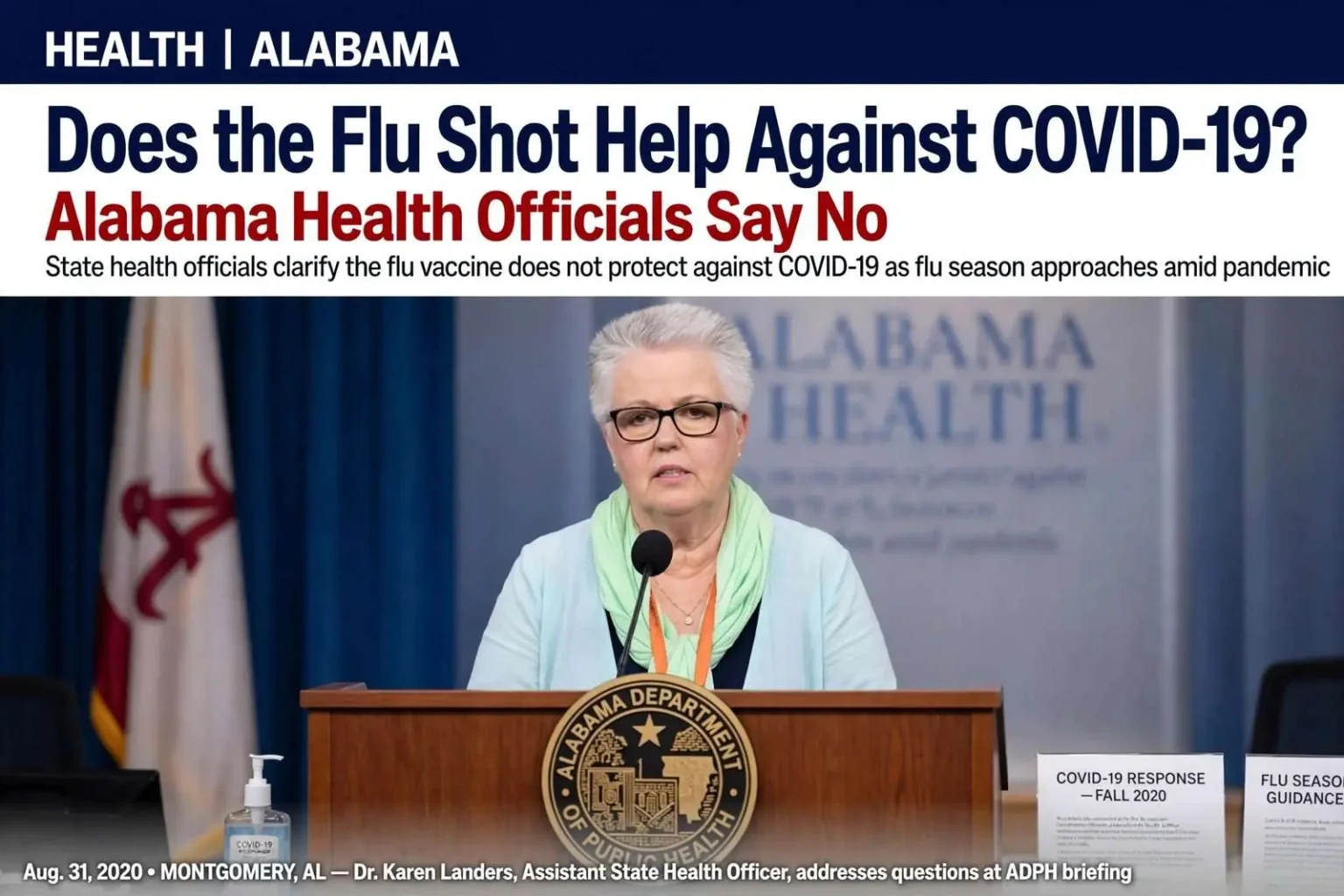
With flu season approaching during the coronavirus pandemic, one question kept coming up across Alabama: does getting a flu shot do anything to protect against COVID-19? The answer from the state’s top public health officials is no. Public health leaders wanted the record clear before the fall respiratory season arrived, because they worried that rumors could lead residents to believe a flu shot offered protection it does not have. The influenza vaccine remains one of the most important shots a person can get, they stressed, but it is designed for one virus and one virus only.
Dr. Karen Landers, assistant state health officer with the Alabama Department of Public Health, addressed the question directly: there is no indication that influenza vaccination has any effect on COVID-19 infection rates. The flu vaccine works against influenza viruses, Landers explained, and COVID-19 is caused by the novel coronavirus, a completely different pathogen that reached the United States in early 2020. Receiving a flu shot, in other words, does not raise or lower a person’s risk of contracting the coronavirus.
Why the Vaccines Are Different
The confusion, health officials acknowledged, is understandable to anyone who is not steeped in the science of virology. Influenza and the novel coronavirus are distinct viruses from entirely different families, with different structures, different surface proteins and different patterns of spread. A vaccine trains the immune system to recognize specific features of one virus; the flu shot prepares the body to fight influenza strains, not the coronavirus that set off the global pandemic.
Landers explained that flu vaccines are reformulated every year to match the influenza viruses that circulated the previous season. That annual update is a hallmark of influenza vaccination: global health experts track which flu strains are moving through populations, and vaccine makers adjust the formulation ahead of each flu season so the shot is aimed at the viruses expected to be in circulation. No similar yearly adjustment has ever been needed for coronaviruses, and no vaccine existed for the novel coronavirus at the time of her comments.
The seasonal nature of the flu shot contrasts sharply with the situation facing COVID-19. Because the novel coronavirus was identified only in late 2019, scientists had to start from the ground up, studying the virus and testing candidate vaccines in laboratory and clinical settings. The flu vaccine, by comparison, rests on decades of accumulated research and annual monitoring that stretches back generations.
No Coronavirus Vaccine Yet
At the time of Landers’ comments in summer 2020, no COVID-19 vaccine existed yet, though she noted research was actively underway to develop one. Research teams in the United States and around the world were working at unprecedented speed, moving candidate vaccines through early trials, but Alabama health officials were careful not to promise a timeline they could not control. Until a coronavirus vaccine completed testing and became available, the only tools residents had against COVID-19 were the familiar public health measures: avoiding close contact with sick people, washing hands, staying home when ill and following guidance from state and federal health authorities.
That reality made the flu shot message all the more important, officials said. Alabama residents could not yet vaccinate against COVID-19, but they could vaccinate against influenza, and every flu case prevented would mean one less burden on families, clinics and hospitals heading into an already uncertain season.
Still Urging Flu Shots
Even though the vaccine offers no coronavirus protection, health officials still urged residents to get their flu shots as fall neared. The argument is straightforward: influenza on its own sends thousands of Alabamians to the doctor each year and puts many in the hospital, and a severe flu season stacked on top of the pandemic would strain the state’s health care system in ways officials could not afford.
Keeping flu hospitalizations down would help preserve hospital capacity, Landers and other officials argued. Hospitals in Alabama and across the Gulf Coast spent much of 2020 managing patients with COVID-19 while still caring for everything else a community brings through the emergency room doors — heart attacks, injuries, childbirth and scheduled surgeries. A wave of flu admissions arriving at the same time would compete for the same beds, the same staff and the same intensive care space, so every patient who avoids the flu through vaccination eases that pressure.
The Alabama Department of Public Health encourages vaccination through its county health departments, which serve residents in all 67 counties, and private providers and pharmacies across the state also carry the seasonal vaccine. The federal Centers for Disease Control and Prevention recommends a yearly flu shot for nearly everyone six months of age and older, with particular emphasis on older adults, young children, pregnant women and people with chronic health conditions — the same groups considered most vulnerable to serious illness from respiratory infections.
Reducing Diagnostic Confusion
There is a second reason officials emphasized flu vaccination, and it has to do with symptoms. Influenza and COVID-19 share many symptoms: fever, cough, fatigue, muscle aches and shortness of breath can all mark either illness. In a season when both viruses circulate at once, a patient with those complaints presents a genuine diagnostic puzzle, and doctors may need testing to determine which infection is present.
Reducing the number of flu cases would reduce that confusion. If fewer people become ill with influenza, fewer patients arrive with symptoms that could belong to either disease, and clinicians can devote more attention and testing capacity to identifying and managing COVID-19. For families, the benefit is practical as well: a confirmed flu diagnosis prompts one set of decisions, while a suspected coronavirus infection sets another in motion, including isolation and contact tracing measures.
Officials also pointed out that the two illnesses can complicate each other when someone is unfortunate enough to face both at once. Anything residents can do to lower their risk of influenza — starting with the annual vaccine — reduces the odds of battling a double respiratory illness during the same season, and that matters for the very young, the elderly and those with underlying conditions more than anyone.
A Familiar Message in an Unusual Year
Alabama health authorities promote flu vaccination every autumn, but the pitch in 2020 carried higher stakes than usual. The Alabama Department of Public Health, the state agency responsible for controlling communicable disease and protecting residents’ health, has long leaned on its county operations, school partnerships and community outreach to push flu shots ahead of each season. This year, the department paired that familiar effort with the broader campaign of guidance it has issued since the coronavirus reached the state in March 2020.
Landers, as assistant state health officer, has been one of the department’s most visible voices during the pandemic, helping explain the science behind the state’s recommendations to news outlets and community groups. Her message on the flu shot fits a theme the department has stressed throughout the outbreak: residents should rely on evidence about what a vaccine does and does not do, rather than on rumors that can spread faster than the viruses themselves.
What Residents Can Do
Along with getting a flu shot, health officials recommend the everyday precautions that serve double duty against influenza and COVID-19 alike. Washing hands often with soap and water, covering coughs and sneezes, cleaning frequently touched surfaces and staying home when sick all slow the spread of respiratory viruses. During the pandemic, many Alabamians have also adopted masks and greater distance from crowded gatherings, habits that health experts note can curb influenza transmission as well.
Where can residents turn for the shot? The department’s county health departments carry seasonal flu vaccine each fall, and many family doctors, pharmacies and workplaces offer it as well. Health officials note that the vaccine is updated annually, so even people who received a flu shot last year need a new one this season to be protected against the strains now circulating. An appointment is usually quick, and the cost of the vaccine is modest compared with the expense — in money and in missed workdays — of a bout of influenza.
Flu season in Alabama generally builds through the fall, peaks in the winter months and can linger into spring, which means there is a long window in which the vaccine can help. Officials encouraged residents not to wait until illness is already moving through their households, workplaces and schools before acting, because the body needs time after vaccination to build its defenses.
The bottom line from the state’s health leadership is simple. A flu shot will not protect anyone from COVID-19 — the vaccines are aimed at entirely different viruses, and the coronavirus vaccine so many were waiting for remained in development. But the flu shot still matters, perhaps more this fall than ever, because it protects the person who receives it, lightens the load on hospitals that may soon be caring for coronavirus patients, and makes it easier for doctors to tell the difference between two illnesses that look alarmingly alike.


