
Dog Dropped Off for a Bath in Midtown Mobile Never Gets Her Owner Back
Goldie was dropped off for a bath at a Dauphin Street-area business in Mobile and never claimed — until a new owner adopted her.
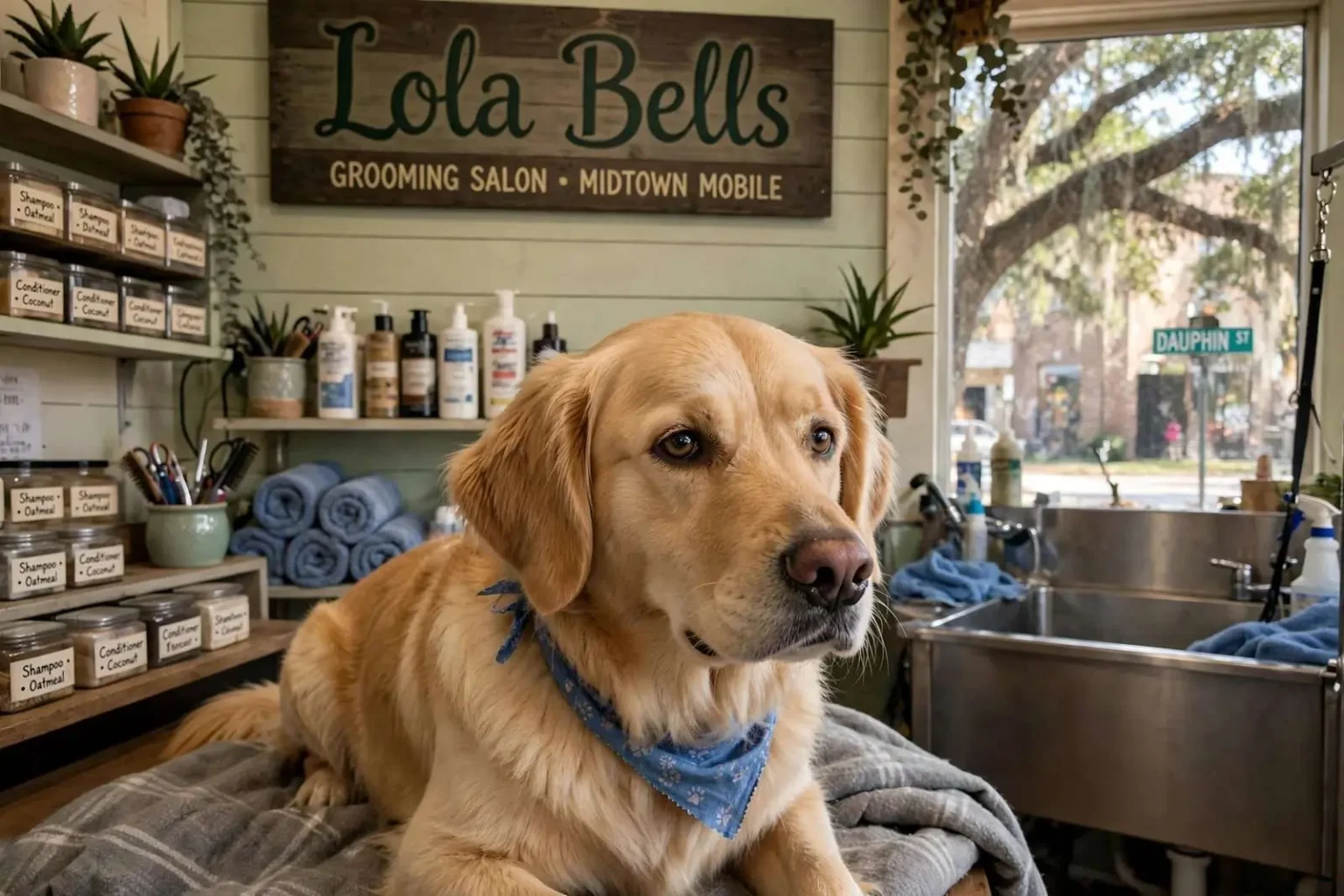
A Midtown Mobile grooming business spent weeks trying to track down an owner who never came back for their dog, and the story reached a happy ending within hours of the shop taking its appeal public. Lola Bells, the grooming salon near Dauphin Street, said the dog — a sweet-natured one named Goldie — had been dropped off for what should have been a routine bath. The owner never returned to pick her up. After repeated attempts to make contact went nowhere, the business turned to social media to find Goldie a new home, and by the end of the day it reported that she had been adopted and was heading home with a new owner.
According to the shop’s account, Goldie arrived for an ordinary grooming appointment like thousands of others on the books at Gulf Coast salons. When the bath and grooming work wrapped up, staff expected a familiar face to walk through the door within hours. Instead, the pickup time came and went. Days stretched into weeks, and the shop said it spent that stretch trying to track down the owner through every channel available to a small business, without success.
The situation left the staff in a position many pet care providers dread: responsible for an animal that was well cared for but had no one coming for her. Groomers, boarding facilities, and veterinary clinics across Mobile County occasionally find themselves in similar straits when a drop-off becomes a de facto surrender. The animal cannot simply be released or rehomed without care and diligence, so the business kept Goldie fed, comfortable, and part of the daily routine while it worked the problem.
Lola Bells operates in the heart of Midtown Mobile, the tree-lined stretch of the city around Dauphin Street known for its mix of small shops, restaurants, and service businesses. Independent grooming salons like this one run largely on repeat customers and word of mouth, which made the abandoned pickup all the more unusual. Regulars at neighborhood salons often become familiar faces over years of appointments, and staff come to know both the pets and the people who bring them in.
When it became clear that the owner was not coming back, the business made the decision to seek a permanent home for Goldie rather than pass her along to an overcrowded shelter. That choice meant taking on the work of describing her temperament honestly, screening interest, and making sure she went to a situation suited to her needs — all while continuing to operate the salon.
The Social Media Appeal
The shop’s post describing Goldie was straightforward about what kind of dog she is. The business described her as very sweet and timid, good with other dogs and children, and in need of a warm home. That combination — a gentle disposition paired with an easygoing temperament around other animals and kids — is exactly what most adopters say they are looking for, and it is a large part of why interest moved so quickly once the post began circulating.
Timid dogs like Goldie often need a little extra patience in a new environment. Shelter and rescue volunteers in the Mobile area consistently note that dogs coming from unfamiliar circumstances may take days or weeks to settle in, so adopters who understand that adjustment period tend to be the best match for a dog with her personality. Her reported comfort with other dogs and children broadened the pool of households that could realistically take her in.
Social media has become the first stop for many Gulf Coast businesses and residents trying to rehome an animal. Community groups and neighborhood pages connected to Mobile, Midtown, and West Mobile routinely carry lost-and-found and adoption posts that reach thousands of local eyes within hours, at no cost. For a small business without a rescue network of its own, a single well-circulated post can accomplish what weeks of phone calls cannot. That is essentially what happened in Goldie’s case: the appeal went up, the community responded, and by the end of the day the shop reported she had been adopted.
What Happens When a Pickup Never Comes
Abandoned drop-offs are a recurring headache for pet service businesses well beyond Mobile. Groomers, boarders, and veterinarians occasionally inherit an animal when a client stops responding, and the path forward is rarely obvious. Businesses generally attempt contact through every number and address on file, consult any paperwork signed at drop-off, and, if necessary, involve local animal control or a rescue partner. The process can take weeks, which is exactly the stretch of time Lola Bells spent trying to track down Goldie’s owner before going public.
Animal welfare organizations in the Mobile area encourage owners who can no longer care for a pet to surrender it through proper channels rather than walk away. The Mobile County area has municipal animal services and a network of nonprofit rescues that accept surrendered animals or help owners place them directly. A direct rehoming effort, like the one the salon undertook, spares the animal the stress of a shelter kennel and frees shelter space for animals with nowhere else to go.
The economics matter too. A grooming appointment is a modest expense, but ongoing care — food, heartworm prevention, veterinary visits — adds up, and hard times sometimes lead owners to make decisions they would not make otherwise. Welfare groups emphasize that asking for help early, whether from family, a rescue, or a shelter, is far better for the animal than an unexplained disappearance. Goldie’s story ended well precisely because the business chose to invest time and care rather than treat the situation as someone else’s problem.
Why Identification Matters
Cases like this one highlight a persistent gap in the Gulf Coast pet population: many dogs and cats carry no collar tag and no microchip. A microchip the size of a grain of rice, implanted in a quick procedure at a veterinary clinic or a low-cost vaccine event, gives any shelter or clinic that scans the animal a direct line to the owner’s registration. Lost-pet groups across Mobile and Baldwin counties credit microchips with reuniting hundreds of animals with families that would otherwise never have been found.
Collar tags serve the same purpose in a more visible way. Anyone who finds a wandering dog can call the number on the tag without special equipment. For pets left in the care of a business, up-to-date contact information on file is equally important — a disconnected phone number or an outdated address turns a routine pickup into an investigation. Groomers and boarders typically collect contact details at the first appointment, and those records are only as useful as the owner keeps them.
For owners facing a move, a financial setback, or a health change that makes pet care difficult, the standard advice from welfare organizations is to act early. Rescues and shelters can advise on options, temporary fosters can bridge a short crisis, and direct rehoming through trusted networks keeps the animal out of the kennel system entirely. None of those paths require leaving a pet behind at a business and hoping someone else sorts it out.
The Happy Ending
By the end of the day after the appeal went up, Lola Bells reported that Goldie had been adopted and was heading home with a new owner. The speed of the resolution underscored how much goodwill a neighborhood business can draw on when it asks. The shop had described the dog honestly — sweet, timid, good with other dogs and children — and that candor appears to have connected with someone ready to offer exactly the warm home she needed.
For the staff, the resolution closed out weeks of uncertainty. Caring for an animal that was never meant to stay is a quiet burden; the dog needs walks, feeding, and attention on top of a full appointment schedule. Goldie, by all accounts, handled her extended stay at the salon with the same even temperament the shop described, waiting out the weeks while the people around her worked the problem.
Adopters taking in a timid dog face a short list of practical steps in the first weeks. A veterinary checkup establishes a baseline and gets vaccinations and prevention on schedule. A consistent routine — same feeding times, a designated resting spot, calm introductions to the household — helps a nervous dog understand what to expect. Experts recommend keeping early outings limited and letting the dog set the pace, particularly in a busy household with other pets or children.
The fact that Goldie is comfortable with other dogs and children gives her new household flexibility, but gradual introductions remain the rule. Rescue volunteers suggest letting dogs meet on neutral ground, keeping first interactions short, and supervising time with young children until everyone settles. Most dogs with Goldie’s reported temperament adjust within a few weeks and settle into the household rhythm for good.
A Neighborhood Business and Its Community
The episode also serves as a small portrait of how Midtown Mobile works. A service business near Dauphin Street encountered a problem it had no obligation to solve, and instead of passing it off, it used its community standing to fix the situation itself. The customers and neighbors who shared the post and answered it did the rest. It is the kind of informal network that operates across the city’s older neighborhoods, where small businesses are often as much community institutions as commercial ventures.
For local pet owners, the takeaways are unglamorous but useful: keep microchip registrations current, keep contact information updated with groomers and boarders, and if circumstances ever make pet ownership impossible, hand the animal over through a channel designed for it. The alternative is weeks of uncertainty for the animal and the business alike — and, for most pets, a far less certain ending than the one Goldie got.
Goldie, meanwhile, starts her new life with a documented temperament, a clean bill of grooming, and a story that circulated widely enough that her new owner almost certainly knows exactly what kind of dog they were taking in. For a dog left behind after a routine bath, that is about as good an outcome as the situation could have produced. The salon, for its part, got its answer, its lobby space back, and a story its customers will presumably be hearing about for years.