DOJ Election Monitors Expected in Mobile County Tuesday, but Probate Judge Says They Won’t Go Inside Polls
Probate Judge Mark Erwin says federal monitors may be in Mobile County on Election Day but will not be allowed inside polling places. Local Republicans and voters, meanwhile, made a final push to get people to the polls.
MOBILE, Ala. — U.S. Department of Justice election monitors may be in Alabama on Tuesday, but at least one county’s top election official says state law will keep them from stepping inside a polling place.
Mobile County Probate Judge Mark Erwin said Monday that his office was notified the department would have monitors in the county on Election Day. He said it is not unusual for the Justice Department to have a liaison working with election offices, but this year’s notice was different.
“We did get notification, which is a little different than in the past, that there would be dedicated monitors in Mobile County on Election Day,” Erwin said.
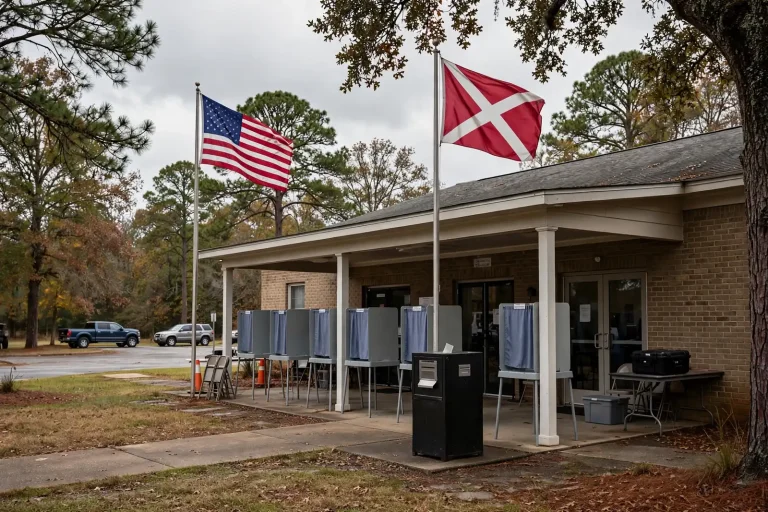
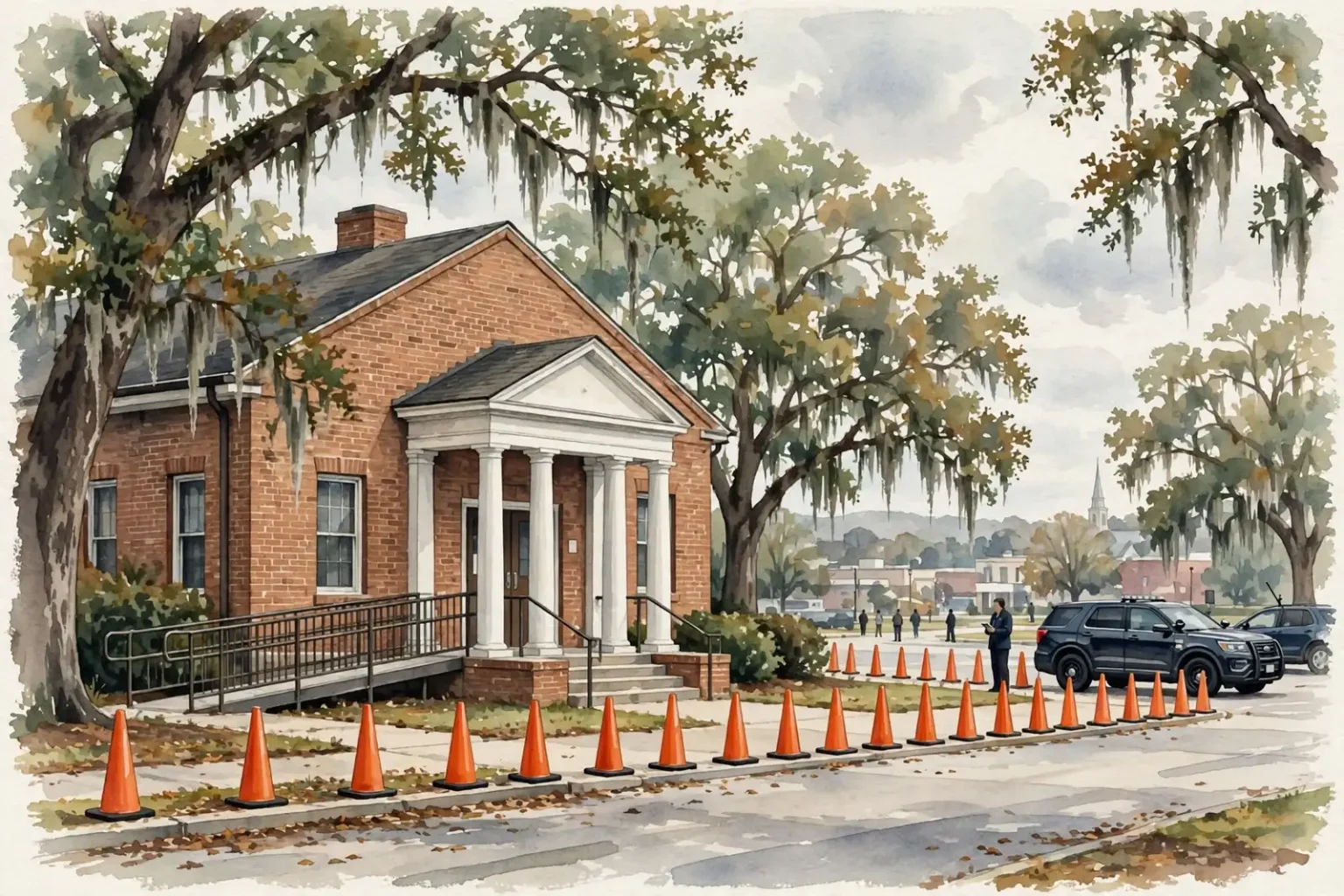
“Frankly, they may be in Mobile. They may be around. It will probably be hard to determine who they are or who they’ve spoken to. But they will not be inside a poll. They may be outside the 30-foot buffer with the other people allowed outside and in the public. They may ask a voter about their experience. I don’t know.”
Montgomery County’s Director of Elections, Alexandria Stephens, said her team was also notified that monitors would be around. Like Erwin, she said she was not sure where they might be.
What Alabama law allows
Erwin said state law determines who may be inside a voting site.
“They are limited in what they can do because of our state law that prohibits anyone in the poll who are not an appointed worker, a sheriff official or a credentialed poll watcher of a party or a voter,” he said. “If you’re not in that category, state law does not have a caveat for anyone else to be there.”
He said the federal employees his office spoke with understood the law and had been in communication with the Secretary of State’s office. He said he does not expect problems Tuesday.
“It didn’t seem to be a lot to be concerned about from an operational standpoint,” Erwin said.
The Alabama Secretary of State’s office did not respond to a request for comment on Monday.
The largest monitoring effort in DOJ history
The Justice Department plans to send about 1,000 monitors to polling places in all 50 states, its largest election-monitoring effort ever. That is more than double the 388 monitors it sent during the 2022 midterms under President Joe Biden.
The department has not released a full list of destinations. According to one published tally, local officials have confirmed visits in at least 21 states, mostly in large Democratic-leaning cities and counties and in districts with competitive congressional races. That list did not include any Alabama counties.
U.S. Attorney Phil Williams of the Northern District of Alabama described the effort on social media in stark terms.
“The Department of Justice is working overtime to ensure that tomorrow’s elections are free, fair, and accurate,” Williams wrote. “There are tricks, and cheats, and unethical efforts by bad actors at local, state and federal levels. The point for the DOJ is to make sure that your Constitutional right to vote is not diluted by someone taking steps to cheat or vote when they shouldn’t.”
Why the effort is drawing scrutiny
Election monitoring by the department is not new. Republican and Democratic administrations have sent monitors to polling places for decades, mainly to check compliance with federal laws such as the Voting Rights Act and the Americans with Disabilities Act. Monitors have also historically been deployed to parts of the country under additional civil rights oversight.
This year’s effort has nonetheless raised concerns, especially among Democratic-aligned groups, that it could disrupt election administration or intimidate voters.
The Trump administration has reshaped the department’s Civil Rights Division, which runs the program. Those changes prompted an exodus of career staff and shifted the division’s focus toward election fraud and voting by noncitizens. The NAACP has sued the department for details of its plans.
A final push from local campaigns
As election officials prepared, Mobile County campaigners from both major parties spent Monday making phone calls, canvassing, fundraising and encouraging people to take part.
Jane Verneuille, president of the Azalea City Republican Women, said people should show up regardless of who they support.
“There’s so many people that fought so hard for the right to vote and it’s tragic that they decide not to do it because they don’t like the candidate or the platform,” she said. “We fought for this right to vote and everybody should be out here voting regardless of who you are voting for.”
Mobile resident Jermaine Burrell said accountability and the next generation motivated him.
“It was important for me to get out and vote because of everything going on in the country right now. I feel like leaders should be held accountable. I’m also voting for the next generation. But the most important thing on the ballot is democracy,” Burrell said.
Voters arriving at the polls may see campaigners outside. Campaigning is allowed on Election Day, but it may not take place within 30 feet of a polling place entrance.