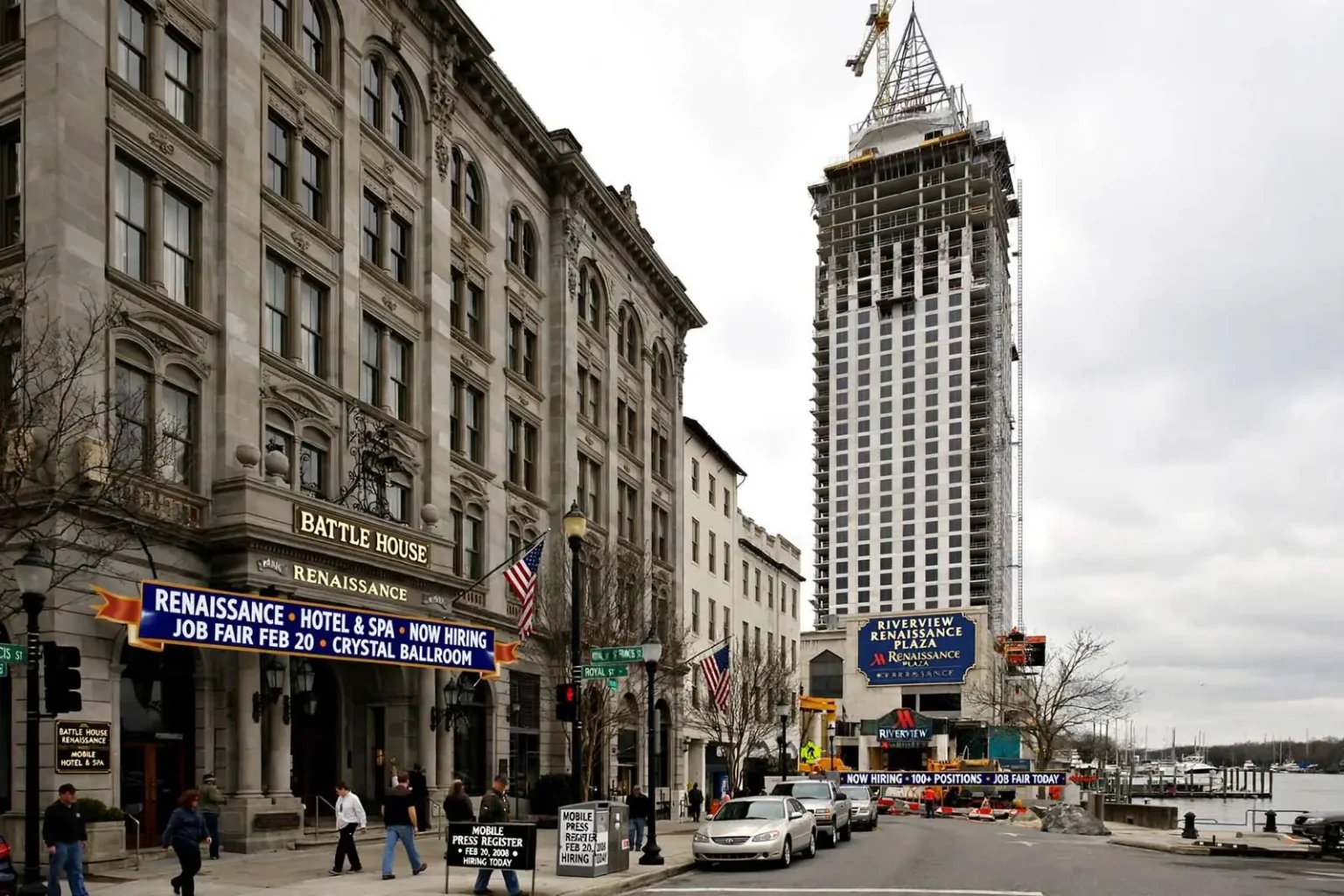
The Battle House Hotel in downtown Mobile, AlabamaThe Battle House Hotel in downtown Mobile.

Historical report, published from archived local news coverage.

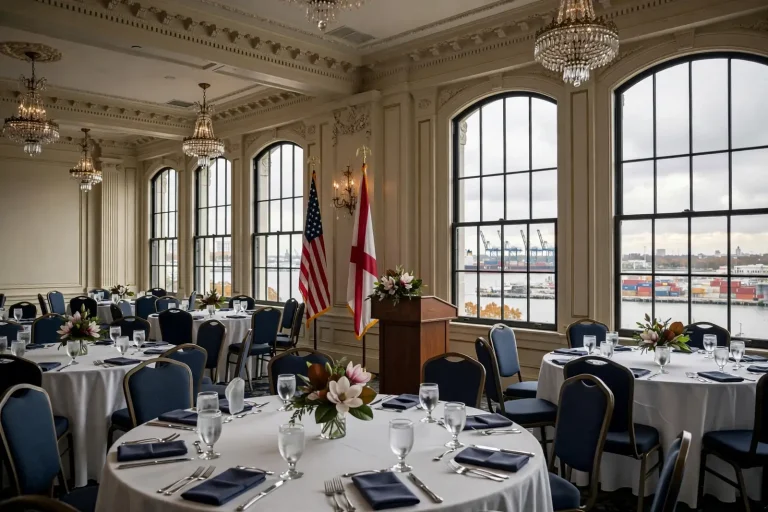
In February 2008, two downtown Mobile hotels were seeking nearly 100 new employees, according to an archived local news report. The restored Battle House Hotel and the Riverview Renaissance Plaza Hotel were hiring for roles ranging from hourly positions to management. The station said the Battle House had recently completed a $60 million renovation and was celebrating its first Mardi Gras in more than 30 years. The Riverview Renaissance was also being renovated, including plans for a spire modeled after the RSA Tower. A job fair was scheduled at the Battle House Crystal Ballroom. This is a historical employment report; the event and job-opening details are no longer current.

The hiring push captured a moment when downtown Mobile’s hospitality market was expanding faster than its workforce could keep up. Two of the city’s flagship hotels were simultaneously adding staff ahead of the Mardi Gras season, the busiest stretch of the year for downtown businesses, and each had its own story of investment and renewal behind the vacancies.

The Battle House Returns

The Battle House Hotel occupies a place near the top of Mobile’s civic history. First opened in the mid-nineteenth century and rebuilt after a fire in the early twentieth century, the hotel at Royal and St. Francis streets hosted presidents, corporate titans, and generations of Mardi Gras revelers before falling into disuse and closing in the 1970s. For three decades the landmark sat largely dark while downtown Mobile struggled through the same mid-century decline that emptied commercial centers across the country.

The $60 million restoration completed before the 2008 hiring effort transformed the building back into a full-service luxury hotel, connecting it with the adjacent RSA tower complex rising alongside it. The restoration preserved the grand public spaces for which the hotel had been known, including the lobby and the Crystal Ballroom, while rebuilding the guest rooms and infrastructure to modern standards. When the hotel reopened, it did so under a national flag brand, bringing a major chain’s reservation network and standards to a building that was nearly a century old.

Celebrating its first Mardi Gras in more than 30 years made the 2008 season a milestone for the hotel. Mardi Gras in Mobile predates the better-known New Orleans celebration, with masked balls and parades dating to the city’s colonial era, and downtown hotels sit at the center of the festivities, along the parade routes and within walking distance of the convention halls where mystic societies hold their balls. A downtown hotel full for Mardi Gras is the clearest possible sign that a district’s revival has taken hold.

See also  Nobody Rings a Bell at the Top: A Mobile Brokerage's Bear Market Revolt

What the Job Fair Offered

With nearly 100 positions open across the two properties, the job fair at the Battle House Crystal Ballroom gave job seekers a chance to apply for everything from housekeeping, front desk, food service, and maintenance roles to supervisory and management posts. Hotels hire in layers: the hourly positions form the operational backbone that keeps rooms clean, guests checked in, and restaurants serving, while the management positions coordinate departments, handle scheduling, and maintain brand standards during the property’s crucial early years.

For downtown Mobile workers, the openings represented more than a paycheck. Hotel careers can progress quickly in a growing market, and employees who joined the restored properties in their early years often had opportunities to move up as the hotels established themselves. The timing also mattered for seasonal reasons. Mardi Gras demand was arriving immediately, followed in the spring by convention business and the summer travel season, so new hires were stepping into a property operating at full tempo from the start.

The job fair format itself reflected the scale of the need. Rather than filling positions one application at a time, both hotels pooled their openings into a single event in the Crystal Ballroom, letting candidates meet representatives from multiple departments in one visit. Hiring fairs of this kind were common in Mobile when large employers needed to staff quickly, and the choice of venue doubled as a showcase for the restored hotel itself, allowing candidates to see the property they would be working in.

The Riverview Renaissance Renovation

Across downtown, the Riverview Renaissance Plaza Hotel on Water Street was undergoing its own transformation, including plans for a spire modeled after the RSA Tower. The Riverview, as it had long been known, stood along the waterfront side of downtown with views over the Mobile River and the port, a location that tied it to the city’s maritime identity. Renovating the property alongside the Battle House restoration meant that both ends of the downtown hotel market were being refreshed at once, from the historic landmark a few blocks inland to the waterfront high-rise.

The planned spire, modeled after the RSA Tower rising nearby, was part of a broader push to make downtown’s skyline and street-level experience more attractive to visitors. Architectural details of that kind signal investment to convention planners, tour operators, and business travelers who choose between cities, and in the competitive Gulf Coast hospitality market Mobile was working to distinguish itself from destinations along the coast. The renovation also kept hotel rooms available during construction in some form, requiring staffing plans that accounted for both renovated floors and rooms still being updated.

See also  Mobile County Vector Services Catching Up on Mosquito Complaints After Storms

Downtown Mobile’s Revival

The simultaneous hiring by the two hotels fit into the larger story of downtown Mobile’s renewal during the 2000s. The district had gained attractions and anchors through the decade, from museums and entertainment venues to the expansion of the convention center, and new residents were moving into upper-floor apartments above restored commercial buildings. Each addition reinforced the others: hotels brought overnight visitors who spent money in restaurants and shops, attractions gave those visitors reasons to come, and the increased activity attracted further investment.

Employment was a central part of that equation. Hospitality jobs are often a community’s most accessible form of employment, requiring less formal education than many industries while offering flexible schedules and paths to advancement. For a downtown working to rebuild its daytime and nighttime population, nearly 100 new hotel jobs meant nearly 100 more people working, eating, and spending in the district every day.

The timing of the report, just ahead of Mardi Gras, underlined how the calendar drives the hospitality economy in Mobile. The Carnival season concentrates visitors, parades, and balls into a few intense weeks each winter, and hotels that are understaffed during that stretch lose revenue that cannot be recovered in quieter months. Getting nearly 100 people hired and trained before the parades rolled was the operational deadline behind the February report.

The Hotel Business in a Seasonal City

Running a hotel in Mobile means planning around a calendar that most cities do not have. Mardi Gras arrives in February or early March with a surge of demand, followed by a convention and group-travel season through the spring, leisure travel in the summer, football-season travel in the fall, and holiday events in December. Each wave brings different guests with different needs, from mystic society members attending balls to families visiting the coast. Staffing levels, inventory, and maintenance schedules all revolve around that rhythm, which is why the hotels’ February hiring push was described in connection with Mardi Gras rather than as routine growth.

See also  Dick Russell's Bar-B-Q in Tillman's Corner Closes After More Than Seven Decades

The two properties also anchored different parts of the market. A restored historic hotel competes on character, luxury service, and its role in the city’s history, drawing corporate groups, wedding parties, and visitors who want an experience as much as a room. A waterfront hotel with extensive meeting space competes for conventions, business travelers, and groups tied to the port and the medical and legal communities downtown. Together they broadened the range of visitors downtown could host, and both needed full staffs to deliver on their promises.

For the workers hired that winter, the restored hotels offered a foothold in an industry that would remain a fixture of Mobile’s economy. Hospitality careers built at landmark properties tend to be durable, and the skills learned in food service, guest relations, and event operations transfer across the region’s hotels, convention centers, and restaurants. Many Mobile hospitality careers began with exactly the kind of application turned in at a ballroom job fair.

A Snapshot of a Changing Downtown

Read today, the February 2008 report preserves a moment when downtown Mobile’s revival was visible in its help-wanted signs. The Battle House’s renovation, the Riverview’s spire plans, and the Crystal Ballroom job fair together documented a district converting investment into jobs and service capacity. They also documented the confidence of the operators, who were hiring ahead of their busiest season in the belief that the demand would be there.

This is a historical employment report, and the event and job-opening details are no longer current. The positions described, the renovation timelines, and the February 2008 job fair have long since passed, and readers seeking employment at Mobile hotels today should consult the properties and their current owners directly. What the archived story preserves is a picture of two downtown landmarks in transition, their operators staffing up for a Mardi Gras season that marked a return to prominence, and a city center rebuilding its hospitality workforce one hire at a time.