Duplex Fire Off Rhea Avenue in Mobile Extinguished Without Injuries
Mobile Fire-Rescue extinguished a duplex fire off Rhea Avenue with no injuries. Three nearby units were saved; the duplex was a total loss.
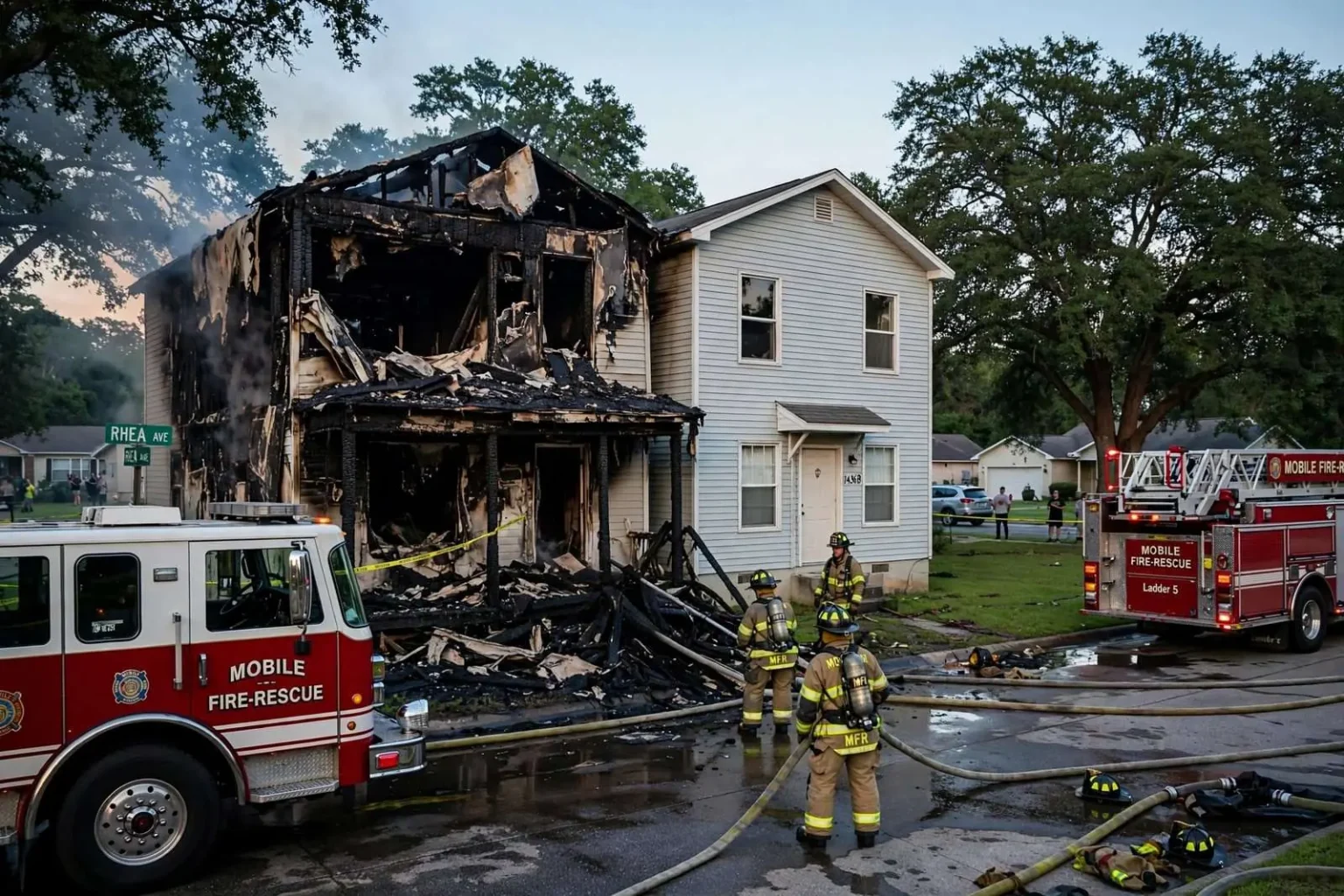
Mobile Fire-Rescue crews extinguished a duplex fire off Rhea Avenue in Mobile on Tuesday evening, July 5, with no injuries reported. Firefighters were dispatched to the scene at approximately 6:39 p.m. after heavy flames were reported engulfing the front of the duplex apartment. When the first crews arrived, they found a fully involved fire and immediately began working to contain the blaze and prevent it from spreading to adjacent structures. By the time the fire was declared under control, firefighters had successfully evacuated nearby apartments and saved three surrounding units from damage, though the duplex where the fire originated was a total loss, according to Mobile Fire-Rescue.
The evening call brought engines and ladder trucks into a residential neighborhood during the peak of the evening hours, when many residents were home for dinner. Flames were visible from the front of the building as the first units arrived, and witnesses reported heavy fire coming from the front portion of the duplex. Command officers established operations and directed crews to attack the fire while a second group of firefighters went door to door through the nearby units, evacuating residents and checking each apartment to confirm that everyone was clear of the danger.
Authorities confirmed that no one was inside the burning structure at the time of the fire, a fact that spared the city what could have been a tragic outcome. The aggressive interior attack, combined with the quick evacuation of surrounding units, kept the flames from extending into the attached and neighboring dwellings. Three surrounding units were saved from damage, and firefighters remained on the scene afterward to mop up hot spots and watch for rekindle in the charred structure.
Mobile Fire-Rescue said the cause of the fire remains under investigation. Investigators with the department’s fire marshal division will examine the scene, interview witnesses and review any available evidence to determine where and how the blaze started. The investigation of a structure fire of this kind typically involves examining burn patterns, checking electrical systems and appliances, and ruling out accidental and intentional causes before a determination can be made. The department has not released a dollar estimate of the damage.
How crews fought the fire
Duplex fires present particular challenges for firefighters because of the shared construction between units. A duplex is a single building divided into two separate living spaces, with common walls, connected attics or shared rooflines that can allow fire and heat to move from one unit into the other even after the original unit is engulfed. Crews responding to a fully involved duplex must therefore fight the visible fire while simultaneously protecting the exposure — the neighboring unit — often working from both the interior and exterior at once.
That is what happened off Rhea Avenue. While hose lines were advanced into the burning unit to knock down the main body of fire, other crews worked the exposure side of the building, pulling ceilings and checking wall cavities to make sure flames were not traveling through the shared structure. The evacuation of nearby apartments was a precaution consistent with that strategy: residents in the units next door were moved to safety while crews confirmed the fire had not extended beyond the unit of origin. In the end, the containment effort succeeded, and the three surrounding units were spared.
The 6:39 p.m. dispatch time placed the response in daylight during early July, when the sun sets late in south Alabama. Daylight operations are generally safer and faster than nighttime fires, allowing commanders to see collapse hazards, giving drivers better visibility, and letting crews spot fire traveling through attics or soffits before it becomes established. Even so, July heat is its own hazard: firefighters in full protective gear working in Gulf Coast summer temperatures and humidity face significant heat stress, and departments rotate crews through rehabilitation areas to prevent exhaustion and heat illness during extended operations.
Mobile Fire-Rescue and the city it protects
Mobile Fire-Rescue is one of the larger fire departments in Alabama, protecting a port city of nearly 200,000 residents with a network of fire stations spread across the city’s neighborhoods, from downtown and the historic districts to the residential corridors of west Mobile. The department provides fire suppression, emergency medical services, and fire prevention and investigation functions, and its crews respond to tens of thousands of calls for service each year, the majority of them medical emergencies. Structure fires such as the one off Rhea Avenue draw on multiple companies at once, pulling apparatus from surrounding stations to ensure enough manpower for both firefighting and search and exposure protection.
The department operates under the traditional engine-and-ladder model common to professional departments across the Gulf Coast. Engine companies carry water, hose and pumps to attack fires, while ladder companies handle forcible entry, ventilation, search and rescue, and utility control. On a working fire, the first-arriving officer makes a rapid size-up — the location and extent of the fire, whether anyone is trapped, and what exposures are threatened — and requests additional alarms if the situation demands them. The quick work off Rhea Avenue reflected that training: evacuate the neighbors, protect the exposures, and knock down the fire before it could extend.
Fires and duplex safety in Mobile
Residential fires remain one of the most common and dangerous emergencies firefighters face, and multifamily buildings concentrate that risk. A single unit fire in a duplex, triplex or apartment complex places not just one family’s home at risk but every unit that shares a wall, roofline or attic space with it. Mobile’s housing stock includes thousands of duplexes and small multifamily buildings, particularly in the older neighborhoods inside the city, which is why the department emphasizes working smoke alarms in every unit and encourages residents of attached housing to know their neighbors’ evacuation plans as well as their own.
Fire officials consistently make the same recommendations to residents: install a smoke alarm on every level of the home and inside each bedroom, test the alarms monthly, and replace batteries at least once a year or immediately when an alarm chirps. Residents of rental units should report missing or nonfunctional smoke alarms to their landlord or property manager, since state and local codes require them in rental housing. Families should also agree on a meeting spot outside the home and practice a two-way escape plan, so that if a fire breaks out — particularly at night — everyone knows exactly where to go once they get out.
The department also warns against re-entering a burning building for pets, documents or belongings. Every year, firefighters across the country are injured rescuing residents who went back inside for possessions after escaping. Once out of a burning structure, residents should stay out and give arriving crews a clear account of who may still be inside and where.
What happens next for the residents
For the family living in the destroyed duplex unit, the days after a fire involve a familiar but painful sequence. The American Red Cross of Alabama, which assists residents displaced by house fires across the region, typically responds to single-family and multifamily fires to provide emergency lodging, food and clothing assistance for affected families. Neighbors, churches and community organizations in the affected neighborhood often organize additional support, and renters are encouraged to contact their insurance carriers — renters insurance, where the household has it, covers the occupants’ belongings even though the building itself falls under the property owner’s policy.
The property owner, meanwhile, will work with investigators and the city on the disposition of the burned structure. A total-loss duplex must be secured and, in most cases, ultimately demolished or substantially rebuilt, a process that involves the city’s inspection services and permitting offices. Until a determination is made, utility service to the damaged unit is typically disconnected, and the structure is fenced or boarded to keep bystanders out of the unstable remains.
The investigation into the fire’s cause will continue in the coming days. Fire investigators urge anyone who saw the blaze begin, or who has information about conditions at the duplex before the fire, to come forward, since even small details — whether lights were on, whether appliances were running, where smoke first appeared — can help narrow the origin and cause analysis. Mobile Fire-Rescue has not indicated whether the fire is considered suspicious, and no injuries to residents or firefighters were reported in connection with the blaze.
A reminder about summer fire risk
Early July is a demanding stretch for Gulf Coast fire crews. The combination of extreme heat, afternoon thunderstorms with lightning, heavy air conditioning loads on aging electrical systems, and holiday-weekend activity keeps call volumes high across the region. Fire officials note that many residential fires in the summer months trace back to electrical systems strained by continuous air conditioning use, cooking equipment, and outdoor grilling placed too close to structures. Simple precautions — keeping grills away from siding and eaves, not overloading circuits, and never leaving cooking unattended — prevent a significant share of the fires departments respond to each year.
For the neighborhood off Rhea Avenue, Tuesday evening ended with damage but no casualties, thanks to the fast response and disciplined tactics of the crews on the scene. The burned unit will need to be rebuilt, and investigators will continue their work to determine what started it. But the three surrounding units that firefighters saved, and the families evacuated safely into the evening air, stand as the measure of a response that did its job: a fully involved duplex fire, contained with no injuries and no spread.