New School Year Begins for More Than 4,000 Students in Escambia County, Alabama
More than 4,000 students returned to class in Escambia County, Alabama, as AC Moore Primary School and other campuses opened for the new year.
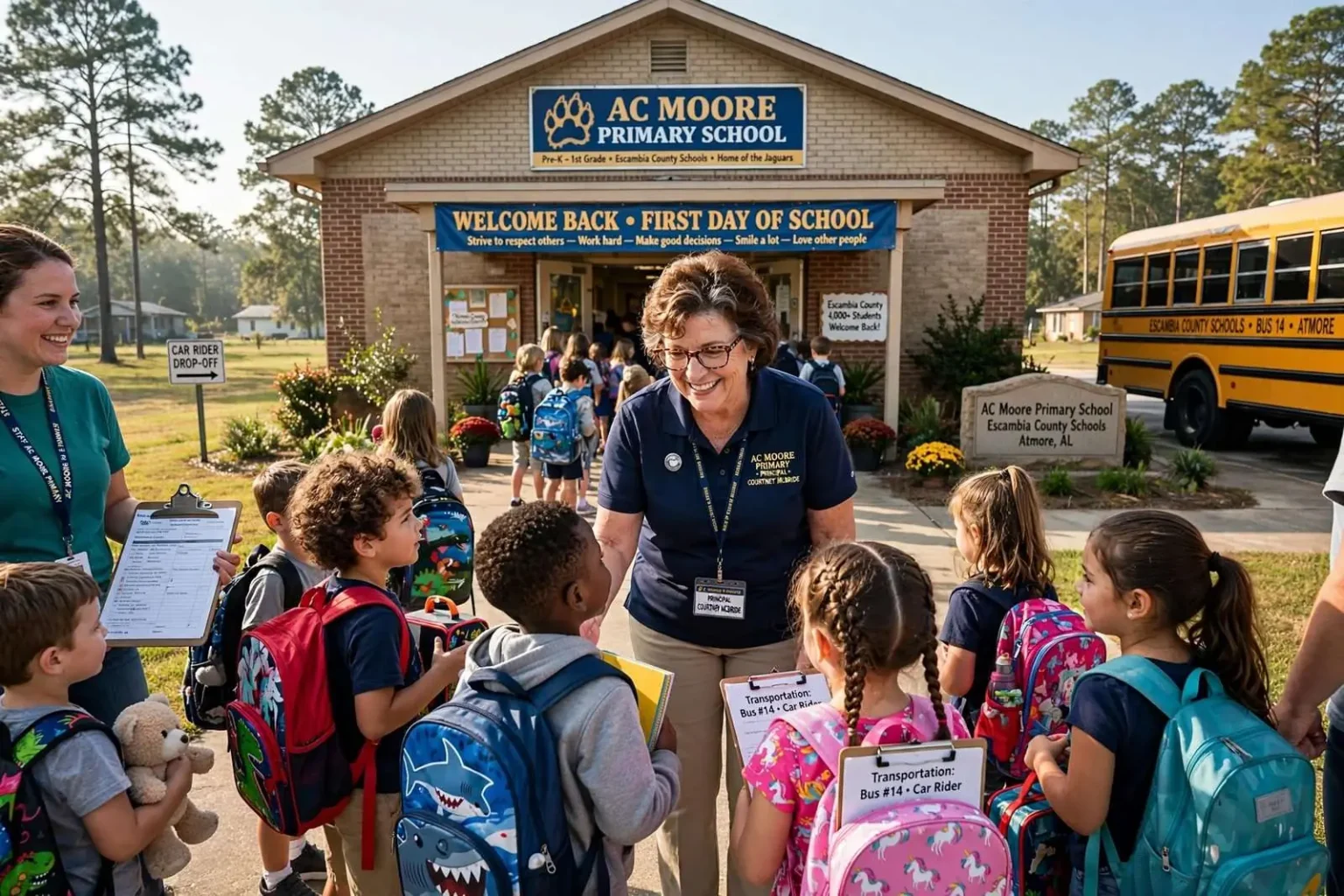
ATMORE, Ala. — It’s a new school year for thousands of kids in Escambia County, Alabama, with teachers and administrators spending the summer preparing for a smooth first day. Hallways have been waxed, classrooms stocked and bus routes mapped across the county as the district’s campuses open their doors for another year of classes in the small farming communities that dot this corner of south Alabama near the Florida line.
Escambia County’s district serves more than 4,000 students, making it a relatively small county school system, but staff say that hasn’t lessened the effort that goes into getting ready for opening day. The district’s schools spread across a wide rural geography, serving communities including Atmore, Brewton, Flomaton and Pollard, and the distances involved shape nearly every logistical decision administrators make — from transportation planning to staffing to the way parents and schools communicate in the opening weeks.
Small systems carry their own distinctive character. In a district of this size, administrators know teachers by name, teachers often know entire families across multiple generations, and the schools function as anchors of civic life in towns where they are among the largest employers and gathering places. The trade-off is that every position matters: a single vacancy in a small school represents a far larger share of its faculty than the same vacancy would in a city system, which makes summer hiring and placement especially consequential.
At AC Moore Primary School, which enrolls more than 300 students from pre-K through first grade, Principal Courtney McBride said she was asked to come out of retirement to lead the school and quickly grew attached to its students and staff. Her return to the building reflects a reality common in small Alabama districts, where experienced educators are often called back to steady a campus through a transition, and where the bonds between a school and its community run deep enough to make such requests hard to refuse.
“It’s so exciting just to see new faces. It’s a brand new school year. Everybody’s getting started off on the right foot in the right direction. I am really most excited, I think, about my team of people. Their goal is pretty simple. It’s one word, and it’s excellence,” McBride said.
The earliest grades carry particular weight in any school system’s plans, and AC Moore’s pre-K through first grade span covers the years when children learn the foundational skills everything else is built on. Teachers at this level are teaching letter sounds and counting, but they are also teaching children how to be students — how to line up, take turns, sit for a story and separate from their parents at the door. A strong start in those years shapes outcomes for years afterward, which is why primary campuses often pour disproportionate attention into the opening days of school.
McBride said the school leans on a daily motto to keep students and staff aligned heading into the new year: “AC Moore Jaguars will strive to respect others, work hard, make good decisions, smile a lot and love other people.” The recitation, repeated each morning, is a fixture of life at many Alabama elementary schools, where a shared creed gives young children a common language for behavior and effort. At a school where most students are learning school itself for the first time, the motto doubles as a checklist for the day ahead.
The Logistics of the First Day
One of the more logistically demanding parts of opening week, McBride said, is making sure every teacher knows exactly how each student is getting home at the end of the day. In a rural county, that question is more complicated than it sounds: some children ride buses on long routes through the county’s outlying roads, others are picked up by parents or grandparents, and some head to after-school programs whose arrangements change from day to day. A first grader who cannot say how they are getting home is a genuine safety concern, so schools build systems to get it right before the bell rings.
The school works to sort out that paperwork through open houses or meet-the-teacher nights beforehand, and staff make a final push to confirm any outstanding transportation details on the first day itself. Those pre-opening events also serve families making the transition into school for the first time, giving pre-K and kindergarten parents a chance to see classrooms, meet teachers and ask questions before the structured schedule begins. For many families, the meet-the-teacher night is the emotional start of the school year, even before the first morning bell.
Behind the scenes, the summer preparation that makes a first day go smoothly is months in the making. Custodial crews deep-clean buildings that sit mostly empty in June. Registrars process enrollments and withdrawals as families move in and out of the county. Bus drivers re-learn routes and stop times, and principals puzzle through master schedules to balance class sizes with the staff they have. In a small district, those tasks are often done by a handful of people wearing multiple hats, which is why administrators describe opening week as the most intense stretch of the school year.
The first days of class set patterns that matter. Teachers spend the opening week establishing routines — how to enter the building, how to ask for help, how to move through hallways — because well-taught routines in August pay dividends in classroom time for the rest of the year. For the youngest students especially, the pace of those first days is deliberately gentle, designed to build confidence alongside expectations.
Small Schools, Big Stakes
Escambia County’s schools operate in a part of Alabama where the public school is often the community’s most visible institution. Friday night gatherings, PTO meetings and academic celebrations draw crowds in towns where fewer other venues exist. The district’s relatively small enrollment means the relationship between schools and the towns they serve is close enough that residents often remember which teachers taught their own children years earlier — a source of both accountability and loyalty for the educators who staff the buildings.
The county seat at Brewton and the larger town of Atmore anchor the district’s geography, but the schools serve families across a broad rural landscape where agriculture and small manufacturing remain the backbone of the local economy. Many students come from families who attended the same schools, and the district’s educators say that generational connection shapes the way the community supports its campuses, from booster clubs to volunteer programs.
For McBride and her staff at AC Moore, the measure of success in the opening weeks is simple: children who feel safe, parents who know where to bring questions, and teachers who start the year with the information they need about each child in their care. The transportation charts that consume so much of opening week are really a proxy for that larger goal — a school where every child is known, every day, from the first morning to the final pickup of the afternoon.
As the year gets underway across Escambia County, the same careful preparation is playing out on every campus, from the primary schools to the county’s high schools. Administrators say the early investment in a smooth opening is the foundation on which the rest of the year is built, and in a small district, everyone shares the load of making sure the more than 4,000 students starting the new year get off on the right foot.
What Families Can Expect in the Opening Weeks
School officials encourage parents to keep contact information current with their child’s school, since early dismissals, bus changes and weather decisions all depend on schools being able to reach families quickly. Parents of the youngest students should also tag backpacks with transportation details during the opening weeks, a small step that helps teachers and bus staff confirm every child’s plan. Schools will send home forms during the first days covering emergency contacts, medical information and pickup permissions, and returning those forms promptly is one of the most helpful things a family can do.
Attendance in the opening month also deserves emphasis, educators say. The habits formed in August carry through the year, and young children who miss the first days of school lose exactly the routine-building instruction that teachers consider hardest to make up. Alabama’s schools stress regular attendance from the very start of the year, and primary schools work closely with families whose children struggle with morning transitions to make sure small problems do not grow into chronic absences.
The district’s calendar for the coming year includes the familiar rhythm of breaks and progress reports that families use to plan around, and teachers will begin reaching out to parents early rather than waiting for scheduled conferences. In the primary grades, that communication often happens daily in the first weeks, as teachers learn each child’s needs and keep parents informed about how the adjustment is going.
For now, the focus across Escambia County is the same one McBride describes at AC Moore: new faces, a brand new year, and a team of people aiming at excellence. If opening week goes as planned, several thousand children across the county will board buses and walk through doors this morning into classrooms that are ready for them — and the new year in Escambia County will be underway.