A Historical Tour of Fairhope, Alabama
A WKRG Hometown Tour explored Fairhope's founding, Mobile Bay setting, public spaces and arts community.
FAIRHOPE, Ala. — A local news Hometown Tour explored Fairhope’s origin story, its setting on the bluffs of Mobile Bay, and the distinctive character of its downtown, tracing how a small band of idealists from Iowa built one of the Eastern Shore’s most beloved communities. The report recounted that Fairhope’s founders organized in Des Moines, Iowa, before choosing their site on the bluffs overlooking the bay — a location that has defined the town’s identity ever since, from its waterfront parks to the way its streets tumble down toward the water.
The Fairhope story begins in the 1890s, when a group of reformers inspired by the economic writings of Henry George set out to establish a community based on his single-tax principles. The idea behind the single tax was radical for its day: land would be held and leased by the community collectively, with a single tax on land value funding public services, while labor and improvements went untaxed. The organizers, meeting in Des Moines, formed what became the Fairhope Single Tax Corporation and went looking for land with a view to building their experiment in the free, mild climate of the Gulf Coast.
What they found was a high bluff above the eastern shore of Mobile Bay, a spot with breezes, beautiful surroundings, and rich potential. The founders chose the name Fairhope because, as the story has been told for generations, they had a “fair hope” of success. The colony was established in 1894, and the little settlement grew steadily as others drawn by the same ideals — and by the sheer beauty of the setting — joined the experiment on the bluff.
The single-tax experiment
Fairhope remains the only single-tax colony in the United States still operating under its original charter, a distinction that gives the town a place in American reform history out of proportion to its size. Over the decades the Fairhope Single Tax Corporation acquired land within the original colony boundaries, and it continues to lease that land to residents and businesses, with lease payments funding community improvements. The full Georgist vision was never entirely realized — private ownership patterns evolved, and the town incorporated in 1908 with ordinary municipal government — but the colony’s presence has left a lasting imprint on the town’s civic culture, its parkland, and its planning ideals.
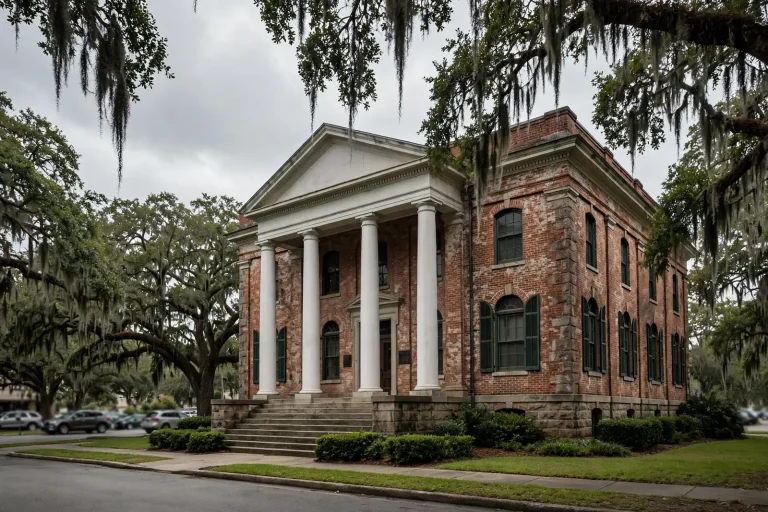
That heritage is on display at the Fairhope Museum of History, where exhibits trace the colony’s founding, the intellectual currents that produced it, and the lives of the reformers, artists, and free-thinkers who made the town their home. The town drew writers, artists, and educators early on, including figures connected to the Arts and Crafts movement and progressive education, and that creative inheritance remains visible in the galleries, bookstores, and public art found downtown today.
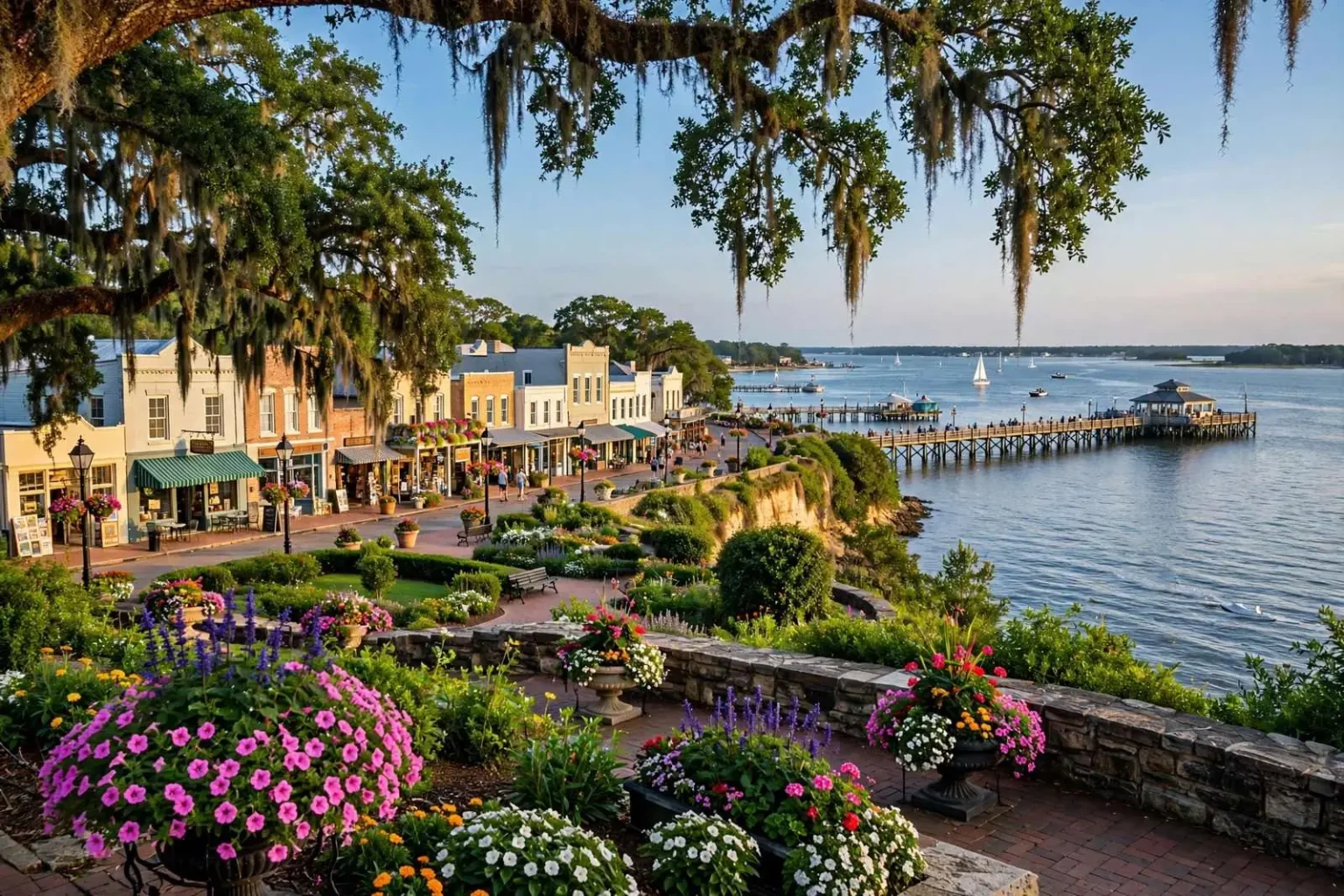
The report also described the community’s waterfront parks, its public art, and the flowers that have become a Fairhope signature. The town’s placement on the bluffs means nearly every visitor’s arrival ends at the water, where the long municipal pier reaches out into Mobile Bay and the surrounding parkland offers lawns, shade, and one of the best views on the Eastern Shore. The pier and waterfront park anchor a string of green spaces that run along the bluff, including gardens and ponds that give the town its parklike feel.
A downtown built on charm
Fairhope’s downtown, a short walk uphill from the pier, has become a destination in its own right. The report noted the galleries, shops, and restaurants that line its streets, set among plantings so lush — pots overflowing with blooms and beds bursting with color in season — that the town has earned a reputation as one of the prettiest small cities in Alabama. The flower tradition is deliberate and long-running, part of a civic aesthetic that the municipality and volunteer gardeners have cultivated for decades.
The annual arts festival stands as the town’s signature event, drawing tens of thousands of visitors to the streets around the pier each spring for juried art, crafts, music, and food. The Fairhope Arts and Crafts Festival has grown into one of the Southeast’s respected outdoor shows, and it pairs naturally with the town’s identity as an artists’ community. On festival weekends the streets fill with tents and crowds, and the town’s usual laid-back charm takes on a festive hum.
Beyond the festival, the Eastern Shore setting gives Fairhope a wealth of natural attractions. Mobile Bay’s Jubilee — the rare phenomenon in which fish, crabs, and eels swarm the shoreline in numbers — occurs on this stretch of the bay more than anywhere else, and lucky residents still speak of jubilee mornings when the shallows come alive overnight. Sailing, fishing, birding along the bay’s wetlands, and simply watching the sun set over the water from the bluff are part of the everyday texture of life in town.
As the report noted, this is a historical summary of a local feature, and details may have changed. But the through-lines remain: a town founded on an audacious idea, set on a bluff with a fair hope, and grown into a community that takes its parks, its flowers, its art, and its view of the bay seriously — a Gulf Coast original whose history is still written into its streets.
The founders who left Des Moines were part of a broader wave of American reform activity in the 1890s, an era when economic inequality, land speculation, and the forces of industrialization drove movements of every stripe. Henry George’s 1879 book “Progress and Poverty” had sold enormously well and inspired single-tax clubs across the country, and Fairhope’s organizers were among the most committed of those readers — willing to leave established lives in Iowa to put theory into practice on a bluff a thousand miles away.
The site they selected offered practical advantages beyond its beauty. Steamboats and, later, rail connections tied the Eastern Shore to Mobile, giving the young colony a commercial lifeline across the bay. The upland terrain drained well, the climate allowed year-round gardening, and the bay provided fish and recreation. Early colonists cleared land, planted orchards and vegetables, and built the first structures near what is now the downtown, organizing their common ventures through the corporation’s land holdings.
From colony to city
As Fairhope grew, so did the tension between the colony’s utopian framework and the needs of a normal town. Streets, schools, and utilities required municipal machinery that the leasehold model alone could not supply, and in 1908 the community incorporated as a municipality. The single-tax corporation persisted alongside the city, and its continued ownership of land within the original colony area has preserved green space and shaped development patterns in ways residents still appreciate. Walk the town today and the colony’s fingerprints show in the parks, the walkable scale of the core, and a civic culture that prizes aesthetics and community life.
Education became one of the town’s great enterprises. The School of Organic Education, founded in the town’s early decades by educator Marietta Johnson, attracted national and international attention for its no-fail, whole-child approach, drawing visits from prominent reformers and thinkers of the era. The school’s legacy fed Fairhope’s reputation as a place apart — a town where new ideas were welcome and where education, art, and civic idealism mixed freely.
Writers and intellectuals made the town a literary outpost as well. Over the years Fairhope’s pages in the region’s cultural history include novelists, essayists, and publishers who found the bluff town congenial to their work, and the bookstore and library traditions that grew from that culture remain fixtures of downtown. The Fairhope Public Library, housed in a treasured building near the center of town, ranks among the most heavily used small-city libraries in the state.
The bay in daily life
Life in Fairhope is oriented to Mobile Bay the way life in river towns is oriented to the water. The municipal pier — rebuilt over the years but always the town’s gathering point — carries walkers, fishermen, and sunset watchers out over the bay, and the adjacent park hosts concerts, festivals, and the daily tide of picnickers. Sailboats from the area’s yacht club dot the water, and the bay’s working heritage — fishing boats, oyster beds, and the ports across the water in Mobile — remains part of the view.
The Jubilee deserves its reputation as the bay’s signature wonder. When conditions of wind, tide, and dissolved oxygen align just so, bottom-dwelling sea life from flounder to blue crabs to shrimp congregates along the shoreline in astonishing numbers, and word spreads through town at dawn as residents head to the water with buckets and gigs. The phenomenon is unpredictable and unexplained in every particular, but it happens on the Eastern Shore more often than anywhere else in the world, and it has woven itself into Fairhope’s identity.
The town’s growth over recent decades — Baldwin County has been among Alabama’s fastest-growing — has brought new neighborhoods, traffic, and the pressures common to desirable small cities. Yet the anchors the report described hold: the waterfront parks, the public art scattered through downtown, the flowers that spill from planters each spring, the galleries and shops that keep the walkable core alive, and the annual arts festival that fills the streets with visitors each March. For a town founded as an experiment with only a “fair hope” of success, Fairhope has made good on its name — and its history remains the best guide to understanding what makes the place special.