5.6 Million Birds Were Over Alabama in a Single Night. Fall Migration Is Underway on the Gulf Coast
BirdCast estimated 5,607,800 birds aloft over Alabama at peak activity on a single August night, and only about 2.9 million crossed the state entirely. Conservation Alabama is asking Gulf Coast residents to make three small changes at home.
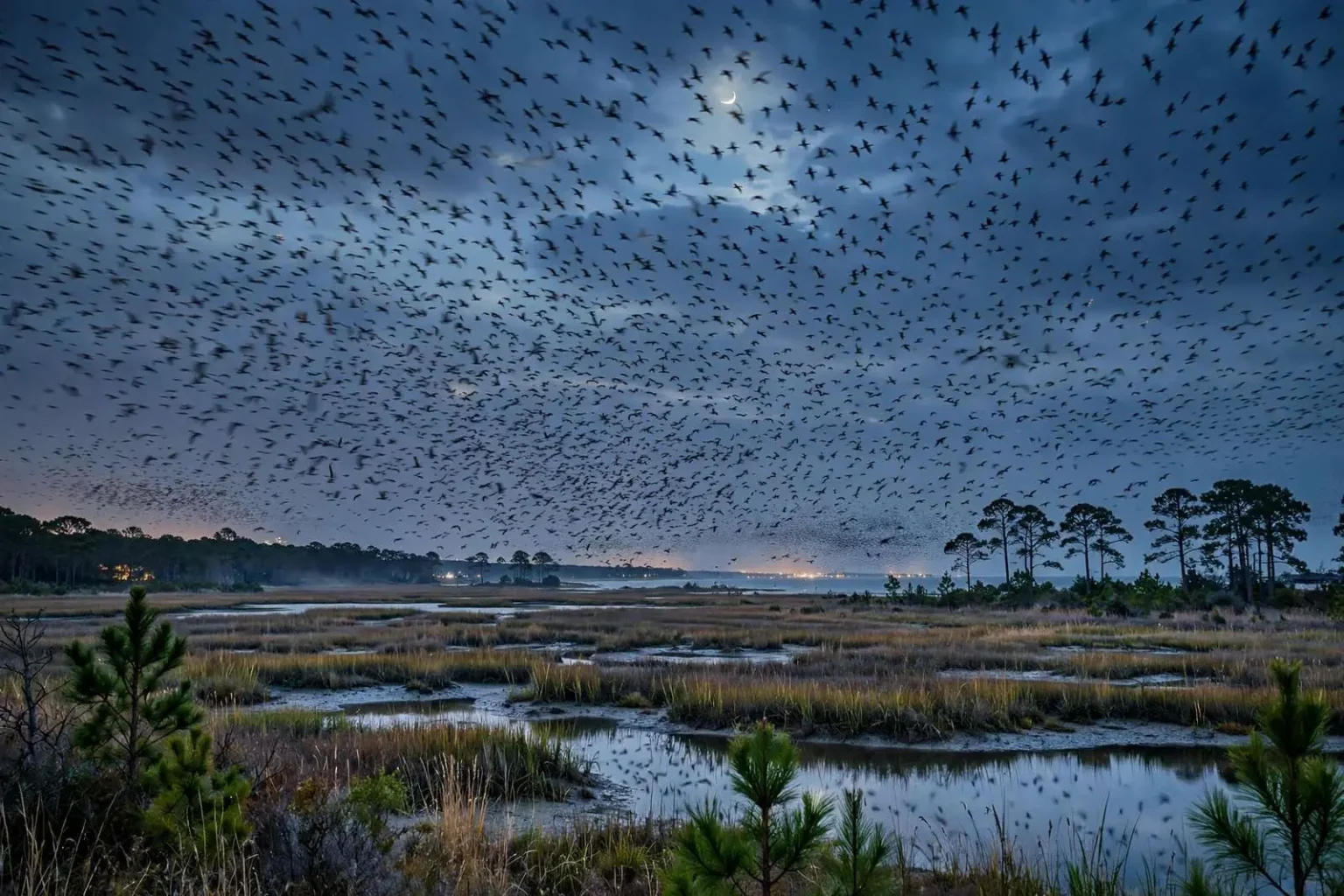
MOBILE, Ala. — More than 5.6 million birds were detected over Alabama in a single night this week, a staggering count that confirms what birdwatchers and ecologists across the Gulf Coast have been sensing: fall migration is well underway.
The massive nighttime movement, recorded by radar and other tracking systems, highlights the region’s importance as a critical corridor for birds traveling from breeding grounds in the northern United States and Canada toward wintering areas in Central and South America.
A single night tells a big story
The 5.6 million figure represents the number of birds observed crossing the state during nighttime hours, when many migratory species prefer to travel. The count comes from a combination of radar observations and automated monitoring systems that have become increasingly important tools for understanding bird migration patterns.
Fall migration along the Gulf Coast is one of the most significant wildlife movements in North America. The region’s mix of coastal wetlands, forested areas and agricultural lands provides essential stopover habitat for birds that need to rest and refuel during long journeys.
The peak of fall migration in the region typically occurs between late August and mid-October, though timing can vary depending on weather patterns, particularly cold fronts that push birds southward.
How nightly migration is measured
Nightly migration estimates like this one are commonly drawn from BirdCast, a project of the Cornell Lab of Ornithology, Colorado State University and the University of Massachusetts Amherst. BirdCast uses data from the National Weather Service’s network of NEXRAD weather radars, which pick up flocks of birds aloft after dark, to estimate how many birds are flying over a state or county on a given night and to forecast migration intensity several days ahead.
Because most songbirds migrate at night and can be disoriented by artificial light, BirdCast and conservation groups use these forecasts to encourage homeowners and building managers to turn off nonessential outdoor lighting on heavy migration nights.