
Family Says 911 Call Went Unanswered as Eight Mile Trailer Burned
An Eight Mile family says their 911 call rang unanswered as a trailer burned; the county dispatch center cites 24 calls in 10 minutes.
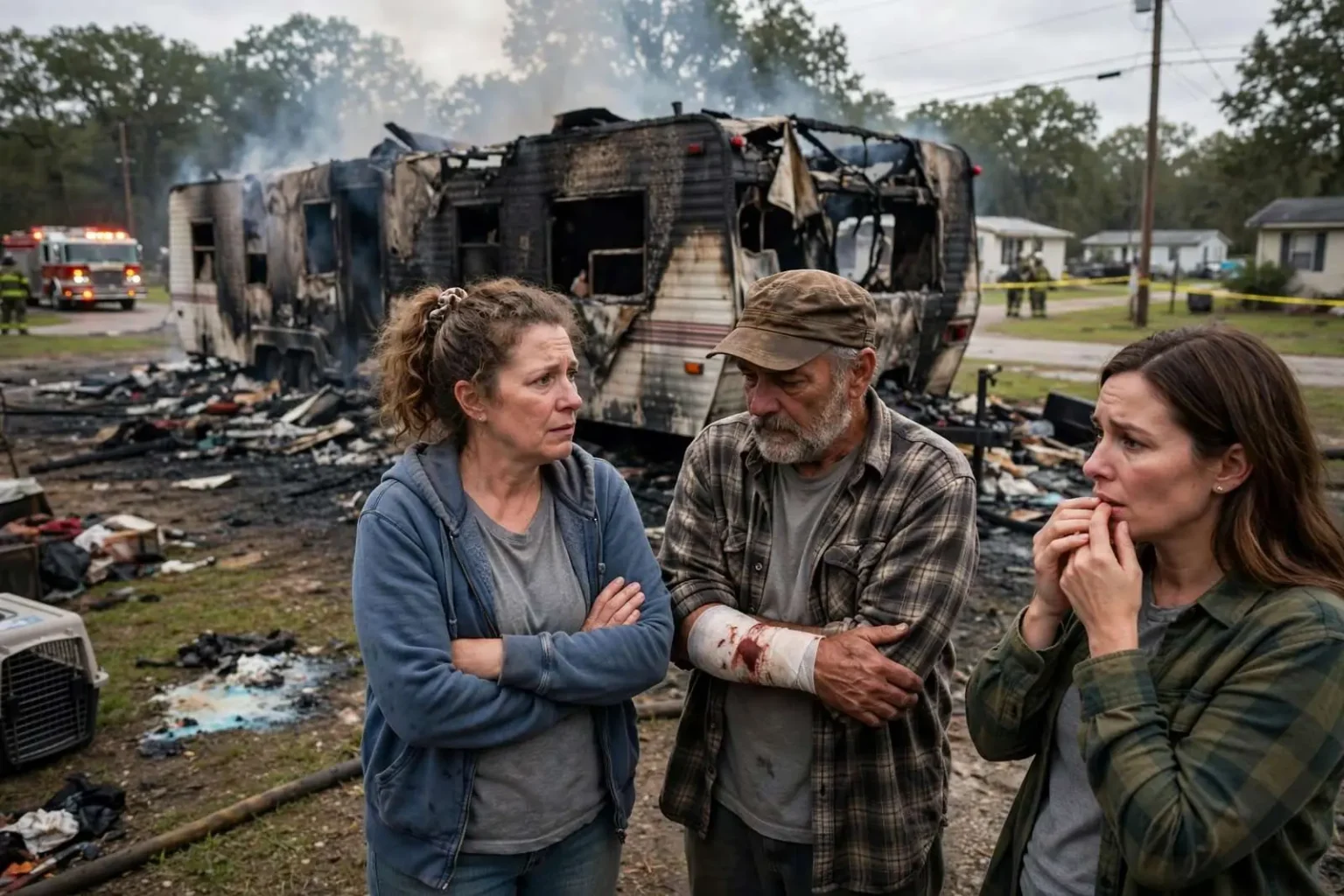
An Eight Mile family is questioning why their emergency call went unanswered while a relative’s mobile home burned, though the county’s 911 center says the delay stemmed from an extraordinary surge of calls.
Helen Helveston said she could see flames and smoke pouring from her cousin’s back window from her own nearby home. When she dialed 911 for help, she said the phone rang about fifteen times before she gave up and called again; a dispatcher answered on her second attempt.
“I just want to know why they didn’t answer the first time,” Helveston said. “I don’t know if it would have made a difference or not, but I thought somebody was always supposed to answer the 911.”
Family members believe an electrical spark ignited the fire in the home’s back bedroom. The trailer and everything inside it were destroyed, and the family lost a small dog in the blaze, though no one was hurt. The family is staying in another home.
The fire also injured a neighbor: Helveston’s uncle, who lives next door, cut his arm on broken glass while spraying the flames with a garden hose — the injury that sent her into a panic to reach a dispatcher.
Dispatch center points to call surge
Charlie McNichol, deputy director of the Mobile County 911 Communications Center, said that at the time of the call the center received twenty-four calls within ten minutes with only four people working the phones.
“If there’s anything we could have done better, we’ll critique it and will train on that,” McNichol said. “At the same time, that does seem like a lot of calls coming in within a ten-minute period for us to process.”
He stressed such delays are rare and urged anyone facing an emergency to keep calling — but offered one key tip: don’t hang up, even if the line keeps ringing. Callers who hang up lose their place in queue and wait longer than those who stay on the line.
The mathematics of that surge explain what the Helveston family experienced. Twenty-four calls in ten minutes averages one call every twenty-five seconds, and with four dispatchers on the phones, each caller would have gotten roughly ninety seconds of a dispatcher’s time before the next call arrived — if every call were brief. Emergency calls rarely are: a dispatcher answering a house-fire report must confirm the address, the nature of the emergency, whether anyone is trapped, and the callback number, all while entering the call into the computer-aided dispatch system that sends the fire units. A single complex call can consume several minutes, and a queue of waiting callers accumulates behind it. Fifteen rings — roughly forty-five seconds to a minute — is long enough to feel like an abandonment from a driveway watching flames, and short enough to happen in exactly the arithmetic McNichol described.
The guidance McNichol offered — stay on the line, don’t hang up and redial — reflects how modern 911 queueing actually works. Calls ring into a distribution system that holds them in the order received and delivers each to the first available call-taker; a caller who hangs up returns to the back of the line on redial, behind everyone who dialed after them. The instinct to hang up and try again is nearly universal — it feels like action — but in a surge it actively worsens a caller’s wait and adds a duplicate call to the queue. Dispatch centers nationally have spent years trying to teach that counterintuitive lesson, and it is the one piece of practical advice that emerged from this incident for every resident who might someday face the same situation.
The incident also illustrates what dispatch professionals call call dilution during visible emergencies. A fire, a crash, or a shooting on a busy road produces multiple simultaneous calls about the same incident — neighbors, passersby, the people inside the home — and each of those calls consumes a dispatcher’s time even though a single report would have sufficed. Twenty-four calls in ten minutes about a fire that half a street could see is exactly the pattern: the incident generates its own call storm at the precise moment the center most needs to process calls quickly. Some modern centers mitigate this with technology that identifies duplicate calls from the same location and text-to-911 systems that let callers report when voice lines are saturated, though neither eliminates the fundamental constraint of staffed phones.
Staffing levels at 911 centers are a persistent national issue, and Mobile County’s experience reflects pressures that rural and suburban centers across the country describe. Dispatcher positions are demanding — shift work, high-stress calls, mandatory overtime during surges — and turnover is chronic. Training a new call-taker takes months before they can work a console unsupervised, which means vacancies translate directly into thinner staffing during exactly the weather events and evening hours when call volume spikes. Centers the size of Mobile County’s balance budgets against worst-case surges, and the result, as this incident shows, is a system sized for the ordinary that can be overwhelmed by the extraordinary.
The electrical spark the family suspects as the fire’s cause is among the most common ignition sources in mobile home fires. Older trailers carry electrical systems designed for lighter loads than modern appliances place on them, and connections behind walls, under appliances, and in the panels age in ways that generate heat no one sees. The back bedroom — where the fire started here — is a common location, where window air conditioning units, space heaters, and overloaded extension cords concentrate demand. Fire investigators distinguish between electrical failures that ignite nearby combustibles and other causes, and the family’s account of a spark is consistent with the pattern investigators document nationwide, though an official cause determination would come only from the fire marshal’s review.
The total loss the family suffered — the structure and everything inside — is the modal outcome of mobile home fires, which spread faster and kill at higher rates than site-built housing. Manufactured homes’ lightweight construction and combustible interiors give occupants less time to escape, and their age stock in the South includes many units built before modern HUD fire-safety standards took effect in 1976. Smoke alarms remain the decisive variable: a working alarm converts a nighttime fire into an evacuation, while its absence converts it into a fatality investigation. The Eight Mile family’s outcome — destruction of property but no human casualties — sits at the better end of the distribution, helped by the daylight hour and by neighbors who acted immediately.
The uncle’s injury — cut on broken glass while attacking the fire with a garden hose — is also a familiar pattern. Fire service messaging consistently urges civilians not to fight structure fires: a garden hose’s reach and volume are trivial against an interior fire, and breaking windows or approaching burning structures produces the lacerations, burns, and smoke injuries that fill the injury statistics of residential fires. The instinct to act with whatever is at hand is understandable, and in this case the cost was a cut arm rather than worse — but the safety lesson mirrors the 911 advice: the most useful thing a civilian can do is call, stay on the line, and let the professionals work.
For the 911 center, McNichol’s promise of a critique and training review reflects the standard quality-assurance cycle that dispatch operations run after any incident that generates complaints. Centers record every call, and supervisors replay surge periods to determine whether calls were processed in order, whether any could have been handled faster, and whether staffing was deployed optimally. Findings feed training and, where patterns emerge, staffing requests to the agencies that fund the center. The public critique of a bad night is the mechanism by which dispatch operations improve — and the transparency of McNichol’s explanation, in an incident the family experienced as a failure, is itself part of the accountability that public safety agencies owe the residents they serve.
The family’s question — why didn’t somebody answer — has an answer, and the answer is arithmetic: too many calls, too few call-takers, in the minutes when their cousin’s home burned. What survives the incident is the practical residue: a family in another home, a neighborhood that knows what a call surge sounds like, and the advice McNichol repeated for the next emergency — stay on the line, keep calling, and trust that the dispatcher will pick up as soon as one is free.
Eight Mile, the unincorporated community where the fire occurred, sits in the northwestern reaches of Mobile County, where mobile homes and older rural lots predominate and fire protection falls to volunteer and county departments rather than city hydrant grids. Response times in such areas are naturally longer than in the city core — stations are farther apart, water supply often means tanker shuttles, and the first engine may arrive to find a structure already fully involved. That reality shapes outcomes in mobile home fires across the county’s unincorporated stretches: the fire that a city department might knock down in its room of origin becomes a total loss by the time the first apparatus rounds the corner. The family’s loss, in that context, was not unusual for the geography — only the unanswered 911 call layered an extra grievance onto an ordinary tragedy.
The 911 system that Helveston reached has its own history in Mobile County. The county’s emergency communications center consolidated dispatch for police, fire, and medical calls, serving both the city and the county through a unified system of call-taking and radio dispatch. Consolidation brought efficiencies — shared staffing, standardized training, unified equipment — but it also concentrates risk: a surge at the unified center affects everything at once, whereas older fragmented systems might have had a county call answered even while the city’s lines were saturated. The center’s leadership, McNichol among them, operate within that trade-off, and every surge critique weighs whether the day’s staffing matched the day’s demand.
Insurance and recovery for a family in this position follow the paths that disaster-response workers know well. A total-loss house fire displaces a household overnight, and the Red Cross’s Alabama chapter — which responds to house fires across the region more often than to any other disaster — provides immediate shelter, food, and replacement medications while families reach their own networks. Insurance recovery, where a policy exists, proceeds through the adjuster’s determination of cause and loss; where no policy exists, families rely on the church networks, charity funds, and family housing that mobile home communities extend in these situations. The Helveston family’s move into another home reflects the informal support system that such communities provide — the practical resilience of families who absorb a relative’s displacement as their own project.
The incident’s legacy, for the family and for the center that served them, runs on parallel tracks. The 911 center’s critique will conclude with findings the public will rarely see — staffing adjustments, training refreshers, perhaps a policy change — while the family’s memory of the unanswered rings will persist long after the burned trailer is cleared from its lot. Between those tracks sits the system’s honest accounting: a center that answers most calls instantly, that failed one family on one night under a load the arithmetic couldn’t cover, and that examined itself in public afterward — the difference between a system that failed and one that fails.


