Flooding Still Plaguing Fort Morgan Weeks After Hurricane Sally
Standing water still plagued parts of Fort Morgan, Alabama, weeks after Hurricane Sally, with officials saying private-property flooding is owners'.
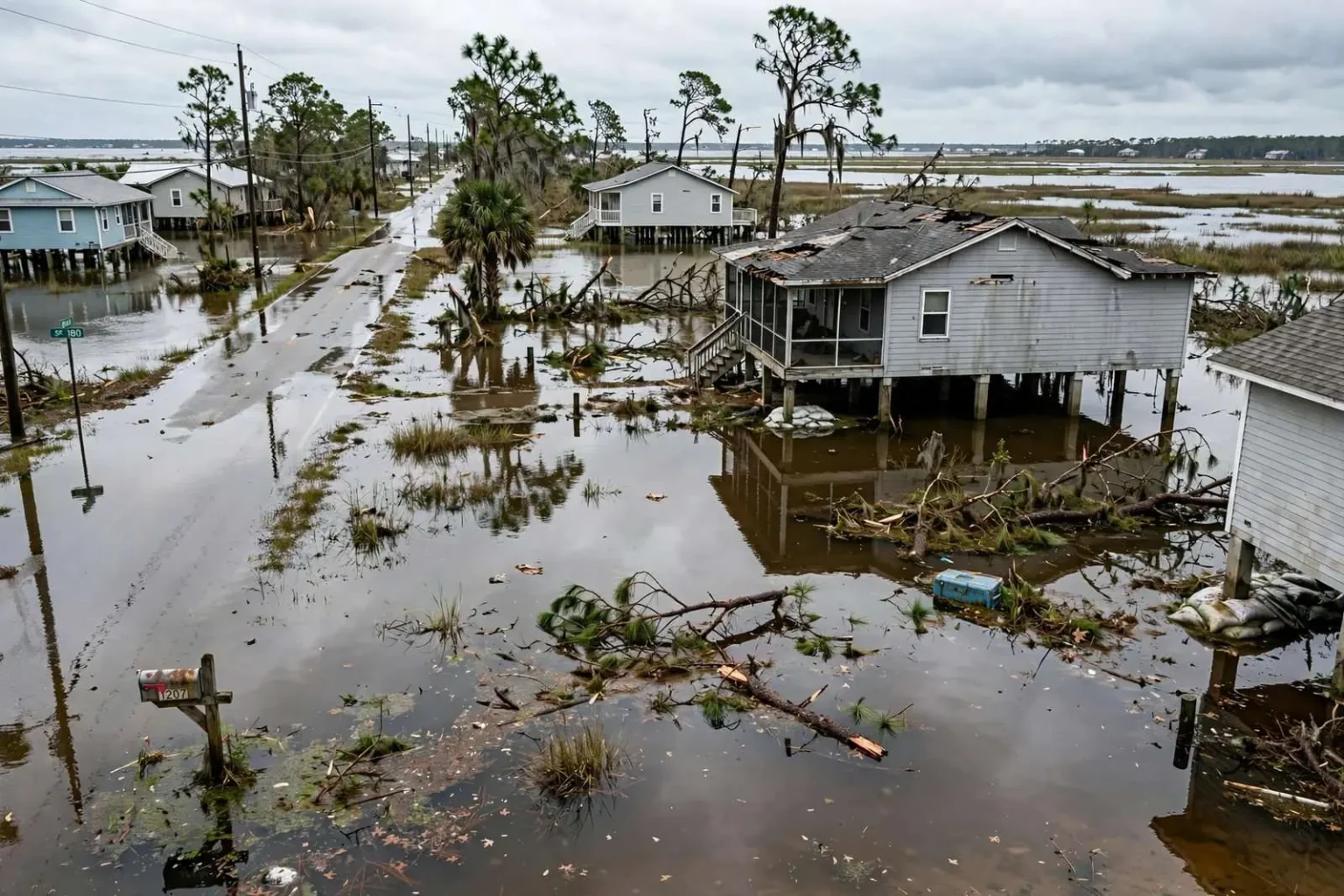
FORT MORGAN, Ala. — Standing water continued to pool in parts of Fort Morgan weeks after Hurricane Sally, leaving a handful of residents on the low-lying peninsula dealing with water that has yet to drain — and officials say there is little the state or county can do about it, because the flooding sits on private property.
Some low-lying spots along the peninsula remained underwater in the weeks following the storm, a stubborn after-effect of the surge and rain that Sally drove across the Alabama Gulf Coast when it came ashore in September 2020. Because the affected areas are on private land, responsibility for removing the water falls to the property owners rather than public agencies, according to officials.
The persistent flooding is one of the lingering effects of a hurricane that hammered the coast with high winds, a storm surge and heavy rain — and on a peninsula as low and narrow as Fort Morgan, those three forces combine in a way that public works crews cannot simply reverse once the storm has passed.
For the residents still dealing with standing water weeks later, the situation captures the particular vulnerability of the Fort Morgan peninsula: a strip of land between Mobile Bay and the Gulf of Mexico where the water table sits close to the surface, the natural drainage is slow, and the margin between a wet yard and a flooded one is measured in inches of elevation.
The peninsula and its water problem
Fort Morgan extends more than 20 miles west from Gulf Shores toward the historic fort at its western tip, a community of homes, condominiums, and vacation rentals strung along State Route 180 between the bay and the Gulf. Much of the peninsula sits only a few feet above sea level, and the marshes and swales that once absorbed storm water have been built over with development that drains less naturally than the landscape it replaced.
When a hurricane’s surge pushes water in from the Gulf and the bay at the same time, the peninsula floods from both sides — and when the surge recedes, the water that remains is trapped in low spots with nowhere to go. Rain from the storm adds to the standing water, and weeks of slow evaporation and percolation into the sand follow. That is the sequence Fort Morgan residents were still living with weeks after Sally’s landfall.
The peninsula’s geography explains why officials had so little to offer. Public drainage systems — ditches, culverts, and pumps — handle water in public rights-of-way, and Baldwin County maintains the roads and roadside drainage along Route 180. But water pooled on private lots is, in the eyes of property law and public works budgets alike, a private problem: the county cannot run equipment across private land to regrade a yard or cut a drainage path without the owner’s direction, and it cannot spend public money improving private property.
Hurricane Sally and the surge that would not leave
Hurricane Sally came ashore near Gulf Shores on Sept. 16, 2020, as a Category 2 storm with winds near 105 mph, moving slowly enough to pile an enormous volume of water onto the coast. The slow forward speed — the feature that made Sally so destructive — meant hours of onshore winds pushing surge into the bays, sounds, and low-lying communities on both sides of Mobile Bay.
The storm’s rain totals, measured in feet in some locations, combined with the surge to produce flooding that persisted long after the winds died. On the Fort Morgan peninsula, where Sally’s eyewall passed nearly overhead, residents dealt first with downed trees, power lines, and roof damage, and then — in the weeks that followed — with the water that stayed: yards that would not dry, driveways still under water, and the mosquito and mold problems that standing water brings to a coastal community in September.
Weeks after landfall, the standing water described in the report was the storm’s slowest-moving damage. Wind damage gets repaired and debris gets collected, but pooled water on flat, sandy ground can linger until weather, time, and the property owner’s own drainage work remove it — and on private property, that work belongs to the owners.
What property owners can and cannot do
The officials’ message — that removing the water falls to property owners — defines the options for Fort Morgan residents still dealing with it. Private solutions on a coastal peninsula are limited by the same geography that caused the problem: pumping water from one low spot typically moves it to another, and cutting drainage across a neighboring property requires the neighbor’s agreement or an established easement.
Homeowners’ associations and property owners along the peninsula sometimes organize drainage improvements on their own — regrading lots, clearing ditches on private land, and installing culverts where they hold the rights to do so. But large-scale drainage on the peninsula runs through a patchwork of private holdings, state lands around the fort and the Bon Secour National Wildlife Refuge, and county rights-of-way, which is why residents’ complaints about standing water so often end at the boundary line of their own property.
The financial side compounds the difficulty. Flood damage from standing water that entered a home is covered only by flood insurance through the National Flood Insurance Program, and damage to landscaping, yards, and unimproved land is generally not covered at all. For a handful of Fort Morgan residents with water that would not drain, the costs were theirs to carry, on their own land, with their own contractors.
Baldwin County’s flood framework
Baldwin County, which includes Fort Morgan, has spent decades building the regulatory framework that coastal Alabama’s growth requires: floodplain management under the National Flood Insurance Program, building elevation requirements in flood zones, and drainage review for new development. Those rules shape how the peninsula rebuilds after storms like Sally — homes elevated higher, drainage plans scrutinized — but they do not equip the county to drain private land after a flood, and officials’ response to the post-Sally complaints reflected exactly that distinction.
The county’s role after a hurricane runs instead through debris removal on public roads, damage assessment that feeds state and federal disaster declarations, and coordination with FEMA on assistance programs for affected households. Sally’s aftermath produced all of that across Baldwin County, which sustained some of the heaviest damage of any Alabama county in the storm.
What the county cannot do is the thing the standing water demanded: enter private property and regrade the land. That limit — frustrating to residents, essential to the legal structure of property and public spending — is the reason weeks-old floodwater could persist on a peninsula full of heavy equipment, with the government’s hands effectively tied.
A lingering lesson of the 2020 season
The water that stayed on Fort Morgan after Sally taught a lesson that coastal residents have absorbed storm by storm: the duration of a hurricane’s damage is not set by the hurricane alone. A slow-moving storm that parks surge and rain on low ground creates flooding that outlasts the emergency response, the news coverage, and the debris collection — and on privately held low ground, the recovery clock belongs to the property owners.
For the handful of residents still dealing with standing water weeks after the storm, the officials’ answer offered no fix, only a clear assignment of responsibility. The water would leave when drainage, evaporation, and the owners’ own efforts combined to remove it — and until then, the persistent pools were part of what Sally left behind on the Alabama Gulf Coast, on the land, on private property, in Fort Morgan.
Fort Morgan’s storm history and its future
Sally was far from the first hurricane to leave water standing on the Fort Morgan peninsula — Hurricane Ivan in 2004 and Hurricane Katrina in 2005 both flooded the same low ground, and older residents can catalogue storms back through the decades by where the water reached. Each event has pushed the community’s rebuilding higher and its drainage planning more urgent, and each has also demonstrated the same property-line limit that shaped the response to Sally’s lingering pools.
The peninsula’s future development will be shaped by that record. Elevation requirements under the floodplain rules push new construction upward, and buyers on the peninsula increasingly ask direct questions about how a specific lot drained in the last storm — a practical inquiry that no marketing description replaces. Lots that held Sally’s water for weeks carry that history into their value and into their owners’ rebuilding decisions.
For now, the standing water that remained weeks after the September 2020 landfall stands as the storm’s most patient damage: not dramatic, not dangerous to anyone beyond the property it sits on, but stubborn — held in place by the peninsula’s flatness, the region’s lingering high water table, and a legal structure that leaves private land to private owners. That combination, as Fort Morgan’s residents learned again in the autumn of 2020, can outlast everything else a hurricane leaves behind.