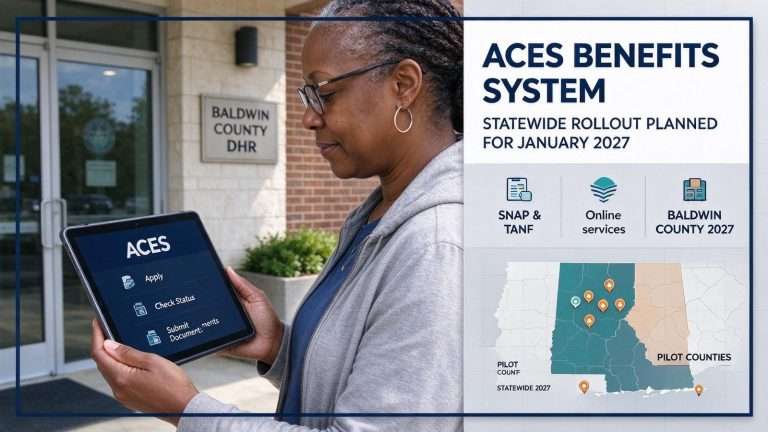
Fowl River Approves Higher Fire Fee While Grand Bay Voters Turn Theirs Down
Fowl River voters approved raising the annual fire fee to $25 while Grand Bay residents rejected a $35 fee, leaving that department on its existing budget.
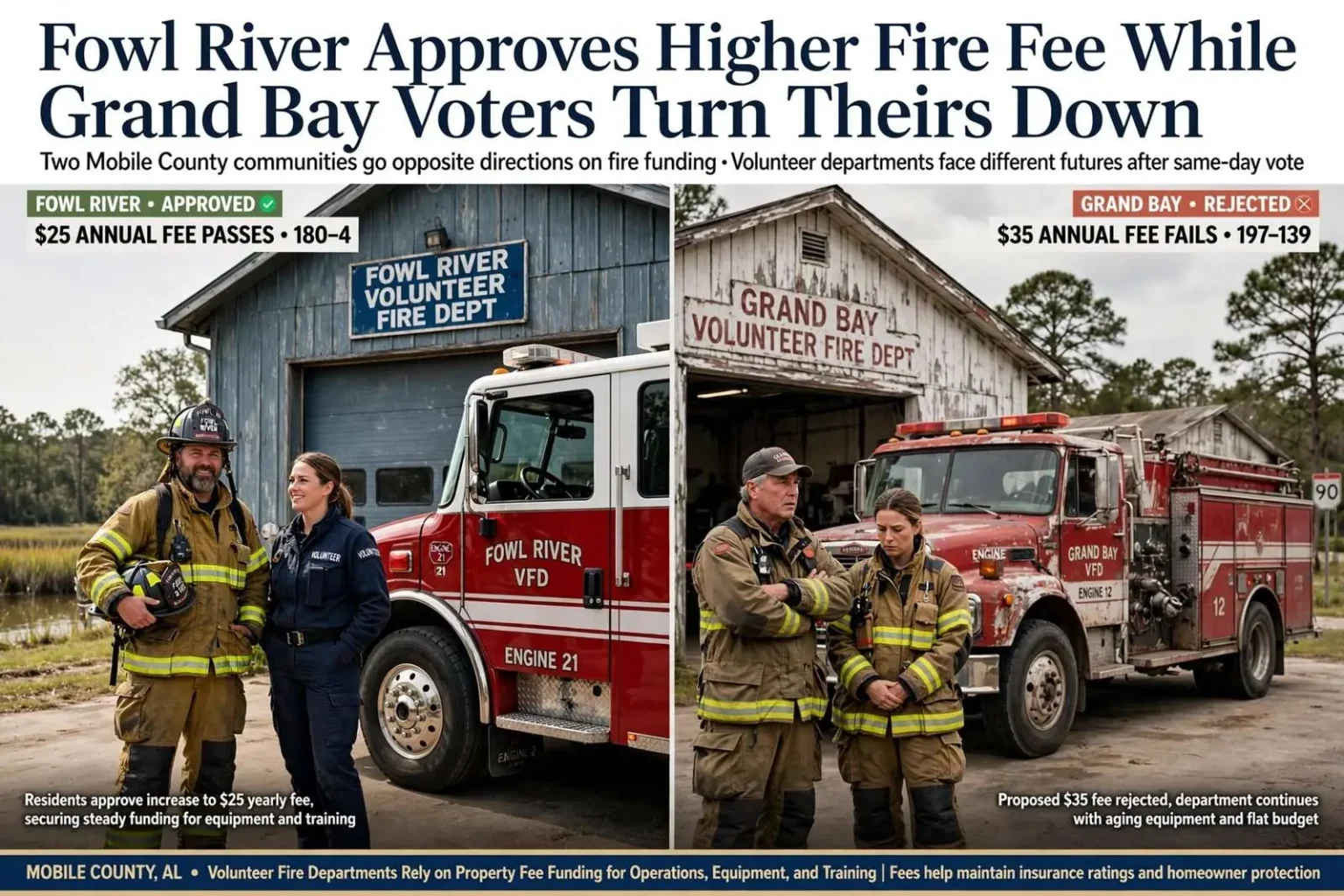
Two Mobile County communities went opposite directions on fire funding, with Fowl River residents approving an increase to their annual fire fee and Grand Bay voters rejecting a similar proposal. The contrasting outcomes, decided in the same round of voting, show how differently neighboring communities can weigh the cost of supporting the volunteer fire departments that protect them, and they leave the two departments heading into the coming year with very different budgets.
In Fowl River, the measure raising the yearly fire fee to $25 passed by a wide margin. Unofficial returns showed 180 residents in favor and just four opposed. A vote that lopsided is more than approval; it is an emphatic statement from a small community that it values its fire protection and is willing to pay a modest annual sum to keep it strong. For the Fowl River Volunteer Fire Department, the result means a dependable, recurring revenue stream that can be planned around rather than hoped for.
The outcome was different a short drive west in Grand Bay, where the proposed increase failed. Unofficial totals showed 197 votes against the measure and 139 in support. Had it passed, the fee would have risen to $35 a year. The margin was not overwhelming, but it was decisive, and it means Grand Bay’s department will continue operating under the same financial constraints that firefighters there say have squeezed them for years.
Grand Bay firefighters had argued the additional money was necessary to keep the department running properly. According to the department, its equipment has been aging for years while its operating budget has remained essentially unchanged for decades, leaving little room for replacing trucks and gear. That combination, decades-old apparatus, rising equipment costs, and flat funding, is the central dilemma for volunteer departments across rural Alabama, where the cost of a new pumper truck or a set of turnout gear has climbed far faster than the fees and fundraisers that traditionally support them.
What the Fees Pay For
Fire fees of this kind are assessed on property in a fire district and fund day-to-day operations for departments that rely heavily on volunteers, covering everything from fuel and insurance to protective equipment and apparatus maintenance. Unlike a municipal fire department supported by a city’s general fund, a volunteer department in an unincorporated community typically has no tax base of its own, and the fee is the closest thing to a steady budget it can count on. Every dollar goes toward keeping trucks in service, keeping volunteers trained and equipped, and keeping insurance costs manageable for the department and, indirectly, for the homeowners it serves.
Insurance is the quiet part of the equation that many residents never see. Fire departments are rated on their capabilities and water supply, and those ratings feed directly into the premiums homeowners pay. A well-funded department with modern equipment and adequate staffing can hold a community’s protection classification down, while a struggling department can push it up. When residents weigh a $25 or $35 annual fee, the offsetting change in their homeowner’s insurance is often the most tangible return they get.
Fire districts in Mobile County and across the state have increasingly turned to fees as their funding base has eroded on other fronts. Fundraisers and donations, once the backbone of volunteer department finances, raise less each year as costs rise, and grant programs are competitive and unpredictable. A property fee, by contrast, spreads the cost across everyone who benefits from fire protection rather than relying on the generosity of the few who show up to fish fries and barbecue sales.
Where the Two Communities Go From Here
With the Fowl River increase approved, that department gains additional annual revenue, while Grand Bay’s department continues operating on its existing budget. For Grand Bay, the immediate consequence is continuity rather than improvement: trucks that need maintenance will be maintained as funds allow, aging gear will stay in service, and the department’s leadership will go back to grant applications and fundraising to cover the gap the fee would have filled.
Fire service advocates say the Grand Bay result reflects a familiar pattern in fee votes. The proposal’s backers must explain to every property owner what the fee buys, while opponents only need to make the case that the existing service is good enough, and a community that has never had a catastrophic fire can be persuaded that the risk is remote. Departments that lose fee votes often return with the same ask a few years later, armed with better cost breakdowns, equipment demonstrations, and the visible wear of a few more years on the fleet.
The geography of both communities shapes the stakes. Fowl River stretches along the river and its tributaries in southern Mobile County, a spread-out, largely rural community where homes sit on large lots reached by narrow roads, and where a fire department’s response time is measured in minutes that depend on distance and volunteer availability. Grand Bay, near the Mississippi line, is similarly dispersed, with a mix of older homes, farms, and growing residential pockets along Highway 90 and the county roads north of it. In both places, the first truck on scene is likely to be staffed by volunteers who left their dinner tables or workplaces to answer the call.
Volunteer departments carry a share of the region’s emergency response that often goes unnoticed until something happens. Beyond fires, they answer wrecks on rural highways, medical calls where they can arrive before an ambulance, and weather emergencies, including the storm responses that coastal Alabama communities have needed repeatedly over the past two decades. The equipment those calls require, hydraulic rescue tools, air packs, radios, generators, is not inexpensive, and much of it ages out on a schedule that does not pause for budget votes.
The contrast between the two votes may also shape how other districts approach their own funding questions. Departments watching the results saw both a demonstration of what a clear, well-explained ask can win, as in Fowl River’s 180-4 outcome, and a cautionary tale about how a proposal can falter even in a community that supports its firefighters personally. The lessons, transparency about costs, early communication with property owners, and concrete examples of what aging equipment means for response capability, will travel among district leaders across the county.
For now, Fowl River’s firefighters can plan for the year ahead with a stronger financial footing, and Grand Bay’s volunteers will keep doing what volunteer departments have always done: stretching every dollar, maintaining what they have, and asking their neighbors to remember them the next time a fee question reaches the ballot. Both communities were reminded this week that fire protection in unincorporated Alabama is not an abstraction, it is a budget line that neighbors vote on, and the margin between adequate and strained can be twenty-five or thirty-five dollars a year per property.
The vote counts themselves tell something about turnout and community size. With fewer than 200 votes cast on either side in both communities, these were decisions made by a small slice of the property owners each fee would affect, which is common for special-district measures that appear on ballots without high-profile races attached. Fire district leaders often note that the people who vote on fees tend to be the ones most engaged with the department, longtime residents, volunteers’ families, and frequent callers, while many property owners encounter the question with little background. That dynamic makes outreach before an election nearly as important as the department’s record of service.
Fee structures also vary from district to district, and understanding what Fowl River’s new $25 rate and Grand Bay’s rejected $35 rate actually represent requires looking at what they buy. A fire fee is not a property tax millage; it is typically a flat annual charge per parcel, sometimes adjusted for structure type, and it appears on the tax bill or is billed directly by the district. The flat structure makes it predictable for homeowners and simple to administer, but it also means large commercial properties and small homes contribute on similar terms, a point that sometimes surfaces in debates over whether the rate is fair.
The Broader Picture for Volunteer Fire Service
The decisions in these two Mobile County communities land amid a long-running squeeze on volunteer fire service nationwide. Recruitment has grown harder as work schedules lengthen and training requirements increase, and departments that once fielded two full crews now sometimes scrape together enough responders for one. Equipment standards have risen, apparatus prices have climbed into the hundreds of thousands of dollars, and insurance requirements have tightened. Communities that fund their departments well hold onto volunteers and coverage; communities that do not sometimes see departments consolidate or dissolve, leaving the nearest engine much farther away.
Against that backdrop, Fowl River’s vote is a local win in a difficult funding environment, and Grand Bay’s rejection leaves its department facing the same national headwinds without new money. Neither outcome changes the fact that when a fire breaks out in either community, the response will come from the same kind of people it always has: neighbors with pagers, trained on nights and weekends, driving trucks bought with the community’s help. What the votes changed is only how well equipped those neighbors will be when the call comes.