Grandmother of murdered 11-month-old sues Alabama DHR officials
A Monroe County grandmother sued the Alabama Department of Human Resources, alleging it failed to protect 11-month-old Catalya Kyles before her death.
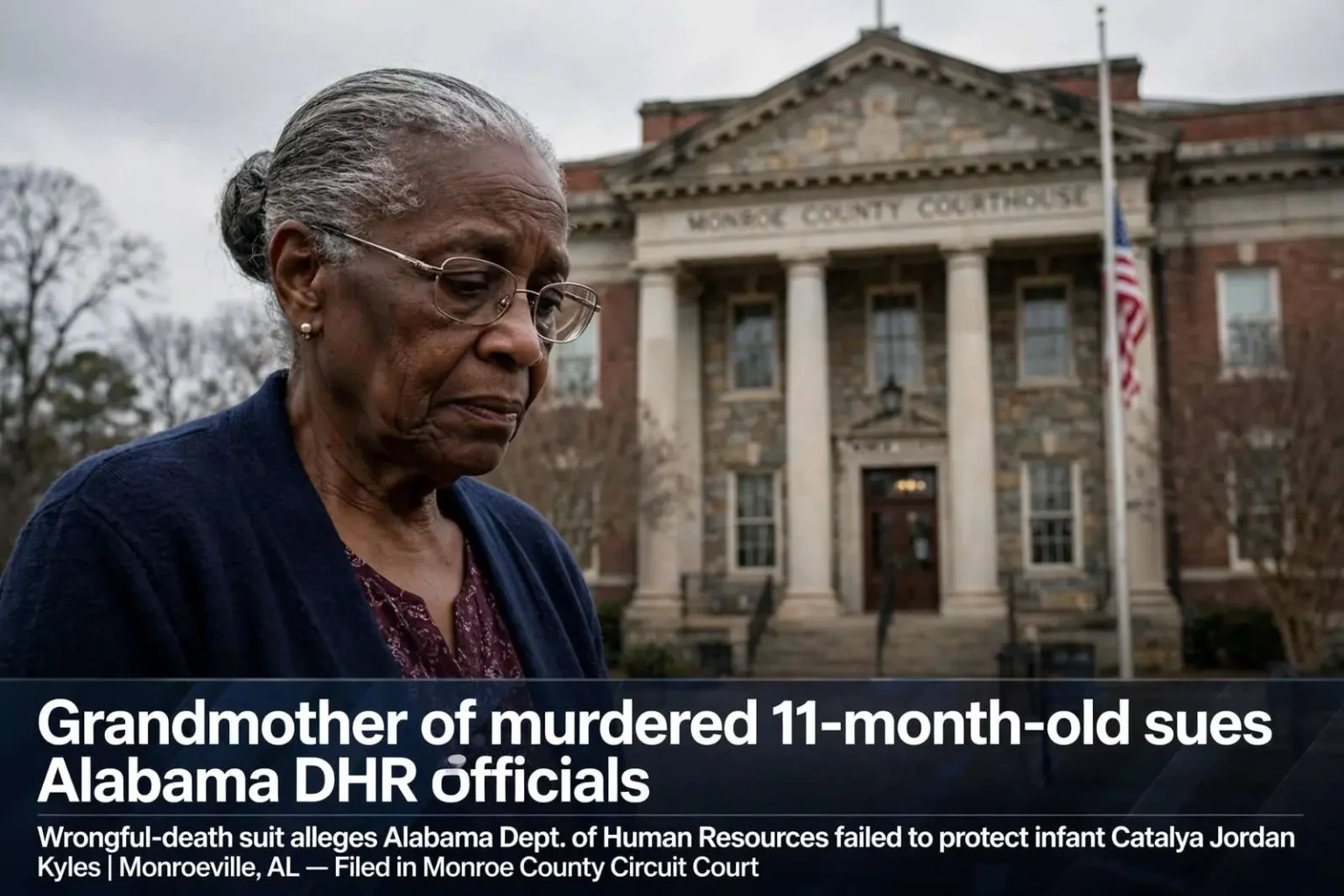
A Monroe County grandmother has filed a wrongful-death lawsuit against the Alabama Department of Human Resources and several of its officials, alleging the agency failed to protect an 11-month-old child who later died. The suit, filed Wednesday in Monroe County Circuit Court, names the Alabama Department of Human Resources, DHR Commissioner Nancy Buckner and two Monroe County DHR employees as defendants.
It claims the officials “breached the mandatory duty owed to Catalya Jordan Kyles by allowing her to remain in an ‘unsafe environment’ exposed to ongoing abuse and/or neglect, which proximately caused the death of Catalya Jordan Kyles.”
The lawsuit places at its center one of the most difficult questions in child welfare law: when a state agency has contact with a family, what legal duty does it owe the child, and who answers when the system fails? Wrongful-death claims against state human resources departments and their employees have shaped Alabama child-welfare practice for decades, testing the line between governmental discretion and the mandatory obligations state law places on agencies that receive reports of abuse and neglect.
Catalya Kyles died in May 2018. Court records show her mother, Bonita Cunningham, and Cunningham’s boyfriend, Dennis Richardson, were later indicted by a grand jury on murder charges.
How the Case Unfolded
The original case drew attention in June 2018, when authorities in Excel, Alabama, charged Cunningham in the child’s death. Excel is a small Monroe County town along the county’s western side, where the local police department typically handles investigations with support from the Monroe County Sheriff’s Office and the district attorney’s office.
According to court documents, Excel police responding to Monroe County Hospital on May 29, 2018, found visible injuries on the infant. An arrest warrant affidavit signed by Excel Police Chief Jeff Dunn alleged the child died of blunt-force trauma.
Hospital-based responses of this kind are often the point at which child abuse cases first surface to law enforcement. Medical staff who observe suspicious injuries on young children are frequently the ones who trigger both police involvement and reports to county child protective services, and the May 29 hospital response set in motion the criminal case that followed.
Excel police served the community from a small department, and the involvement of Chief Jeff Dunn himself in the warrant affidavit reflected the scale of the town’s police force and the seriousness with which the agency treated the infant’s death.
The grand jury indictment of Cunningham and Richardson moved the case into the criminal courts, where murder charges carry the state’s most serious potential penalties. Criminal prosecution and civil litigation run on separate tracks: the state’s murder case seeks to hold individuals accountable, while the grandmother’s wrongful-death suit addresses the conduct of the agency charged with protecting the child in the months before her death.
The Agency and Its Duties
The Alabama Department of Human Resources is the state agency responsible for child protective services in all 67 counties, operating through county offices that receive and investigate reports of abuse and neglect. County DHR staff make the initial contact with families, assess safety in the home, and determine whether children should remain with parents, receive in-home services or be removed into state custody.
State law assigns those responsibilities as mandatory duties rather than discretionary ones — a distinction that carries legal weight. When reports allege that children face ongoing abuse or neglect, statutes and administrative rules direct the agency to respond within defined timeframes, assess the child’s safety and take protective action when necessary. The lawsuit against the department and its officials rests on exactly that framework, alleging the mandatory duty owed to Catalya was breached.
Nancy Buckner serves as DHR Commissioner, the official who leads the statewide agency, and her inclusion as a defendant reflects the suit’s targeting of both county-level decisions and the department’s broader administration. The two Monroe County DHR employees named as defendants were, according to the suit, involved in the handling of the case at the local office level.
A DHR public relations representative said the agency had no comment on the pending litigation. The no-comment posture is standard for state agencies facing active lawsuits, and the department’s formal legal response will come through the Alabama Attorney General’s office or outside counsel representing the agency and its employees in Monroe County Circuit Court.
Wrongful-Death Law in Alabama
Alabama’s wrongful-death statute is unusual among state laws: it allows recovery only punitive damages, a structure the legislature designed to punish wrongdoers and deter future conduct rather than compensate for losses. In cases involving children, Alabama courts have long held that punitive damages serve as the primary means of signaling how seriously the state regards the loss of a young life.
Suits against state agencies add another layer of complexity. Government entities and their employees generally receive some protection under the doctrine of sovereign immunity, but Alabama law carves out exceptions where officials breach duties owed by statute — particularly in child welfare, where courts have allowed claims to proceed when agencies fail to act on known risks to children in their care.
Those cases are hard-fought. The state typically moves to dismiss on immunity grounds, and plaintiffs must thread their allegations to specific statutory duties and specific failures. Whether this suit clears those hurdles will be decided in Monroe County Circuit Court in the months ahead, with the criminal prosecutions of the child’s mother and her boyfriend unfolding in parallel.
Monroe County’s Courtroom History
The case lands in one of Alabama’s most storied judicial counties. Monroe County, with its courthouse in Monroeville, is famous as the hometown of Harper Lee and the setting immortalized as Maycomb in “To Kill a Mockingbird” — a novel built around a courtroom and the question of who the law protects. That legacy gives the county’s courtrooms a symbolic weight few rural jurisdictions carry, and the wrongful-death claim will be heard in the same building where generations of celebrated trials have taken place.
Rural counties like Monroe handle a disproportionate share of the state’s child welfare caseload relative to their resources. Small county DHR offices manage investigations across wide territories with limited staffing, and the employees named in suits of this kind are often the same caseworkers responsible for dozens of active family cases at once. Child welfare advocates have repeatedly pointed to that strain when cases end in tragedy, calling for more caseworkers, better training and tighter oversight of how reports are screened and handled.
Statewide attention to such strains has grown in recent years, with legislative committees and child advocacy organizations examining Alabama’s foster care caseloads, recruitment shortfalls and the working conditions of frontline county staff. Any reform conversation that follows a tragedy like this one typically centers on the same questions the lawsuit will explore: what was reported, what was known and how quickly the agency moved.
What Comes Next
The civil suit now enters the standard litigation sequence: the defendants will be served, responsive pleadings filed, and the state’s immunity defenses tested through motions before any trial date is set. Discovery — the exchange of documents and sworn testimony — will likely reach into the Monroe County DHR office’s file on the family, including what reports were received, what assessments were made and what actions were taken in the months before May 2018.
Those records will shape the case. Wrongful-death claims against child welfare agencies rise or fall on the paper trail: whether the agency had notice of danger, whether its response matched the mandates of state law and whether the harm was foreseeable. The grandmother’s allegations frame the agency’s failure in mandatory-duty terms precisely because that framing is what Alabama law requires to move past immunity.
Meanwhile, the criminal cases against Bonita Cunningham and Dennis Richardson proceed separately, with the grand jury’s murder indictments moving toward trial in the same county’s criminal courts. Prosecutors will not be bound by anything the civil suit alleges, and outcomes in one case will not determine the other — a structure that reflects the different purposes of criminal punishment and civil accountability.
A Community Left With Questions
For the Excel community and Monroe County at large, the case has reopened painful questions about how the system performed in the months before an 11-month-old died. Child deaths involving families with prior agency contact routinely prompt internal reviews, and the public dimension of a lawsuit adds an external one: the allegations, defenses and evidence that surface in court become part of the record the public can examine.
The grandmother’s decision to sue, filed Wednesday in Monroe County Circuit Court, ensures the questions will be asked formally and under oath. Whether the courts find the state breached its duty to Catalya Jordan Kyles will take months to resolve — but the filing itself guarantees that the short life and preventable death of a Monroe County infant will remain before the courts, and before the public, until they are answered.