
Great Food Truck Race Draws Biggest Crowds of the Tour to Downtown Mobile
Mobile posted the biggest crowds of the Great Food Truck Race so far as Let There Be Bacon, Lone Star Chuckwagon and The Middle Feast returned downtown.
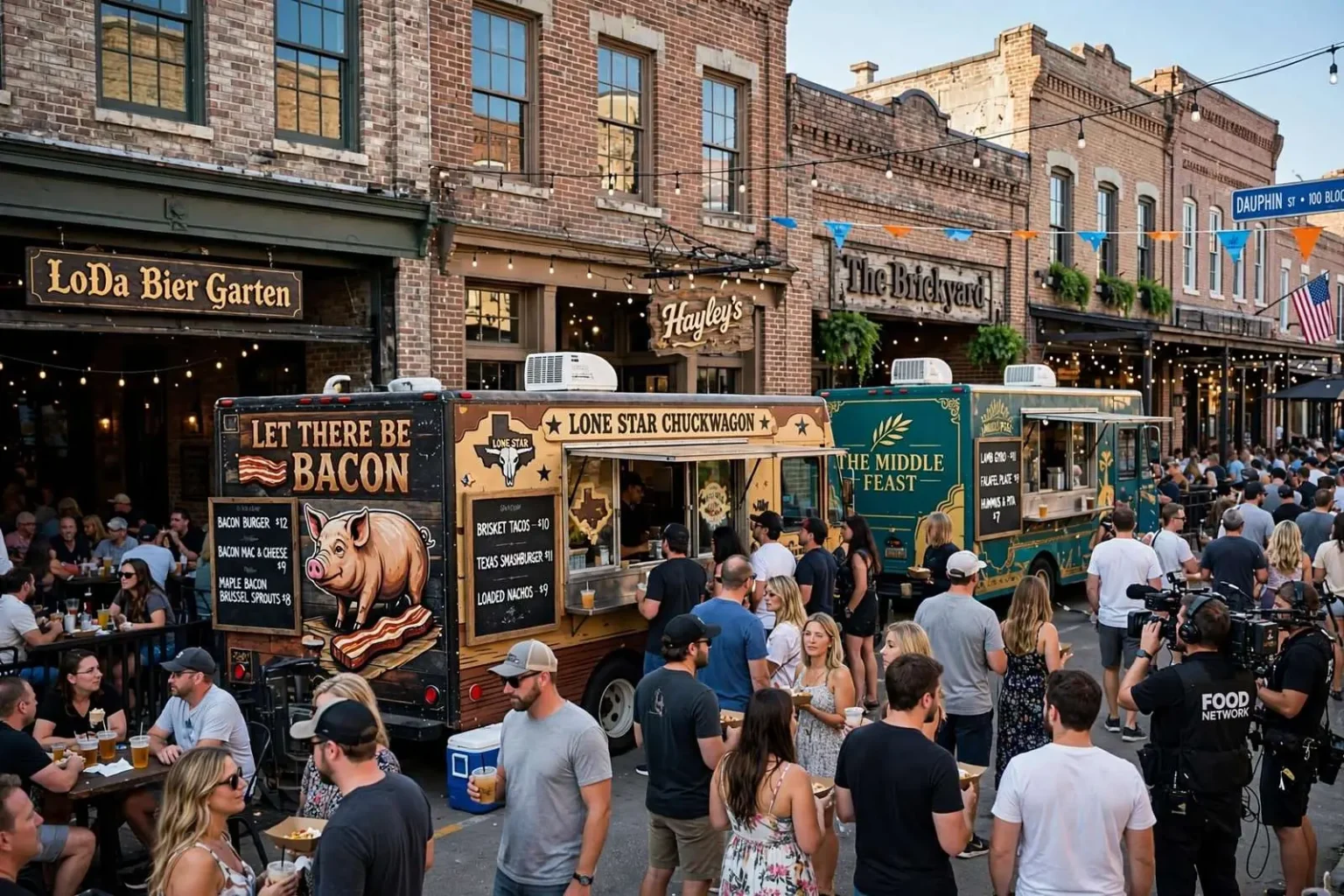
Mobile turned out in force for the Great Food Truck Race, and organizers said the city delivered the biggest crowds of the series so far. The Food Network competition, which sends a field of food trucks from city to city to sell their menus to hungry crowds, rolled into downtown Mobile for a weekend stop that transformed the Dauphin Street corridor into an open-air food hall, and the response from Gulf Coast food lovers exceeded anything producers had seen at earlier stops on the tour.
On Saturday, May 31, food trucks gathered across downtown Mobile’s Dauphin Street corridor, the historic entertainment strip that runs through the heart of the city’s LoDa district. Three competing trucks set up operations at familiar downtown businesses, pairing each visiting kitchen with a well-known local venue. Let There Be Bacon set up at LoDa Bier Garten, Lone Star Chuckwagon at Hayley’s, and The Middle Feast at The Brickyard, each offering special menus for the day alongside the regular offerings of their host establishments.
A weekend of street food on Dauphin Street
The pairing of traveling trucks with established downtown bars and restaurants gave visitors an easy way to sample the competition. LoDa Bier Garten, with its sprawling beer selection and central location, became the home base for Let There Be Bacon, a truck whose menu builds nearly everything around its namesake ingredient. A few blocks away, Hayley’s hosted Lone Star Chuckwagon, bringing Texas-style road food into the middle of Mobile’s nightlife district. The Brickyard, a longtime stop on the Dauphin Street strip, welcomed The Middle Feast, rounding out the trio of host venues for the day.
Word of the event spread quickly through social media and local food groups, and by afternoon the corridor was drawing steady foot traffic. Because of the strong turnout, all of the trucks returned downtown on Sunday, June 1 — an unusual second day that underscored how well Mobile had responded. Let There Be Bacon stayed at LoDa Bier Garten, Lone Star Chuckwagon returned to Hayley’s, and The Middle Feast remained at The Brickyard, giving residents who missed Saturday’s service a second chance to take part in the show’s taping.
Producers take note of Mobile’s turnout
Producers praised Mobile’s response, noting the city posted the largest crowds of any stop on the tour. For a competition series in which sales figures help determine which trucks advance and which go home, a market that shows up in force matters to the contestants as much as it does to the local fans who get to try the food. The turnout also gave the show exactly the kind of lively street scene that makes for compelling television: lines of customers, packed patios and a downtown corridor humming with activity on a late-spring weekend.
The Saturday-to-Sunday return was itself a sign of the momentum behind the stop. Food truck events live and die on turnout, and a two-day run on the same block requires a market with enough appetite — literally — to sustain lines at three separate trucks two days in a row. Mobile’s downtown dining district, which stretches along Dauphin Street from the waterfront side of the city toward midtown, has spent years building the kind of foot traffic that makes such events work, with restaurants, bars, music venues and galleries clustered within easy walking distance of one another.
What the Great Food Truck Race means for a host city
The Great Food Truck Race has long served as a traveling showcase for American street food. Each season, competing trucks — often run by chefs and families hoping to launch or grow their businesses — drive from city to city, selling wherever they can park and counting on local crowds to keep their sales totals high. Cities that draw big crowds become favorite stops for producers, and the presence of cameras and competition stakes tends to amplify the energy of an ordinary food-truck pop-up into something closer to a street festival.
For Mobile, the stop arrived at a moment when the city has been working to market itself as a food destination on the Gulf Coast. Downtown’s Dauphin Street corridor already hosts regular festivals, art walks and concert nights, and the arrival of a nationally televised food competition gave the district one more reason to pull crowds from across the greater Mobile area and from neighboring Baldwin County. Visitors who came out for the trucks found the usual downtown mix waiting for them — patios, live music and the walkable blocks that make an afternoon of sampling easy.
The venues that hosted the trucks
Each of the three host businesses brought its own character to the event. LoDa Bier Garten has built its reputation on one of the larger craft beer lists in downtown Mobile, making it a natural anchor for a food event where guests linger over a pint while waiting in line. Hayley’s, a fixture of the corridor’s nightlife scene, offered the Lone Star Chuckwagon a stage in the middle of the district’s evening crowd. The Brickyard, known for its casual atmosphere and outdoor space, gave The Middle Feast room to serve a steady stream of orders through the weekend.
That the trucks stayed put on Sunday rather than moving to a new part of town also speaks to the convenience of the Dauphin Street location. The corridor offers on-street and nearby garage parking, and its concentration of bars and restaurants means visitors can turn a food-truck stop into a full afternoon without ever moving their cars.
Community gathering meets national television
Events like the Great Food Truck Race stop do more than entertain for a weekend. They put a city’s public spaces in front of a national audience, and they give local residents a low-cost outing that requires nothing more than an appetite and a short drive downtown. Families, friend groups and food lovers from across the region turned the two-day stop into a shared experience, comparing notes on which truck had the longest line and which special menu items were worth the wait.
The economic ripple effects are modest for a single weekend but real. Visiting trucks buy supplies locally, host venues draw customers who might otherwise have stayed home, and the surrounding bars and restaurants pick up overflow traffic when lines at the trucks run long. For downtown Mobile, the weekend functioned as an informal advertisement for the district’s ability to host large, walkable public events.
Looking ahead after the tour rolls on
Once the Sunday service wrapped, the trucks moved on to their next stop, leaving behind a downtown that had proven it can turn out for national events. Producers praised Mobile’s response throughout the weekend, and the city posted the largest crowds of any stop on the tour — a distinction that residents and local business owners alike will likely point to the next time a touring production considers the Gulf Coast.
The event showcased downtown Mobile as a destination for street food and community gathering, and it reinforced what the district’s regulars already knew: Dauphin Street can carry a crowd. For the contestants aboard the trucks, the Mobile stop offered two days of strong sales and enthusiastic customers; for the city, it offered a nationally televised spotlight and a weekend that demonstrated the draw of downtown’s food and nightlife scene.
Residents who missed the event can expect the show’s Mobile episodes to air as part of the season’s broadcast run, giving locals a chance to see their city — and those long Saturday lines — on screen. In the meantime, the three host venues remain fixtures of the downtown scene, ready for the next crowd that comes looking for good food in the heart of Mobile.
How the show’s city stops work
Viewers unfamiliar with the series may wonder what exactly a stop like Mobile’s involves. In the show’s format, trucks arrive in a market with a limited window to sell, often facing location assignments and menu challenges along the way. Sales matter, because at the end of the season the truck with the strongest performance claims the title and its prize. A city’s willingness to line up and buy is therefore not just hospitality — it can decide the competition. That dynamic makes a record-breaking crowd like Mobile’s a memorable stop for the contestants, who are balancing long hours of service with the pressure of the race.
The mechanics of a stop also explain the venue partnerships. Rather than simply parking on a random curb, trucks benefit from established locations with restrooms, seating, parking and a built-in customer base. The pairing with LoDa Bier Garten, Hayley’s and The Brickyard gave each truck a ready-made operation, while the venues gained a weekend of event traffic and a share of the spotlight that comes with national television.
For the crowds, the format was simple: walk the corridor, pick a line, and try the special menus each truck prepared for Mobile. Fans of the series came ready to help their favorite trucks post strong sales numbers, and plenty of first-time viewers discovered the show through the street-level event. By the time Sunday service ended, the weekend had delivered exactly what a host city is asked to provide — big crowds, steady sales and a downtown that looks good on camera.