National First Responders Day Spotlights Gulf Coast Lifeguards Who Guard Alabama’s Beaches
On National First Responders Day, a look at how Gulf Shores Beach Rescue and Orange Beach Surf Rescue lifeguards protect millions of beachgoers, from rip current rescues to helicopter deployments.
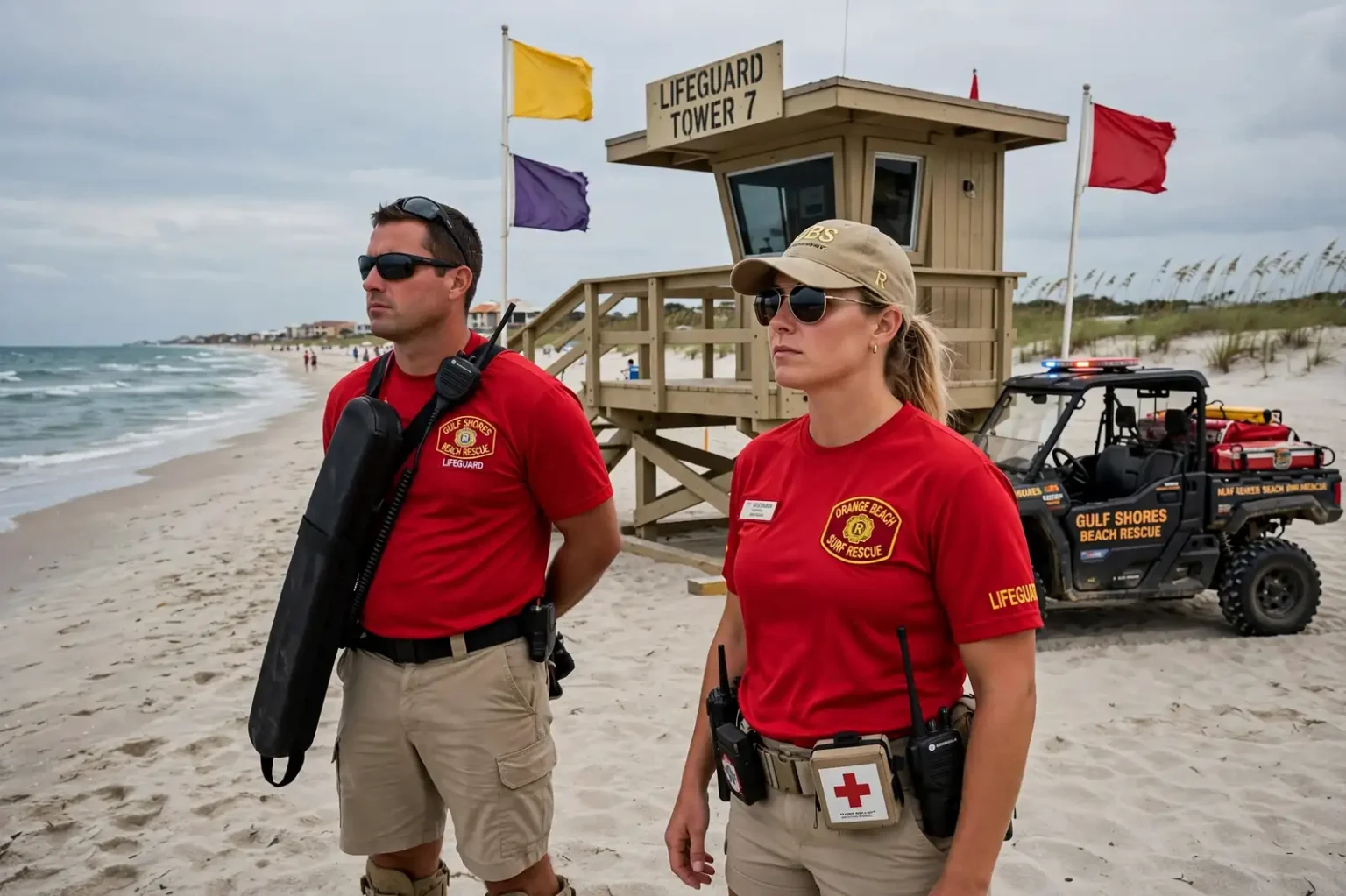
ORANGE BEACH, Ala. — National First Responders Day, observed each year on Oct. 28, is a time to thank the police officers, firefighters, paramedics and emergency crews who answer the call when something goes wrong. Along Alabama’s Gulf Coast, that list also includes a group many visitors meet only from a distance: the Gulf Coast lifeguards of Gulf Shores Beach Rescue and Orange Beach Surf Rescue.
Perched in towers and rolling along the sand in patrol vehicles, these professional lifeguards serve as frontline protectors for the millions of people who visit Baldwin County’s beaches and waterways each year. Their work goes well beyond pulling swimmers out of rip currents, and on any given shift they may act as medics, searchers, wildlife responders and safety educators all at once.
More than rip current rescues
Open-water rescues and rip current extractions remain central to lifeguard training, but daily duties cover a much broader range of emergency and public services. Over the course of a season, beach rescue personnel handle incidents that include:
- Medical aids and rescues: Treating injuries, stabilizing trauma patients, responding to serious cardiac events and caring for heat-related emergencies such as heat stroke.
- Public assists and preventive actions: Making thousands of contacts with beachgoers, giving directions and safety advice, and taking hundreds of proactive steps to stop emergencies before they happen.
- Missing children and reunifications: Searching for lost children and family members in crowded stretches of beach and reuniting them safely.
- Wildlife incidents: Handling unexpected encounters with wildlife and marine life along the shore.
- Ordinance enforcement: Enforcing local beach rules and safety codes to keep order on the sand and in the water.
Preventive work is often the part of the job beachgoers never notice. A lifeguard who waves a family away from a fast-moving rip channel, or reminds a swimmer about the day’s flag color, may stop a rescue from ever being needed.
How Gulf Coast lifeguards use the beach flag system
Gulf Shores and Orange Beach use a standardized, color-coded Beach Flag Warning System to tell swimmers how dangerous the water is on a given day. Flags fly at public beach accesses, and the colors include:
- Yellow: Medium hazard, with moderate surf or currents
- Red: High hazard, with high surf or strong currents
- Double red: Water closed to the public
Green flags signal low hazard, and purple flags are used to warn of dangerous marine life such as jellyfish. Swimming when double red flags are flying is not only dangerous but also against local ordinances in both cities, and violators can face fines.
Despite warning flags at every public access point, automated phone hotlines and text message alerts, many beachgoers still fail to check the flag status or choose to ignore life-threatening conditions. When swimmers enter dangerous surf under double red flags, lifeguards must risk their own lives, plunging into rough water to save people from drownings that could have been prevented.
Rip currents are the biggest danger. These narrow channels of fast-moving water flow away from shore and can pull even strong swimmers out past the breaking waves. Safety officials advise anyone caught in one not to fight the current by swimming straight toward the beach. Instead, swimmers should stay calm, float and swim parallel to the shoreline until they are out of the current, then angle back toward land. Anyone who cannot escape should face the shore, wave and call for help.
Help from the air on the busiest weekends
To strengthen emergency response on the busiest summer holiday weekends, including Memorial Day, the Fourth of July and Labor Day, Gulf Shores Beach Rescue and Orange Beach Surf Rescue work closely with the Alabama Law Enforcement Agency’s Aviation Unit.
Through specialized Rescue Swimmer Details, ALEA helicopters fly patrols over stretches of beach that do not have stationary tower coverage. During high-stress water emergencies, trained lifeguards can deploy directly from the aircraft into the Gulf to reach swimmers in distress, cutting the time it takes to get help to someone far from a tower.
The partnership gives the beach rescue teams an eye in the sky at the moments when crowds are largest and help is hardest to reach by land.
Constant patrols on sand and sea
Keeping millions of visitors safe requires constant movement and active watching. Along with staffing fixed lifeguard towers at the main public beach accesses, guards maintain a continuous presence through roving patrols that use multi-utility vehicles, beach trucks and personal watercraft.
Those patrols let lifeguards track changing surf conditions, respond quickly to calls outside tower zones and keep watch over crowded beaches throughout the season. Jet skis in particular allow rescuers to reach a struggling swimmer quickly and bring more than one person back to shore if needed.
How beachgoers can help
The best way to thank a lifeguard, safety officials say, is to make their job easier. A few simple habits can prevent emergencies:
- Check the beach flag color before going in the water, and sign up for local beach condition alerts.
- Swim near a staffed lifeguard tower whenever possible.
- Never swim when double red flags are flying.
- Keep a close eye on children and agree on a meeting spot in case anyone gets separated.
- Drink plenty of water and take breaks from the sun to avoid heat illness.
- Learn how to escape a rip current, and call for help rather than entering the water to rescue someone yourself.
- Follow lifeguards’ instructions; they know the day’s conditions better than anyone.
Honoring all who answer the call
National First Responders Day is a chance to recognize the selflessness, courage and vigilance of emergency personnel across Baldwin County and beyond, from police officers and firefighters to paramedics and ambulance crews who work around the clock to keep communities safe.
On the coast, it is also a chance to remember the lifeguards who spend long, hot days watching the waves so that others can enjoy them. Their work helps make Gulf Shores and Orange Beach some of the most popular vacation destinations in the Southeast, and it is a big part of why so many families go home with good memories instead of tragedies.
As the off-season begins and the towers grow quieter, the people who staffed them deserve a word of thanks, along with a promise from every beachgoer to check the flags and swim safely when summer returns.