Gulf Coast Veterans Find Healing Through Equine Therapy as Memorial Day Approaches
As Memorial Day approaches, Gulf Coast veterans are finding healing through equine therapy. Learn how horses are helping veterans cope with PTSD and.
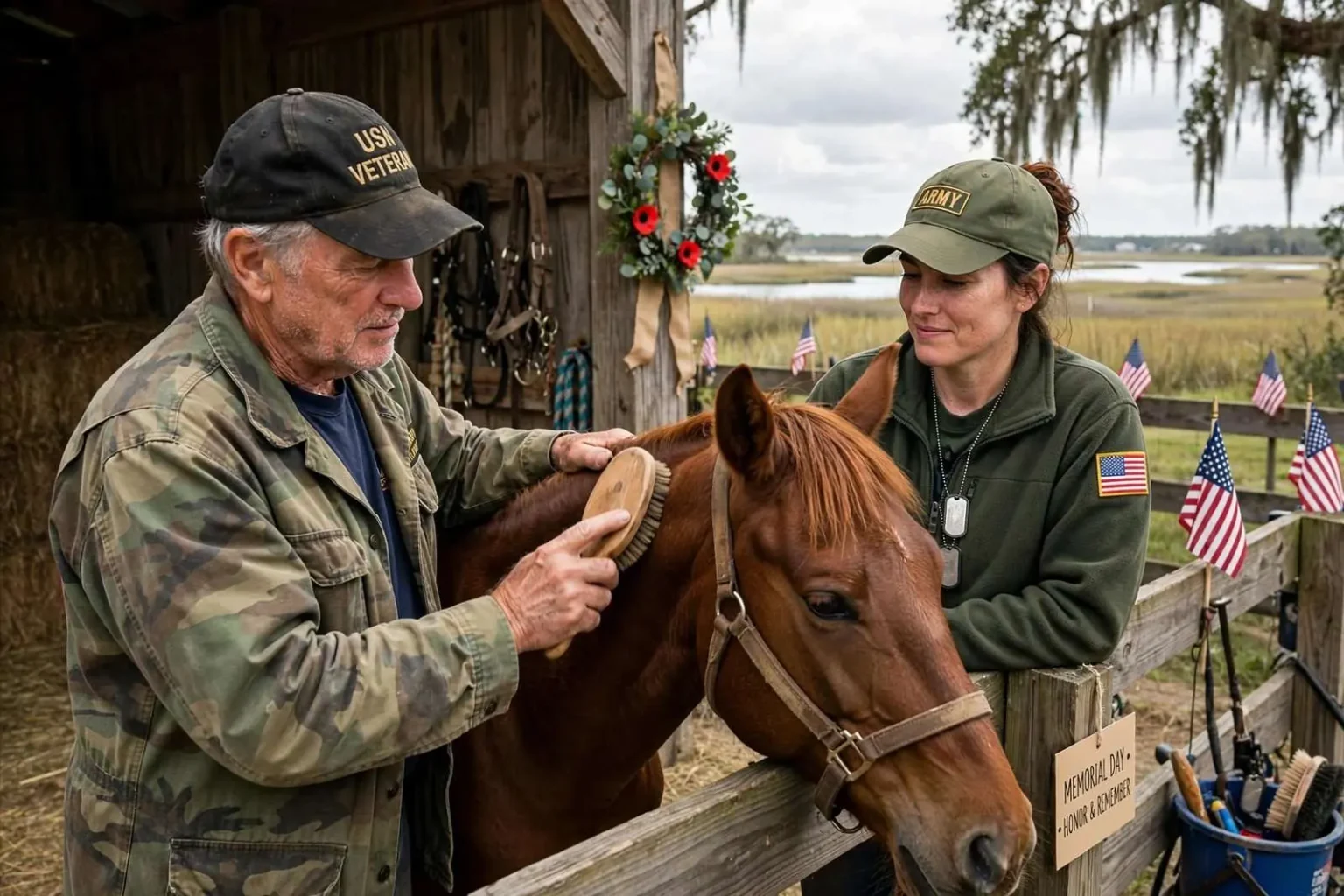
As Memorial Day approaches, many veterans along the Gulf Coast are finding solace in an unexpected form of therapy — working with horses. From the Florida Panhandle to the Mississippi Gulf Coast and across south Alabama, equine therapy programs are quietly serving a region with one of the densest concentrations of military veterans in the country.
Kari Whatley, president of the Equine Therapy Group, says with approximately 65,000 veterans living along the Gulf Coast, the need for mental health support is significant. The region’s veteran population is fed by major installations including Naval Air Station Pensacola, Keesler Air Force Base in Biloxi, and the Army aviation hub across the state line in southeast Alabama, along with decades of retired service members who chose to settle near the water and the military communities they came from.
Many returning service members struggle with the transition to civilian life, carrying the weight of experiences from their time in uniform. The invisible wounds of war — post-traumatic stress, anxiety, depression, and the difficulty of reconnecting with family and work — affect veterans of every generation, from those who served in Vietnam to the men and women who deployed during the past two decades of conflicts in Iraq and Afghanistan.
“There is nothing noble about punishing yourself for being the one who lived,” Whatley said. “People can come home and be angry and end up punishing themselves in really destructive ways. But one of the best ways to honor the dead is by helping the living. And that includes yourself.”
Her words carry particular weight as Memorial Day nears. The holiday, originally established after the Civil War as Decoration Day, asks Americans to honor those who died in service. For veterans, that act of remembrance is not abstract — it is personal, tied to faces and names they knew.
How equine therapy works
Equine therapy, which involves guided interactions between patients and horses, has gained recognition as an effective treatment for post-traumatic stress disorder, anxiety, and depression among veterans. Sessions typically take place on the ground rather than in the saddle, with participants learning to groom, lead, and handle horses under the guidance of trained facilitators and mental health professionals.
The non-judgmental nature of horses and the physical engagement required to work with them can help veterans process trauma in ways that traditional talk therapy sometimes cannot. Horses are prey animals with a highly developed sensitivity to human body language and emotional states — they respond to calmness, consistency, and trust, and they react visibly to tension or fear.
That sensitivity makes the horse an honest mirror. A veteran who arrives guarded or agitated will see the horse pull away; one who learns to slow his breathing, soften his posture, and approach with patience will find the animal willing to connect. Those immediate, physical feedback loops give participants a different route into the work of managing their own emotional responses.
For many veterans, the setting matters as much as the method. A barn or pasture is far from the clinical environment some veterans associate with formal mental health care, and the reluctance many service members feel about asking for help diminishes when the therapy looks and feels like work with an animal rather than treatment for an illness.
Programs across the region have reported growing interest from veterans and their families, and the approach has increasingly been folded into broader networks of care that include VA treatment, peer support groups, and community-based organizations serving the military community along the coast.
For many Gulf Coast veterans, Memorial Day serves as a powerful reminder of those they served alongside. The holiday can trigger difficult memories and emotions, making access to supportive resources especially important during this time of year. Ceremonies at National Cemeteries in the region — including Barrancas National Cemetery at Naval Air Station Pensacola and Biloxi National Cemetery — draw crowds of veterans, families, and community members each May.
The days around the holiday can be among the hardest on the calendar for veterans carrying grief or survivor’s guilt. Cookouts and retail sales fill the public celebration of the long weekend, while the original meaning of the day — mourning the dead of America’s wars — is felt most sharply by those who lost friends in uniform. Mental health providers and veteran service organizations have long urged families to check in with the veterans in their lives during the holiday period.
The Equine Therapy Group works to connect veterans with these healing opportunities, offering a path forward for those who may be struggling with the invisible wounds of military service. Whatley’s message to veterans is direct: honoring fallen comrades and caring for oneself are not competing impulses but the same act, viewed from different angles.
The region’s network of support extends beyond equine programs. Veterans along the Gulf Coast have access to VA medical centers and clinics in Biloxi, Mobile, and Pensacola, county and state veteran service offices that help with benefits claims, and a web of nonprofit organizations focused on everything from employment assistance to peer counseling. Equine therapy sits within that landscape as one option among many — often valuable precisely because it reaches veterans who have not connected with more traditional services.
Why the Gulf Coast community responds
The Gulf Coast’s relationship with the military runs deep. The region hosts training commands, air stations, and coast guard sectors that have shaped local economies and communities for generations, and a large share of residents have family ties to the armed forces. That familiarity has fostered a culture in which veteran-focused charities, churches, and volunteers mobilize readily around the needs of those who served.
Memorial Day brings that culture into the open. Communities from Mobile to Pensacola to Biloxi hold ceremonies, rides, and remembrances, and for many participants the events double as a way to stay connected to one another. Isolation is one of the most damaging forces working against veterans in crisis, and community gatherings — like a morning at a barn with other veterans and their families — push back against it.
As another Memorial Day arrives, Whatley and others working in equine therapy will spend the holiday much as they spend the rest of the year: with horses, with veterans, and with the work of helping people who lived carry what they brought home. The 65,000 veterans of the Gulf Coast are the reason the programs exist, and the days around the holiday are when that work matters most.
For veterans who want to try it, the barrier to entry is low — a phone call to a local program, a scheduled visit, and a first session spent learning a horse’s name and how to approach it. From there, the work proceeds at the pace of the person and the animal alike, which is precisely the point.
Research into equine-assisted services has grown alongside the programs themselves. Studies have documented reductions in PTSD symptoms among veterans participating in equine therapy, with improvements in emotional regulation, trust, and social engagement reported across programs. The field has also professionalized, with certifying organizations establishing standards for instructors, facility safety, and the integration of licensed mental health clinicians into sessions.
The physical dimension of the work is part of its appeal. Veterans spend sessions outdoors, moving, lifting grooming tools, and coordinating their bodies with a 1,000-pound animal — an experience that engages the senses and demands presence in the moment. For people whose trauma keeps their nervous systems on alert, that grounding in the physical world is itself a therapeutic skill.
Family involvement rounds out the model at many programs. Veterans’ spouses and children often participate in sessions or observe from the barn, and the horse can become a shared reference point for conversations that are otherwise hard to start at home. Rebuilding those family connections is one of the most common goals veterans bring to the programs.
The cost of running such programs is largely carried by donations and volunteer labor. Horses require feed, veterinary care, farrier work, and facilities, and most Gulf Coast equine therapy operations are nonprofit organizations that rely on community support, grants, and veterans’ organizations to keep sessions affordable or free for participants.
Volunteers, many of them veterans themselves, handle much of the daily work — leading horses, supporting participants, and maintaining the barns. That peer presence is a quiet part of the therapy’s effect: a veteran working with a horse is often standing beside someone who understands exactly what brought them there.
Referrals reach the programs from across the network of care. Some veterans arrive through VA providers who have learned to consider equine services as a complement to clinical treatment, others through word of mouth from fellow veterans, and some at the urging of family members who watched the struggle up close long before the veteran was ready to name it.