Gulf Shores Doubles Its Year-Round Lifeguard Force to 12
Gulf Shores has doubled its year-round lifeguard staff from six to 12, spending about $400,000 annually, as officials report fewer rescues and no drownings.
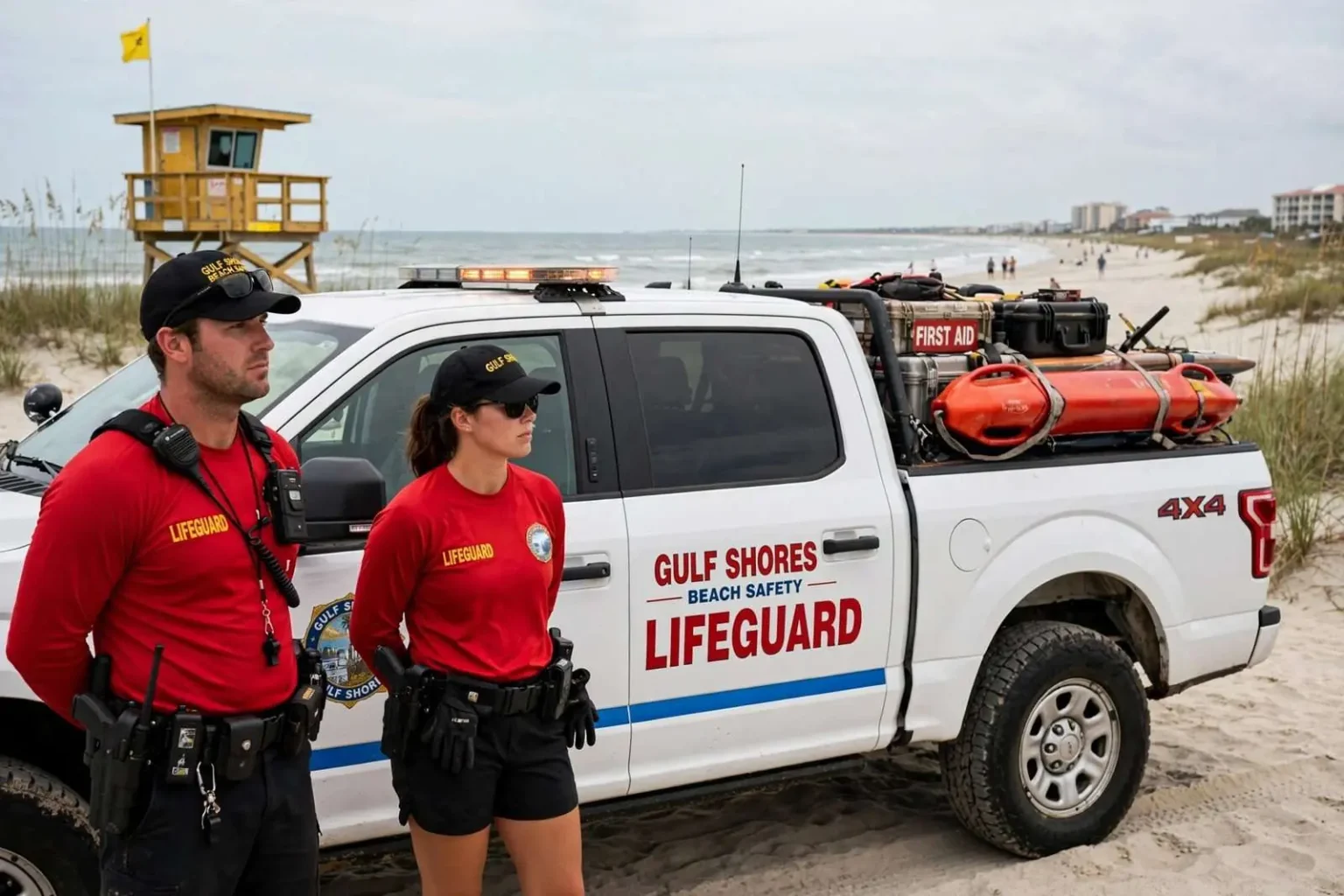
GULF SHORES, Ala. — As the summer tourist season winds down and Gulf Shores’ 36 seasonal lifeguards prepare to leave, the city has doubled its number of full-time, year-round lifeguards this year, increasing the total from six to 12. The move makes Gulf Shores one of the more heavily staffed beach safety operations on the Alabama Gulf Coast during the off-season, when most resort towns along the northern Gulf reduce their lifeguard presence to a minimum or drop it entirely.
The new lifeguards came onboard in January and were at full speed by spring break, according to Gulf Shores Beach Safety Chief Joethan Phillips. The winter hire gave the department a window to train the newcomers before the crowds arrived, rather than throwing them into the water during the busiest weeks of the year. “We were able to train these guys up and fill them in to our culture and how we want things to be done and then, starting in March, they were already ready to go along with some of the returning lifeguards that came back from last year and that just gave us more people in the spring season than we’ve ever had before,” Phillips said.
The timing matters for a beach town whose calendar is driven by tourism. Spring break brings an early surge of visitors while water temperatures are still cool enough to shock swimmers who stay out too long, and weekends through April and May can draw large crowds before the summer lifeguard corps is fully staffed. A larger year-round roster means the city no longer has to bridge that gap with whoever happens to be available, and it gives returning seasonal guards a core of experienced full-timers to work alongside from day one.
A Bigger Presence Before and After Summer
Expanding the permanent force also changes how the city plans its budget and its coverage. Full-time lifeguards can be scheduled through the winter months, when a smaller number of residents, anglers, surfers and snowbird visitors still use the beach, and they can respond to weather events that draw onlookers to the shoreline even when swimming conditions are dangerous. Storm surf, king tides and passing hurricanes routinely produce powerful rip currents along the Alabama coast, and the people most likely to enter the water during those periods are often the ones who underestimate them.
Gulf Shores’ public beach is the economic engine of the city, drawing visitors who fill condominiums, vacation rentals and restaurants along and near Highway 182. City officials have repeatedly framed beach safety spending as an investment in that visitor economy, since families planning Gulf Coast vacations consistently rank lifeguarded beaches among their top considerations. The doubling of the year-round force extends the city’s protection deeper into the calendar, covering the shoulder seasons that bracket the Memorial Day to Labor Day peak.
Lifeguards Shifting to Patrol Vehicles
As the city moves into late summer and fall, lifeguards will move from their watchtowers to patrol vehicles. The seasonal transition reflects the reality of the off-peak beach: fewer swimmers spread across more sand, with activity scattered from the public beach areas out toward the less crowded stretches east and west of town. Tower coverage that makes sense when thousands of people share a few hundred yards of shoreline becomes less efficient when beachgoers are strung out in small groups.
Having more lifeguards on staff will allow them to cover more sand and maintain public interaction, since emergencies can happen anywhere. “It’s not as busy as a summer day, but they’re out there and there’s always things that can happen. It’s not just water-related incidents. It can be incidents on the beach…cardiac arrests and having the full-time lifeguards puts them there quicker,” Phillips said. Patrol vehicles carry rescue equipment, first aid supplies and communications gear, allowing a two-person crew to function as a mobile response unit until ambulances or fire crews arrive.
The off-season patrol model also keeps lifeguards engaged in the preventive work that beach safety officials say prevents most emergencies before they happen. Talking with visitors about flag conditions, pointing out sandbars and holes, and reminding families where the safest stretches of water are can head off the situations that would otherwise become rescues. Phillips noted that the public interaction side of the job does not stop when the crowds thin, and that the larger roster exists partly so guards have time to keep doing it.
Training and the Year-Round Commitment
Becoming a Gulf Shores lifeguard requires more than strong swimming. Candidates train in open-water rescue techniques, first aid, CPR and the use of rescue boards and watercraft, and they must be prepared to work in surf conditions that pool-based lifeguards rarely encounter. The city’s beach safety program runs its hires through a period of on-the-job instruction under experienced guards, which is what the January start date made possible this year: new staff had weeks of supervised practice before spring break rather than days.
The year-round commitment also reflects a shift in how Gulf Coast beach towns think about staffing. For years, the standard model across the region was intensely seasonal — towers staffed from late May through early September, then empty. But the Gulf Coast’s own tourism calendar has stretched, with fall festivals, winter snowbird season and early spring events bringing visitors to the sand in every month. A twelve-person permanent corps lets Gulf Shores maintain trained eyes on the water through all of it.
Weather is another year-round factor. Rip currents along the northern Gulf are not a summer-only phenomenon; they form whenever wind, tide and wave conditions align, and some of the region’s most dangerous surf days have come in the off-season, when cool air tempts beachgoers to assume the water is calm. Lifeguards stationed in the city through the fall, winter and spring can post flags, warn pedestrians and coordinate rescues on days when no seasonal guard would otherwise be on duty.
Beachgoers React
Those at the beach Wednesday had plenty of space on the sand. Most brought shade with them and moved in and out of the water to cool off. Lifeguards were still manning their stands, and beachgoers said they were pleased with the city’s investment in safety. The late-summer crowd was a fraction of what the public beach draws at its peak, but the presence of staffed towers and patrolling vehicles remained visible to anyone walking the shoreline.
“I think it’s a wise investment. The lifeguard that’s here now, he answered so many questions for us,” said Jessica Whittenberg, of Greenville, South Carolina. Visitors like Whittenberg often arrive from inland communities where open-water swimming is unfamiliar, and lifeguards say questions about currents, flag colors and where to swim are among the most common interactions they have with out-of-town families.
“It was nice. Even when we walked out here today to get to the beach, we had a lifeguard walk up to us just to check and see if we needed anything and it’s nice to see their presence out here. They’ve got their jet skis and trucks,” said Justin Becerra, of Dallas, Texas. The visibility of the operation — towers, patrol trucks and rescue watercraft staged along the beach — is part of what city officials hope communicates to visitors that the beach is watched, even in the quieter weeks of the season.
The reactions from visiting families underscore the dual role lifeguards play in a resort town. Formally, they are rescue and first-response personnel; informally, they are often the first city employees a tourist meets, fielding questions that range from water conditions to directions. The city’s decision to grow the permanent corps effectively extends that visitor-facing presence into months when the towers would otherwise come down.
What the Flag System Means for Visitors
Beach safety officials along the Alabama coast use a uniform colored-flag system to communicate daily swimming conditions, with green indicating calm, yellow signaling moderate surf and caution, red marking high hazard, and a double red flag closing the water to swimmers entirely. Purple flags warn of dangerous marine life such as jellyfish or stingrays. Lifeguards say the biggest ongoing challenge is reaching visitors who either do not know the system or choose to ignore it, particularly on days when the surf looks inviting even as flags warn against entry.
Rip currents remain the leading hazard on the northern Gulf Coast. The narrow channels of fast-moving water pull away from shore and can quickly exhaust even strong swimmers, and safety officials advise anyone caught in one to stay calm, float and signal for help rather than fight directly against the current. The presence of trained lifeguards, whether in a tower or on patrol, shortens the time between distress and rescue, which is the interval that most determines whether a rip current encounter becomes a close call or a fatality.
Heading Into the Off-Season
With the seasonal corps preparing to depart, the expanded year-round team takes over responsibility for the city’s beaches through the fall and winter. Officials say the additional full-time guards will keep coverage, equipment and quick response in place during the months when Gulf Shores’ sand belongs mostly to locals, anglers and the hardier out-of-town visitors who come for the quiet. For a city whose identity and economy are built on the same shoreline, the expanded force is a statement that beach safety no longer keeps tourist hours.