Gulf State Park Pier to Expand Overnight Shark Fishing Sessions This Summer
Gulf State Park is adding eight new overnight shark fishing dates in July and boosting the number of anglers allowed on the Gulf Shores pier after a successful testing phase.
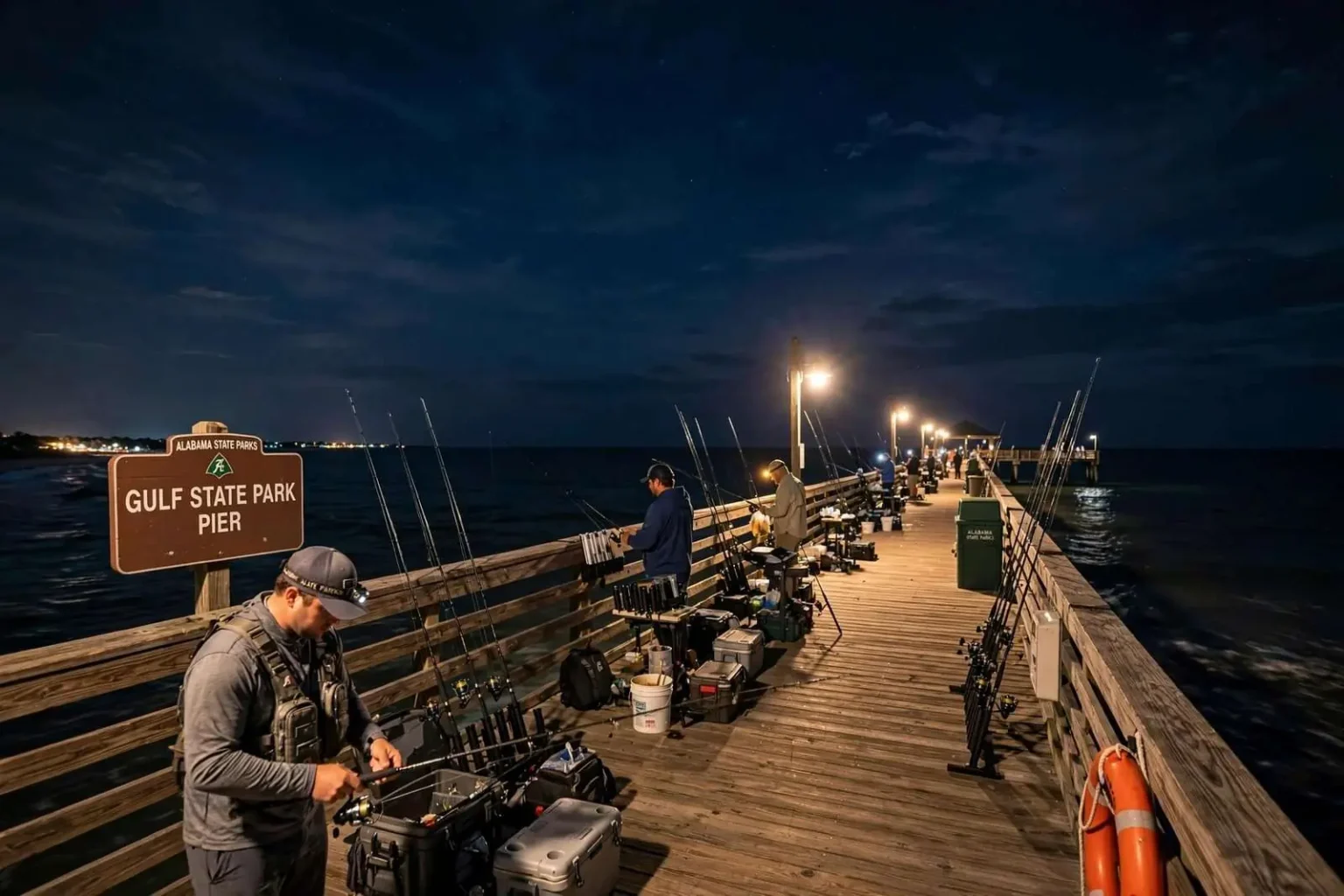
Anglers hoping to land a shark from the Gulf State Park Pier will soon have more chances to do so. State park officials are expanding a limited overnight shark fishing program at the Gulf Shores landmark after a brief testing period showed strong interest from local and visiting fishermen. The program began with two Tuesday sessions used to work out logistics and safety procedures. Officials have now scheduled eight additional nights for the shark fishing season: July 8, 10, 15, 17, 22, 24, 29 and 31. Each session will run from 7 p.m. until 7 a.m. the following morning, giving anglers a full overnight window to fish for sharks off the pier.
Along with the added dates, park officials are increasing the number of anglers allowed on the pier during each session. The initial testing phase limited participation to 10 fishermen per night. Under the expanded schedule, up to 15 anglers will be permitted on the pier during each of the newly announced dates. The expansion follows the kind of measured rollout that park managers use when a new activity involves both heavy public interest and genuine safety questions, letting staff refine procedures on a small scale before opening the program to more participants.
The Gulf State Park Pier, which stretches roughly 1,500 feet into the Gulf of Mexico, is one of the most popular fishing spots on the Alabama coast and draws anglers targeting a wide variety of species throughout the year. The current pier opened after the original structure was destroyed by Hurricane Ivan, and it has since re-established itself as the centerpiece of fishing at Gulf State Park, with concessions, tackle rentals, cleaning stations and staff on site. Its length puts anglers well beyond the sandbar line and into deeper water where larger fish patrol, which is precisely what makes the structure attractive for shark fishing in the first place.
Shark fishing from the pier has long been popular among serious anglers, but it also raises safety concerns for swimmers and beachgoers, which is why state park officials have kept the program limited in scope while they evaluate demand and safety protocols. Even a hooked shark near the beach can pose a hazard to people in the water, and a large shark being worked toward the pier can attract a crowd of onlookers in ways an ordinary pompano or whiting catch never does. Limiting the activity to controlled overnight sessions, when designated beaches are closed to swimming, allows the park to separate the two uses of the water almost entirely.
What Anglers Can Expect on an Overnight Session
Species commonly caught off Alabama’s Gulf Coast piers include blacktip, spinner and bull sharks, some of which can grow large enough to require specialized tackle and technique. Blacktips and spinners are fast, acrobatic fish that leap when hooked, while bulls are pure power and are among the most common larger sharks encountered near shore in the northern Gulf during summer months. Landing any of the three from a pier requires heavy rods, strong reels, wire or heavy fluorocarbon leaders, and long-handled gaffs or dehooking tools, along with the patience to play a fish that can run hundreds of yards on its first take.
The overnight format changes the character of the fishing entirely. Sharks feed most actively after dark and before dawn, following baitfish schools that move close to the beach at night, so a 7 p.m. to 7 a.m. session covers the prime window. Anglers typically deploy baits on multiple rods at different distances, using bite alarms or bell rigs while they wait, and the longer sessions allow time to both soak baits and work active bites. Participants in the testing sessions worked through the practical questions that come with night fishing on a pier, from lighting and monitoring gear at the rail to handling a shark alongside the structure for release.
Anglers interested in participating in the overnight sessions should check with Gulf State Park for registration details, any applicable fees and specific rules governing catch, release and safety on the pier. Reservation systems for special programs at Alabama state parks generally open in advance of the dates, and slots on this pier are limited by design, so anglers who want one of the 15 places on a given night will need to plan ahead. Participants should also expect to confirm their own tackle meets program requirements and to review handling rules before stepping onto the pier for a session.
Alabama’s shark fishing regulations apply alongside whatever park rules govern the sessions. State and federal rules distinguish between species that may be kept and those that must be released, set size limits, and prohibit harvesting of several protected species, so anglers participating in the program need to be able to identify what they have hooked before bringing it alongside. Most serious pier shark fishermen practice catch-and-release regardless, both because many of the largest sharks are protected and because the fish are valuable to the fishery alive. Park staff on hand during the sessions are positioned to help enforce those rules.
A Busy Summer on the Alabama Coast
The expanded shark fishing schedule adds to a busy summer of outdoor recreation at Gulf State Park, which draws visitors from across the region for fishing, camping, hiking and beach access throughout the season. The park is one of the largest units in the Alabama state park system, encompassing thousands of acres of beach, dunes, maritime forest, freshwater lakes and trails between Gulf Shores and Orange Beach. Its campground ranks among the most popular in the state, and its network of trails, including boardwalk routes over the dunes and backcountry paths around Lake Shelby, gives visitors a way to experience the coast beyond the sand.
For the surrounding communities, a successful shark fishing program is another draw in a tourism economy that depends on giving repeat visitors something new to do. The Gulf Shores and Orange Beach fishing community has long built its reputation on variety, from inshore speckled trout and redfish to offshore charters targeting larger game, and pier shark fishing fits that identity. Local tackle shops typically see the ripple effects first, as overnight participants restock terminal tackle, buy bait and swap reports from the rail the next morning.
Officials have not announced whether the program will continue beyond the newly scheduled dates or whether the cap might rise again if the expanded sessions fill up. The two testing Tuesdays and the eight July nights will give park managers a fuller data set on participation, catch rates and any safety issues before any further decisions. Anglers who miss out on a registration slot this season will likely get another chance if demand holds, and for now the expanded schedule stands as one of the more distinctive fishing opportunities anywhere on the Alabama Gulf Coast this summer.
The Pier’s Role in Alabama Fishing History
Pier fishing occupies a special place on the Alabama coast because it puts Gulf fishing within reach of anglers who will never own a boat. For the price of a fishing license and a pier pass, anyone can stand 1,500 feet out over open water and cast to the same migrating fish that boats chase. Families fish the structure for whiting, pompano and hardtails by day, serious surf anglers work the rail for bull reds and king mackerel in season, and the deck’s length means there is nearly always room for both crowds at once. That accessibility is a large part of why the rebuilt pier has become such an anchor for Gulf State Park attendance since it opened.
The park itself has grown around that anchor. Gulf State Park sits within a short drive of the condo towers of Gulf Shores and Orange Beach, yet its interior feels like a different world of longleaf pine, palmetto flats and freshwater sloughs. The Learning Campus, the lodge and the interpretive programming added in recent years have broadened the park’s audience beyond anglers and campers, but the pier remains the single biggest draw for many visitors, and special programs like the overnight shark sessions build directly on that established base of fishing tradition.
There is also a conservation dimension worth noting for anyone new to shark fishing. The sharks that patrol Alabama’s beaches in summer are part of a coastal ecosystem that has drawn more careful management in recent decades, and populations of several species are still rebuilding from historical overfishing. Handling practices matter enormously: a shark kept out of the water too long, dragged onto a hot deck or cut from a hook carelessly may not survive after release, even if it swims away strongly. The program’s emphasis on rules governing catch and release reflects that reality, and first-time participants should expect staff to take handling standards seriously during the overnight sessions.
For anglers weighing whether to try one of the new dates, the essentials are simple. Bring tackle heavy enough for the fish, be prepared for a long night on the rail, review the park’s registration requirements before the session, and treat the fish and the beach with the same care that has kept this pier one of the coast’s most productive fishing platforms for generations. The eight nights in July represent a rare, structured way to target one of the Gulf’s most thrilling fish from shore, and demand so far suggests the slots will go quickly.