Irish Singer-Songwriter Danny Burns Brings ‘North Country’ to The Listening Room of Mobile
Danny Burns, an Irish singer-songwriter with decades of experience, performs tracks from his debut album 'North Country' at The Listening Room of Mobile.
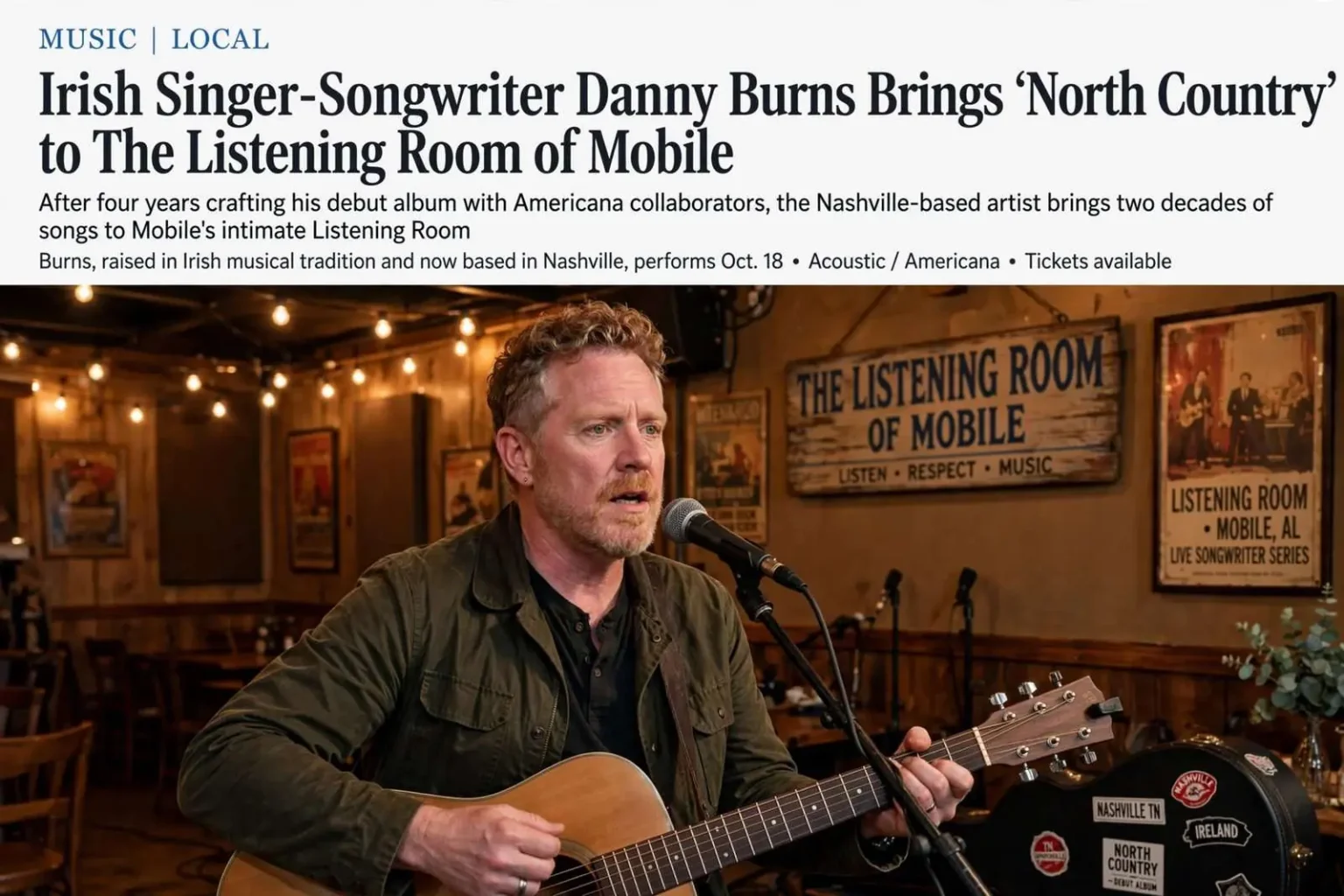
Danny Burns, an Irish-born singer-songwriter with decades of professional experience, brings the sounds of his debut album “North Country” to The Listening Room of Mobile. The intimate venue will host Burns for a performance featuring tracks from the album, which took four years to record and features collaborations with some of Americana’s most notable artists. After 20 years as a professional musician, Burns carefully formulated the tracks on “North Country” between gigs and sessions, refining material that had already spent years on stage before it ever reached a studio.
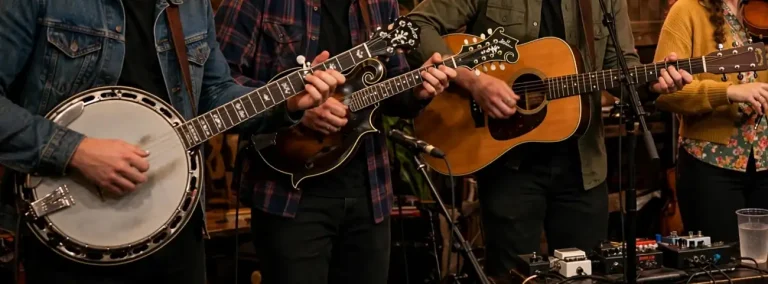
The album features contributions from Tim O’Brien, Sam Bush, Critter Fuqua of Old Crow Medicine Show, Dan Tyminski of Alison Krauss and Union Station, and many others. The result is a collection of traditional Americana folk that Burns describes as beautifully haunting. For a city that has long embraced live music along the Gulf Coast, the arrival of a songwriter with that kind of roster of collaborators is a notable addition to the local calendar, and the venue’s close-quarters setting is well suited to the storytelling style that defines the record.
From Ireland to Nashville
Burns comes from a family of working musicians who toured America in the 1980s. Growing up watching his parents perform, he gained extensive experience on stage and on the road from an early age, absorbing the rhythms of touring life long before he ever fronted his own project. That upbringing gave him a practical education that few conservatories can match: loading gear, reading rooms, and learning how a song lands with an audience night after night.
After finishing school in Ireland, he pursued studio and engineering work but found himself drawn back to live performance. The pull of the stage proved stronger than the control room. “I was gigging around Europe and got the offer to be a side guy,” Burns said. “So I came out here and the rest is history.” That decision set him on the transatlantic path that eventually landed him in Nashville, the city that serves as the home base for so many working songwriters who move between Irish folk traditions and American roots music.
Now based in Nashville, Burns has spent years honing his craft. The songs on “North Country” range from 18 to 19 years old, tested through countless live performances before being committed to the album. That long gestation is part of what gives the record its lived-in quality; none of the material was written in a burst and rushed to tape. Instead, each song earned its place by surviving in front of audiences, the same proving ground that shaped Burns himself as a performer.
The connection between Irish musical tradition and American roots music runs deep, and Burns sits squarely at that junction. Generations of Irish immigrants carried their ballads and dance tunes into the American South, where they mingled with blues, old-time string band music and gospel to form the foundations of country and Americana. A singer-songwriter raised on Irish performance culture who built his career in Nashville is, in a sense, tracing that historical route in reverse — and bringing the results back to rooms like the one in Mobile.
Crafting ‘North Country’
The production of “North Country” took about four years to track from beginning to end. Burns recorded independently, taking his time to ensure the final product met his standards. Sessions took place in New York, Chicago, Los Angeles, and Nashville’s Butcher Shoppe studio, a pace that reflected his insistence on catching each track at the right moment rather than boxing to a label deadline. Working without a record label’s clock also meant he could schedule sessions around the touring commitments of the artists he wanted involved.
“I wanted everybody to bring their personality to it,” Burns said of his decision to collaborate with artists he admired rather than hiring session musicians. “All those people who I asked, I was a fan of theirs first.” That approach turned the album into something closer to a gathering of peers than a solo project with hired help. Each guest brought the stylistic signature that made their name, from O’Brien’s singing and multi-instrument work to Bush’s mastery of the mandolin and Tyminski’s unmistakable voice.
The names on the record carry weight across the Americana and bluegrass worlds. Tim O’Brien has spent decades as one of the most respected figures in acoustic music, moving between bluegrass and folk with equal authority. Sam Bush is widely regarded as a founding force of newgrass, the blend of bluegrass instrumentation with rock and jazz energy that reshaped acoustic music in the 1970s. Critter Fuqua helped steer Old Crow Medicine Show from busking origins to some of the most celebrated string band records of the modern era. Dan Tyminski’s voice is familiar to millions from his work alongside Alison Krauss and Union Station, including his contribution to one of the most successful roots recordings of all time.
The album blends Americana and folk with the melodic sensibilities of Burns’s Irish upbringing, a combination that gives “North Country” its distinctive character. Rather than choosing between the music he grew up with and the music he came to America to play, he lets the two traditions sit side by side, the way they have blended for centuries along the migration routes between the British Isles and the American South.
A debut years in the making
There is something fitting about a debut album arriving after two decades in the business. Burns is no newcomer learning in public; he is a veteran who waited until the songs, the players and the recordings all felt right. The 18- and 19-year-old songs at the heart of the record have been road-tested across years of gigs, and that durability shows in arrangements built to hold up in a live room as well as on a stereo.
Independent records of this kind depend heavily on the patience of the artist making them. Four years of tracking across four cities means flights, scheduling headaches and plenty of moments where the project sat idle while touring paid the bills. It also means the album carries the imprint of multiple rooms and regions — the energy of New York, the studio heritage of Chicago, the session culture of Los Angeles and the acoustic intimacy of Nashville — all filtered through one songwriter’s vision.
For audiences, that patience translates into a record that sounds unhurried. The collaborations were built on genuine admiration rather than obligation, and guests given room to bring their own personalities tend to play that way. The result is the kind of traditional Americana folk that rewards careful listening, with arrangements that reveal new details on repeated plays.
The Listening Room setting
The Listening Room of Mobile has built its reputation as a venue where the songs come first. Modeled on the listening rooms of Nashville, the space is designed for audiences who come to hear songwriters present their material without the noise and distraction of a typical bar. Seating is close to the stage, conversation during performances is kept to a minimum, and the room’s acoustics put every lyric and guitar figure within easy reach of the audience.
That environment is a natural fit for a catalog like Burns’s. Songs that spent nearly two decades being shaped in front of crowds are built for exactly this kind of presentation, where the stories between songs carry as much weight as the songs themselves. Audiences at the Mobile show can expect to hear the “North Country” material presented with the collaborators’ parts reworked for a live setting, alongside whatever else two decades of professional touring has put in his repertoire.
Mobile’s own music scene has deep roots in the same Gulf Coast blend of folk, blues, country and Cajun-influenced sounds that runs through Americana. The city hosts a year-round calendar of singer-songwriter nights, acoustic showcases and festival stages, and venues that prioritize listening have carved out a loyal following among residents who want a full evening of music rather than background entertainment. A touring act with Burns’s pedigree adds to that lineup and gives local fans a chance to hear material they would otherwise have to travel to Nashville or festival circuits to catch.
What the album means for his live show
Veteran performers often say that a debut album released late in a career changes the shape of their live sets, and that is likely to be true for Burns. With the record finished, songs that existed only in scattered set lists for years now stand as a fixed body of work that audiences can know in advance. For listeners who have followed his side-man work and touring career, the show offers a first full look at the material he chose to keep for himself.
The tour behind an independent album also serves as its own promotion. Every room like the Listening Room of Mobile becomes a place where word of mouth can carry the record further, one audience at a time. That slow-build approach mirrors the way the album itself was made — patiently, person by person, with the long game in mind.
For Mobile audiences, the evening offers a chance to hear a songwriter whose family has been crossing the Atlantic to play American rooms since the 1980s, whose debut took four years and a who’s-who of Americana collaborators to complete, and whose songs have already passed the toughest test in music: years of live performance in front of listeners who could have looked away and didn’t. In a room built for exactly that kind of music, the material should land the way it was designed to — up close, at full attention, with the stories attached.