Johnny No Celebrates Sophomore Album With Free Release Party at The Blues Tavern
Mobile blues band Johnny No held a free album release party at The Blues Tavern, debuting their sophomore record Modern Hymns for the Gentleman Loafer a.
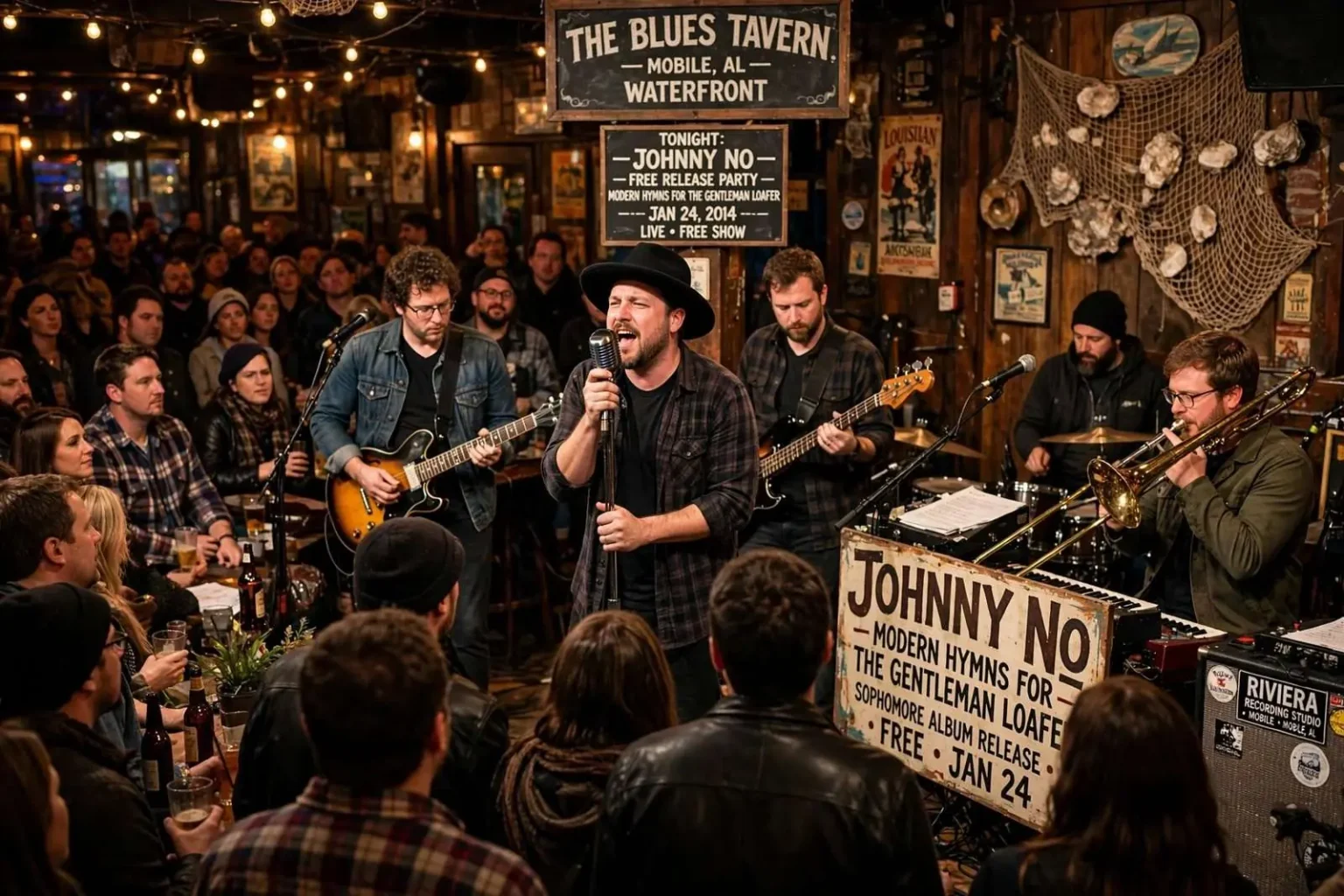
Mobile blues outfit Johnny No hosted an album release party at The Blues Tavern on January 24, 2014, giving fans an exclusive first listen to their sophomore record, Modern Hymns for the Gentleman Loafer, a full month before its official February 25 street date. The free show packed the waterfront blues bar with fans who heard the new material live weeks before it reached stores and streaming services, and it capped a recording cycle the band had kept close to home from start to finish.
The five-piece Port City band built on the foundation laid by their debut, The Riviera Sessions Volume 1, with a new collection steeped in classic blues themes. Lead vocalist The Rev described the album’s inspiration in terms of the genre’s rebellious roots. “The blues is America’s first form of underground music,” he said. “The founders had a style of playing that was worlds different from what the public was used to hearing, and they were singing about all kinds of subjects that were not common.”
A deeper dive into the blues
True to that tradition, Modern Hymns draws on whiskey, lust, heartbreak, and the supernatural, with tracks like “Hand of Glory” and “Samedi’s Boast” weaving voodoo imagery into the mix. The songwriting places the band squarely in the lineage of blues music that treated taboo subjects plainly, from hard drinking to infidelity to dealings with the spirit world, and the Gulf Coast setting gives the voodoo references a regional resonance that runs from Mobile west through New Orleans.
The title itself — Modern Hymns for the Gentleman Loafer — signals the band’s framing of blues as a kind of sacred music for the wayward, songs that sanctify the very subjects polite society left out of church. For a band named for an outlaw, the framing fits: Johnny No has built its identity on playing blues that leans into the genre’s unruly origins rather than smoothing them over for casual listeners.
The release party format also said something about how the band sees its audience. By staging a free first listen at The Blues Tavern, a long-running Mobile room dedicated to the genre, Johnny No put its most devoted fans at the front of the line for the new material, letting the people who pack the band’s weekend shows hear the record in the same kind of room it was made for.
Homegrown production
The album was recorded at Riviera Recording Studio, the band’s own facility in Mobile. Johnny No handled production duties in-house, maintaining tight creative control over the project’s sound. Owning the studio changed the economics and the pacing of the record: sessions could be scheduled around the band’s live calendar, and decisions about arrangements and mixes stayed inside the band rather than with an outside producer or label timetable.
For the cover art, the group collaborated with Portal Studio, where artists Zach DePolo, April Hopkins, and Jillian Crochet translated the band’s vision into the finished design. “We couldn’t have asked for anything better,” The Rev said of the artwork. The collaboration kept the visual side of the record as local as the music itself, with Mobile artists handling imagery for a Mobile band on a Mobile-recorded album.
That homegrown approach carried through every layer of the release. A self-produced record on a self-built record leaves the band holding its own masters, and in an era when regional blues acts increasingly fund recordings themselves, Johnny No’s studio ownership is the kind of asset that lets a five-piece band sustain a recording career without waiting on a label’s permission.
A versatile live act
Known for energetic performances that blend originals with inventive takes on familiar favorites, Johnny No had built a loyal following across the Gulf Coast, particularly in Mobile and nearby New Orleans. The Rev’s deep baritone vocals anchored a sound shaped by guitarist Al McNab, bassist T McNab, keyboardist and trombonist Caleb McCartee, and drummer Bob Scroggins. The two-horn texture McCartee adds on trombone, alongside keyboards, gives the band a broader palette than the standard guitar-bass-drums blues trio, and the McNab brothers anchor the rhythm section that carries the group’s live sets.
“We are such a different kind of band when it comes to blues that I don’t think many people thought we would survive this long, let alone release a second album,” The Rev said. “What they didn’t realize is that we have a very versatile blues sound that attracts a wider demographic than your typical blues purist.”
That wider demographic is visible at the band’s shows, where the audience for a Friday night at The Blues Tavern can include everything from longtime blues devotees to younger listeners who came for the rock-adjacent energy and stayed for the originals. Cover songs give newcomers familiar entry points, while material like “Hand of Glory” gives the converted something no cover band can provide.
The Blues Tavern and Mobile’s blues scene
The Blues Tavern has spent years as a fixture of Mobile’s live music landscape, a dedicated blues room on the city’s western waterfront where touring acts and regional bands share a calendar. For a hometown band celebrating a sophomore release, there is a logic to staging the moment there: the room’s regulars have watched Johnny No evolve from a debut to a second album, and a free party thanks them for it.
Mobile’s blues tradition runs deep, from the street corners and juke joints of the early twentieth century to the modern club circuit, and the city sits at the western edge of a Gulf Coast sound that stretches toward New Orleans. Johnny No’s voodoo-tinged songwriting and second-line rhythms draw on that shared coastal heritage, and the band’s willingness to name that influence — rather than chase a more generic blues-rock sound — is part of what sets its records apart.
The free release party at The Blues Tavern offered attendees the chance to hear the new material live and pick up the album well ahead of its wider release. For fans, January 24 became a first listen that most music audiences never get — a full month of knowing the record before the street date — and for the band it served as both a celebration and a shakedown cruise for the material before a wider audience hears it.
Between the January party and the February 25 street date, the band had a month of momentum to work with: partygoers talking up the record, early copies in local hands, and a set of songs already tested in front of the room that knew the band best. It is a grassroots release strategy that fits the band’s grassroots production — everything about Modern Hymns for the Gentleman Loafer, from the studio on the sessions to the artists who drew its cover, was made in Mobile, for a band that intends to keep playing it that way.
With a second album on shelves and a dedicated home room for playing it live, Johnny No entered 2014 with the strongest position it had held since forming: a debut behind it, a self-owned studio beneath it, and a Gulf Coast following stretching from Mobile to New Orleans ready to hear what the gentleman loafer had been writing about.
The record’s track list rewards listeners who follow the band’s themes closely. “Hand of Glory” borrows its title from the old folk charm — a preserved hand said to unlock any door — and turns it into blues shorthand for the things people will do to get what they want. “Samedi’s Boast” invokes the voodoo spirit of the dead from the Gulf Coast’s conjure tradition, delivered with the swagger the title promises. Together the songs establish the album’s world: a place where the supernatural sits as close to the surface as whiskey and heartbreak, and where the narrator is never entirely innocent.
For a sophomore effort, the record carries a particular weight. First albums can be collections of everything a band knows how to play; second albums have to say who the band is. Johnny No’s answer is emphatic — this is a blues band with literary ambitions and a regional accent, one that treats the genre’s classic subjects with both reverence and a wink, recorded to sound like the five people in the room rather than a polished product.
The Riviera studio sessions gave the band room to pursue that sound. Rather than booking limited hours at a commercial facility, the members could chase arrangements across multiple sessions and listen back in the same room where they would perform them, a luxury that shows in the record’s live, room-filling feel. The trade-off of self-production — no outside ears to argue with — is one the band has embraced as a feature of its identity rather than a compromise.