
Laid Off Twice, Then Displaced by Sally: An Orange Beach Newcomer Finds a Safe Place to Land
A seasonal tour worker who moved to Orange Beach lost two jobs to COVID-19 and her housing to Hurricane Sally before an officer steered her to local help.
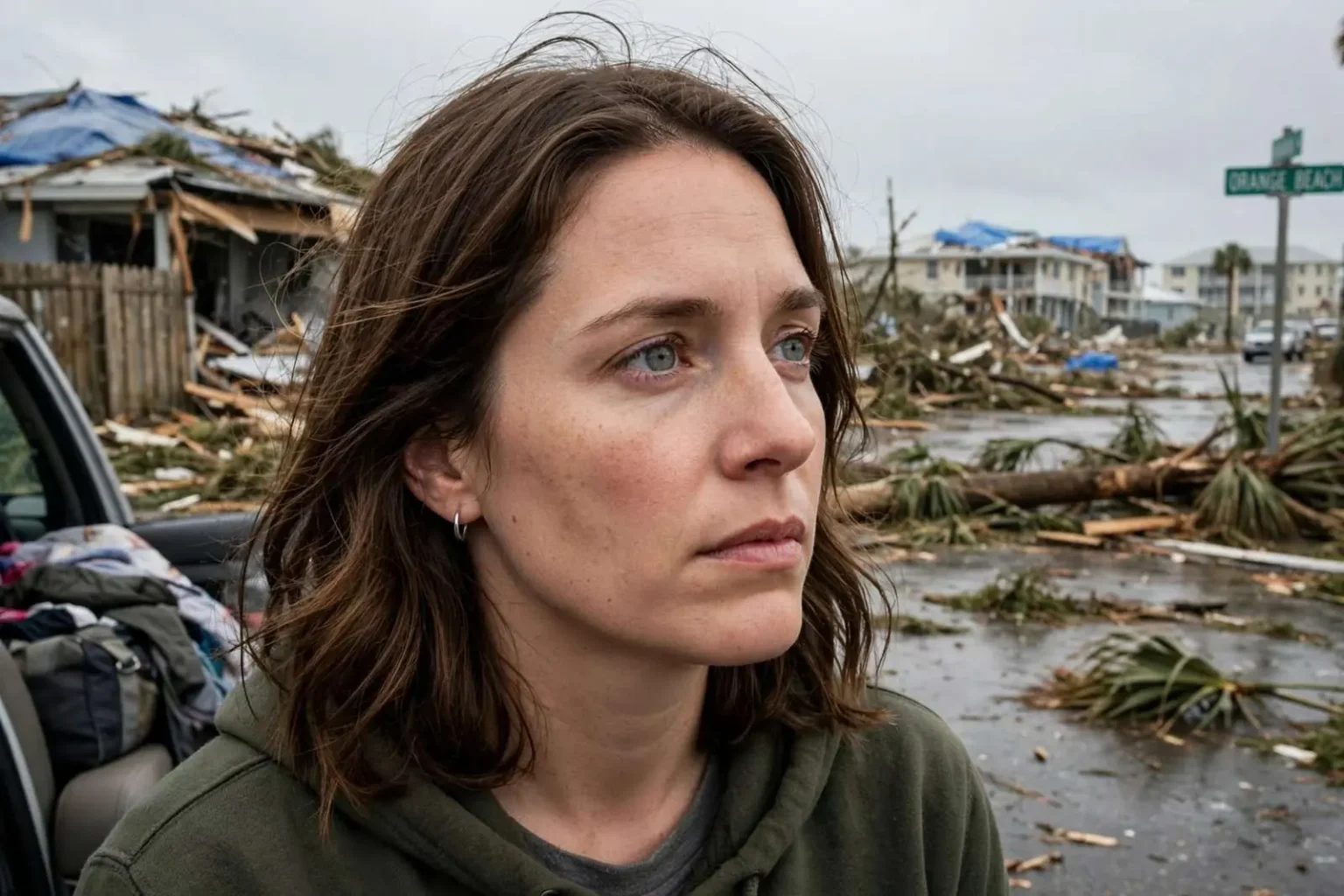
Jennifer Lyn came to the Alabama coast this year because tourism work looked steadier here than almost anywhere else during the pandemic. Between COVID-19 shutdowns and Hurricane Sally, the plan collapsed twice before it ever started. Her story traces the double blow that 2020 delivered to the Gulf Coast’s tourism workforce — first the virus closed the businesses that hire seasonal workers, then a hurricane damaged the places they would have worked and the rooms they would have rented.
A year earlier she had been working the off-season in Charleston, South Carolina, before heading back for what should have been her fifth season with a duck-boat tour operation in Seattle. She worked two days, she said, before the company told employees it could not sustain the season and closed. The pattern that followed — a job secured, a plan made, a collapse on arrival — became the organizing experience of her year, and she gave it a phrase that stuck: two days, then two days again.
For seasonal workers along the nation’s coastlines, the pandemic erased the assumption that the industry always rehires its own. Tourism employment runs on accumulated seniority of a sort — returning workers who know the routes, the safety briefings, the rhythm of a season — and when an entire season vanished, the network of jobs that lives off it vanished too. Workers like Lyn, who moved between coastal markets as the seasons turned, suddenly had nowhere to turn.
A plan that lasted two days
That is what sent her to the Baldwin County beaches. “I moved to Alabama to work for another tour company here, and I planned everything down to the smallest detail, and when I got here, I worked for two days and they said we need to suspend operations because of COVID,” she said. The quote captures the particular cruelty of pandemic-era tourism work: the plans were sound, the job was real, and the collapse had nothing to do with her performance or her preparation. Operations suspended on a health official’s order do not owe anyone a season.
She lined up what looked like a more stable job at Adventure Island in Orange Beach. The day she was supposed to start turned out to be the day the hurricane hit. Hurricane Sally came ashore in September as a slow-moving storm that parked over the Gulf Coast and dumped punishing rain and wind on the Baldwin County communities nearest landfall, and Orange Beach sat squarely in the damage zone. The amusement park where she expected to begin work became another business shuttered by a disaster, joining marinas, restaurants and condominiums across the island.
Sally’s timing compounded every difficulty the coast was already managing. Businesses still operating under pandemic restrictions faced storm damage on top of lost revenue, workers who had finally been recalled were put back out of work, and the housing that seasonal workers depend on — the rentals, rooms and shared houses of the beach communities — was suddenly damaged, flooded or commandeered by displaced residents and repair crews.
An officer pointed her to help
Lyn, who asked that her last name not be published, said her housing situation also fell apart as the storm approached, and she was told to leave the room she had been renting. She decided to sleep in her car for a while and was driving around looking for a park to stop in when a police officer pulled alongside her.
“He said well you should go home, and I said well I don’t have one anymore,” she said. Instead of moving her along, she said, the officer connected her with local resources. The exchange is a small one, but it describes the front line of disaster response that never makes official situation reports — officers who, in the days around a hurricane, spend as much time steering displaced people toward help as they spend enforcing curfews and managing traffic.
For someone sleeping in a car in a storm-damaged beach town, the options are thin. Hotels are full of evacuees and utility crews, shelters fill quickly, and the informal housing market that seasonal workers rely on — a room here, a shared rental there — simply evaporates when the housing stock itself is damaged. What stands between a person in that position and a spiral into prolonged homelessness is usually the same thing: another human being with information about what help exists and how to reach it.
The arrangement she landed in is not permanent, but she called it a safe home with people she never would have met otherwise. She credited the first responders she has dealt with on the coast for treating her with what she described as consistent compassion during the worst stretch of her year.
Her account lands with particular force in Orange Beach, where the storm’s aftermath tested a community that runs on hospitality. The city’s economy is built on welcoming strangers — millions of visitors a year in ordinary times — and the same instinct showed up in the recovery, as residents and business owners organized supply distributions, checked on neighbors, and took in people who had nowhere else to go.
What her story says about the workforce
The workers who staff the coast’s attractions, restaurants and tour boats are largely invisible in good times — the ride operators and deckhands and ticket takers behind the region’s tourism economy. Stories like Lyn’s put them back in view: people who cross the country for seasonal work, plan their lives around the industry’s rhythms, and absorb the shocks of pandemic and hurricane with no cushion at all. The pandemic-plus-hurricane combination of 2020 hit that workforce harder than any single disaster in recent memory, scattering workers inland or out of the state entirely.
Recovery on the coast has been measured, in the months since the storm, in debris cleared and roofs repaired and businesses reopening. But the human recovery — workers finding stable housing, families rebuilding routines, seasonal employees deciding whether the coast is still worth the gamble — runs on a longer clock. Lyn’s path through it, from a car in a parking lot to a safe place with people she calls generous, is the version of recovery that happens one person at a time, mostly out of public view.
Her willingness to tell the story with only a first name reflects the precarious position she is still in, and it also serves a purpose for the people who may read it: other seasonal workers who arrived on the coast in the middle of 2020’s double disaster and found themselves in similar straits. The message embedded in her account is practical — ask, and keep asking. The officer did not solve her situation in that conversation, but he pointed it in a direction, and the direction held.
The tour companies and attractions she aimed to work for are part of what makes the Baldwin County beach economy function in ordinary years, and their return is one of the markers of the coast’s comeback. Workers like her are the other marker. A town can rebuild its buildings and reopen its amusement parks, but if the workforce that runs them cannot afford to live anywhere nearby, the recovery is incomplete. Housing for service workers has been a pressure point in resort communities up and down the coasts for years, and disasters only sharpen it.
In the meantime, she is doing what the coast asks of everyone who lands there — adapting. She came for a season of tour work and found a community instead, assembled in the most difficult year the region has faced in a generation. She planned everything down to the smallest detail, and the plan failed twice through no fault of her own. What survived the failures was smaller and sturdier than the plan: a safe place to sleep, people she trusts, and a first-responder community she describes as having treated her with compassion when she had nothing else. On the Alabama coast in 2020, that qualified as the year’s most valuable find.
Hurricane Sally’s landfall near Gulf Shores in September marked the first hurricane to strike Alabama’s coastline in more than a decade and a half, and its slow movement made it disproportionately destructive for its strength. Storms that linger drop more rain, and Sally parked over the region long enough to produce flooding that extended well inland, toppling trees across Baldwin and Mobile counties and leaving hundreds of thousands of utility customers in the dark. Orange Beach and Gulf Shores took some of the worst of it, with damage to condominiums, marinas, restaurants and the small businesses that anchor the beach economy.
The storm arrived at the worst possible moment for the tourism calendar. September ordinarily holds the tail end of the season — the last weeks when attractions staff up for weekend crowds and workers bank final paychecks before the off-season. Sally cut that short everywhere at once, and for a newcomer like Lyn the timing meant her job at Adventure Island never had a chance to begin. There was no onboarding interrupted midstream, no paycheck to tide her over; there was simply a start date that coincided with a hurricane.
Displacement followed a familiar sequence in the storm’s aftermath. Rental housing along the beach communities is tight in the best of years, and post-storm it became scarcer still as damaged units emptied out, repair workers arrived from across the region, and displaced residents competed for whatever remained intact. People on the economic margin — seasonal workers, service staff, anyone without a lease or family nearby — faced the sharpest edge of that shortage, which is how a newly arrived worker with a signed job expectation ended up considering a night in her car.
What happened next, by her account, depended on a police officer choosing engagement over enforcement. It is worth pausing on that choice, because it happens hundreds of times in a disaster and rarely gets recorded. An officer who finds someone sleeping in a car can direct them to move along; in the middle of a hurricane’s aftermath, that person has nowhere to move along to. The officers who connect the dots — to a shelter with space, a church handing out supplies, an aid organization taking names — turn the difference between a bad week and a lost year.