Lunatix and Co. Fashion Show Turns Cathedral Square Into a Runway
The 2012 Lunatix and Co. fashion show brought local designers to Cathedral Square during Arts Alive weekend in Mobile. See who walked the runway.
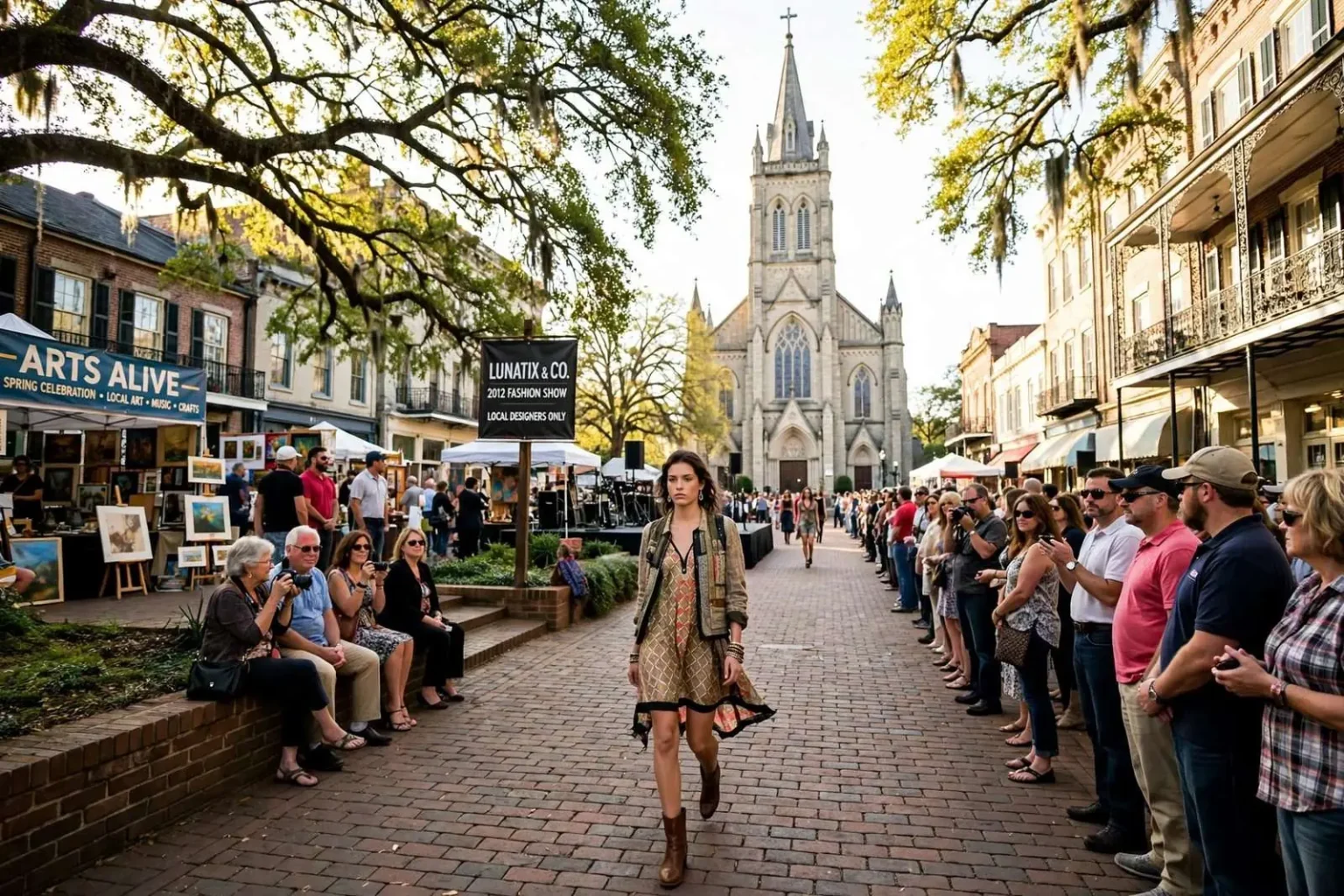
Cathedral Square in downtown Mobile became an open-air runway as Lunatix and Co. presented its 2012 fashion show, the centerpiece fashion event of Arts Alive weekend and a showcase with a distinctive rule at its heart: local designers only. The show turned the historic square — the shaded, brick-paved heart of downtown Mobile, ringed by the Cathedral of the Immaculate Conception and some of the city’s oldest architecture — into a stage for Gulf Coast style, with models walking the square’s paths as crowds gathered under the live oaks.
The 2012 Lunatix show was among the weekend’s highlights, putting locally made fashion design center stage and giving nine area designers a professional platform for their work. The collections came from Nikki Burkett, Suzanne Sarver, Jill Burkett, Brennan Gibson, Jessica Price, Veronica Minsadur, Renee Odom, Katie Martin and John Ross Thomas — a roster that spanned the range of the local design community, from established names to emerging talents showing publicly for some of their first audiences.
About Arts Alive
Arts Alive is an annual spring celebration held in Cathedral Square, the historic center of downtown Mobile, drawing crowds with music, performances and displays from the local arts community. The festival fills the square and surrounding blocks with artist booths, live music stages, dance performances, children’s activities and interactive exhibits, and it has long served as the single largest annual gathering of the Gulf Coast’s working artists in one place. For a weekend each spring, the festival makes the case that Mobile’s cultural life extends well beyond its museums and theaters — into studios, galleries and independent creative businesses scattered across the city.
The festival’s setting is inseparable from its character. Cathedral Square occupies the block facing the cathedral whose name it carries, in the oldest part of the city where the street grid dates to Mobile’s colonial founding. The square has hosted public gatherings for generations, and its combination of green space, shade and historic backdrop makes it a natural festival ground — and, for a fashion show, a backdrop that no conventional runway can match. Models passing historic ironwork and century-old buildings with contemporary designs gave the Lunatix show its visual signature: the city’s past and its creative present sharing the same frame.
A Local-Only Showcase
The decision to spotlight the work of local designers only was what set the Lunatix show apart from the many retail-oriented fashion events that fill calendars across the region. Rather than presenting national brands or boutique merchandise, the show functioned as a juried-style platform for designers who make their own work — the seamstresses, patternmakers and creative entrepreneurs of the Gulf Coast — and gave each a slot in front of an audience that included festival-goers, fellow artists and members of the press.
The Designers on the Roster
The nine-designer lineup gave the 2012 show its range. Among the names were Nikki Burkett and Jill Burkett, Suzanne Sarver, Brennan Gibson, Jessica Price, Veronica Minsadur, Renee Odom, Katie Martin and John Ross Thomas — designers working across styles and specialties, each contributing a collection that reflected an individual point of view rather than a house brand’s lookbook. Events like this one matter enormously to designers at every stage: an emerging designer gains the audience and the credential of a produced show, while an established one gains the direct feedback of a live crowd and the visibility that comes from appearing among the festival’s headline events.
The show also documented the depth of Mobile’s design community. A nine-designer roster for a single evening’s program says something about how many people in the city are actively making clothing and fashion objects — often in small studios, alongside day jobs or separate creative careers. Festivals like Arts Alive give that community its most public moment of the year, and the Lunatix show gave its fashion wing its most focused one.
Fashion in the Festival Mix
Within the festival’s ecosystem, the fashion show occupied a distinctive niche. Painter and sculptor booths invite quiet browsing; a runway show commands a crowd and a schedule. By staging the show in the square itself rather than an indoor venue, the organizers let the fashion audience mingle with the larger festival crowd, pulling passers-by into the audience and giving the designers maximum exposure. That open-format staging has become a hallmark of the better outdoor fashion events — no velvet rope, no ticketed seating, just a stretch of the square turned into a runway with the festival flowing around it.
The format suits the event’s mission. Arts Alive exists to put the local arts community in front of the public, and a fashion show staged in the open square does exactly that: it converts festival foot traffic into a fashion audience, one Saturday afternoon at a time. For the designers, the math is simple — there is no larger concentration of potential customers, patrons and collaborators anywhere in the city that weekend than the crowd filling Cathedral Square for Arts Alive. And for the audience, the show offers something a boutique cannot: the sight of the city’s own designers taking a bow in the open air, applauded by neighbors who may well be wearing their work next season.
Lunatix and Co.’s Role in the Scene
Lunatix and Co. has built its reputation on exactly this kind of staging — fashion presented with theatrical energy rather than commerce-first formality. The 2012 Cathedral Square show fit the formula: a public square instead of a private venue, a festival audience instead of an invitation-only list, and a program designed as entertainment first. That approach has made the show a recurring favorite of the Arts Alive weekend, bridging the gap between the visual arts displays that anchor the festival and the performing arts on its stages. Fashion, the argument goes, belongs squarely in that mix — as an art form made to be worn, produced by the same local hands the festival celebrates.
By 2012, the show had become one of the ways the festival kept its programming fresh from year to year. Festivals live on the balance between the familiar and the new, and a runway show in the square delivered a spectacle that casual festival-goers might not plan to attend but rarely walked past once the music started and the first model hit the square’s brick paths.
Cathedral Square as a Stage
The square itself deserves credit as a co-star. Cathedral Square sits at the center of Mobile’s historic district, framed by the cathedral and surrounded by the churches, museums and commercial buildings of the old city. Its open lawn and mature trees give festival organizers a versatile canvas: booth rows for the artists’ market, open ground for performances and, for an event like the Lunatix show, a natural runway with built-in grandstand seating on the surrounding steps and sidewalks. Photography from the 2012 show captured the effect — designers’ collections moving past wrought iron fences and historic facades, the spring light filtering through the oaks.
That setting also carries symbolic weight for the local arts community. Cathedral Square is where Mobile’s creative economy assembles most visibly each spring — the square during Arts Alive is arguably the densest concentration of local artists, craftspeople and performers the city sees all year. Staging the fashion show there, amid that gathering, framed fashion design as part of the same civic story as the painting, pottery, music and dance filling the rest of the weekend: art made in Mobile, by Mobilians, for the public to see.
Why It Mattered
The Festival Economy of Local Art
Events like the 2012 show also illustrate the quiet economic engine that festivals like Arts Alive represent for working artists. A designer who shows at the Lunatix event walks away with exposure that translates into commissions, custom orders and new clients — the lifeblood of any independent creative business. The festival weekend as a whole funnels thousands of visitors past the booths and performances where local artists sell their work, and for many of them, a few strong days in Cathedral Square carry real weight in the year’s income. The fashion show’s inclusion in that weekend signals that clothing design is treated, economically as well as artistically, as part of Mobile’s creative economy rather than an afterthought to it.
The 2012 Lunatix and Co. show stands, in retrospect, as a snapshot of the Gulf Coast’s independent fashion scene at the start of the decade — nine local designers, one historic square, and a festival audience that came for art and stayed for the runway. It put locally made fashion design center stage, exactly as promised, and it demonstrated the formula that keeps such events alive: a public venue, a festival platform and a roster drawn entirely from the community the event exists to celebrate.