Mardi Gras Comes to Mobile Nursing Home During Secretary of State Visit
Alabama's Secretary of State joined a Mardi Gras king in bringing beads and celebration to residents of a Mobile nursing home during Carnival season.
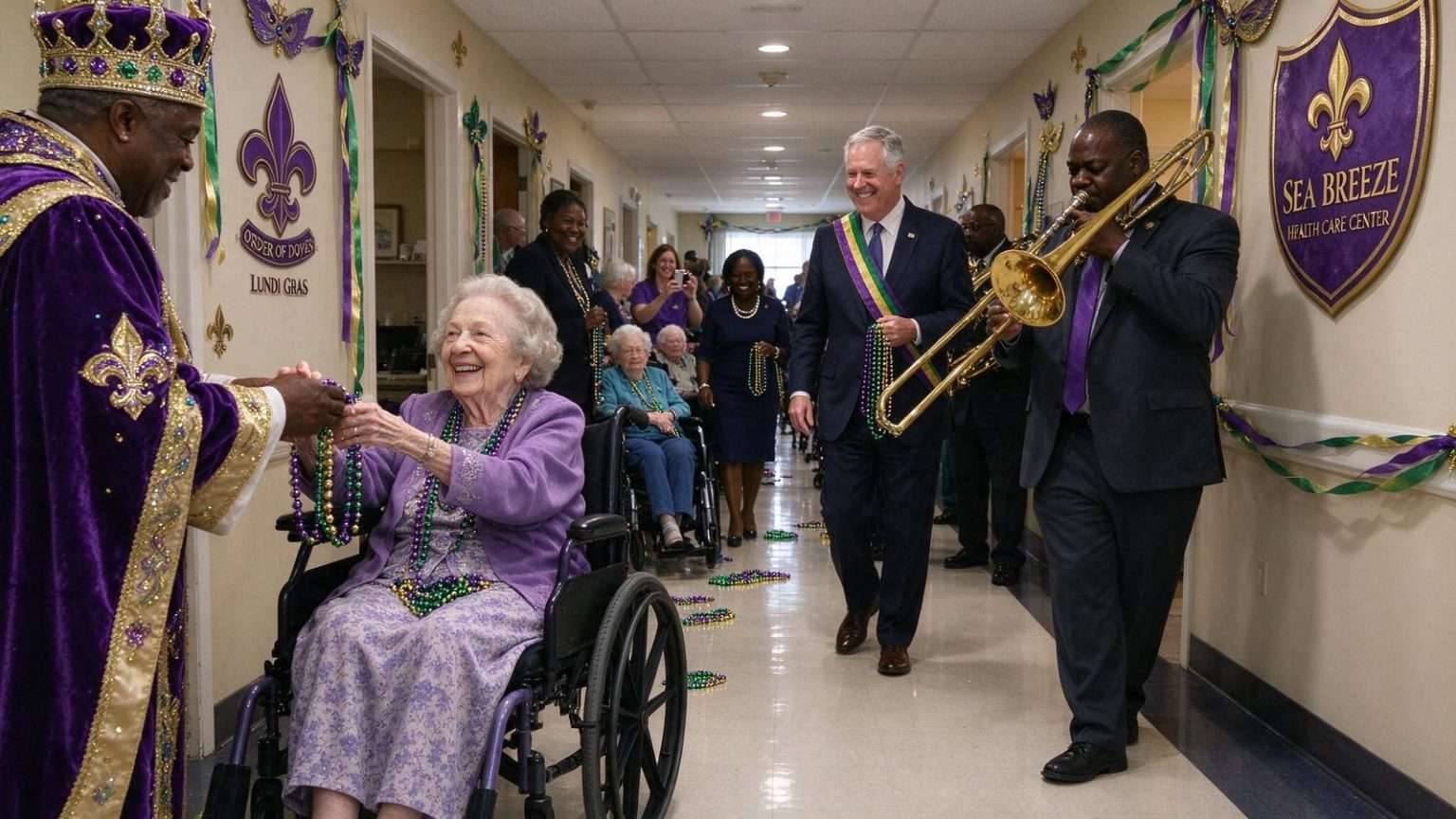
Mardi Gras made its way into the halls of a Mobile nursing home this week, as Alabama Secretary of State John Merrill joined an Order of Doves Mardi Gras king on a visit that brought beads, music and a burst of Carnival spirit to residents who might otherwise have missed the celebration entirely. For a building where most residents cannot stand along a parade route for hours or navigate the packed streets downtown, the celebration came to them — and the building shook a little in the process.
A Statewide Official in the Middle of Carnival
Merrill, joined by his wife and the reigning Order of Doves Lundi Gras king, toured Sea Breeze Health Care Center on Congress Street, greeting residents in dining halls and hallways throughout the building. Merrill was in Mobile serving as grand marshal for the Order of Doves’ Mardi Gras ceremonies, and the nursing home visit became part of a broader schedule that included the Joe Cain Day parade and a meet-and-greet at a local bead shop. Grand marshal duty in Mobile’s Carnival season is a packed assignment — a string of balls, parades and civic appearances that stretches across the final days of the season — and the Sea Breeze stop fit the pattern: a chance to carry the celebration to the people least able to reach it.
For Merrill, a statewide official whose office touches elections and government records rather than festival planning, the appearance reflected the civic role Alabama’s constitutional officers traditionally play in the season’s pageantry. Serving as grand marshal of a mystic society’s parade is one of Mobile’s signature civic honors, and the visit to Sea Breeze extended the role beyond the parade route — into the hallways where the city’s oldest residents watch the season go by through windows rather than from street corners.
The Order of Doves is part of Mobile’s diverse Carnival mosaic — one of the organizations, alongside groups like the Mobile Mystics Mardi Gras Association, that carry forward the city’s Black Carnival traditions alongside the older societies. Lundi Gras, the Monday before Fat Tuesday, has its own traditions in Mobile, and the Order’s king for that day was among those walking the halls at Sea Breeze in full regalia, handing out beads to residents in wheelchairs who reached up for them from the doorway of their rooms.
A Building That Shook
Staff at Sea Breeze said the home’s roughly 106 residents had already held their own Mardi Gras ball weeks earlier, complete with a crowned king, queen and runners-up chosen from among the residents. That internal ball is a fixture of the season at nursing facilities across Mobile — an institution-level celebration that gives every resident a role, from the crowned royalty to the committee members who choose the court. The visit from Merrill’s group added another layer to the season’s festivities, with a brass band from the Mobile Mystics Mardi Gras Association playing loudly enough, staff said, to shake the building as it moved through the halls handing out beads.
Facility staff described the response from residents as overwhelming, noting that many had no advance notice a sitting statewide official would be stopping by. The surprise was part of the effect: residents greeted the procession from their rooms and gathered in the hallways as the band passed, and staff reported the building’s energy lifting for hours afterward — the kind of day that a long-term care facility marks on its calendar long after it has passed.
Why a Nursing Home Visit Matters During Carnival
For residents with limited mobility or few opportunities to take part in Mobile’s outdoor parades and street celebrations, the visit offered a direct connection to a tradition deeply woven into the city’s identity. Mobile is the original home of American Mardi Gras — the city’s celebrations predate New Orleans’ by years, reaching back to the early 1700s — and for residents of a city that built its calendar around Carnival, missing the season is not a small thing. Many of Sea Breeze’s residents grew up attending parades on Government Street and downtown, masking or dancing in their own society balls, and raising children on the same route their parents walked.
Long-term care facilities across Mobile have developed their own ways of keeping that connection alive. Residence balls, door-decorating contests, king cake socials and viewings of the parades on television are fixtures of the season inside facilities, and visits from parading societies — whose members sometimes march their bands and throws right through the corridors — have become a treasured tradition of their own. The music matters as much as the pageantry: brass bands playing the standards of Carnival season can reach residents that conversation cannot, drawing responses from men and women who have not spoken much in days.
A First Look at Mobile’s Mardi Gras
For Merrill and the Order of Doves king, both of whom were experiencing Mobile’s Mardi Gras traditions for the first time, the stop offered a different vantage point on a celebration usually associated with parade routes and packed downtown streets. First-time grand marshals in Mobile often describe the depth of the season as the biggest surprise — the sheer number of societies, the generational memberships, the way the celebrations organize family life for weeks. Seeing the season from inside a nursing home, where the audience cannot come to the parade, adds a dimension to that education that no route-side viewing can match.
Organizers noted that Mardi Gras carries real economic weight for Mobile, drawing visitors and revenue to the city each year, but stops like the one at Sea Breeze reflect the community and civic side of the season as well. The economic story is real — hotels filled through the final weekends, restaurants and shops along Dauphin and Government streets busy through Fat Tuesday, and the city’s brand spread by visitors who come for the parades and return for the history. But the season’s civic side runs deeper: the societies’ charitable work, the school and church groups that ride in the parades, and the visits that bring Carnival to residents who watch the rest of it from a window on Congress Street.
The End of a Packed Calendar
The visit capped a busy stretch of Mardi Gras appearances for Merrill in Mobile, which included watching the Joe Cain Day parade the day before. Joe Cain Day — the Sunday before Fat Tuesday — is one of Mobile’s most beloved inventions, honoring the man who revived Mardi Gras after the Civil War and whose revival of the tradition is commemorated each year by the Merry Widows and the Red Clowns in a parade that is deliberately, proudly informal. For a grand marshal visiting from out of town, Joe Cain Day is the course in Mobile’s Carnival history that no invitation card quite prepares for.
Later that evening, the Order of Doves’ Great Gatsby-themed ball was scheduled to close out his time in the city, part of the packed calendar of balls and parades that mark Mobile’s Carnival season each year. By the time the ball’s music ended, the grand marshal’s itinerary would have run the full arc of the season — a parade on Sunday, a nursing home full of beads on Monday, and a themed ball to close the night — before the city turned to Fat Tuesday and the season’s final marches downtown.
The Season Seen From Congress Street
Sea Breeze Health Care Center occupies a place in Midtown Mobile where the season is close enough to hear. On parade days, the sounds of the downtown celebrations carry across the neighborhoods, and residents who spent decades lining the routes can follow the rhythm of the season from their rooms. That proximity is part of what made this week’s visit land the way it did — the Carnival that had been arriving through speakers and windows for weeks suddenly came through the front door, led by a brass band and the Secretary of State of Alabama carrying beads like everyone else in the procession.
The staff who organized the day, and the volunteers who trailed the band through every hallway, performed the logistical work that such visits require — clearing pathways, alerting nursing stations, timing the music to mealtimes, and making sure residents in every wing got a view rather than only those along the main corridor. The result, staff said, was a day that residents will talk about for the rest of the season, and one that captures what Mobile’s Carnival does at its best: it reaches into every part of the city, not just the parts standing along the barricades.
The Order of Doves’ week, meanwhile, continued after Sea Breeze. The society’s Lundi Gras celebrations carried into the evening, the Great Gatsby ball closed the calendar, and Fat Tuesday brought the city’s final parades and the traditional end of the season at midnight. For the residents of Sea Breeze, the season’s end arrived the way it does every year — with the decorations stored away until next spring, and the memory of a Monday when the parade came to them.