MAWSS Reports Sewage Overflow Into Fowl River After Contractor Breaks Force Main
MAWSS reported two additional sewer overflows at the same Dawes Oak Drive site on Aug. 14, bringing the total to three spills into Fowl River in three days; health officials are urging residents to avoid the water.
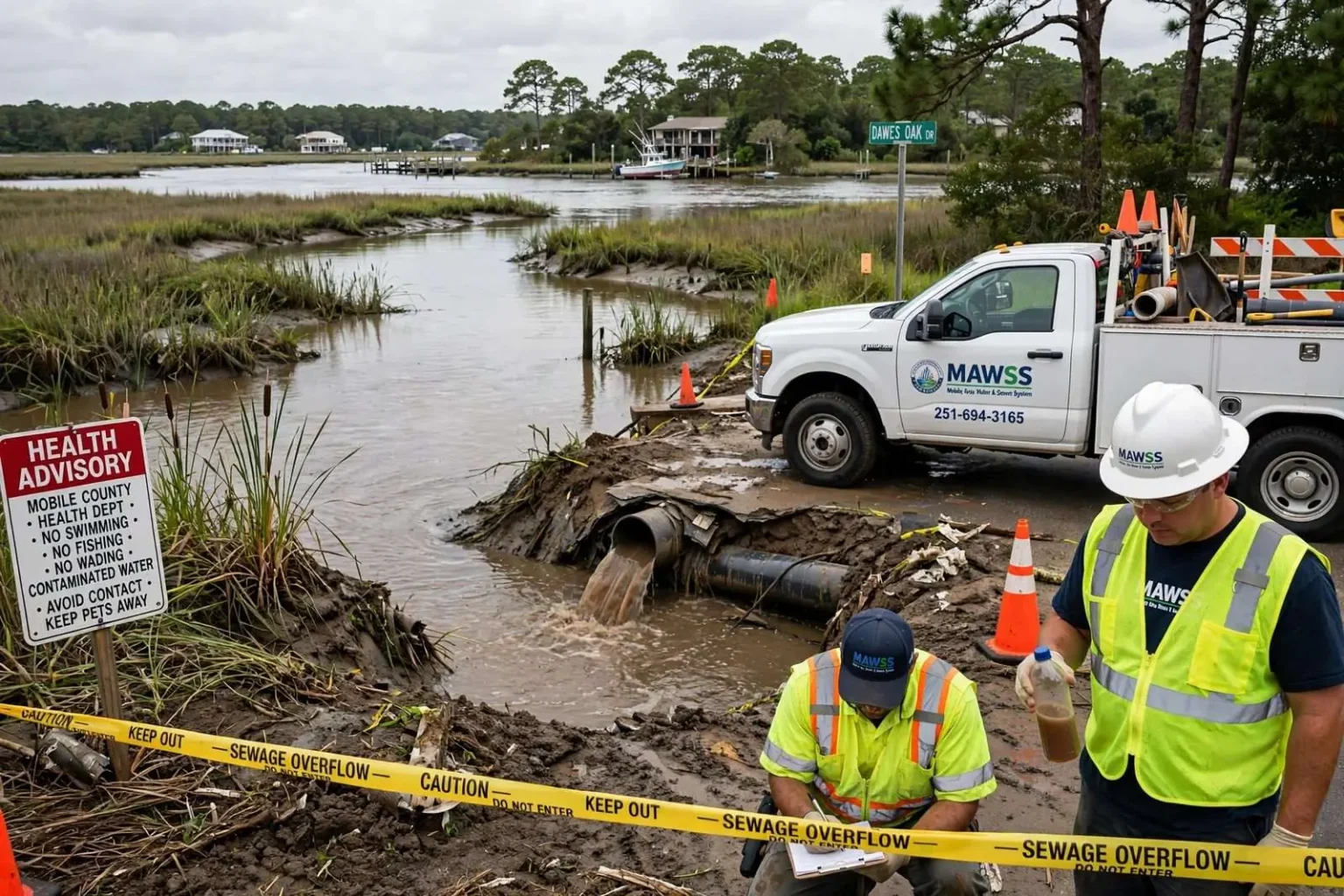
The Mobile Area Water & Sewer System (MAWSS) responded to a sanitary sewer overflow Aug. 12 at 8890 Dawes Oak Dr., after a third-party contractor broke a low-pressure force main, according to the utility. Approximately 960 gallons of wastewater overflowed into Fowl River as a result of the break. The incident, first reported by a citizen, set off a chain of repairs and follow-up overflows that turned a single utility call into a week-long problem for one of the waterways that defines southern Mobile County.
Fowl River winds through some of the most picturesque country in Mobile County, stretching from inland neighborhoods down to the community of Mon Louis Island, where it meets Mobile Bay. Homes line its banks, fishing boats work its waters, and the river feeds directly into the estuarine system that supports the bay’s shrimp, oyster and finfish harvests. That geography is precisely why sewer overflows here draw swift attention from health officials: what goes into Fowl River does not stay put, and the people most affected are the ones who live, swim and fish along it.
MAWSS crews said at the time that they had repaired the mainline and were taking steps to prevent future overflows at the location. Force mains are pressurized pipes that push wastewater uphill or across low ground to treatment points, and a break in one releases sewage under pressure until the line can be isolated and fixed. Repairs of that kind are routine work for a utility crew, but the conditions around a residential street and a tidal river complicate the job, and the initial fix does not always hold, as the following days would prove.
Two more overflows at the same location
Despite those repairs, the same stretch of pipe on Dawes Oak Drive failed again two days later. MAWSS and the Mobile County Health Department reported that an additional 480 gallons of wastewater overflowed at the location on Aug. 14, followed by a third overflow that same night of approximately 360 gallons. MAWSS said the repeat failures were tied to the same broken low-pressure force main and, as with the initial break, attributed the cause to work by a third-party contractor.
That brings the total to three separate sanitary sewer overflows at 8890 Dawes Oak Drive within a three-day span, all linked to the same contractor-damaged pipe. Combined, the overflows released roughly 1,800 gallons of wastewater into the environment, with the majority reaching Fowl River. Repeat failures at a single site usually indicate that the damaged section needs more than a patch, and utilities typically follow such episodes with more extensive replacement work once the immediate emergencies are controlled.
The pattern also illustrates how contractor damage becomes a lingering liability for utilities and residents alike. A third-party crew striking a force main creates an immediate emergency, but the weakened section can continue to fail even after emergency repairs, forcing the utility to keep responding while the permanent fix is planned and scheduled. Each additional overflow restarts the clock on public health warnings and adds volume to the spill totals that utilities must report to state environmental regulators.
Health warnings for residents
Mobile County Health Officer Dr. Kevin Michaels is urging residents to avoid the water and soil near the site, including swimming, wading or fishing in the area, until the site is confirmed safe. Health officials note that sanitary sewer overflows can introduce bacteria, viruses and parasites into waterways, which can cause diarrhea, vomiting, skin infections and other illnesses in people who come into contact with contaminated water or soil. Anyone who does have contact with the affected water or soil is advised to wash their skin and clothing thoroughly with soap and clean water as soon as possible.
The advisories that follow a sewer overflow apply to more than the visible spill site. Wastewater moves with the current and the tide, and health departments customarily warn against contact with the water downstream of an overflow until sampling confirms conditions have recovered. For a tidal river like Fowl River, that caution extends to the people who crab off their docks, cast for speckled trout at the river’s mouth or let children play along the shoreline, all normal activities in the neighborhoods the river serves.
Pets are a consideration as well. Dogs that swim in or drink from contaminated water can pick up the same pathogens that affect people, and owners along the affected stretch have been encouraged to keep animals out of the river until the all-clear. Fish caught in the area raise additional questions, and the standard guidance is to avoid consuming catch from the advisory zone until health officials confirm the water is safe.
Sanitary sewer overflows are among the most closely watched categories of environmental events in Alabama’s coastal counties, and the reporting system behind them is more transparent than most residents realize. Utilities document each overflow with the date, location, cause and estimated volume, and state environmental regulators compile those reports, building a public record that advocacy groups and reporters use to track problem areas over time. A site with three overflows in three days, all traced to a single damaged pipe, stands out immediately in that record, which is one reason utilities invest in permanent repairs rather than repeated emergency patches.
The volume figures themselves tell a story about scale. Roughly 1,800 gallons is a small overflow by the standards of major sewer failures, which can involve tens of thousands of gallons or more, but in a residential tidal river the practical impact is less about volume than location. Even a modest release of untreated wastewater into a waterway used for recreation and fishing warrants the kind of caution the Health Department issued, because pathogens concentrate where people and pets actually come into contact with the water, close to home rather than far out in the bay.
Low-pressure force mains occupy a particular place in coastal sewer systems. Much of the land around Mobile Bay is flat and low, which makes gravity-fed sewer lines difficult to build, so utilities rely on pressurized force mains and lift stations to move wastewater across the terrain. Those pressurized lines fail differently than gravity pipes: a break releases sewage under pressure rather than passively, and locating the failure point along a buried line takes time. The engineering realities explain both the initial spill and the difficulty of guaranteeing that a repaired section will hold.
For anyone living near the site, the practical checklist from health officials is straightforward but worth repeating. Avoid swimming, wading, fishing or boating in the advisory area until the all-clear is issued. Keep children and pets away from the water and from any soil that may have been affected, since contamination does not always stay in the river channel. If contact happens anyway, wash skin and clothing thoroughly with soap and clean water as soon as possible, and watch for symptoms of gastrointestinal illness in the days that follow. Residents with questions can contact the Mobile County Health Department, which posts advisories and updates as conditions change, and the department remains the authoritative source for when normal activity along the river can safely resume.
What happens next
MAWSS has not yet said what additional steps it is taking to permanently resolve the recurring failures at this location. The utility operates hundreds of miles of collection lines across Mobile, and its crews respond to overflows throughout the year, with the results reported to the Alabama Department of Environmental Management as required. Larger repairs, including replacing a compromised force main section, typically require planning, materials and coordination with property owners along the route, which takes longer than the emergency response that follows each break.
For neighbors on Dawes Oak Drive, the episode has been a lesson in how quickly a utility accident can upend daily life. The initial break was reported by a citizen, a reminder that residents are often the first to notice and report these events, and prompt reporting is part of how the volume of an overflow gets limited. Utility officials consistently ask the public to report anything that looks like a sewer problem, from manhole surcharges to unusual flows in ditches, because early notification leads directly to faster response and smaller spills.
The overflows also renew the familiar conversation about aging infrastructure and the cost of protecting the waterways that make coastal Mobile County desirable. Every utility in the region faces the same math: pressurized mains buried in developing neighborhoods, contractors working near them, and rivers close enough that any release matters. How MAWSS follows through on a permanent fix at Dawes Oak Drive will determine whether the three overflows of that August week remain a bad memory or become the first chapter of a longer problem.