
Meet Mobile Musician Ryan Balthrop, a Storyteller of Gulf Coast Life
Mobile musician Ryan Balthrop blends southern eclectic rock with storytelling rooted in Gulf Coast life, family and a wry view of the human condition.
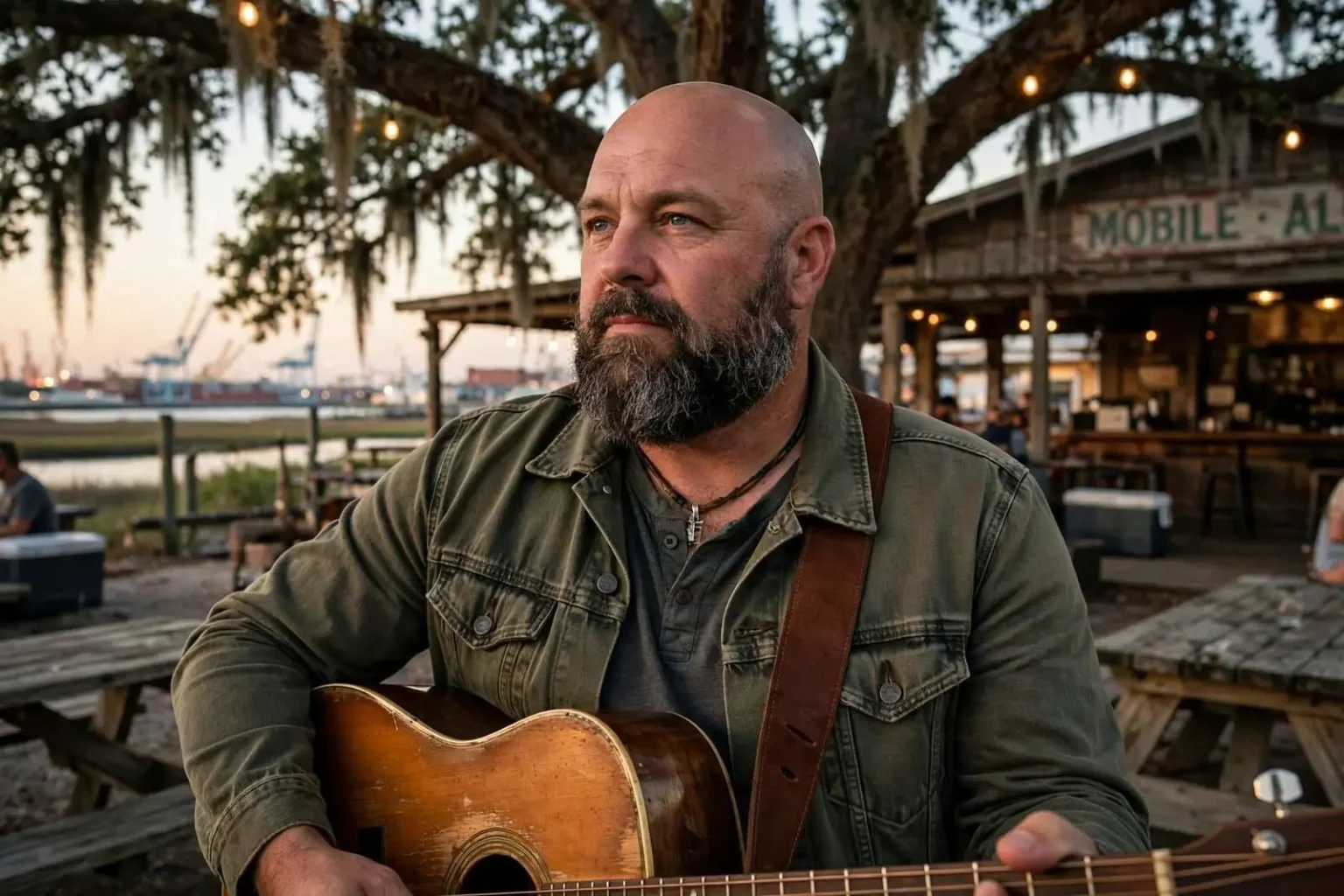
Mobile musician Ryan Balthrop writes songs about the afterlife, respecting the past, social struggles and small moments of everyday life. His characters leap from trees into marriage or get left behind at the Greater Gulf State Fair, finding comfort in beer, chicken wings or a quiet apartment with a bed in the back. It is a songbook drawn from Gulf Coast life — funny, plainspoken, and quietly philosophical — and it has made the Mobile native one of the region’s most distinctive performing songwriters.
The subjects Balthrop reaches for are not the usual postcard images of the Gulf Coast. Instead of beach parties and sunny clichés, his songs turn toward the interior lives of ordinary people: the way someone mourns, the way memory binds a family together, the way a small humiliation at a county fair can say more about a life than a résumé ever could. His narrators are often lovable losers or wry survivors, and Balthrop treats them with an affection that keeps the humor from curdling into mockery. In a music scene saturated with generic material, that commitment to character has become his calling card.
A Sound All His Own
Balthrop describes his style as southern eclectic rock, but the bald, burly singer with a sometimes bushy beard resists easy categorization. His flexible voice evokes Gregg Allman, John Prine, Paul Simon and Ziggy Marley by turns — a gritty blues-rocker’s growl on one song, a folk singer’s conversational warmth on the next, even a reggae-inflected lilt when the material calls for it. That range is not affectation; it is the natural result of an artist who absorbs whatever the moment requires and refuses to be pinned to a single genre shelf.
The eclecticism serves the writing. A song about mortality can borrow the rumble of southern rock; a meditation on everyday dignity can sound like a Prine-style talking blues; a celebration of island rhythms can carry a Marley bounce. For Gulf Coast audiences, whose musical inheritance runs from blues and country to swamp pop and Caribbean sounds through the port city’s long history, that blend feels less like a hybrid and more like an honest portrait of where they live.
Music runs in the family. His parents, siblings, aunts and uncles all sing and play, both grandfathers were storytellers, and his grandmother wrote poetry and short stories. Growing up in a household where performance was as ordinary as dinner conversation gave Balthrop both the technical foundation and the narrative instinct that now define his work. The storytelling thread matters most: his songs are built like short stories, with characters, setups, and turns, and the family legacy of tale-spinning is audible in every verse.
His father, James Balthrop, recalls that Ryan’s gift for mimicry showed early. “My earliest memory of Ryan was his ability to imitate people,” he said. That spontaneous, humorous stage personality has defined Balthrop’s performances around the Gulf Coast, where a night with him is as much a comedy set and a family reunion as a concert.
Imitation, in Balthrop’s hands, is more than a party trick. It is the observational engine behind his writing: the same ear that captures a voice inflection captures a turn of phrase, a rationalization, a small vanity. The mimicry that delighted his family as a child became, in adulthood, a way of listening closely enough to ordinary people to write them into songs without flattening them into caricature.
Live audiences along the Gulf Coast know what to expect. Between songs, Balthrop riffs; during songs, he inhabits characters with an actor’s willingness to look ridiculous in service of the truth of a scene. Venues across the region have made him a reliable draw, and his ability to read a room — to know when to push the humor and when to let a ballad breathe — reflects years of stage time rather than studio polish.
From Nursing to the Stage
Balthrop attended the University of South Alabama in Mobile, initially studying nursing with plans to become a nurse anesthetist. It was a practical ambition, the kind a family might applaud: a respected profession, steady employment, and a clear professional ladder. Music, at that point, was not yet a career plan — it was an interest competing for attention with a demanding course of study.
Those plans changed sophomore year when he became lead singer of a band. The group evolved into Slow Moses, a successful college band that toured the Southeast in the mid-1990s. The move from anatomy labs to band vans was decisive. Touring gave Balthrop the experience of playing night after night in front of strangers, sharpening his stage instincts and teaching him the practical lessons — load-ins, set lists, broken strings, empty rooms and packed ones — that no classroom offers.
Slow Moses also confirmed the essential question of any artistic career: whether an audience responds. The band built a following across the Southeast, and that early validation made it difficult to return to a plan built for someone else’s temperament. Many musicians face the same fork — the sensible career and the risky one — and Balthrop’s choice of music put him on the long road of writing, performing, and self-reinvention that continues today.
Rooted in Mobile
Today the Mobile native continues to build a body of work rooted in Gulf Coast life, drawing on family, place and a wry eye for the human condition. The decision to remain in Mobile, rather than chase a scene in Nashville or Atlanta, is itself part of his artistic identity. The region supplies both his subject matter and his audience: the barrooms, festivals, and listening rooms where his songs about fairgrounds, apartments, and afterlives land because listeners recognize the world they come from.
Mobile’s music culture rewards exactly that kind of rootedness. The city supports a web of venues, festivals, and civic events where local songwriters can reach audiences week after week, and the Gulf Coast’s distinctive character — part Deep South, part port city, part beach culture — gives local writers material unavailable anywhere else. Balthrop’s catalog is proof of the approach: rather than writing placeless songs aimed at an imagined national market, he has written the songs his own region could only have produced.
The Craft Behind the Characters
What distinguishes Balthrop’s songwriting is the attention paid to people who would never ordinarily get a song. His characters are the ones left behind when the group moves on, the ones whose big romantic gestures misfire, the ones seeking comfort in the modest consolations of a late-night meal or a rented room. The humor in these stories is real, but it is the humor of recognition — audiences laugh because they know these people, or because they are these people.
His thematic range runs wider than the comedy suggests. Songs about the afterlife and about respecting the past sit alongside the lighter material, giving his sets an emotional undertow. The movement between laugh and lump-in-the-throat is a difficult one to manage, and it depends on the same quality his father noticed decades ago: an unusual ability to get inside another person’s way of speaking and feeling. Mimicry was the first form of that gift; songwriting is its mature expression.
The vocational detour through nursing also left its mark, whatever its direct influence on the music. A would-be nurse anesthetist learns to pay attention to people at their most vulnerable, and a songwriter benefits from the same discipline. Balthrop’s songs rarely judge their subjects; they watch them with patience and a certain tenderness. Listeners who wonder why his ordinary characters feel so fully realized might find part of the answer in that abandoned career path.
An Enduring Gulf Coast Voice
For audiences in Mobile and across the Gulf Coast, Balthrop occupies a familiar role: the local songwriter who never became a national name but never stopped being essential to the region’s live music life. Careers like his hold local scenes together. National acts pass through and move on; the resident writer keeps showing up, keeps writing, keeps supplying the songs that give a place its own soundtrack.
His family’s artistic streak continues to matter as well. With singers and players on all sides and storytellers in the generation above him, Balthrop works in an environment where music is a shared language rather than a solitary ambition. That context helps explain both his versatility and his stamina — a performer raised in collaboration tends to keep collaborating.
The summary that his career keeps circling back to is the one he offers himself: southern eclectic rock, made by a Mobile native, about the afterlife and the fairground, the past and the present, the leaps people take and the ones who get left behind. It is a local art with universal reach, and it is still being written, one character at a time, on stages across the Gulf Coast.