Mobile activist says she’s seen change in city, country since George Floyd’s death
Mobile activist Sabrina Mass says she sees progress a year after George Floyd's death, as she joins the city's Human Relations Commission.
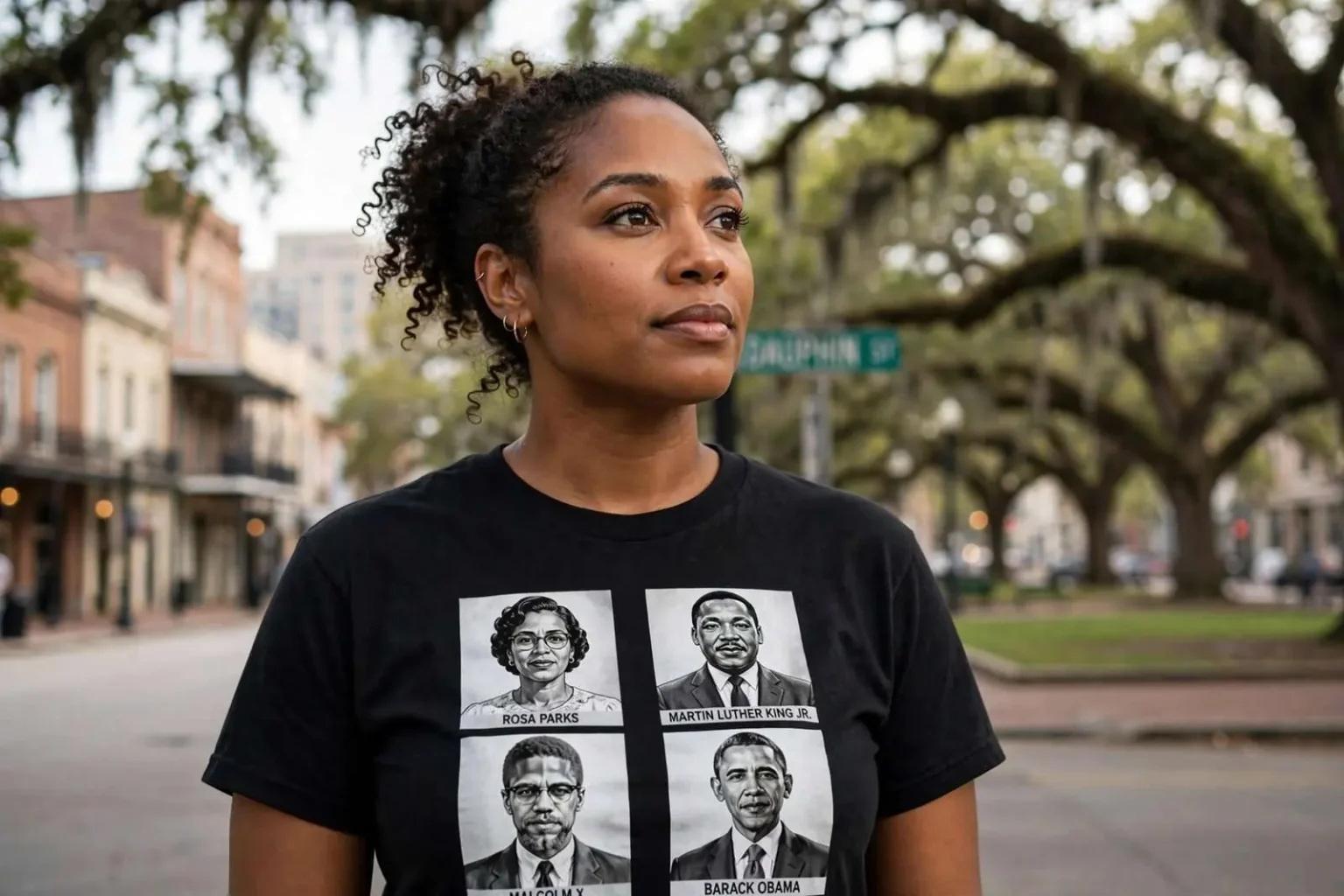
A year after George Floyd was killed in Minneapolis, a Mobile activist says she sees signs of progress at home and across the country. Sabrina Mass reflected on the change she has witnessed while wearing a shirt bearing the images of Rosa Parks, Martin Luther King Jr., Malcolm X and former President Barack Obama — four figures she called “legends and iconic figures in the movement.” Her assessment came on the anniversary of a death that reshaped conversations about race and policing in cities across America, Mobile included.
“As a nation, I think we’re moving forward. I definitely see that change,” Mass said. Her optimism, offered a full year after the protests of 2020, carried the weight of someone who had spent that year in the middle of the city’s reckoning — first in the streets, then inside the institutions the streets were trying to move.
From the crowd to a familiar voice
Mass became a familiar figure during the protests that drew crowds downtown last May, when she emerged as a prominent voice in the demonstrations. The Mobile protests of that spring and summer were part of a national wave that followed Floyd’s death, but they took their own local shape: gatherings in and around downtown Mobile, marches past Government Street landmarks, speakers addressing crowds about their own experiences in the city. In that setting, Mass’s visibility grew from participant to organizer-adjacent presence — someone reporters sought out, crowds recognized, and city officials had to answer.
The downtown backdrop mattered. Mobile’s historic core — Dauphin Street, Bienville Square, Government Street — has long been the city’s stage for public assembly, from Mardi Gras processions to political rallies, and the 2020 demonstrations joined that lineage. The crowds that gathered there in the weeks after Floyd’s death were notably diverse, and the protests remained largely peaceful even as their message — accountability, reform, a seat at the table for Black Mobile — was delivered unmistakably. Mass, speaking plainly and often, became one of the faces of that moment in the city.
The Human Relations Commission
The most concrete institutional product of her activism came with her appointment to the Mobile Human Relations Commission, a group that works alongside the Police Department and city leaders. The commission’s charge, as described by the United States Commission on Civil Rights, is to promote and encourage fair treatment and equal opportunity for all residents, foster mutual respect and understanding, and work to eliminate discrimination. Moving from protest to the commission placed Mass in the room where complaints, policies, and community concerns are actually processed — a transition not every activist makes, and one she treated as part of the same work.
Human relations commissions exist in cities across the country, typically as advisory or quasi-official bodies that receive discrimination complaints, mediate community disputes, advise city leadership on equity questions, and serve as a channel between residents and police departments. Their effectiveness varies with the city’s commitment, and their composition — volunteers drawn from the community — determines whether residents see them as genuine advocates or ceremonial panels. Mass’s appointment put a proven community advocate on Mobile’s body at a moment when public scrutiny of such institutions had never been higher.
A year measured in changes
When Mass said she saw change at home and across the country, the year behind her supplied the specifics of the era: cities reconsidering police policies, departments publishing data they had never released, legislatures debating reforms, and communities — including Mobile’s own — holding conversations that had previously been confined to churches, barbershops, and living rooms. The anniversary itself was marked nationwide with memorials, marches, and assessments of what had actually changed since the previous May, when a video recorded in Minneapolis had set off the largest protest movement in American history.
Her assessment was deliberately forward-looking. Wearing the images of Parks, King, Malcolm X and Obama, she framed the present as a continuation of a long movement rather than a response to a single moment — the four figures on her shirt spanning more than six decades of American civil rights history, from the Montgomery bus boycott through the presidency of the nation’s first Black chief executive. Calling them “legends and iconic figures in the movement” placed Floyd’s death and Mobile’s response in that longer arc, a continuity she has emphasized in her public work.
For Mobile, the year between the protests and the anniversary produced its own ledger. The city’s leadership engaged with demonstration organizers in ways the city had not seen in a generation, and the Human Relations Commission gained members whose credentials came from the streets rather than solely from civic résumés. Mass’s own trajectory — demonstrator to commissioner — was the single clearest example of that shift.
What the commission work looks like on the ground
The Mobile Human Relations Commission’s work alongside the Police Department and city leaders covers ground that residents encounter directly. Complaints about discriminatory treatment, questions about policing practices, tensions between neighborhoods and institutions, and celebrations of the city’s diversity all fall within the body’s scope. The commission’s stated purposes — fair treatment, equal opportunity, mutual respect, the elimination of discrimination — are broad by design, giving the body latitude to address whatever the community brings to it.
Members appointed in the wake of 2020 carried particular weight, because the city’s credibility in the eyes of the demonstrators depended partly on whether the commission became a working instrument or stayed a symbolic one. Mass brought to that task the assets her year of activism had built: name recognition in the neighborhoods most affected, relationships with the organizers still operating outside City Hall, and credibility with both. Those qualities translate, in commission work, into complaints that actually get filed and voices that actually get heard.
Mobile’s long civil rights inheritance
The tradition Mass invoked with her shirt has deep roots in the city she works in. Mobile’s civil rights history — sit-ins at downtown lunch counters, freedom riders passing through, local organizers whose names never made the national papers — predates the 2020 protests by decades, and the city’s Black neighborhoods carry that inheritance in their churches, civic clubs, and family memory. The downtown squares where the 2020 crowds gathered are blocks from sites where earlier generations staged their own demonstrations with higher stakes and thinner protection.
Placing Parks, King, Malcolm X and Obama on one shirt collapses that history into a single statement: the movement is one thing, continuing. King and Parks represent the Southern nonviolent tradition that began practically next door in Montgomery; Malcolm X represents the tradition of uncompromising demand; Obama represents the political possibility the earlier generations opened. Mass’s choice to wear all four, a year into the reckoning, argued against narrowing the movement to any single method or memory.
Anniversaries as assessment
Anniversaries also serve the movement itself, which is why Mass’s public reflection mattered beyond the headline it generated. Movements run on narrative, and the story a community tells itself about a year of protest determines whether the next year produces engagement or fatigue. By telling the story as one of forward motion — with herself as witness, having stood in both the crowd and the commission — Mass supplied Mobile’s version of that narrative at the moment it was most needed.
First anniversaries are when movements take stock, and the one-year mark of Floyd’s death prompted exactly that accounting in cities across the country. The questions asked everywhere were the same: How many of the promised reforms passed? Did the protest energy convert into institutions, or evaporate? Who stayed engaged, and who returned to their previous lives? Mobile’s answers were still being written, but the presence of a protest leader on the city’s human relations commission was a measurable datum — evidence that at least one channel between the streets and the institutions had opened and stayed open.
Mass’s reading of the year, that the nation and Mobile were moving forward, was an activist’s verdict offered from inside the system she had helped push. The qualification inherent in such optimism — that seeing change is not the same as change completed — was implicit in her position: a commissioner’s work is never a finished project. The anniversary found her wearing the movement’s history on her shirt and carrying its demands into the city’s working bodies, which is where she said the change she sees is actually being made.
For residents of Mobile, the practical significance lies in what comes next: whether the commission’s channel produces results residents can feel, whether the conversations of 2020 become the policies of the following years, and whether the voices that emerged downtown — Mass foremost among them — remain in the rooms where the city’s decisions are made. A year after George Floyd’s death, she was still in them, and still reporting that the movement was moving.