Mobile Animal Services Rolls Out $31 Dog Adoptions for October Howl-O-Ween Push
City of Mobile Animal Services is offering $31 dog adoptions all October as part of a Howl-O-Ween push to clear the shelter. Here's how to adopt.
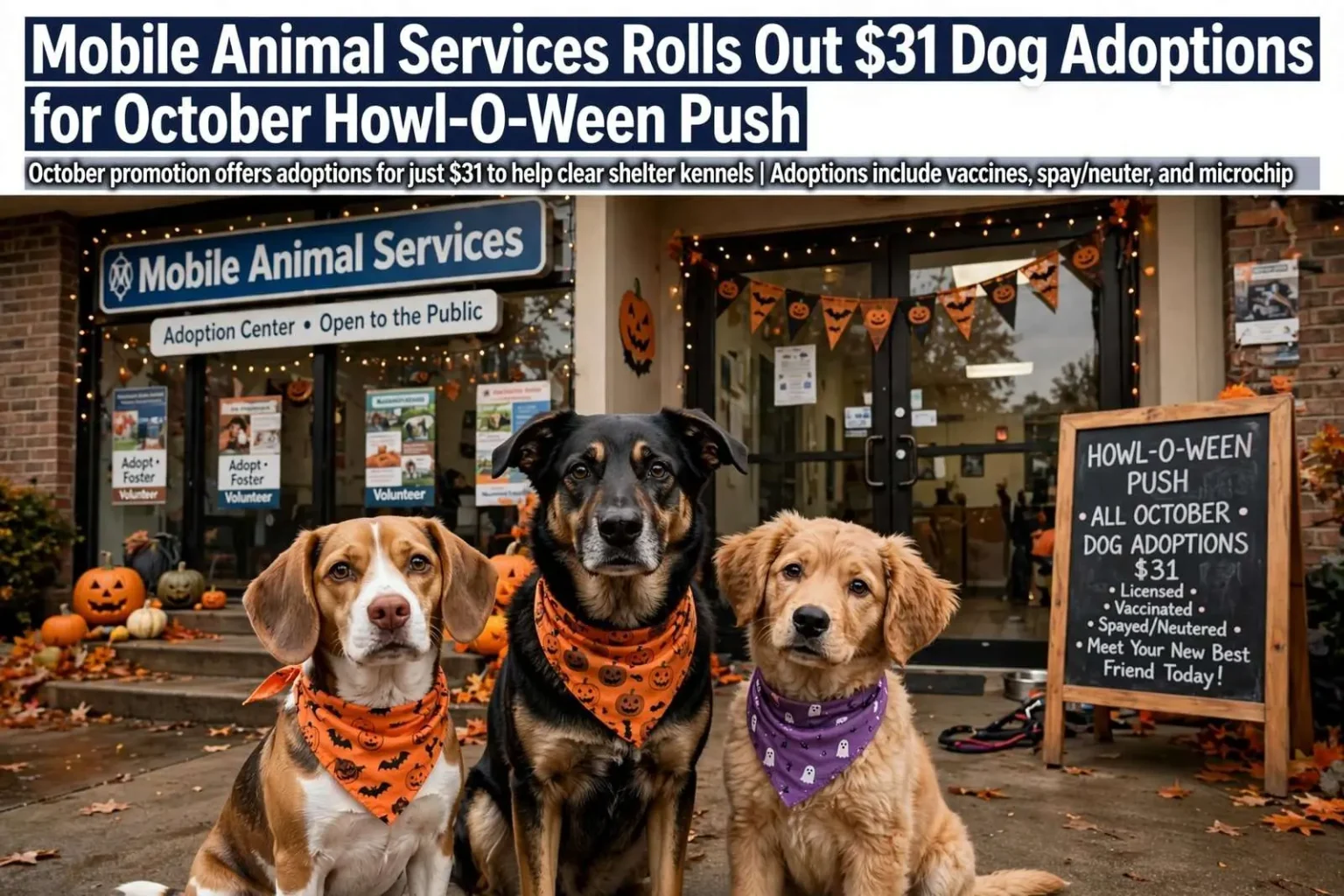
The City of Mobile Animal Services is marking October with a promotion aimed at emptying its kennels: throughout the month, anyone can take home a shelter dog for an adoption fee of just $31. The Howl-O-Ween push runs for all of October, and the discounted rate — a fraction of the standard adoption cost — applies to the dogs waiting in the city shelter, from young puppies to older mixes who have watched whole seasons pass behind a kennel gate.
Officials with the municipal animal services operation hope the discounted rate will encourage prospective pet owners to adopt while helping clear space at the shelter, which routinely takes in stray and surrendered animals from across the city. Space is the constant math of municipal sheltering: every kennel occupied by a dog waiting for a home is a kennel unavailable for the next stray picked up by an officer or the next family pet surrendered at the front desk. When intake outpaces adoptions, that math turns grim, and fee promotions are one of the few levers a shelter can pull quickly to move the numbers in the right direction.
The $31 figure — pegged to the month’s “Howl-O-Ween” theme — is also a marketing decision. Promotions built around a memorable number and a holiday hook generate the kind of social media sharing that a routine adoption notice never does. Every share puts a shelter dog’s face in front of someone who had not planned to visit, and a meaningful share of adoptions at discounted-rate events go to people who arrived out of curiosity and left with a leash.
The push comes as shelters nationwide continue to grapple with persistent overcrowding. According to the ASPCA, roughly 6.3 million companion animals enter U.S. shelters each year. About 4.1 million of those animals are adopted annually and another 810,000 are reunited with their owners, though hundreds of thousands of dogs and cats are still euthanized each year for lack of a home. The national figures frame what local promotions are actually fighting: not a shortage of animals who need homes, but a shortage of homes appearing at the moment the kennel space runs out.
Why Adoption Promotions Matter
Fee-reduction events like Howl-O-Ween-style campaigns have become a common tool for municipal shelters trying to move animals out of kennels and into homes quickly. Lower upfront costs can be the deciding factor for families who are otherwise ready to adopt but hesitant about initial expenses. A standard adoption package — fee, licensing, vaccinations, spay or neuter surgery — can run well over a hundred dollars at many shelters, and for a household weighing a tight month, that total is sometimes the reason a dog stays in a kennel.
Shelter officials are quick to note what the discount does not change. The screening still happens, the paperwork still gets done, and the animals still go home with their vaccinations and surgeries completed — the promotion reduces the price, not the standards. The goal is to remove cost as the barrier for committed families, not to place dogs in homes that were never serious to begin with. Standard adoption procedures still apply, which means the counseling conversation at the counter, the rental and household questions, and the matching process that tries to pair each dog’s temperament with the adopting family’s situation.
Residents interested in adopting from Mobile Animal Services can visit the city’s shelter during regular operating hours to meet available dogs. Meeting in person matters more at a municipal shelter than most first-time adopters expect. Kennel behavior and home behavior are two different things: a dog that barks itself hoarse behind a gate may settle into a couch companion within days, and the adoption staff’s job is to help visitors see past the kennel stress to the animal underneath. Bring the whole family, including the household dogs where the shelter allows introductions, because the best predictor of a successful adoption is a good first meeting.
The timing of an October push also works in the animals’ favor beyond the fee. Fall is a practical season to bring home a dog: the summer heat that makes housebreaking and exercise miserable has broken, holiday travel has not yet arrived, and families settling into the school-year routine can establish the feeding and walking schedule a new pet needs. Dogs adopted in October land in their homes with months of cooler weather ahead — long walks, backyard training sessions and the time to bond before the chaos of the holidays.
For the city, every completed adoption in the promotion window does double duty. It frees a kennel for the next intake, and it moves an animal from the shelter’s expense ledger — food, medical care, staffing — into a home where those costs become a family’s own. Municipal shelters run on tight budgets drawn from the city’s general fund, and a successful month-long push can measurably change the shelter’s capacity picture heading into the winter months, when intake typically slows but never stops.
What officials hope residents take away from Howl-O-Ween is bigger than the month itself: that the shelter on the city’s side of town holds adoptable dogs of every size and age, that the adoption process is simpler than most people assume, and that the $31 price tag is the exception to a normal fee structure that still remains far below the cost of purchasing a pet from any commercial source. The dogs waiting behind those kennel doors did not choose to be there — and for one month, taking one home costs about what a family spends on a night out.
Adopters should arrive prepared for what shelter adoption actually involves. Bring a photo ID and proof of address, and if the household rents, bring landlord contact information or a copy of the lease’s pet provisions — shelters call to verify, and a rental restriction discovered after the fact is the most common reason an adoption falls through at the counter. Families with existing pets should know their animals’ vaccination status, and every adopter should budget for the first weeks of ownership: food, a collar and leash, a crate or bed, and the first veterinary visit that establishes care with a local clinic.
The animal services division also encourages residents who cannot adopt to contribute in other ways during the push. Sharing the shelter’s posts extends the reach of every promotion; volunteering walks dogs and socializes animals, which makes them more adoptable; and donations of food, towels and supplies stretch the shelter’s budget further. Fostering — taking a dog home temporarily until a permanent adopter appears — is the single most effective way an individual can expand shelter capacity, because one foster home frees one kennel at no cost to the city.
The national numbers behind the promotion are worth sitting with for a moment. Of the roughly 6.3 million animals entering American shelters each year, the 810,000 reunions with owners show how much good identification — tags, microchips, registration — accomplishes: every stray that goes home is a kennel that never fills. The gap between the 4.1 million adoptions and the total intake is the space where the euthanasia numbers live, and every fee-waived weekend, every Howl-O-Ween discount and every share of a kennel photo is aimed squarely at closing it.
Municipal shelters like Mobile’s carry a burden private rescues do not: they must take every animal the city brings them, with no waiting list and no selection. That mandate is why intake surges — after a hoarding case, a puppy-season spike, or a storm that scatters pets across the county — hit a city shelter hardest, and why the adoptable dogs waiting during an October promotion represent only a snapshot of an ever-changing population. The dog available this week may not be there next week, for the happiest of reasons.
By the time October’s last day arrives, shelter officials will count the results in the only metric that matters: kennels emptied, dogs in homes, and capacity restored for whatever November brings through the intake door. For the families who took advantage of the $31 rate, the promotion’s end date matters little — what they walked out with was a companion whose adoption fee was, in hindsight, the smallest part of the transaction. And for the dogs, the math is simpler still: a month-long discount that ends with a home is a promotion that worked.
Mobile’s shelter promotion fits into a larger Gulf Coast pattern of regional animal welfare pressure. Coastal counties see heavy stray populations, driven by warm weather that keeps breeding seasons running most of the year and by pet populations that go unaltered because spay and neuter surgery costs more than many households can spare. That dynamic keeps municipal intake numbers high across south Alabama and the Florida panhandle, and it is the reason area shelters coordinate on transfers, shared adoption events and spay-and-neuter programs aimed at shrinking the problem at its source.
For residents weighing the $31 adoption against a pet store or breeder purchase, the shelter route carries its own practical advantages. Shelter dogs come with their vaccinations up to date and their spay or neuter surgery completed as part of the adoption package — thousands of dollars of veterinary work included in the fee. The adoptable population also spans every imaginable size and mix, from dogs clearly suited to apartment life to high-energy animals looking for an active owner, and the shelter staff, who have watched each animal for weeks, can steer a visitor toward the match their household actually needs rather than the one that just looks good through the kennel glass.