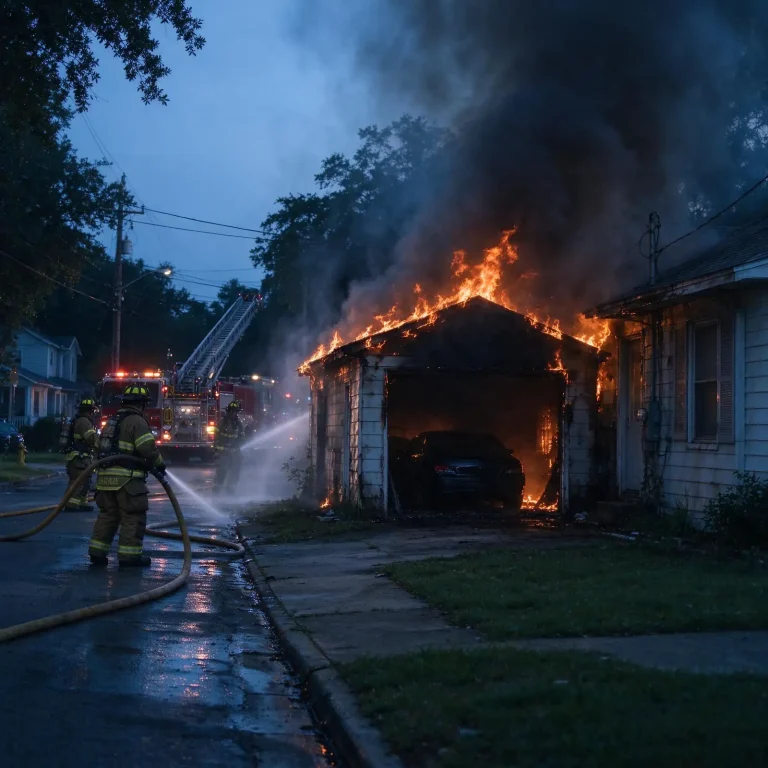
Mobile Detailed Annexation Service Plans in 2008
In March 2008, Mobile Mayor Sam Jones said the city was following through on public-safety commitments for recently annexed areas near Schillinger Road and Mobile Terrace.
Originally reported March 12, 2008.
MOBILE, Ala. — Mobile Mayor Sam Jones said in March 2008 that the city was moving forward with the public-safety commitments it had made to residents after parts of Schillinger Road and Mobile Terrace were annexed into the city limits the previous September. The annexation had extended Mobile’s boundaries into a corridor of western Mobile County, and with it came promises that city police, fire, and municipal services would follow.
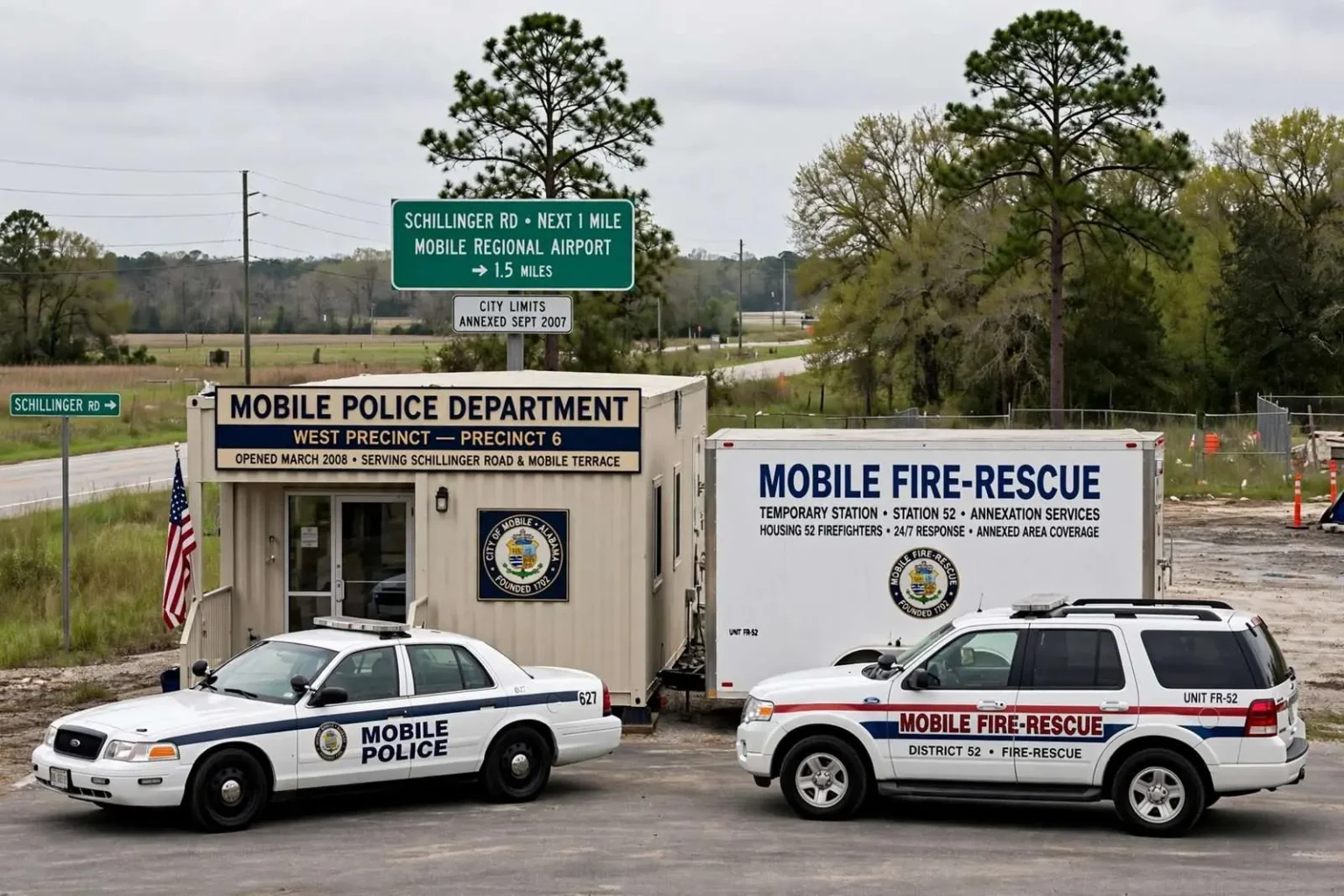
The most visible signs of those commitments were already in place by the spring of 2008. The city had opened a new police precinct near Mobile Regional Airport, placing officers closer to the newly annexed neighborhoods along the Schillinger Road corridor, and it planned to open a fire station at the same location. The precinct was part of the city’s geographic policing structure, in which the Mobile Police Department divides the city into precincts so that patrol commanders and neighborhood officers are responsible for specific areas rather than reacting to calls across the whole city.
Jones said the city was working to put the promised services in place in a planned manner — a phrase that reflected the administration’s argument that annexation service commitments could not be met overnight. Fire stations require equipment, staffing rotations, and in many cases new construction, and police precincts require personnel who can be reassigned or hired without hollowing out coverage elsewhere in the city.
Promotions to Staff the Expanded Area
Staffing for the expanded service area was moving through the city’s civil service process at the same time. The report noted that 49 police officers had recently been promoted, moving up through the department’s ranks, and that 14 firefighters had also moved up in rank, with some of those promoted personnel assigned to the annexed area. Promotions in the fire and police departments serve a practical purpose in a growth scenario like the 2007 annexation: sergeants, lieutenants, and fire captains are the ranks that staff new stations, supervise new hires, and give a new precinct or station its leadership structure.
The Mobile Fire-Rescue Department, like most career departments, staffs its stations around the clock in shifts, so opening even a modest station requires dozens of firefighters across three shifts once administration and relief factors are counted. That is why the planned fire station in the airport-adjacent area was expected to house 52 firefighters while operations ran out of a temporary trailer, even before a permanent building was developed. The trailer arrangement let the city put a crew in the annexed corridor quickly, cutting response times, while the permanent station was designed and built on the city’s capital construction timeline.
The Annexation That Reshaped West Mobile
The September 2007 annexation of parts of Schillinger Road and Mobile Terrace was part of a long pattern in Mobile County, where the city of Mobile has periodically extended its boundaries to take in unincorporated neighborhoods as development pushed west and north. For residents of an annexed area, the change brings city services — city police rather than sheriff’s deputies, city fire protection, city garbage collection, and city street maintenance — along with city property tax rates. The prospect of better fire insurance ratings and faster police response is typically the strongest argument for annexation, and the strongest argument against is the tax increase.
West Mobile’s growth along Schillinger Road, Cody Road, and the surrounding corridors had been one of the fastest-moving residential trends in the county through the 1990s and 2000s. Subdivisions, schools, and retail followed the population out the airport corridor, and the neighborhoods around Mobile Regional Airport sat at the center of that expansion. Annexing the Schillinger Road and Mobile Terrace areas put a growing population inside the city’s tax base and inside the city’s service obligations at the same time.
Sam Jones and City Hall’s Expansion Era
Sam Jones was serving his first term as mayor of Mobile in 2008, having taken office in 2005 as the city’s first African-American mayor. His administration oversaw a period of substantial growth and reinvestment in the city, including downtown redevelopment, hurricane recovery work following Hurricane Katrina’s impact on the Gulf Coast in 2005, and the steady extension of city services to newly annexed areas. The annexation pledges on Schillinger Road and Mobile Terrace were among the many service commitments the administration was balancing alongside its regular capital program.
City halls in growing Southern cities of that era faced a common problem: development at the edges outpaced the infrastructure at the edges. Fire stations built in the 1960s and 1970s served older, denser neighborhoods, while new subdivisions on the periphery sat farther and farther from existing stations. Annexation made the problem official — once residents were inside the city, the city owed them the same response times and service levels as older neighborhoods, and closing that gap required money, land, and staffing.
Police Precincts and the Airport Location
Siting the new police precinct near Mobile Regional Airport made operational sense beyond the annexed neighborhoods. The airport area sits at the junction of several major west Mobile arterials, giving officers posted there quick access to Schillinger Road, Highway 98, and the connecting streets between them. A precinct house also functions as a community anchor: it gives residents a place to file reports in person, meet neighborhood officers, and hold community meetings, and its visible presence is intended to deter the property crimes that tend to rise in fast-growing areas.
The Mobile Police Department’s precinct model assigns patrol officers and commanders to a defined service area, and the department’s statistics and accountability structures follow those precinct lines. Opening a precinct is therefore not just a construction project but an organizational one — reports, evidence handling, and supervisory chains all have to be set up for the new location, which is why the department paired its precinct openings with waves of promotions that put experienced supervisors in place.
Fifty-Two Firefighters and a Temporary Home
The plan to house 52 firefighters in a trailer while a permanent building was developed illustrates how career fire departments stage expansion. A single-engine company operates with a small crew per shift, but round-the-clock coverage with three shifts, plus officers and allowances for leave, multiplies the headcount quickly. Housing that staffing in temporary quarters lets a department claim the response-time benefit immediately; the trailer carries the beds, kitchen, and radio equipment, while the apparatus bays may be built first or the apparatus may be staged under temporary cover.
For the residents of the annexed Schillinger Road and Mobile Terrace areas, the sequence mattered most at the insurance and emergency level. Home and commercial fire insurance ratings in Alabama are driven largely by a community’s Public Protection Classification, which weighs fire station distance, staffing, and water supply. A staffed station in the corridor shortened response times for the new city neighborhoods and supported the insurance ratings that annexation proponents had promised would follow.
Putting Promised Services in Place “in a Planned Manner”
Jones’s phrase about working “in a planned manner” captured the city’s position as it fielded questions from annexed-area residents in 2008. Annexation opponents during the 2007 campaign had warned that service promises would be slow to materialize, and city officials were conscious that every month without a visible station or precinct gave that argument traction. The administration’s response was to sequence the work: precinct first, temporary fire staffing next, permanent construction on the capital schedule, and promotions processed through civil service so that the new facilities opened with experienced supervision.
The approach also reflected budget realities. Fire stations and precinct houses are capital projects funded through the city’s budget cycle, bond issues, or a combination, and each competes with resurfacing projects, drainage work, and park improvements across the whole city. Personnel costs, meanwhile, are recurring: every promoted officer and every firefighter assigned to a new station becomes part of the annual payroll, which is why cities typically absorb annexation service costs over several budget years rather than all at once.
What the 2008 Report Recorded
As of March 12, 2008, the elements the report recorded were these: a new police precinct operating near Mobile Regional Airport; a planned fire station at the same location, expected to operate out of a trailer with 52 firefighters assigned while a permanent building was developed; 49 police officers recently promoted; 14 firefighters moved up in rank, some assigned to the annexed area; and a mayor describing a deliberate, planned buildout of the services promised in the September 2007 annexation of parts of Schillinger Road and Mobile Terrace.
Those elements together sketch how a mid-sized Southern city absorbed a new population area in practice — not with a single announcement, but with precinct houses, temporary fire quarters, promotion lists, and the slow accumulation of permanent facilities. For the residents along Schillinger Road and Mobile Terrace, the changes were tangible ones: city patrol cars in the neighborhood, a fire crew stationed minutes away instead of across town, and a city hall that, whatever its pace, was spending its public-safety budget on the corridors it had just taken in.
This article reflects the plans and status reported in 2008, not current city services or staffing. The City of Mobile’s police precincts, fire stations, and staffing levels have changed in the years since, and the details above should be read as a record of where the expansion stood in the spring of 2008 — the middle of a buildout that began with the September 2007 annexation and continued through the mayor’s subsequent budget requests and capital plans. Readers seeking the current status of facilities in west Mobile should consult the City of Mobile’s present-day department listings rather than this historical account.