Mobile Councilman Urges E-Bike Safety Amid Rising Concerns
Mobile Councilman Beau Fleming is urging parents to prioritize e-bike safety after witnessing children riding at high speeds without helmets or lights.
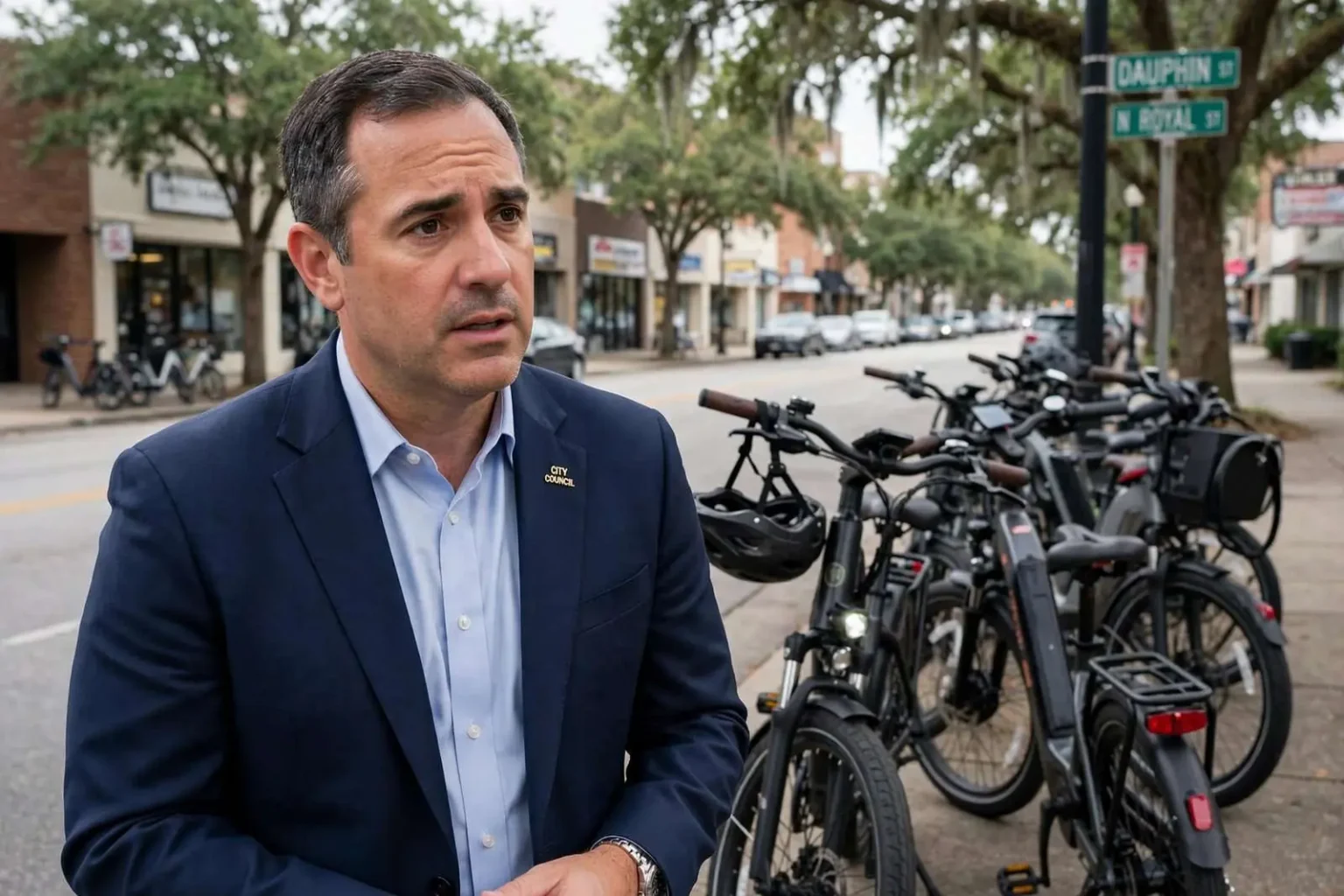
Mobile City Councilman Beau Fleming wants to raise awareness about the dangers of e-bikes after witnessing several incidents that he said put children at risk. With e-bike popularity skyrocketing, Fleming said more kids are out riding bikes and scooters, and in recent months the speed of some bikes has become a serious hazard on city streets.
“I mean, some of those things go 20 to 30 mph, and kids are riding them at night,” Fleming said. “No lights, no helmets, just riding them in the middle of the street, popping wheelies, blowing through intersections, and I’ve started to receive a lot of calls from concerned parents.”
The councilman’s observations track with a national trend that has transformed neighborhoods across the country in just a few years. Electric bicycles, once a niche product favored by commuters, have dropped sharply in price and become one of the most popular gifts for teenagers, and the powered scooters that once belonged mostly to rental fleets now crowd sidewalks and driveways as personal vehicles. That surge has outpaced both safety habits and, in many places, the local rules that were written with ordinary bicycles in mind.
As a parent himself, Fleming said he shares those concerns.
“I don’t want to see another child get hurt,” he said. “So, I want to bring awareness to this because I want some parents to understand the safety issues associated with e-bikes.”
Awareness First, Not New Rules
Fleming said he does not want to introduce local regulations on personal bikes. Instead, he hopes parents will do the policing.
“Make sure your kids ride where they’re supposed to, not where they’re not supposed to,” Fleming said. “Make sure they have a helmet, make sure they have lights. Make sure they stop at intersections. Don’t pop wheelies in the middle of major thoroughfares, which is what they’re doing. I’ve witnessed a dozen kids do that.”
His reluctance to regulate reflects a dilemma facing city halls across the country. E-bikes occupy a gray zone in most traffic codes: they are fast enough to create real danger, yet they are legally closer to bicycles than to motor vehicles, and officials have been wary of writing rules that would treat a 12-year-old riding to a friend’s house the same way as a motorcyclist. Nationwide, most states classify e-bikes into three tiers, with the fastest legal classes capable of assisted speeds well above what a child on a pedal bike can generate, and enforcement of where those machines may be ridden has largely been left to parents and local police judgment.
For now, the councilman said, the goal in Mobile is simple awareness, and he is using his platform to deliver it directly to the households where the decisions are made.
A Crash That Could Have Been Far Worse
A young boy was recently injured when he crashed his e-bike. Fleming said the child hurt his leg, but it could have been much worse had he not been wearing a helmet.
“That young man is very fortunate to be alive,” Fleming said. “Thankfully, he had a helmet on, but I don’t want to see any more of this.”
Safety researchers have repeatedly found that helmets dramatically reduce the risk of fatal injury in bicycle and e-bike crashes, and the speeds involved on powered bikes make that protection even more consequential. Emergency rooms across the country have reported sharp increases in e-bike injuries in recent years, a pattern that mirrors exactly what Fleming says he is seeing in his own district.
Department of Public Safety public affairs manager Blake Brown told reporters the main issues police are seeing are riders not going with the flow of traffic and riding scooters on sidewalks. Both behaviors put riders in places where drivers and pedestrians do not expect them, and both are among the most common factors in urban bicycle crashes. A rider moving against traffic at 25 mph turns every intersection into a surprise, while sidewalk riding creates conflicts at every driveway and crosswalk where a driver turning in or out is looking at the road, not the walkway.
The city can regulate Lime Scooters operating in Mobile, where riders must obey traffic laws, yield to pedestrians, ride with the flow of traffic, wear a helmet and take other precautions. The rental fleet operates under a permit-style relationship with the city, which gives Mobile leverage over where the scooters may be parked, how fast they may travel and what the app tells riders before they unlock one. That framework is why the sharpest safety gaps now involve personally owned machines, which arrive in stores and through online retailers with no such conditions attached.
For personal e-bikes, however, Fleming said he simply wants the community to take notice.
“As a parent, as a councilman, I just want to make sure kids are being as safe as they can,” Fleming added. “We’ve had so many close calls in the last few months. Let’s pay attention to what’s going on here. This is dangerous.”
What Riders and Parents Can Do
Police urge e-bike and scooter riders to use caution at night, avoid sidewalks and avoid using a phone while riding. Night riding deserves particular emphasis in a port city like Mobile, where many corridors lack continuous lighting and where summer evening rides keep young riders out after dark. A rider without lights is effectively invisible to a driver until the last seconds before a crossing, which is precisely the scenario Fleming described seeing along the city’s major thoroughfares.
Safety advocates recommend a short checklist for any household with a young e-bike rider: a properly fitted helmet every ride, a white headlight and red rear light for anything ridden after dusk, bright or reflective clothing, and a clear family rule about which streets and intersections are off limits. Parents are also encouraged to ride the route with their children at least once, pointing out sight lines, blind driveways and the crossings where traffic moves fastest.
Equally important is matching the machine to the rider. Many entry-level e-bikes can be powered far beyond a child’s cycling experience, and parents who understand the settings can limit the assisted speed, lock out the throttle or choose a lower-powered model altogether. Retailers and manufacturers publish these capabilities in the specifications, and a few minutes of review before a purchase can prevent the exact scenarios that prompted the councilman’s warning.
A Conversation Cities Are Just Beginning
Mobile is hardly alone in wrestling with the question. Communities across Alabama and the Gulf Coast have seen the same pattern — cheap, fast e-bikes in the hands of young riders — and most have chosen education before ordinances, for the same reasons Fleming cited. Enforcement of traffic law already covers much of the dangerous behavior he described, from riding against traffic to failing to stop at intersections, and police in Mobile say those existing tools apply to e-bike riders just as they do to any other road user.
What remains uncertain is whether awareness alone can keep pace with sales. Every holiday season brings another wave of new riders onto streets that were never designed for them, and the close calls Fleming described have become a familiar story in neighborhoods nationwide. His message to Mobile families is deliberately simple: the speed and silence of an e-bike change the risk, the helmet and the lights are not optional, and the habits children form this year will decide whether the next crash is a bruised leg or something far worse.
How the Councilman Hopes Parents Will Respond
Fleming’s approach leans on the same mechanism that has driven other successful safety campaigns: peer pressure among parents. When a councilman reports receiving “a lot of calls from concerned parents,” the concern is already circulating through neighborhoods, and his stated aim is to convert that worry into household rules before another crash forces the issue. He has framed the appeal as a request rather than a mandate — parents setting expectations about helmets, lights, intersections and riding behavior, the same way families already handle seat belts and curfews.
That framing also reflects a practical reality of municipal government. Writing and enforcing new local rules for personal e-bikes would require defining machine classes, setting age limits, deciding where each class may operate and dedicating enforcement resources to a category of offense that officers rarely have time to police proactively. For a city managing all of the ordinary demands on its police department, the councilman’s argument is that the most efficient enforcement officer a young rider will ever have is a parent standing in the driveway with a helmet in hand.
The concerns Fleming raised are likely to grow rather than fade. E-bike sales have climbed year after year nationally, prices keep falling, and the machines now appear in big-box stores and online marketplaces that never explain local riding rules to buyers. Each new rider adds to the traffic mix on Mobile’s streets, and each close call that ends without injury is a warning the city received for free.
For now, the councilman’s campaign is the message itself — repeated in interviews, passed along through parents’ groups and delivered to the households where decisions about safety are actually made. Whether that is enough will show up in the statistics that matter most: the number of children carried into emergency rooms after e-bike crashes, and the number of close calls that never become collisions at all.
Police in Mobile continue to ask riders to follow the basics that already exist in law — ride with traffic, stay off sidewalks, obey signals and yield to pedestrians — and they add a seasonal reminder that a rider on a phone is a rider who cannot hear or see what is approaching. Families who want a practical starting point can borrow the checklist Fleming outlined: helmets every ride, lights after dusk, intersections crossed on foot when in doubt, and no stunts on major thoroughfares. The alternative, he warned, is watching the city’s run of close calls end in a tragedy that a helmet and a pair of headlights could have prevented.