Mobile County Confirms Third COVID-19 Death, a 56-Year-Old Man
The Mobile County Health Department reported the county's third COVID-19 fatality on April 2, 2020, just a day after announcing the second death, as the outbreak's toll continued to grow locally.
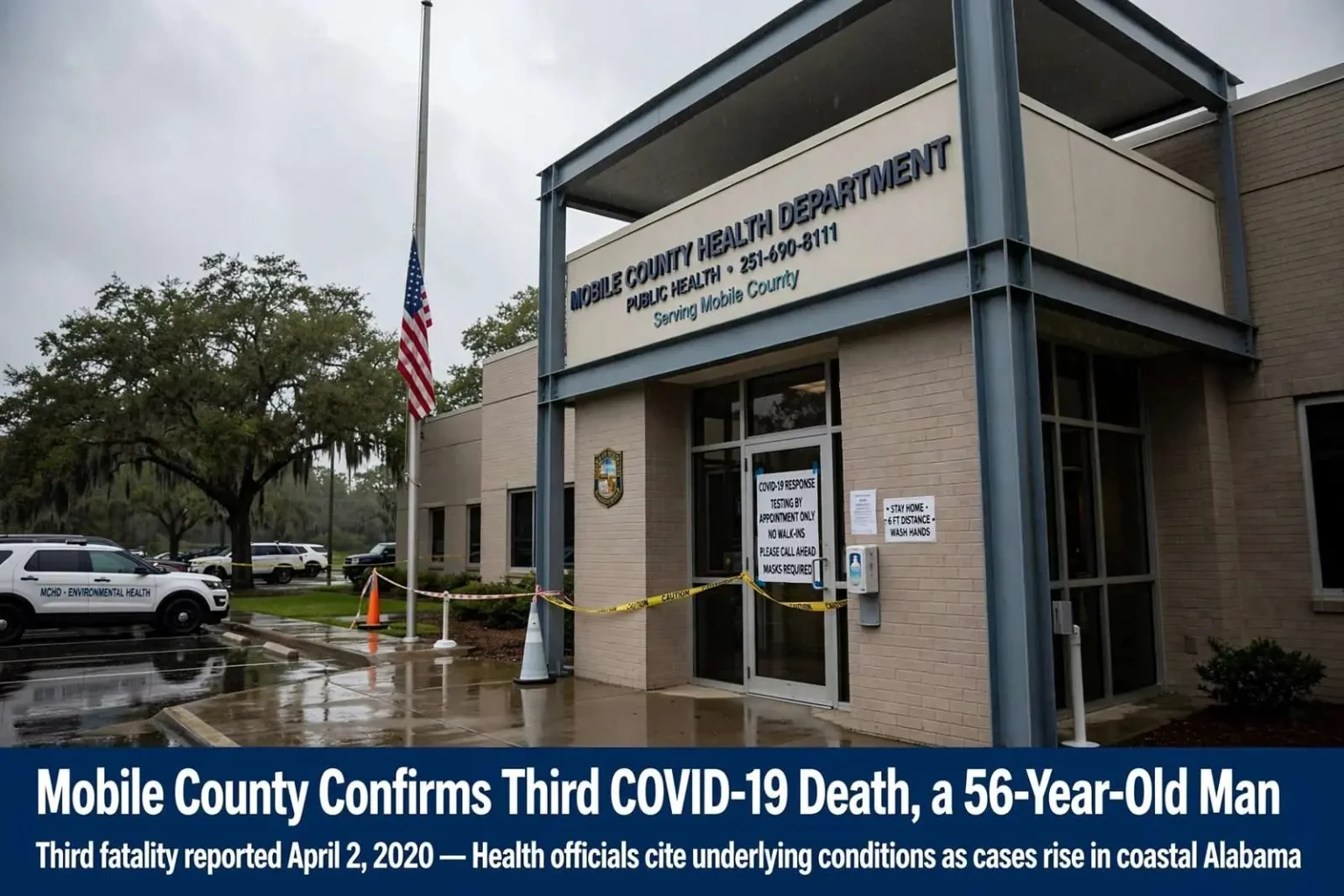
The Mobile County Health Department announced on April 2, 2020, that a third Mobile County resident had died after testing positive for COVID-19, coming just a day after health officials confirmed the county’s second fatality tied to the virus. The back-to-back losses marked a sobering milestone in the pandemic’s early weeks along the Gulf Coast.
The individual was a 56-year-old man with a history of underlying medical conditions, according to MCHD. The health department did not release additional details about the circumstances of his illness or hospitalization, consistent with its approach to earlier COVID-19 deaths reported in the county, where officials limited public disclosure to broad demographic information in order to protect the privacy of the families involved.
The back-to-back announcements underscored how quickly the pandemic’s impact was accelerating in Mobile County during the final days of March and the first days of April 2020. What had been, weeks earlier, a distant news story from another continent had become a matter of daily local briefings, drive-through testing sites and empty shelves at area grocery stores.
An Accelerating Regional Emergency
By early April, the novel coronavirus had transformed daily life across Alabama. Schools and universities statewide had closed their campuses, restaurants and bars had shifted to takeout and delivery under state health orders, and houses of worship had moved services online. Mobile County, as one of the state’s most populous counties and home to a major port, found itself watching case numbers climb alongside the rest of coastal Alabama.
Local health officials had spent the preceding weeks urging residents to limit gatherings, maintain distance from others in public and follow guidance from the Alabama Department of Public Health as confirmed cases climbed across the county. That guidance mirrored the federal recommendations coming from the Centers for Disease Control and Prevention: wash hands frequently, avoid touching the face, stay home when sick and keep six feet of distance from other people whenever possible.
The advisory to older adults and those with chronic conditions was especially emphatic. Health authorities had recognized early in the outbreak that certain groups faced elevated danger from the virus, and the pattern was already visible in the county’s own case data.
Contact Investigations and Case Tracking
MCHD continued to conduct case contact investigations for residents who tested positive for the virus, a process aimed at identifying and notifying people who may have been exposed so they could monitor themselves for symptoms and limit further spread. The investigative work — calls to patients, interviews about recent movements, notification of close contacts — became one of the department’s primary tools for slowing transmission in the absence of widespread testing.
Public health staff described the process as labor-intensive but essential. Every confirmed case required follow-up, and every contact identified needed guidance on quarantine and symptom monitoring. The effort involved infectious disease nurses and epidemiologists working through a growing caseload as the county’s count rose day by day.
Residents who had been in close contact with a confirmed case were asked to self-quarantine for the incubation period recommended by state and federal health authorities, watching for fever, cough and shortness of breath — the symptom trio that defined early COVID-19 case definitions.
Who Is Most at Risk
Health officials reiterated that people with underlying medical conditions, including older adults, faced a higher risk of severe illness or death from COVID-19, a pattern reflected in the county’s first three reported fatalities. Conditions cited in early federal guidance included heart disease, lung disease, diabetes and compromised immune systems.
That risk profile shaped the recommendations issued to Alabama households: protect older relatives by limiting visits, take extra precautions around family members with chronic illnesses, and treat any symptoms in high-risk individuals as a reason to call a health care provider rather than waiting for the illness to run its course.
The 56-year-old victim’s age placed him well below the elderly population most often associated with COVID-19 mortality, which officials said reinforced the seriousness of the underlying-conditions warning. The virus, they stressed, was not solely a threat to nursing homes and retirement communities, and younger residents with chronic health problems needed to take the same precautions.
A Community Adjusting
Across Mobile and Baldwin counties, the pandemic’s early weeks brought changes that residents had never experienced before. Cruise operations at the Port of Mobile had been suspended, Mardi Gras season celebrations had already been canceled weeks earlier — cutting short the city’s signature cultural event — and local businesses were wrestling with the sudden loss of customers.
Hospital systems in the area adjusted their operations as well, restricting visitors, postponing elective procedures to preserve capacity and establishing screening protocols at entrances. Emergency rooms created separate pathways for patients with respiratory symptoms, and providers shifted many routine appointments to telephone visits.
Public officials urged residents to rely on official sources for information rather than rumors circulating on social media, which had already become a challenge for health departments nationwide. MCHD used its website and daily updates to publish case counts, guidance and answers to common questions about testing and quarantine.
The Toll in Context
The county’s third death, arriving so soon after the second, gave local officials a somber data point in their argument for voluntary compliance with the stay-home guidance. Statewide, Alabama’s case count continued to rise through the first week of April, and health officers repeatedly warned that the coming weeks would determine how severe the state’s first wave would become.
Nationally, the pandemic was shutting down much of American life during the same period, with the federal government urging social distancing through the end of April and hospitals in hot spots elsewhere in the country straining under patient loads. Alabama’s case curve was rising more gradually than some states’, a fact officials attributed in part to early closures — while cautioning that the full effect of infections already contracted would take weeks to appear.
That lag between infection and outcome is what public health officials said made the daily numbers so difficult to interpret. Patients who fell seriously ill in early April had typically contracted the virus weeks earlier, meaning the deaths being announced represented the tail end of exposures that had occurred before the strictest guidance took hold.
What Residents Were Being Asked to Do
The guidance circulating in Mobile County at the time was, by design, simple to remember. Health officials asked residents to stay home except for essential errands such as groceries, medicine and medical care; to work from home where possible; to keep distance from others in public; and to wash hands thoroughly and often.
Those experiencing symptoms were asked to call ahead before visiting a clinic or emergency room, allowing providers to prepare protective equipment and route patients appropriately. Testing capacity, while expanding, remained limited in the pandemic’s early months, and health care providers used screening criteria to determine which patients needed testing most urgently.
Households with sick members were given practical instructions as well: isolate the ill person within the home, disinfect frequently touched surfaces, avoid sharing household items and monitor everyone under the roof for symptoms.
For family members of those at elevated risk, officials encouraged planning — arranging for grocery deliveries, ensuring a supply of regular prescription medications and establishing a communication plan in case of illness. The advice echoed the general emergency-preparedness guidance that Gulf Coast residents knew well from hurricane season, adapted to a public health emergency that would keep everyone indoors rather than send them fleeing.
Looking Ahead From April 2020
As the county processed its third fatality, officials continued to frame the crisis in terms of collective action. The tools available — distancing, hygiene, quarantine and contact investigation — were the same ones public health had relied on for a century, and their effectiveness depended entirely on participation.
MCHD pledged to continue updating the public as the situation developed, providing case counts and guidance through its official channels. Health leaders acknowledged that the weeks ahead would bring difficult news, but maintained that the county’s collective choices in the meantime would determine how much harder that news became.
For the family of the 56-year-old man whose death was announced April 2, the statistics took on a deeply personal dimension — a reminder, for the broader community, that behind each case number reported in the daily briefings was a Mobile County resident, and behind each resident, a circle of family and friends grieving in the middle of a lockdown.
The Science Behind the Guidance
The recommendations health officials repeated daily in early April rested on what researchers had learned about the virus in the months since it emerged. COVID-19 spread primarily through respiratory droplets produced when an infected person coughed, sneezed or talked, which was why distance between people mattered so much, and why mask discussions were moving to the center of the public health conversation nationwide.
The virus could survive on surfaces for hours or longer under certain conditions, which informed the widespread emphasis on disinfecting doorknobs, counters, phones and other frequently touched objects. Public health agencies acknowledged early on that the science would continue to evolve, and that guidance would be updated as researchers learned more about transmission, symptoms and treatment.
Symptoms listed in the early case definitions included fever, cough and shortness of breath, though reports of loss of taste and smell and other presentations were accumulating as clinicians across the country treated more patients. Officials asked residents to assume any respiratory illness could be COVID-19 and to behave accordingly.
Protecting the Most Vulnerable Neighbors
In a community with a large retiree population along the Eastern Shore and the barrier islands, the warnings about older adults carried particular weight. Assisted living and nursing facilities across the region restricted visitors early, adopting the lockdown measures that would define long-term care nationwide for the next year.
Churches and civic organizations that could no longer meet in person reorganized quickly around the needs of vulnerable members, organizing phone trees, grocery runs and prescription pickups for seniors who were now advised not to leave home at all. The volunteer networks that formed in those first weeks became a quiet fixture of pandemic life in Mobile County neighborhoods.
Health officials encouraged families to check on elderly relatives by phone and video, and to keep in mind that isolation itself posed health risks for older adults cut off from regular social contact. Balancing infection control against the loneliness of a prolonged lockdown would become one of the enduring challenges of the pandemic response, a tension officials were already acknowledging in the pandemic’s first months.