Mobile County Sheriff’s Office Reported Prostitution-Sting Arrests in 2007
Archived WKRG coverage reported that deputies made arrests during a 2007 undercover prostitution sting in the Old Pascagoula Road area.
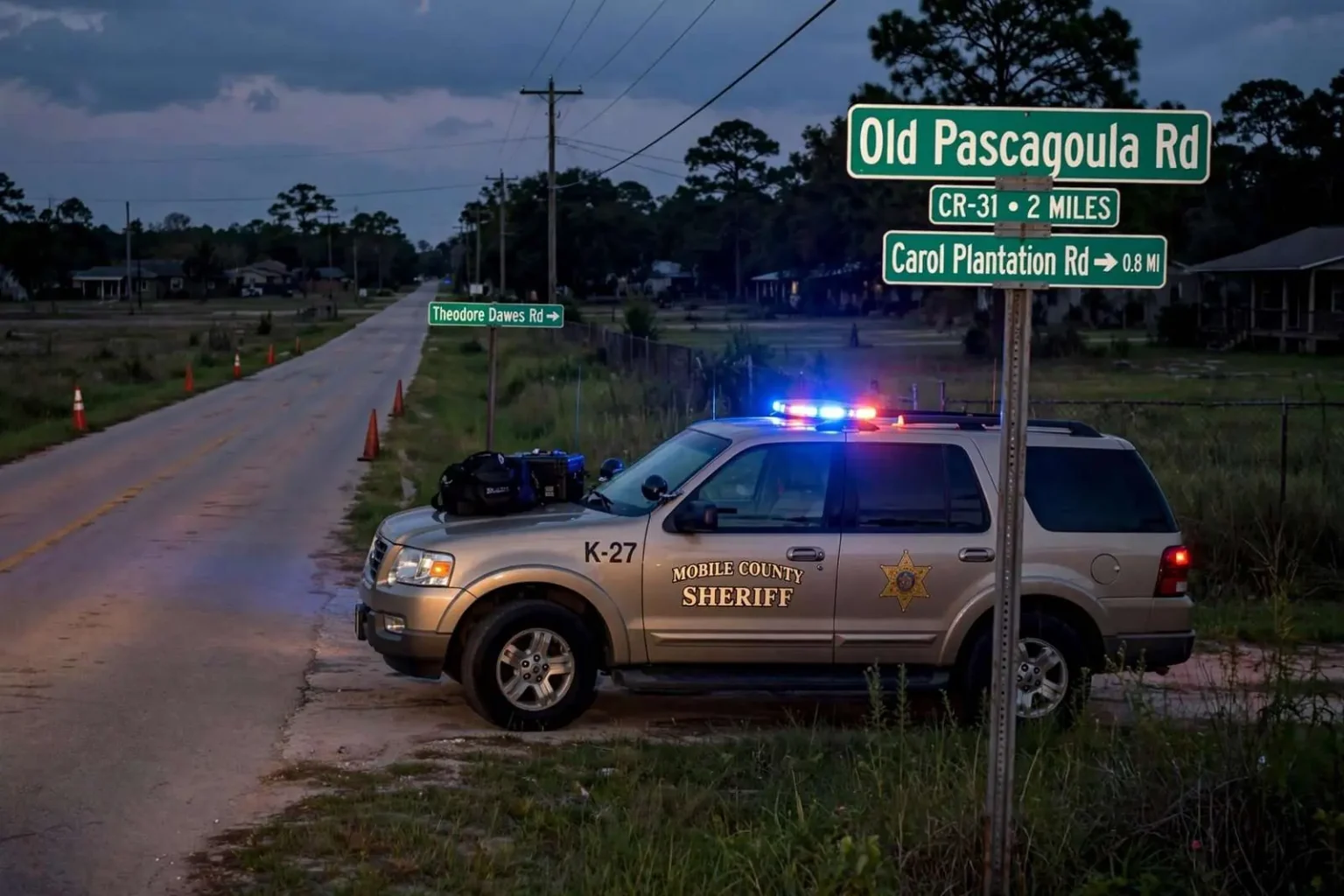
Historical crime report, published from archived local news coverage. This article reflects allegations and charges reported at the time; it does not establish guilt or report any later case outcomes.
The Mobile County Sheriff’s Office reported five arrests during an undercover prostitution sting in the Old Pascagoula Road area in 2007, according to an archived local news report. Deputies said the operation took place between Carol Plantation Road and Theodore Dawes Road, a stretch of western Mobile County where residents had raised concerns about activity along the roadway. The women arrested were charged with solicitation of prostitution, and three also faced drug-paraphernalia charges, the report said.
Undercover stings of this kind are a standard tool for county sheriff’s offices responding to complaints about street-level activity. Deputies pose as customers or work from vehicles while colleagues monitor the area, making arrests when solicitation occurs, and the operations typically unfold over an evening or a weekend. The five arrests in the Old Pascagoula Road corridor reflected a focused effort along a specific stretch of road, and the added drug-paraphernalia charges pointed to the overlap between street-level prostitution and drug activity that deputies routinely encounter.
The area and its residents
Old Pascagoula Road runs through western Mobile County, an older artery that predates the modern highways and connects the communities west and south of the city. The corridor between Carol Plantation Road and Theodore Dawes Road passes a mix of rural homes, small businesses, churches, and vacant lots — the kind of landscape where activity that gathers at the roadside is visible to everyone who lives and works nearby. It was those residents and workers whose complaints typically prompted enforcement, and whose observations of comings and goings along the road gave deputies the tips that shape a sting’s timing and location.
The archived report noted that residents and workers quoted by a local station said they had concerns about activity in the area and hoped enforcement would continue. That sentiment is a common thread in coverage of such operations: people living along the affected roads describe the decline of their roadside environment, the discomfort of customers and employees, and the wish that patrols would keep returning. Sheriff’s offices, for their part, generally describe stings as responsive to community complaints rather than as standing campaigns, returning to an area when complaints accumulate again.
How the charges work in Alabama
Solicitation of prostitution is a criminal offense under Alabama law, generally charged as a misdemeanor for a first offense, with penalties that can include fines and jail time. Drug-paraphernalia possession is likewise a misdemeanor under the state’s controlled substances laws, covering items intended for use with illegal drugs. The three of the five arrested who faced both sets of charges would answer them separately in Mobile County District Court, where misdemeanor cases are heard, and could face fines, probation, or treatment-oriented outcomes depending on the court and the circumstances.
An arrest, as the historical note accompanying this article makes clear, is not a conviction. Everyone arrested in such an operation is presumed innocent unless and until guilt is established in court, and charges can be reduced, dismissed, or resolved through plea or trial. The archived report recorded the charges as filed on the day of the operation; it did not follow the cases through the courts, and no outcomes are reported here.
Inside an undercover operation
A sting along a rural-adjacent corridor like Old Pascagoula Road requires coordination that the public rarely sees. Deputies plan the operation around the times when complaints say activity peaks, position undercover personnel and marked units so that arrests can be made safely, and document encounters to support the charges. The women arrested in the 2007 operation were taken into custody and booked, and the Sheriff’s Office released the tally — five arrests, with three of them carrying additional paraphernalia counts — to the local media as the operation concluded.
The goals of such operations are usually stated plainly by the deputies who run them: to respond to residents’ complaints, to disrupt activity along the affected roads, and to gather information that often reaches beyond solicitation into drug possession and other offenses. The paraphernalia charges in this sting fit that pattern, since encounters during undercover operations frequently turn up controlled substances or the items used with them, giving deputies grounds for additional counts.
Sheriff’s Office coverage in western Mobile County
The Mobile County Sheriff’s Office patrols the unincorporated expanses of the county — including the Old Pascagoula Road corridor — where municipal police departments do not operate. Its deputies cover one of Alabama’s largest counties by area, responding to calls ranging from traffic crashes to burglaries while also running the jail and the specialized units that handle investigations like this sting. Community complaint history drives much of the office’s targeting, and road corridors that generate repeated calls often see periodic enforcement operations until the complaints subside.
For the neighborhoods along Carol Plantation Road and Theodore Dawes Road, the visible sign of such work is deputies’ presence along the roadside during and after an operation. Residents in unincorporated Mobile County communicate with the Sheriff’s Office directly — through precinct contacts, community meetings, and non-emergency lines — and enforcement actions like the 2007 sting are the visible response to that feedback loop.
Geography matters in these operations as well. Old Pascagoula Road’s length, its access points, and its mix of businesses and vacant stretches give an undercover team room to work while remaining close to the roads where deputies can intercept a vehicle after an arrest. The corridor between Carol Plantation Road and Theodore Dawes Road offered exactly that combination, which is why it was chosen as the boundaries of the operation rather than a single address.
The pattern of street-level enforcement
Stings like the 2007 operation sit inside a longer history of how American communities respond to visible street-level prostitution: periodic enforcement campaigns, followed by quiet, followed by renewed complaints and another operation. Critics and reformers have long noted that enforcement alone displaces rather than resolves the underlying activity, and modern approaches increasingly pair police operations with social services, drug treatment, and diversion programs that address the circumstances — addiction, poverty, exploitation — that land people in solicitation arrests in the first place.
In 2007, the Mobile County Sheriff’s Office operation was reported in the register of its time: an enforcement tally, charges filed, and residents hoping the pressure would hold. The drug paraphernalia counts that accompanied three of the arrests hinted at the tangled circumstances behind the street activity, where substance abuse and prostitution travel together along the same roads. What the archived report could not capture was whatever happened afterward — whether activity along Old Pascagoula Road diminished, whether the arrested women received help or simply fines, and whether the corridor’s residents got the relief they said they wanted.
Reading the historical record today
Archived crime reports like this one are preserved for the record of what was reported, not as a judgment on the people named in them. The five arrests on Old Pascagoula Road in 2007 were the beginning of legal cases, not their conclusion, and the misdemeanor charges at issue were the kind that, in the years since, courts across Alabama have handled in increasingly varied ways — from standard fines and probation to specialty courts and diversion programs where they are available. The archived report does not say how the five cases were resolved, and this article does not speculate about outcomes that the record does not contain.
The report also preserves a portrait of a specific place and moment: the stretch of Old Pascagoula Road between Carol Plantation Road and Theodore Dawes Road in 2007, the residents and workers who had grown weary of what they saw along the roadside, and the deputies who staged an undercover operation in response. That interplay between community complaint and county enforcement is the ordinary machinery of law enforcement in unincorporated Mobile County, and the 2007 sting was one visible turn of it.
The enforcement cycle those residents described had a predictable rhythm: complaints made to deputies, a targeted operation on the affected stretch, arrests and headlines, and then quiet until the activity crept back. Each cycle costs the Sheriff’s Office manpower and the courts docket time, and each one ends with the same open question about what would actually change conditions along the road. That question — enforcement or something more — has followed street-level operations like this one for decades, in Mobile County and everywhere else.
This article records historical reporting only. The charges described were allegations reported at the time and do not establish guilt, and no later case outcomes are reported here. Readers seeking current information about law enforcement activity in the Old Pascagoula Road area will find the Mobile County Sheriff’s Office responsive to community contacts, just as it was when residents’ concerns prompted the operation documented in this archived account.