Mobile Cyclists to Hold Ride of Silence for Riders Killed and Injured on Local Roads
Mobile cyclists ride in silence May 18, 2011, honoring riders killed or injured on local roads. Start time, route rules, and why it matters here.
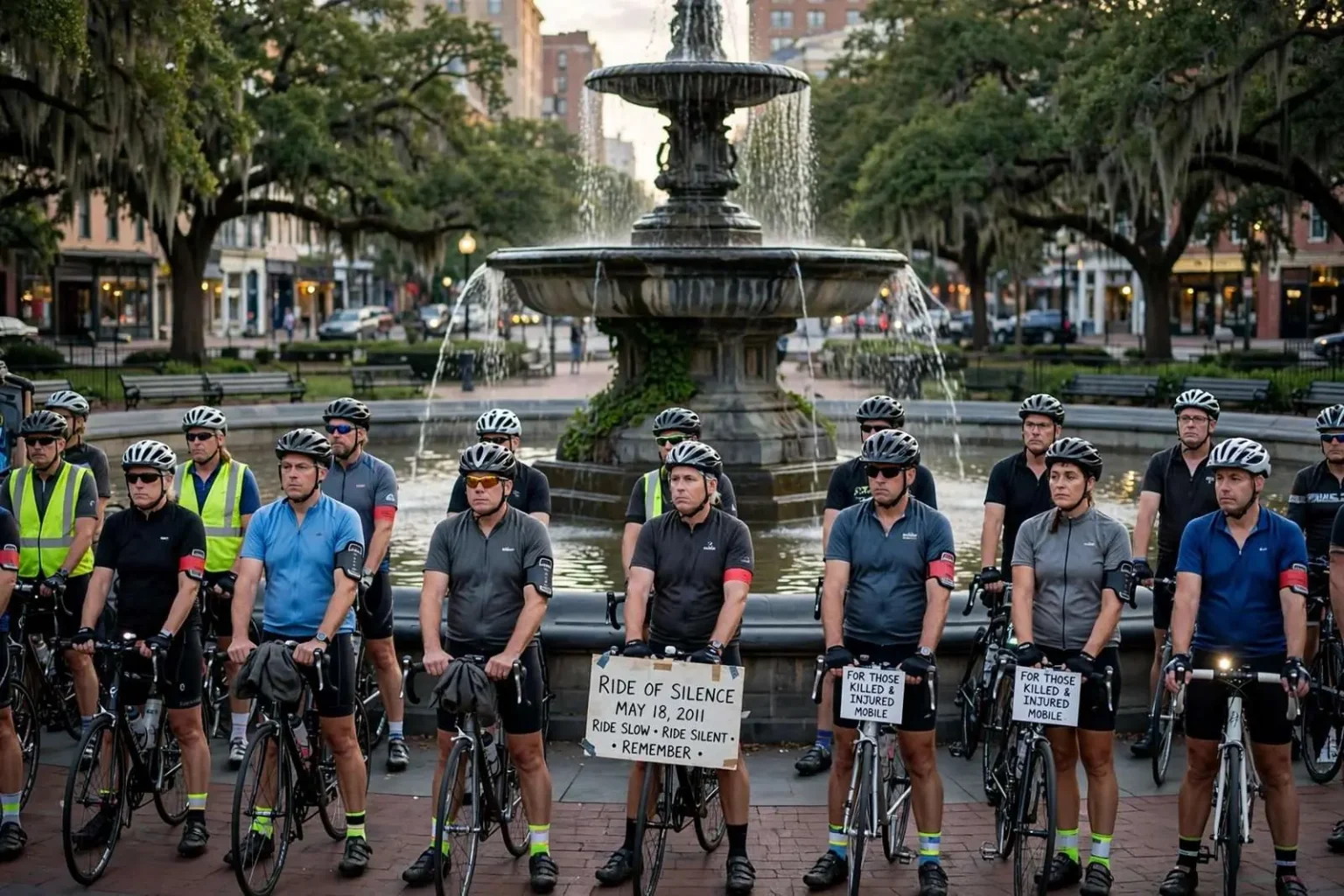
Mobile’s cycling community will roll out Wednesday, May 18, 2011, for the city’s Ride of Silence, one stop in an international observance held to commemorate cyclists who have been killed or injured while riding on public roads. The Mobile ride begins at the Washington Square fountain and is scheduled to conclude by or before 7 p.m., ahead of that evening’s 7:42 p.m. sunset.
The local ride takes on added weight after a difficult stretch for area cyclists. Two riders were struck by cars during the Mobile Infirmary Duathlon the previous weekend, and cycling advocates note that Mobile routinely ranks among the more dangerous cities in the country for people on bikes. Organizers hope the sight of a slow, silent procession will register with both motorists and city leadership.
What the Ride of Silence is
The Ride of Silence began in Dallas in 2003, organized after a cyclist was killed by a passing bus, and it has since spread to hundreds of cities across the United States and around the world. The rules of the observance are the same everywhere: riders move at a deliberately slow pace, in silence, wearing helmets, often adorned with black armbands for the dead and red for the injured. There are no speakers, no rallies and no chants — the silence is the statement, a funeral procession for riders who cannot ride anymore and a visible reminder to every motorist who passes a column of cyclists that the people on bikes are someone’s family.
Rides traditionally begin at 7 p.m. local time in cities around the world, but Mobile organizer Jeff Grill has set an earlier 6 p.m. rollout so participants finish before dark. The adjustment is practical Gulf Coast thinking: May evenings in Mobile bring heavy traffic on the streets the ride must share, and finishing by or before 7 p.m. keeps the procession off the roadways in full darkness. All cyclists are invited to take part, and the event’s organizers emphasize that the ride is open to every skill level — the point is numbers and visibility, not speed.
A community already in mourning
The duathlon crash days earlier put a sharp edge on the occasion. Two riders struck by cars during the Mobile Infirmary Duathlon meant that, in a single weekend, the local cycling community saw two of its own injured in organized competition — the setting where riders are supposed to be most protected. The Ride of Silence gave that frustration a venue, turning the annual observance into something closer to a vigil.
The broader statistics are the reason rides like this exist. Advocates have long pointed out that Mobile ranks among the more dangerous American cities for cyclists, a function of road design built almost exclusively for cars, wide high-speed arterials with narrow margins, and a sprawl that makes bicycling both a necessity for some residents and a risk for all of them.
How the ride works
A few ground rules apply to the Mobile procession: every rider must wear a helmet, reflective attire is strongly encouraged, and riders stay silent for the duration of the ride — the silence itself being the point. Organizers also ask riders to obey all traffic laws, since a Ride of Silence that runs stop signs would undercut its own message about road safety. The slow pace, typically well under twelve miles per hour, keeps the group compact and manageable for the motorists who encounter it, and police awareness of the route helps the column move through intersections safely.
The route for the 2011 Mobile ride was published online through MapMyRide, allowing riders to review the course before Wednesday evening’s start at Washington Square. Publishing the route served double duty: participants could plan their arrival at the fountain, and motorists along the corridor could see where and when the procession would pass. The MapMyRide posting also connected Mobile’s ride to the international network — riders traveling between cities could find the local route the same way they would find a ride in Dallas or Atlanta.
Washington Square, the historic Midtown park where the ride assembles, gives the event a fitting starting point: a neighborhood green space framed by some of the busiest cycling corridors in the city, where riders regularly train and regularly contend with traffic.
The message to motorists and city hall
Organizers hope the sight of a slow, silent procession will register with both motorists and city leadership, and the two audiences require different arguments. For motorists, the ride is a lesson in presence: hundreds of riders moving legally on public roads are hard to dismiss the way a lone cyclist at an intersection can be dismissed. For city leadership, the ride is a policy question delivered in person — what will Mobile do about streets where cyclists are struck during organized events, let alone on ordinary commutes?
The national Ride of Silence movement frames the request in deliberately modest terms. Rides do not demand specific legislation; they ask motorists to share the road, ask cities to remember that cyclists have a legal right to the lanes they ride in, and ask everyone to give the dead and injured a moment of public recognition. That modesty is part of the observance’s power — a silent ride makes no claims except that the lives lost mattered and that the streets could be safer than they are.
Riding in Mobile in 2011
The conditions riders faced in Mobile that spring were typical of the city’s cycling reality. Midtown’s grid of residential streets offers some of the best riding in the region, shaded and comparatively calm, but riders reaching it must cross arterials built for speed, and the area’s sprawl means errands and commutes routinely put cyclists on roads never designed for them. The Mobile Infirmary area itself, where the duathlon crashes occurred the previous weekend, sits along one of the busier Midtown corridors — a reminder that even organized events with traffic control cannot fully insulate riders from the consequences of a driver’s mistake.
Advocacy in the years around the 2011 ride pushed for the basics: signage, painted lanes, motorist education and enforcement when drivers injure riders. Progress came slowly and unevenly, which is why the Ride of Silence returned year after year in Mobile as it did across the country. Each May, the procession reassembles — same silence, same slow pace, same request to be seen — and each year’s ride carries the names of whoever the previous twelve months added to the list of riders killed or injured on public roads.
Wednesday’s ride ends where it began, at the Washington Square fountain, with participants dispersing before the 7:42 p.m. sunset. What it leaves behind is the memory the organizers intend: a column of cyclists, silent and visible, moving through Mobile at the speed of a funeral procession — asking nothing except that the next driver who sees a rider on the road remember this evening, slow down and share the road.
The international movement behind the ride
Understanding the Ride of Silence means understanding how it grew. What started in Dallas in 2003 as a single memorial ride, publicized through cycling email lists and word of mouth, drew more than a thousand riders with no advertising and no organizing budget. The following year, cities across the country held their own versions on the same evening, and the observance has since been held on the third Wednesday of May each year in communities across North America and beyond. The movement’s structure remains deliberately decentralized: there is no national organization collecting fees, just local organizers like Jeff Grill who adopt the format, publish a route and invite riders.
The shared rituals are what tie the rides together across continents. A helmet on every head. Red armbands for riders injured, black for those killed. A pace slow enough that conversation would be possible — and a choice not to have any. Cycling clubs that compete fiercely against one another all season ride together in the same column, and families of riders killed in past years often ride near the front. For one evening a year, the cycling community acts as what it actually is: a single population sharing the same risk on the same roads.
Why visibility matters on Gulf Coast roads
Gulf Coast cities present particular hazards for cyclists. Summer riding means heat, sudden thunderstorms and long daylight hours that encourage early-morning and evening commutes in low sun — the worst light for drivers to see a rider. Coastal humidity fogs glasses and visors, roads of shell and older asphalt hold debris at the edges where cyclists ride, and the region’s bridges and causeways concentrate traffic onto narrow crossings with no separate space for bikes. Reflective attire, one of the ride’s recommendations, is not a formality in those conditions; it is often the only thing separating a rider from a driver who never registered what was ahead.
The ride’s organizers know that one evening will not change driver behavior permanently. What it can do is put the issue in front of the community at a moment when the duathlon crashes are still fresh news, when the people injured still have names, and when city officials can be asked — silently, by hundreds of riders passing in formation — what they intend to do about the streets that produced those injuries. That is the work the Ride of Silence does everywhere it is held, and on Wednesday, May 18, 2011, it does that work in Mobile, starting at the Washington Square fountain at 6 p.m., finishing before dark, and saying nothing out loud the entire way.