Mobile County Chase Ended on Dauphin Island Parkway in 2008
A 2008 WKRG report covered a Mobile County chase involving a stolen vehicle that ended in a crash on Dauphin Island Parkway.
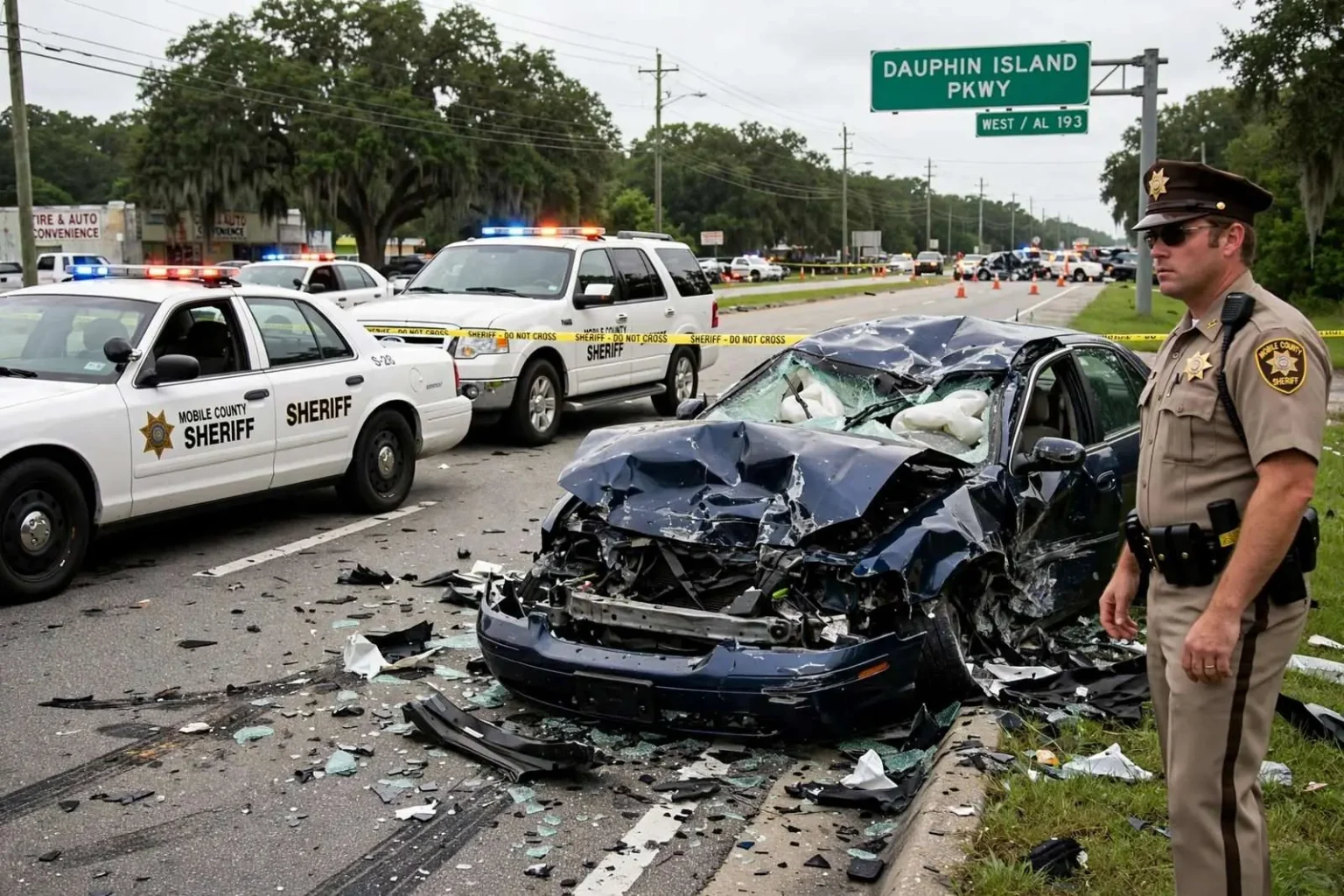
A Mobile County law-enforcement chase ended in a crash on Dauphin Island Parkway in June 2008, according to a local station. Deputies said they began pursuing a vehicle on Old Pascagoula Road after its driver did not stop. The vehicle crashed on Dauphin Island Parkway, and two men were taken into custody. Authorities said the vehicle had been reported stolen from Bayou La Batre and that illegal drugs were found. Charges had not been filed as of the report’s publication.
The chase stitched together three corners of southern Mobile County in a matter of minutes. It began on Old Pascagoula Road, the long, heavily traveled east-west artery that carries traffic through west Mobile toward the Mississippi line, where deputies tried to stop a vehicle and the driver chose to run. It ended miles away on Dauphin Island Parkway — the four-lane locals simply call DIP — where the vehicle wrecked and the run came to an end with two men in custody.
By the time deputies finished their inventory at the crash scene, the case had grown well beyond a traffic stop that never happened. The vehicle, authorities said, had been reported stolen out of Bayou La Batre, the fishing community on the county’s southern shore. And inside it, deputies found illegal drugs. The two men taken into custody at the scene had not been charged as of the report’s publication — a common posture in the hours after a pursuit arrest, while investigators sort out who was driving, who knew what, and which agency’s case would carry the charges.
Old Pascagoula Road: a corridor built for chases
Anyone who knows west Mobile will not be surprised that a pursuit began on Old Pascagoula Road. The road is one of the area’s busiest commuter corridors, a multi-lane stretch lined with businesses, apartments and cut-through traffic feeding Highway 98, Schillinger Road and the intersections in between. Vehicles run constantly, speeds run higher than the strip should invite, and a driver determined not to stop has a hundred escape routes into side streets and parking lots.
That combination is exactly why deputies treat failure to stop there seriously, and why pursuits that start on the corridor so rarely stay on it. A fleeing driver typically jumps between arterials looking for openings, with the geometry of west Mobile’s road grid offering straight, high-speed runs between the major north-south spines — and Dauphin Island Parkway one of the most direct of them, threading from the airport-area grid down through Tillman’s Corner toward the bay.
Where the chase crossed paths with DIP is where it ended. Dauphin Island Parkway carries everything from beach traffic to fishing trucks to commuters, and a crash anywhere along it in mid-June — with summer traffic building toward the coast — drew immediate attention from other drivers and nearby businesses.
The crash and the arrests
The crash that ended the pursuit was the predictable punctuation of a vehicle running at speed through traffic. When the driver lost control or collided on Dauphin Island Parkway, the pursuit was over; what remained was a wrecked vehicle in a travel lane, two men and whatever the car contained. Deputies took both men into custody at the scene and secured the vehicle pending a search.
The search is where the case expanded. Confirming the vehicle as the one reported stolen from Bayou La Batre transformed the incident from a fleeing-motorist case into a stolen-property case with the added exposure of anyone found in possession of the vehicle. And the discovery of illegal drugs inside added a third layer — one that in Alabama carries its own range of felony exposure depending on the substance, the quantity and the circumstances of possession.
Sorting those layers takes days, not minutes. Investigators must determine which occupant was driving, whether both men knew the vehicle was stolen, and how the drugs found in the car connect to each of them. The absence of filed charges in the report’s account reflects that sorting still underway: deputies had probable cause to detain, but the formal charging decisions belonged to prosecutors reviewing what the arrests would support.
Bayou La Batre’s stolen-vehicle report
The vehicle’s origin in Bayou La Batre added a geographic irony to the case. The small shrimping city on the county’s southern shore — famous for its fleet and its seafood processing — had reported the vehicle stolen, and it surfaced more than twenty miles north, in west Mobile, in the hands of two men who led deputies on a chase across half the county. Bayou La Batre’s police department, a small force covering a compact city, routinely depends on coordination with the Mobile County Sheriff’s Office and other agencies when its cases cross city limits, as stolen vehicles almost always do.
Stolen vehicles along the bay’s coastal communities often travel: a car or truck taken in south Mobile County may surface in Mobile city limits, in Prichard, or across the county line, wherever the heat feels faded. Each movement creates new jurisdictional threads — the reporting agency documents the theft, the pursuing agency handles the pursuit and scene, and prosecutors in the district where charges land assemble the case. The June 2008 chase was a textbook example of how one stolen car can touch three corners of the county in a single afternoon.
For the deputies involved, the outcome was the safest realistic version of a dangerous incident: the chase ended in a crash rather than a gunfire exchange, no deputies or bystanders were reported injured in the account, and both suspects were in custody with a vehicle full of evidence. For the two men, the arithmetic was already grim — a reported-stolen vehicle, drugs in the car, and the flight itself, which never helps anyone’s position in an Alabama courtroom.
Pursuits and their price on county roads
Vehicle pursuits are among the riskiest things law enforcement does, and Mobile County agencies weigh that risk every time a driver runs. Policy generally asks deputies to balance the seriousness of the suspected offense against the danger a chase poses to the public — a calculation that changes the moment a report like this one surfaces a stolen car and drugs alongside the traffic stop that started it. High-speed runs down crowded corridors like Old Pascagoula Road and Dauphin Island Parkway put everyone on the road into the incident.
That is why the endings matter. A pursuit that closes with a one-vehicle crash and two arrests, with no injuries reported in the account, is the outcome every deputy hopes for; the same chase through school zones or against oncoming traffic can end far worse. Departments review every pursuit afterward, examining whether it followed policy and where it could have been ended sooner — a discipline that has shaped pursuit rules across the country over the past two decades.
As of the original report, the case remained in its opening chapter: two men in custody, no charges filed, and investigators working to line up the stolen-vehicle case from Bayou La Batre with whatever the drugs found in the wreckage would support. The account preserves the incident as deputies described it in June 2008 — the beginning of a legal process whose conclusion the archived report does not record.
What the charges would have involved
Had the case proceeded as it appeared it would, the charge list would have been substantial. Receiving or possessing a stolen vehicle is a felony in Alabama when the vehicle’s value crosses the statutory threshold, and a defendant’s knowledge that the car was stolen — shown by things like altered plates, stripped compartments or a contradictory story at the scene — is what separates a theft charge from an innocent explanation. Eluding police is its own offense, graded by whether the flight endangered others, and the drug count would depend entirely on what the search confirmed about the substance and its quantity.
Prosecutors weighing those charges would also have considered the two men’s records, their roles during the pursuit, and the strength of the evidence tying each of them to the wheel during the chase. In a two-occupant vehicle, that question of who drove is often the central factual fight of the case, since the driving charges attach only to the driver while possession counts can reach either or both depending on where the drugs were found and who had access to them.
For residents watching the case, the practical lesson of incidents like this one is about the roads themselves. Old Pascagoula Road, Airport Boulevard and Dauphin Island Parkway form a grid that puts any point in west Mobile within a short drive of any other, which is a convenience for commuters and, in moments like June 2008, an escape map for a fleeing driver. The chase’s route — a straight line from the Old Pascagoula Road corridor down to a DIP crash site — traced the grid the way hundreds of drivers trace it every evening, just at higher speed and against the clock.
The account ends where the news report did: with a wrecked vehicle, an open case file, a stolen car returned to the ledger in Bayou La Batre, and charges still to come. It is a snapshot of routine, unspectacular county policing — the kind of incident that fills a shift log and, on the day it happens, briefly commands the attention of everyone who drives the roads it crossed.