
Mobile Diner Packs a U-Haul for Louisiana: Bob’s Downtown Diner Delivers Hurricane Laura Relief
A downtown Mobile diner collected a vanload of donations and drove them to Louisiana communities devastated by Hurricane Laura.
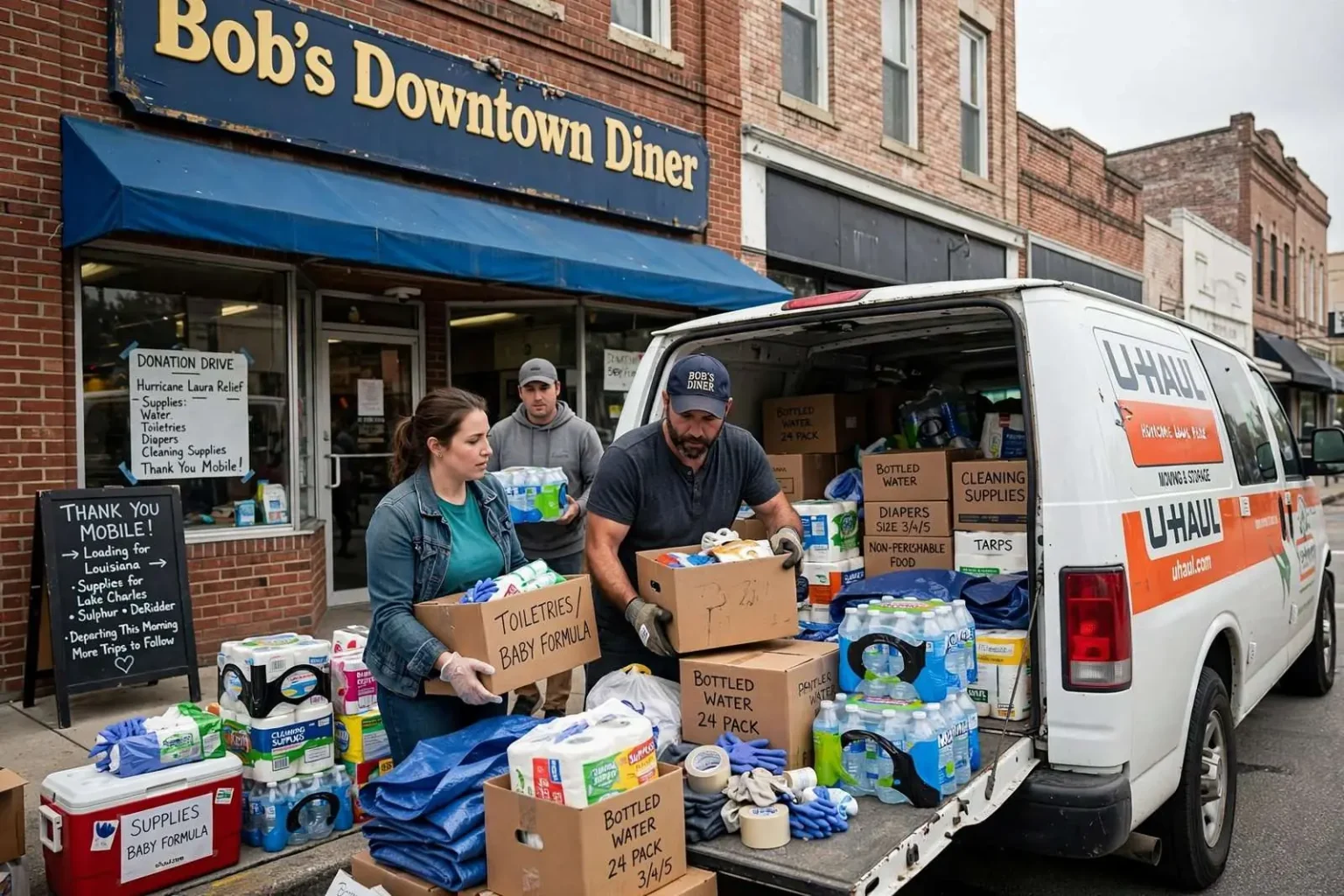
Mobile dodged Hurricane Laura’s landfall, but one downtown restaurant made sure its neighbors to the west didn’t weather the storm alone. After a little more than a week of collecting donations, Bob’s Downtown Diner packed up and hit the road Wednesday morning to deliver supplies to hard-hit Louisiana communities.
Owner Tony Sawyer said he and his team didn’t hesitate when they started brainstorming ways to help. “You know a time or two we’ve been through this. It’s great and it’s good for your heart. It’s good for your soul to reach out and do good for other people,” Sawyer said. U-Haul donated a van for the effort, and donations poured in from Mobilians in less than a week. Sawyer loaded up the goods and set out to lend a hand in person — with plans, he said, to make multiple trips.
“The good people in Mobile pitched in and did this, so a big thank you,” Sawyer said.
The Storm That Missed Mobile
Hurricane Laura came ashore in late August near Cameron, Louisiana, as a powerful Category 4 storm, one of the strongest hurricanes on record to strike the Louisiana coast. Its path carried devastating wind and storm surge damage through communities in the western part of the state — Lake Charles, Sulphur, DeRidder and the small towns between them — leaving tens of thousands of residents without power, water or livable homes. Mobile, sitting more than 250 miles east of the landfall point, saw far milder conditions, but the Gulf Coast’s shared experience of hurricanes means that when a storm hits the central Louisiana coast, the communities to the east understand exactly what the victims are facing.
That shared understanding is what Sawyer and his team tapped into. Mobile has been on both sides of the hurricane relationship — sheltering evacuees from storms that hit farther west, and sending help after hurricanes Ivan, Katrina, Sally and others struck closer to home. Downtown businesses like Bob’s Diner, a fixture serving the courthouse workers, office employees and residents of the city’s historic core, know their customers well enough to mobilize them, and a donation drive based at a popular restaurant can gather contributions from hundreds of people in a matter of days.
The drive at Bob’s collected supplies for a little more than a week before the Wednesday departure. Relief drives after major hurricanes typically focus on the essentials that broken communities run out of first: bottled water, non-perishable food, toiletries, cleaning supplies, baby formula and diapers, tarps, work gloves and batteries. Donors in Mobile, remembering their own post-storm needs, tend to fill collection points quickly when the request is concrete and local — and a downtown diner, where regulars pass through every morning for breakfast, is about as local and concrete as a collection point gets.
The Relief Effort
U-Haul’s donation of a van for the effort reflects a program the moving and storage company has maintained for years, offering equipment to relief organizations and community groups responding to disasters across North America. A donated van solves the practical problem that stops many well-meaning relief efforts: a restaurant can gather the goods, but moving a week’s worth of donations several hundred miles requires a vehicle, fuel and a driver willing to make the run. With the van lined up, Sawyer and his team could turn their attention to the load itself — organizing, boxing and stacking the donations so the cargo would survive the drive west.
The destination — hard-hit Louisiana communities — matters as much as the cargo. In the weeks after Laura’s landfall, relief organizations worked to move supplies beyond the major distribution hubs in Lake Charles and into the smaller communities where damage was severe but media attention and official aid arrived slowly. Volunteers learned quickly that parish roads, downed power lines and fuel shortages made local distribution complicated, and that the most useful donations were those delivered by people willing to make multiple trips rather than a single handoff. Sawyer’s plan to keep making trips — he said he intended to go more than once — fits the pattern of what actually helped in the months after the storm.
Delivering the goods in person also carries a value beyond the supplies themselves. Residents in storm-damaged communities consistently describe the morale effect of seeing volunteers who show up, unload and stay long enough to hear their stories. A diner owner from Mobile standing in a Louisiana parking lot, handing out supplies collected by his customers, is a visible signal that the region beyond the storm’s path has not forgotten the people still living in its wreckage.
Mobile’s Response Culture
The effort by Bob’s Downtown Diner joins a long tradition of Gulf Coast communities taking care of each other across state lines. After Hurricane Katrina devastated the Mississippi coast and New Orleans in 2005, Mobile became a refuge for evacuees and a staging point for supplies; after hurricanes struck closer to home, the flow reversed. Churches, schools, restaurants and civic groups across the region maintain the networks and the muscle memory that make a quick relief drive possible — someone donates a vehicle, someone else offers warehouse space, and a business with a loyal clientele provides the collection point and the motivation.
Restaurants occupy a particular place in these efforts. A kitchen and dining room are natural gathering points, the staff is used to logistics and hard work, and the owner’s personal appeal carries weight with customers who have been coming in for years. In the days after a storm, restaurant donation drives across the Gulf Coast routinely collect truckloads of supplies, and many establishments also cook for relief workers and displaced families. The gesture costs the business time and money, which is precisely why customers respond to it — the owner is visibly putting his own effort behind the ask.
Sawyer’s comment that Mobile has “been through this” a time or two is, if anything, an understatement. The Alabama Gulf Coast’s hurricane history runs from Frederic in 1979 through Ivan in 2004, Katrina’s glancing blow in 2005, Isaac in 2012 and Sally’s destructive surge through the Pensacola and Baldwin County coasts — a catalog that has taught the region how quickly a community can go from donor to recipient. The same week Bob’s Diner loaded its van, crews in Louisiana were beginning the months-long work of clearing debris and restoring power that Mobile itself has known after its own storms.
For now, the van from Bob’s Downtown Diner is one more link in the chain of Gulf Coast mutual aid — a small business that turned its customers’ generosity into water, food and supplies delivered where they were needed, with more trips to follow. “The good people in Mobile pitched in and did this,” Sawyer said, crediting the city rather than himself. It is a measure of how these efforts work: the story of one diner’s donation drive is really the story of a community that remembered what a hurricane feels like, and acted on it.
What the Trip Means for Louisiana
The communities receiving donations in the wake of Hurricane Laura faced a recovery measured in years, not weeks. Utility crews came from across the country to rebuild the electrical grid in the Lake Charles area, and residents of the coastal parishes dealt with tarped roofs, condemned buildings and disrupted schools well into the following year. In that landscape, outside help arrives in two forms: the large, organized shipments coordinated by relief agencies, and the smaller, more personal deliveries made by groups like the one from Bob’s Diner — direct runs that put supplies into the hands of the people who need them without intermediate paperwork.
Both forms matter, and the personal runs fill gaps the organized efforts cannot reach. A diner owner making repeat trips learns what a particular community actually lacks, adjusts the next load accordingly and builds relationships with the local people coordinating distribution. Repeat volunteers become a pipeline: the second trip typically carries the specific items neighbors mentioned on the first, and the third often includes tools, school supplies or the household goods that families need as they move from shelters back into damaged homes. Sawyer’s plan for multiple trips positioned his effort to become exactly that kind of sustained pipeline rather than a one-time gesture.
The generosity of U-Haul in donating the van deserves its own note in the story, because equipment donations are what allow small-scale efforts to scale up. A full-size van carries a volume of supplies that no personal vehicle can match, and the company’s disaster-relief practice of lending equipment to community groups has enabled hundreds of local drives across the Gulf Coast and beyond. Combined with the donations of goods from Mobile residents and the labor of the diner’s staff, the van turned a neighborhood collection point into a supply line running west across state lines.
Weeks after Laura’s landfall, as the national news cameras moved on to the next story, efforts like this one continued quietly along the Gulf Coast — vans and trailers loaded in church parking lots, storefronts and diners, running west toward the parishes still digging out. The people of Mobile had seen the storm miss them and decided not to waste the luck, and the downtown diner that fed the city every morning became the place where that decision turned into boxes on a van and miles on the road. It was, as Sawyer said, good for the heart and good for the soul — and, for the families receiving the supplies, materially helpful in the hardest weeks of their recovery.