
Mobile family seeks answers after woman killed in hit-and-run
The family of Tammy Moore, 39, is searching for answers after she was struck and killed by a driver who left the scene in Mobile.
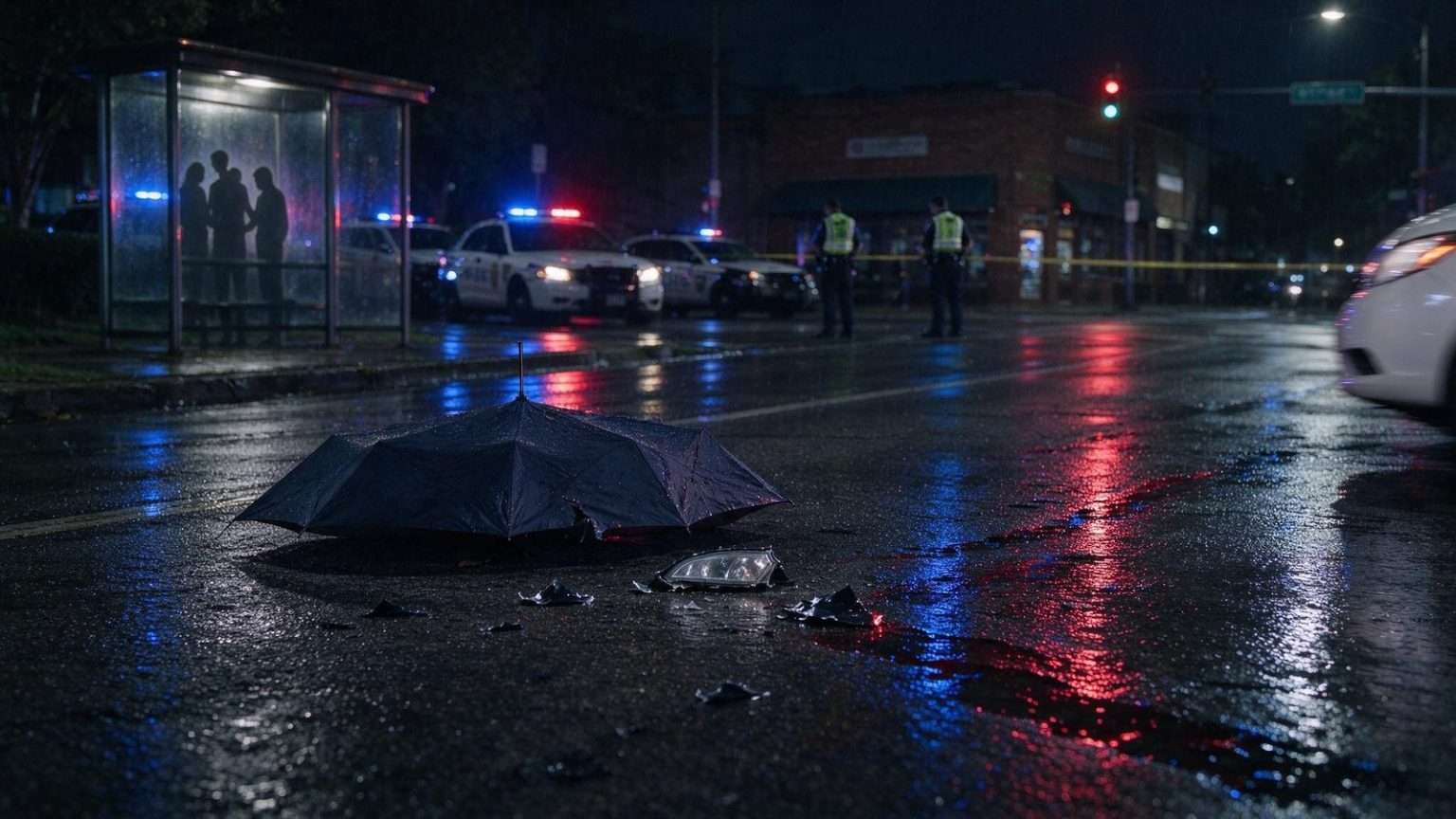
A Mobile family is grieving and pressing for answers after a 39-year-old woman was struck and killed by a driver who left the scene, and relatives say the questions are heavier than the loss itself. Relatives identified the woman as Tammy Moore, a Mobile resident whose death added the city to a grim annual count of fatal hit-and-run crashes that investigators work for months and sometimes years without an arrest.
Moore was hit by a car in Mobile and died from her injuries. In the days that followed, no arrest had been announced, and authorities had not publicly released a description of the vehicle involved — a silence that has left her family waiting on the one thing detectives in these cases always need more of: information.
The family’s central question
Moore’s relatives said the hardest part of the loss is not knowing why the driver kept going. An uncle said he believes Moore might have survived if the person who struck her had remained at the scene and called for help rather than leaving her in the roadway. That belief — that the distance between life and death was measured in the minutes after impact — is one that families of hit-and-run victims across Alabama repeat, and it is the question that investigators and prosecutors confront in every one of these cases.
The family’s grief has been matched by frustration. With no vehicle description made public and no suspect in custody, relatives have been left to canvass their own contacts, share the story on social media and wait for the tip that breaks a case open. They know from experience that fatal hit-and-runs in Mobile rarely end with a dramatic arrest; they end when someone talks.
Leaving the scene in Alabama
Under Alabama law, a driver involved in a crash that causes injury or death is required to stop, remain at the scene, provide identifying information and render reasonable assistance. Leaving the scene of a crash involving death is a felony offense, one that carries prison time in addition to whatever charges the underlying crash supports. The duty to stop applies whether or not the driver believes the crash was their fault, and it applies on any public road in the state.
Prosecutors treat the flight itself as an aggravating factor. A driver who remains, calls 911 and renders aid may face a negligent or reckless driving charge depending on the circumstances; a driver who flees adds a felony and, in the eyes of jurors, a moral judgment that no explanation has ever seemed to soften. Investigators say the first minutes after a crash are when a victim is most likely to be saved, which is why the legal duty to render aid is written so plainly into the statute.
How these cases get solved
Investigators working fatal hit-and-run cases typically rely on debris and paint transfer left at the scene, nearby surveillance or doorbell footage, and body-shop reports of unexplained front-end repairs. A broken headlight lens, a fragment of a bumper or a smear of paint on a guardrail can narrow the make, model and year of the vehicle involved. From there, detectives pull traffic camera footage, canvass businesses along the route and compare repair records against the damage pattern documented at the scene.
Those cases often turn on a single tip, which is why departments continue to appeal for witnesses long after the initial response. Someone saw a car with fresh front-end damage parked in a neighborhood. Someone heard a driver talking about a dent they could not explain. Someone was on the road that night and remembers headlights. In case after case, it is one of those calls — often weeks or months later — that gives detectives the name they need.
What the law requires after a crash
Alabama’s duties after a crash are worth spelling out, because they are the standard the driver in Moore’s death is accused of abandoning. A driver who stops must give their name, address and vehicle registration on request, and must show a license if asked. If the crash injures someone, the driver must provide reasonable assistance, which the law treats as including arranging transportation to medical care or calling for an ambulance when the injured person needs one. Failing any of those steps after a fatal crash can support the felony charge on its own, regardless of what caused the collision.
The reasons drivers give for fleeing are depressingly familiar to prosecutors: no license, no insurance, an outstanding warrant, alcohol or drugs in the system, or simple panic. None of those reasons changes the charge, and each of them — unlicensed, uninsured, impaired, wanted — tends to surface anyway once an arrest is made, turning a survivable legal problem into a felony case that can send a person to prison for years. Detectives who work these cases say the math never favors running, yet the decision is made in the two or three seconds after impact, when panic overrides everything else.
A family waiting on answers
For now, the Moore family’s days are organized around the things families in these cases do: sharing the story so it stays visible, keeping pressure on the investigation, and remembering a 39-year-old woman as more than the sum of the facts in a police report. They describe the not-knowing as its own injury, one that compounds daily so long as the driver remains unidentified.
The wider toll on Mobile’s streets
Moore’s death fits a pattern that traffic safety officials in Mobile and across Alabama have tracked for years. Pedestrians are among the most vulnerable people on the state’s roads, and the Gulf Coast’s wide, fast arterials — multilane roads built for cars rather than crossings — consistently rank among the most dangerous environments for people on foot. Federal data have repeatedly ranked Alabama among the states where pedestrians face the highest per-capita risk, and Mobile’s corridors of commercial strips, cross streets and dark stretches between signals are where that risk concentrates.
Hit-and-runs compound the danger. When a driver flees, the victim loses the immediate aid that survival sometimes depends on, investigators lose the driver’s account and any evidence of impairment, and families lose the answers that even a difficult court case can provide. Safety advocates argue that the problem feeds on itself: the more drivers believe they can get away, the more likely some are to run, which is why deterrence — arrests, prosecution and publicity — is treated as a safety tool as much as a justice one.
What happens to a case when no one is caught
When no arrest is made quickly, a fatal hit-and-run file does not close. Detectives keep the evidence catalogued — the debris, the measurements, the footage pulled before it is overwritten — and the case remains open indefinitely. Warrants can be issued years later, and prosecutors can bring charges whenever an arrest is finally made, because there is no statute of limitations on homicide in Alabama. Families often become the case’s public face in the meantime, marking birthdays, sharing flyers and renewing appeals on anniversaries when news coverage might prompt a memory.
That waiting period is its own kind of grief. Without an arrest, relatives describe a loss that has no shape — no court date to brace for, no defendant to face, no account of what happened in the final seconds. The uncle’s question, why the driver kept going, has no answer that the justice system can deliver until someone is held to account.
Anyone with information
Anyone with information about the crash that killed Tammy Moore was asked to contact the Mobile Police Department. Tips can be shared anonymously, and departments across the region have used anonymous tip lines and cash rewards to break open vehicle cases where a witness prefers not to be identified. Even a partial detail — a piece of a license plate, a direction of travel, a color — can be enough to narrow a search that otherwise has no starting point.
Investigators note that time works against some kinds of evidence and for others. Surveillance footage loops over in days, and repairs can hide damage, but memories of a strange car or an odd story told by an acquaintance tend to surface as time passes and circumstances change — a breakup, an arrest, a move. That is why detectives say no tip is ever too old, and why cases like Moore’s stay open as long as it takes.
For the family, the appeal is simple and unchanged since the first days after the crash: someone in Mobile knows what happened on the roadway that night, and one call could give them the answer they have been waiting for. Until then, they say, the hardest part is not the loss itself, but the silence of a driver who left a 39-year-old woman in the road and drove on.