‘We Show Up on Holidays, Birthdays’: Mobile’s First Responders and Nurses Worked Labor Day
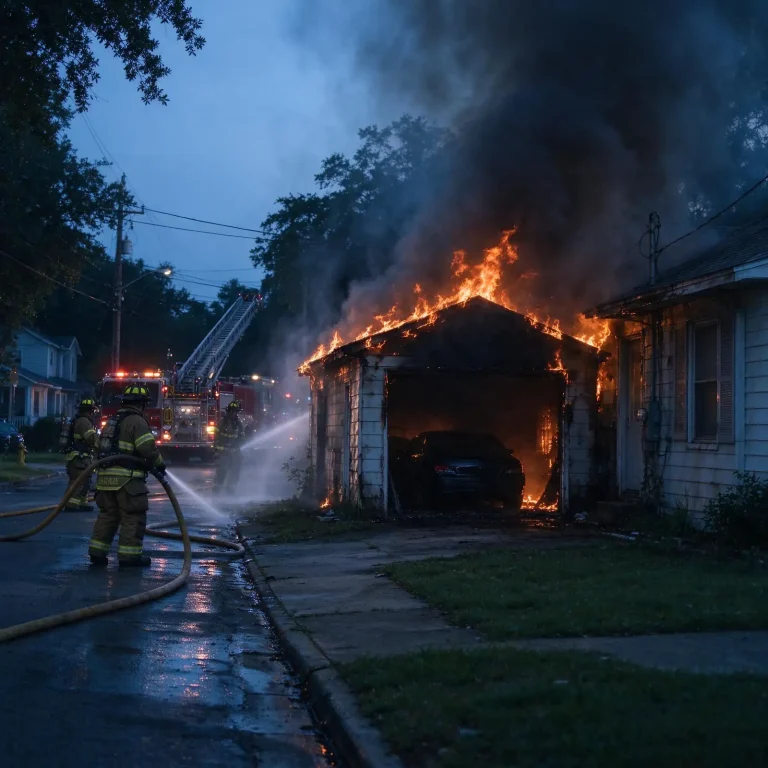
While most of the Gulf Coast spent Labor Day at the beach, Mobile Fire-Rescue drivers and health care workers clocked in as usual. Their message for everyone else: enjoy it, hydrate, and don't leave the grill burning.
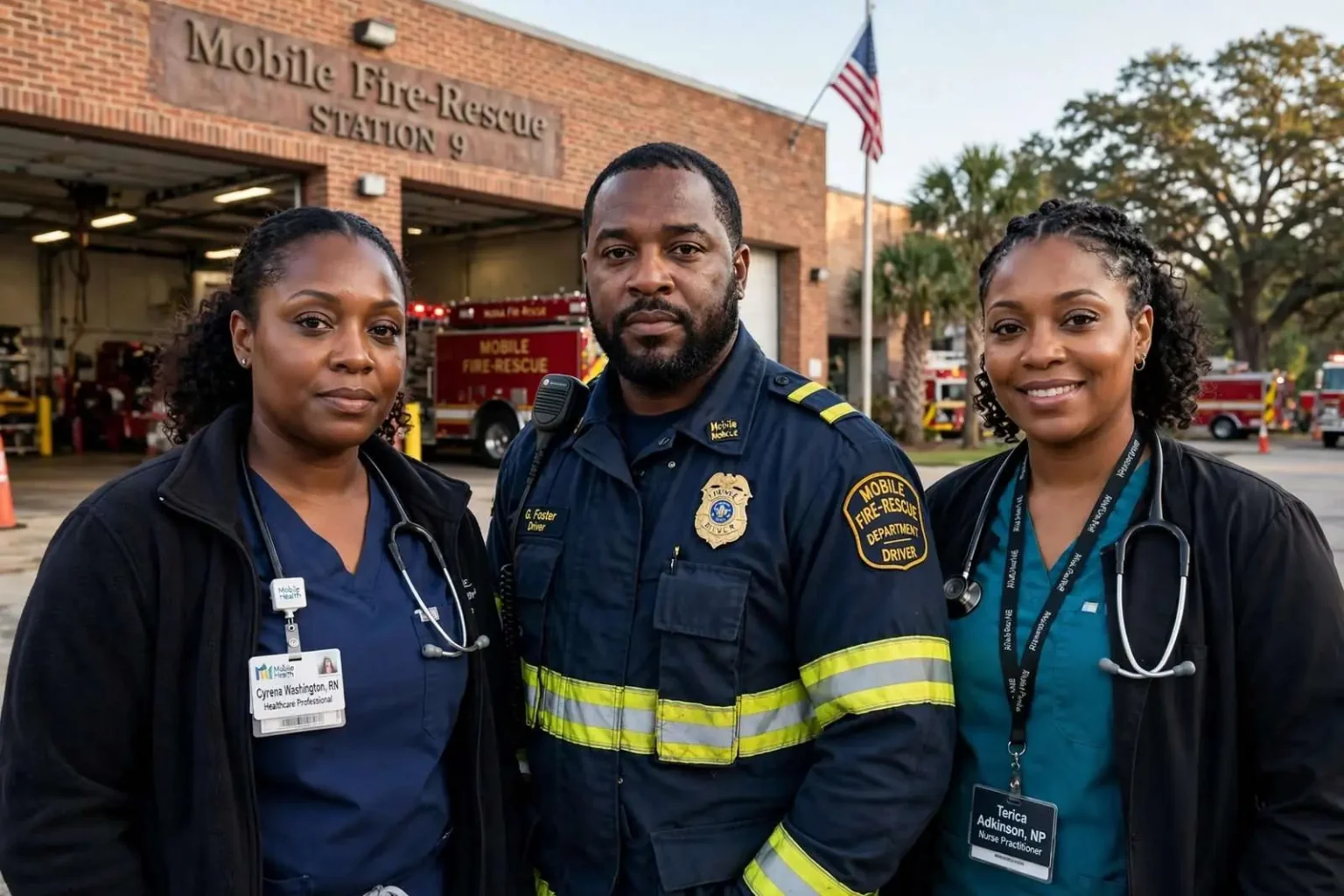
MOBILE, Ala. — Labor Day is a national holiday, and most businesses close in observance. Most is not all.
Most people spent Monday at the beach, or shopping, or running the errands a three-day weekend makes possible. For anyone working in a 24/7 operation — health care, emergency services, public safety — it was a workday like the ones on either side of it.
“We’re in the medical field, so we know we have to be here,” health care professional Cyrena Washington said.
‘It’s Part of the Job’
Mobile Fire-Rescue Department Driver Glen Foster described the arrangement without complaint and without pretending it costs nothing.
“All of us know that it’s part of the job,” Foster said. “You know, we show up on holidays, birthdays. We miss things for our family. But this is an important job.”
Nurse practitioner Terica Adkinson said the same trade is familiar to her.
“I’m used to working odd hours, being away from our family,” Adkinson said. “But being a practitioner is very rewarding. I love taking care of kiddos. I love being a support to the family.”
Mobile Fire-Rescue Department Driver Ben Jones noted that the holiday changes the rhythm of a shift without changing its purpose.
“It’s typically a little slower, so that’s nice,” Jones said. “But emergencies still happen. So, you’ve got to be here.”
How Holiday Staffing Actually Works
The reason a fire station is fully staffed on Labor Day is structural rather than a matter of anyone volunteering.
Fire departments generally operate on a shift rotation — commonly 24 hours on followed by 48 off, or a variation on that pattern — which divides the workforce into platoons that cycle continuously through the calendar. The rotation does not pause for holidays. Whichever platoon’s turn falls on Dec. 25 works Dec. 25. Over a career, the schedule distributes the holidays roughly evenly, which is the fairest available arrangement and also means every firefighter misses a substantial number of family occasions.
Hospitals work differently but arrive at the same place. Inpatient units, emergency departments, labor and delivery, and intensive care all require continuous staffing at defined ratios. Holiday coverage is typically assigned through a mix of seniority-based rotation, alternating years, and negotiated swaps, with premium pay attached. The unit does not close, so someone is there.
What both systems share is a quiet fact about staffing on a holiday: it is frequently thinner than a normal weekday, because the administrative, outpatient and support functions that surround emergency operations are closed. The people running calls and staffing beds have fewer people behind them.
Why Holidays Are Not Actually Quiet
Jones described a typical holiday shift as a little slower. That matches the experience of most emergency responders, and it comes with a caveat worth understanding.
Call volume shifts in character rather than simply dropping. The routine weekday load — workplace injuries, traffic collisions during commute hours, transfers between medical facilities — falls off. What replaces it is holiday-specific.
Emergency departments and fire departments across the country see predictable patterns around a late-summer holiday: heat-related illness, cooking and grilling fires, alcohol-related incidents and crashes, drownings and near-drownings, boating injuries, and burns. Fireworks and lawn equipment appear in the data around other holidays. Cardiac events cluster around holidays as well, for reasons that include disrupted routines, missed medications and delayed care.
On the Gulf Coast in early September, heat sits at the top of that list. Heat illness runs on a continuum from cramps to exhaustion to heat stroke, and the last of those is a true medical emergency with a mortality risk that rises with every minute of delay. Humidity is what makes the Gulf Coast version particularly dangerous: the body cools primarily by evaporating sweat, and when the air is already saturated, evaporation slows and the cooling mechanism fails.
The Advice From People Who Spent the Day Working
Both responders and clinicians offered the same short list, unprompted.
“Enjoy the day,” Foster said. “Spend time with your family. Always be aware of the heat and hydration. And don’t leave your grills burning.”
“Have fun,” Adkinson said. “But it’s really important to be safe. Wear your sunscreen while you’re outside. And make sure you’re staying hydrated. It’s extremely hot out there.”
The grill warning is not throwaway advice. Unattended cooking is consistently the leading cause of residential fires, and outdoor grilling adds its own failure modes: grills placed too close to a structure or under an overhang, grease buildup igniting, propane connections leaking, and coals disposed of while still hot. A charcoal grill that appears dead can retain enough heat to start a fire hours later, which is why fire departments advise soaking ashes with water rather than bagging them.
The hydration advice has a specific physiological point behind it. Thirst is a lagging indicator — by the time it registers, fluid loss is already underway. Anyone spending a hot day outdoors should drink on a schedule rather than on demand, and alcohol and caffeine both work against the effort.
The Rest of the Workforce
Firefighters and nurses are the visible face of holiday work, but the list is longer: police officers, dispatchers, paramedics, hospital environmental services and food service staff, utility crews on standby, corrections officers, air traffic controllers, port and refinery operators, convenience store clerks, and everyone staffing the restaurants and travel centers that a holiday weekend fills.
Labor Day originated as an observance of working people, and the version of it that involves a day off is not available to a considerable share of the workforce. The people quoted above were, on the holiday established to recognize labor, laboring.
Foster’s framing was the least sentimental and probably the most accurate.
“This is an important job,” he said.
The Cost of the Schedule
Foster’s line — “we show up on holidays, birthdays. We miss things for our family” — describes something that shift workers absorb quietly and that research has examined closely.
Rotating and extended shift work carries documented health consequences. Circadian disruption is associated with sleep disorders, cardiovascular strain, metabolic effects and elevated rates of anxiety and depression. Emergency responders and clinical staff carry the additional load of repeated exposure to traumatic events, which accumulates over a career in ways that are only recently being addressed institutionally.
Fire service organizations have moved substantially over the past decade toward treating behavioral health as an occupational issue rather than a personal one, adding peer support teams, confidential counseling access, and cancer and cardiac screening programs. Hospital systems have taken similar steps around clinician burnout, with mixed results.
The family cost is harder to quantify and does not appear in any dataset. It shows up as missed birthdays, holidays worked, and a spouse managing a household alone on a rotating schedule.
Heat Illness: Knowing the Difference
Both responders and the nurse practitioner led with heat, which on the Gulf Coast in September is the right call. The distinction between the stages matters, because the response differs sharply.
Heat cramps. Painful muscle spasms, usually in the legs or abdomen, during or after exertion in heat. Response: stop activity, move to a cool place, drink fluids with electrolytes, gentle stretching.
Heat exhaustion. Heavy sweating, cool and clammy skin, weakness, dizziness, nausea, headache, rapid weak pulse. Response: move to air conditioning or shade, loosen clothing, cool with wet cloths or a cool bath, sip water. Seek medical attention if symptoms worsen or persist beyond an hour, or if the person is vomiting.
Heat stroke. A medical emergency. Body temperature above 103 degrees, hot skin that may be dry or damp, confusion or altered mental status, slurred speech, loss of consciousness. Response: call 911 immediately, move the person to a cooler place, and cool them aggressively with cool water or ice while waiting. Do not give fluids to someone who is confused or unconscious.
Altered mental status is the single most important warning sign. A person who is confused, combative or not making sense in the heat is not simply tired.
Grill Safety, Specifically
Foster’s advice not to leave grills burning reflects consistent fire service experience. The practical guidance:
- Distance. Keep grills well away from the house, deck railings, and out from under eaves and overhanging branches.
- Never leave it unattended. Unattended cooking is the leading cause of home fires generally, and the rule does not change outdoors.
- Clean the grease. Accumulated grease in the trays and on the grates is the most common ignition source in a grill fire.
- Check propane connections. Soapy water on the hose and fittings will bubble at a leak. Do this at the start of the season and after any move.
- Handle coals properly. Let ashes cool completely, then soak them with water before disposing of them in a metal container. Charcoal retains heat for hours.
- Keep children and pets at a distance. Grill contact burns in children are common and largely preventable with a defined perimeter.
A Word of Thanks, and Then Back to Work
The people quoted here were not asking for recognition. Asked about working the holiday, each described it as a condition of a job they chose, and then gave safety advice to everyone who was not working.